









































Description
Salvador Dali – Atavistic Vestiges after the Rain
| Year of Creation: | 1934 |
| Original size: | 54 cm x 65 cm |
| Paint style: | Surrealism |
| Original technique: | Oil on canvas |
| Located: | Private collection |
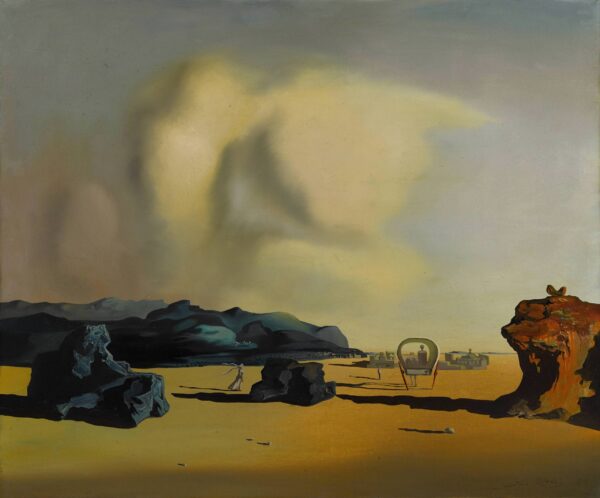
“Atavistic Remains After the Rain” by Salvador Dalí is a surrealist masterpiece that showcases the artist’s unique style and vision. Created in 1940, the painting depicts a barren landscape with bent and twisted trees and a lone figure standing in the foreground. The sky is dark and stormy, adding to the feeling of anxiety and mystery.
One of the most striking elements of this painting is the use of light and shadow. Dali used a limited palette of dark, subdued colors, with the exception of a bright, almost neon blue, which creates a feeling of otherworldliness and dreaminess. The figure in the foreground is also distorted and elongated, adding to the sense of anxiety and disorientation.
Dalí’s use of symbolism is also evident in this painting. The twisted and distorted trees can be understood as a representation of the subconscious mind, and the solitary figure in the foreground as a representation of the human psyche. The stormy sky can also be interpreted as a metaphor for the restless nature of the human mind.
The painting is considered one of Dalí’s most important works and is a masterpiece of surrealism. The painting is currently on display at the Salvador Dali Museum in St. Petersburg, Florida, and is considered a must-see for fans of Dali’s work and those interested in Surrealism.
Overall, “Atavistic Remains After the Rain” is a striking and powerful painting that showcases Dalí’s unique vision and style. It’s a fascinating exploration of the human psyche, and its use of symbolism and surrealist elements is a must-see for all art lovers.