


















































Description
Salvador Dali – Christ


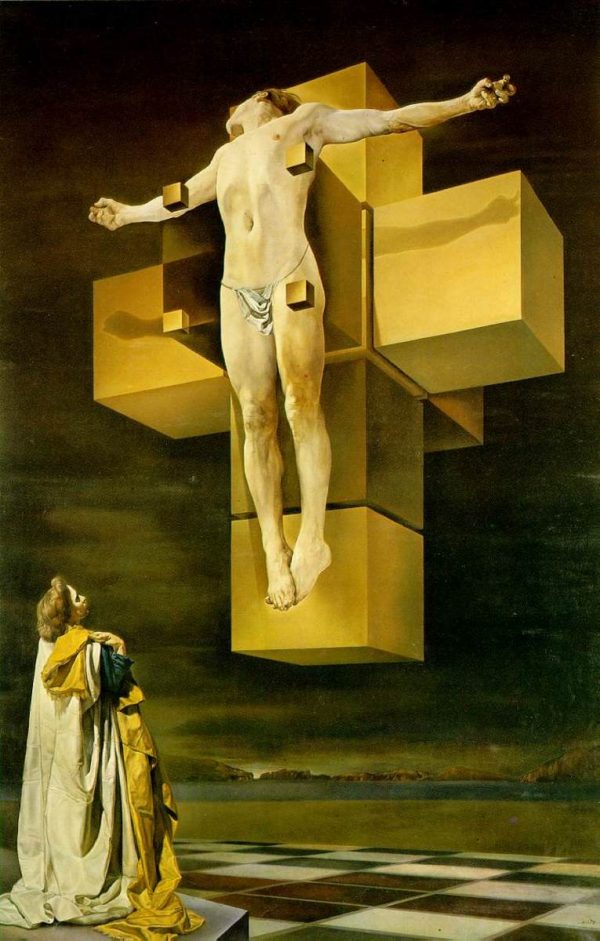
Salvador Dalí’s “Christ” painting is a unique and striking piece of art that showcases the artist’s unique style and vision. The painting was created in 1951 and depicts the crucified Christ in a surrealistic and dreamlike setting.
The painting is characterized by Dalí’s signature use of surrealist elements and symbolism and his masterful technique of creating a sense of depth and movement. The figure of Christ is depicted twisted and elongated, with outstretched arms in a crossed position. In the background of the painting is a dreamscape with a melting clock and strange, organic shapes.
One of the most striking elements of the painting is the use of color. Dali uses a subdued palette of greens, blues and grays, which gives the painting a melancholic and otherworldly feel. Color is also used to create a sense of depth and movement as the background appears to recede into the distance.
In addition to technical and aesthetic qualities, the painting “Christ” also has a deeper meaning and importance. Dali was a devout Catholic and often dealt with religious themes and symbols in his works. In this painting, the figure of Christ can be understood as a symbol of sacrifice and salvation, and the melting of the clock as a comment on the transience of time and memory.
Overall, Salvador Dalí’s painting “The Christ” is a powerful and stimulating work of art that showcases the artist’s unique vision and technique. It is still a popular and appreciated work of art and is considered a masterpiece of surrealist art of the 20th century.