



























Description
Salvador Dali – Moment of Transition
| Year of Creation: | 1934 |
| Original size: | 65 cm x 54 cm |
| Paint style: | Surrealism |
| Original technique: | Oil on canvas |
| Located: | Viktor and Marianne Langen Collection |
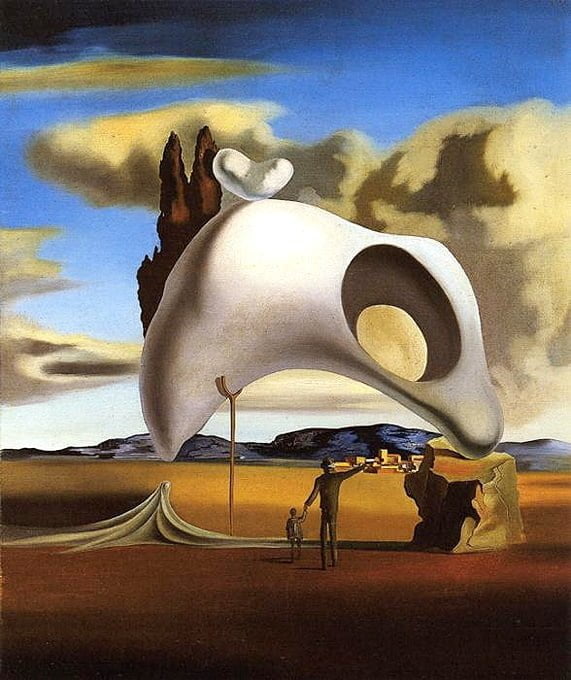
The painting “Moment of Transition” by Salvador Dalí is a striking and stimulating painting that is sure to capture the attention of any viewer. The painting was created in 1940, a period of great change in Dalí’s life and career. It is considered one of his most important works from this period.
One of the most striking elements of this painting is the use of color. Dali uses a calm palette of blues, greens and grays that create a sense of peace and tranquility. This is in stark contrast to the chaotic and fragmented shapes that make up most of the painting. The shapes in the painting seem to be in a state of transition and movement, which is what gave the painting its name.
The image also contains many symbolic elements. For example, the central image of a hand holding a key is said to represent the key to unlocking the subconscious, a theme that Dalí explored throughout his career. In addition, the painting is full of images of clocks, which Dali often uses in his works to show the passage of time and the transience of existence.
Overall, “Moment of Transition” is a powerful and stimulating painting that showcases Dalí’s mastery of color, form, and symbolism. This painting is considered one of his most important works from the 1940s and is a must-see for anyone interested in the art of Salvador Dali. The painting is currently in the Salvador Dali Museum in St. Petersburg, Florida, USA, and can be seen in other museums around the world.