










































Description
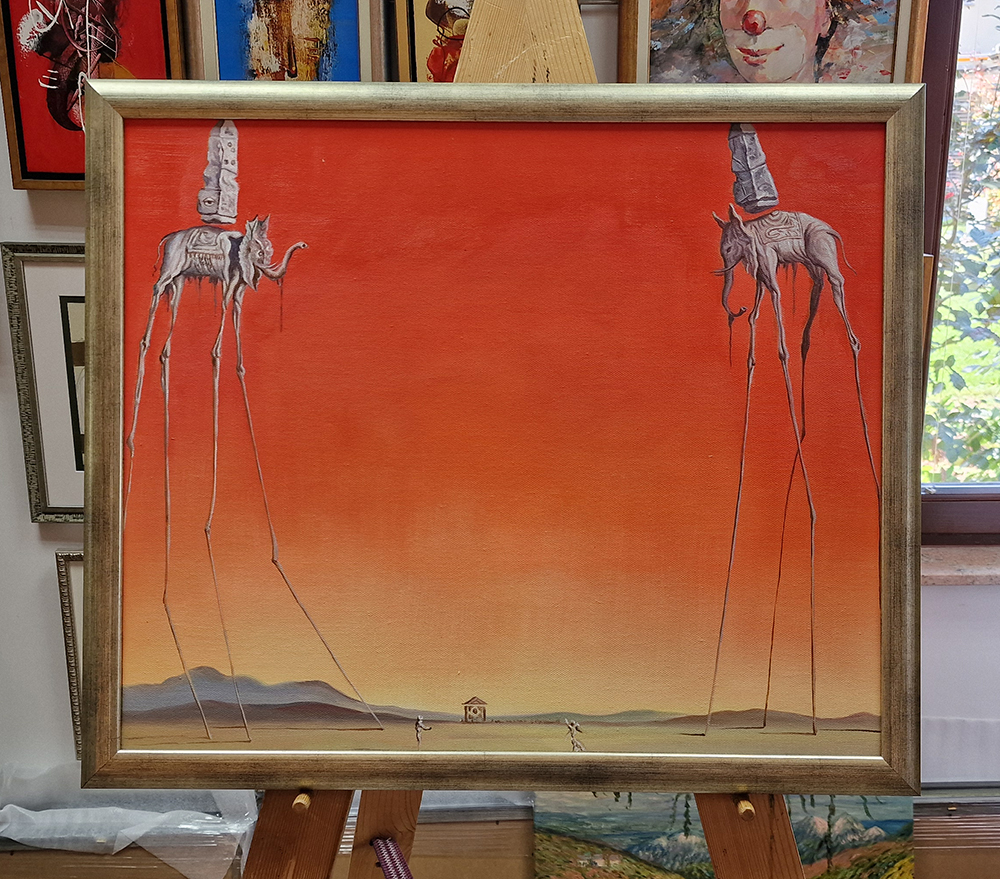
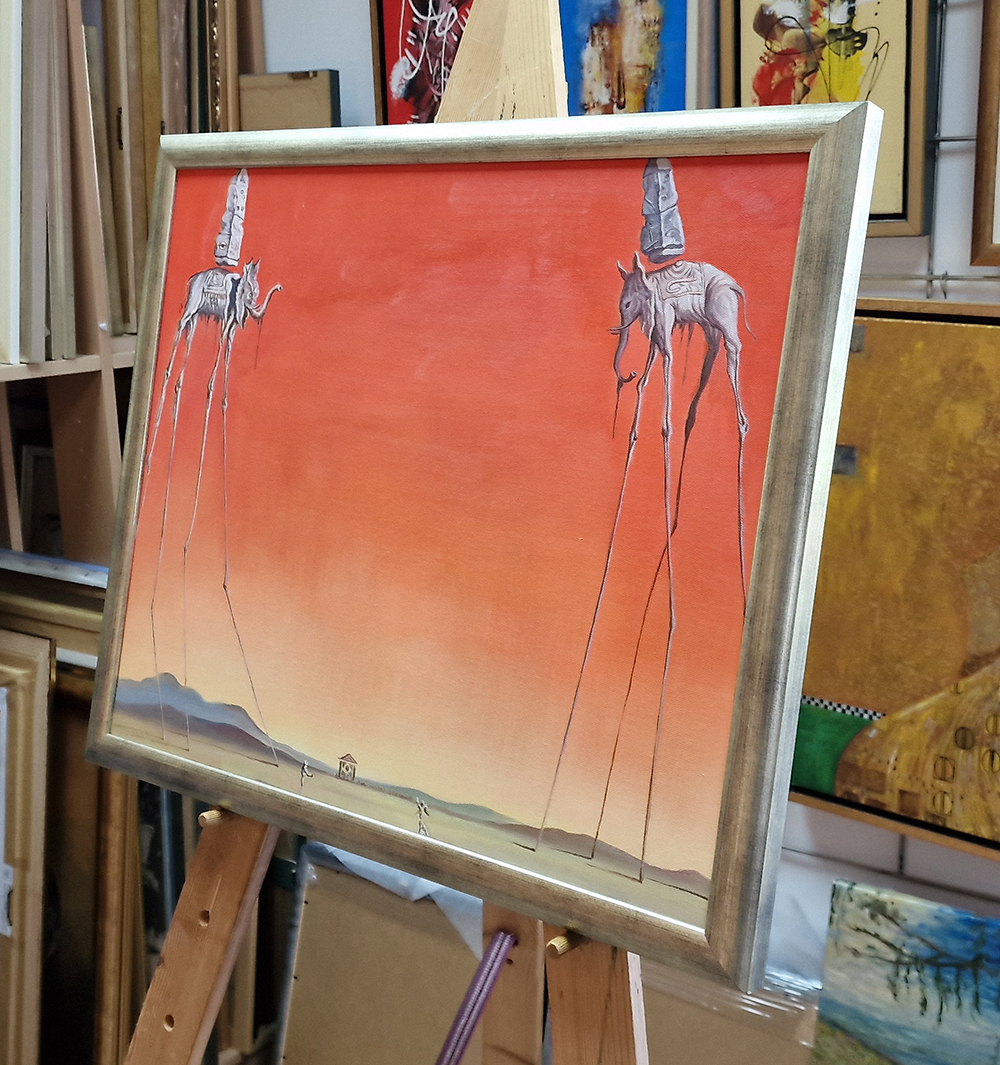
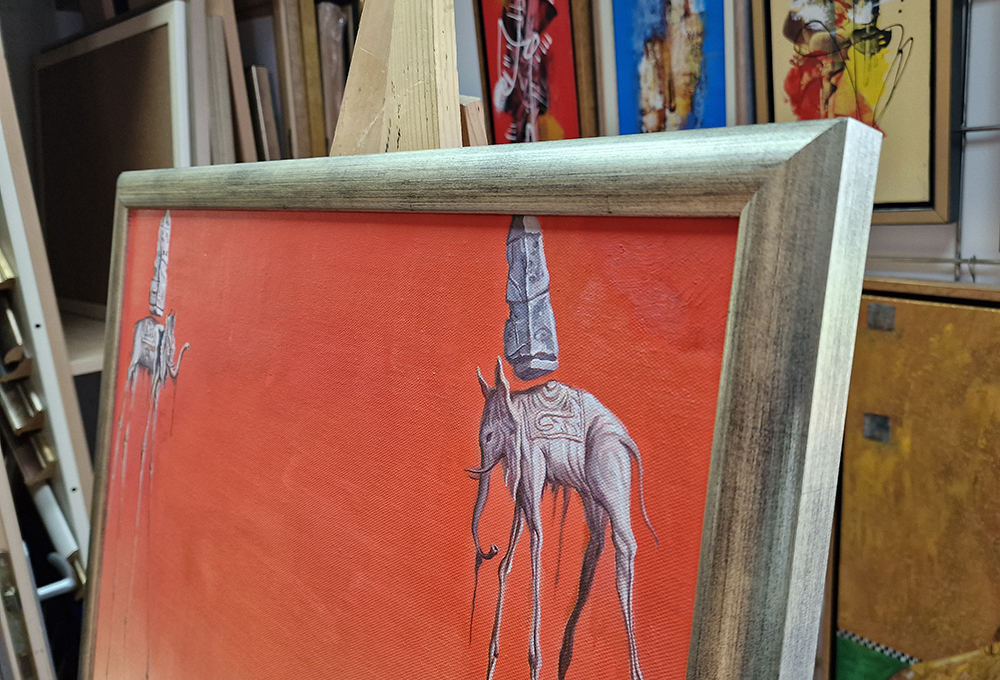
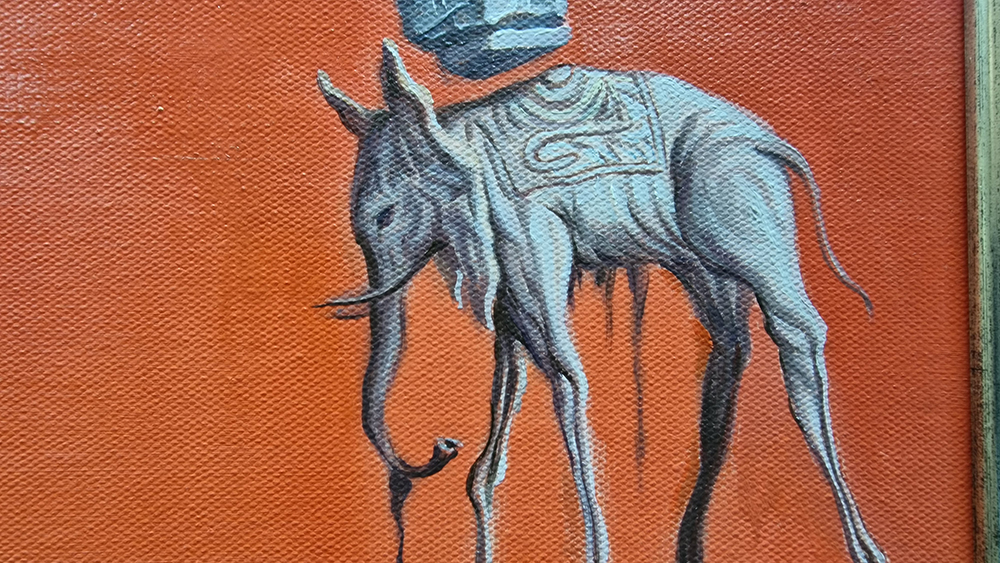
Salvador Dali – The Elephants
| Year of Creation: | 1948 |
| Original size: | |
| Paint style: | Surrealism |
| Original technique: | Oil on canvas |
| Located: | Dali Museum Spain |
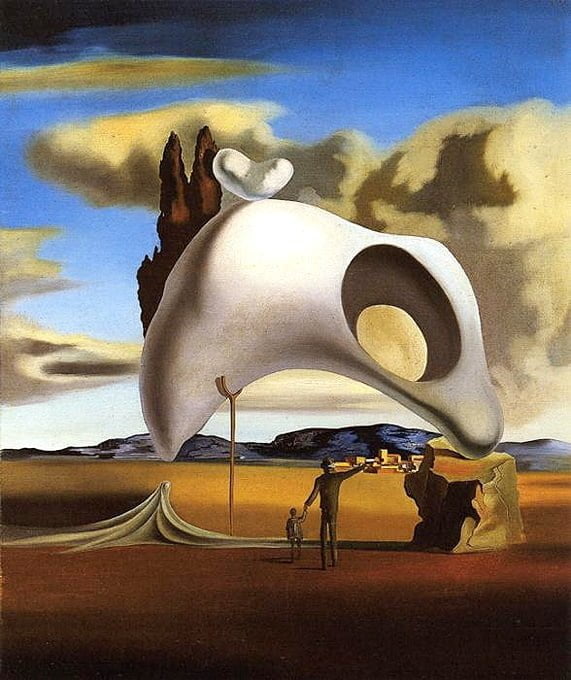
Salvador Dali’s Elephants is a surrealist painting created in 1948. The painting features three long-legged elephants walking in a barren desert environment. The elephants seem to float above the ground, adding to the dreamlike and surreal nature of the painting.
One of the most striking elements of the painting Elephants is the use of color. Dali uses a limited color palette, consisting mainly of shades of gray and brown. This color scheme adds to the feeling of a desert and desolate landscape and contrasts with the bright, almost glowing whiteness of the elephants.
The elephants in the painting have also been interpreted as a symbol of the subconscious mind, as their extended legs represent the connection between the conscious and subconscious mind. Dalí’s use of elephants, usually associated with memory and power, also adds a deeper meaning to the painting.
“Elephants” is considered one of Dalí’s most important works from the 1940s and is an excellent example of his surrealist style. The painting has been presented at many exhibitions and is in the collection of the Museum of Modern Art in New York.
In conclusion, Salvador Dali’s Elephants is a powerful and stunning painting that showcases the artist’s unique style and ability to express deep meaning through surreal imagery. The painting is still a popular and appreciated work of art and a must-see for any fan of Surrealism or Dalí’s work.