












































Description

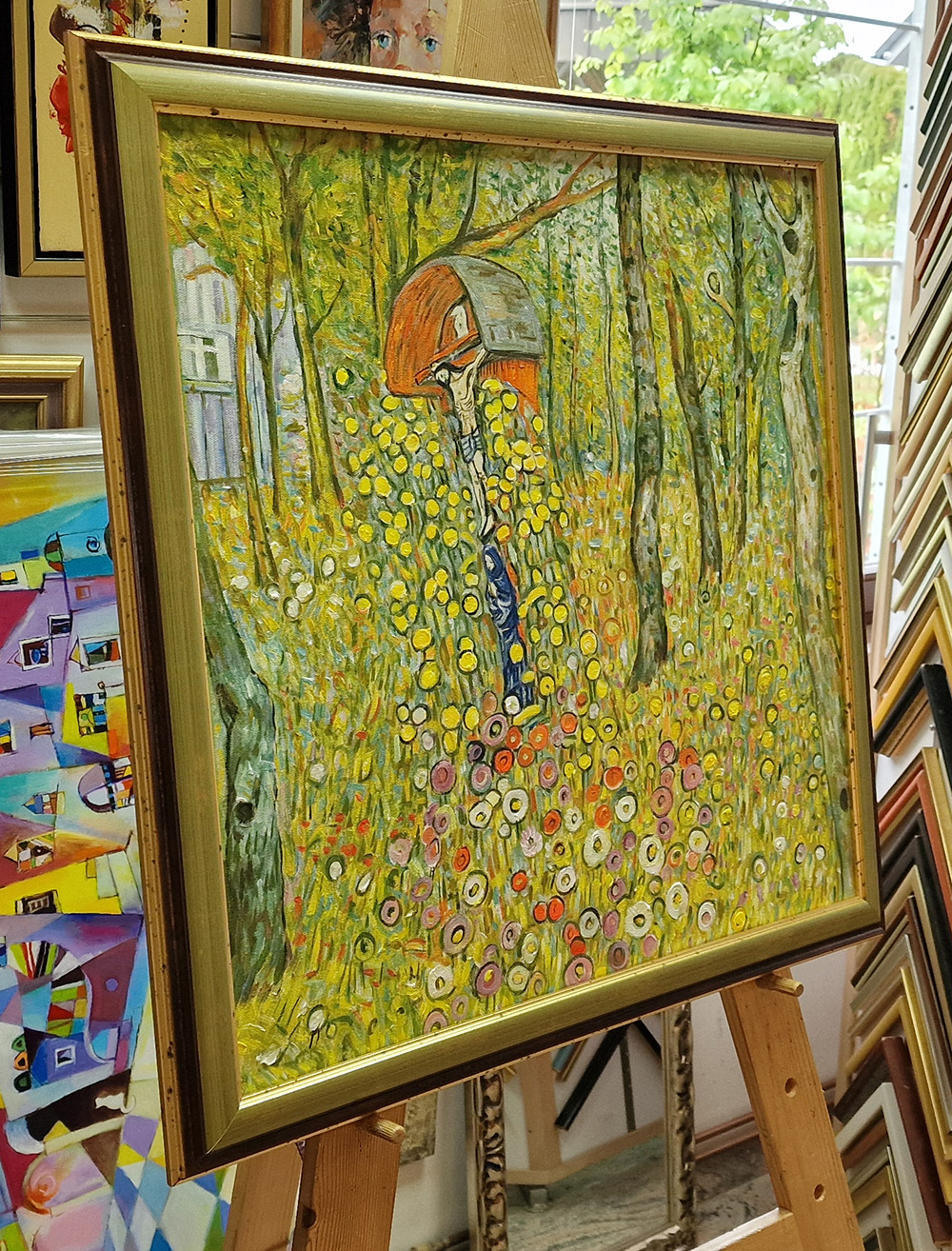

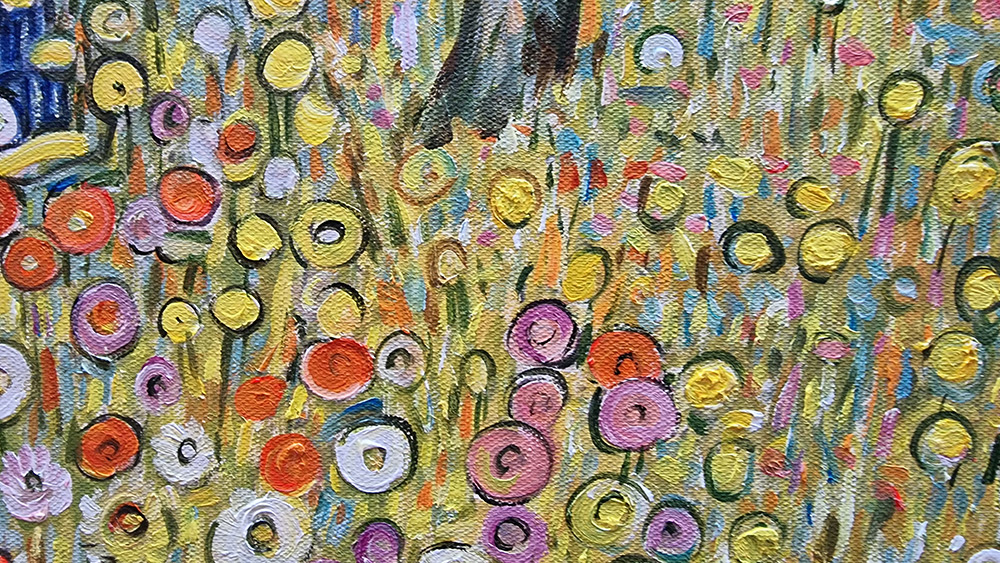
Gustav Klimt – Farm Garden with Crucifix
| Year of Creation: | 1911-1912 |
| Original size: | 110 cm x 110 cm |
| Paint style: | Secession |
| Original technique: | Oil on canvas |
| Located: | Original destroyed in 1945 |
The composition of the oil on canvas Farm Garden with Crucifix is simple, the lines are natural. However, the painting is full of details and conveys a wonderful atmosphere. The blurred old building in the background of the oil on canvas and the overgrowth of the cross with flowers and vegetation evokes the feeling that Klimt stumbled upon this piece of property, untouched for many years.
“Farmer’s garden with a crucifix”, painted in 1910 by the Austrian artist Gustav Klimt, is considered one of the artist’s most provocative and controversial works. The painting depicts a farm garden full of lush greenery and a large crucifix in the center of the composition. The crucifix is the main focus of the painting and is depicted in a highly stylized, simplified and almost abstract form.The painting is an excellent example of Klimt’s Art Nouveau style, which was characterized by the use of ornate patterns, bold colors and sensual themes. The crucifix is depicted in a highly stylized manner, with elongated limbs and simplified features, giving the image an otherworldly and dreamlike quality.One of the most striking features of “Farm Garden with Crucifix” is its use of bold colors and intricate patterns. The painting is a riot of color, with the crucifix, background and decorative elements consisting of swirling, interwoven patterns. The use of color and pattern creates a sense of movement and fluidity, which is appropriate given the painting’s theme of spirituality and nature.The symbolism of the painting is also rich. The crucifix in the painting is a symbol of Christianity and the sacrifice of Jesus Christ. The lush greenery and decorative elements in the painting could represent a connection between nature and spirituality. However, the painting received criticism for its depiction of the crucifixion, as some considered it blasphemous and disrespectful.The painting was not well received by critics when it was first exhibited, and it has since become one of Klimt’s most controversial works. It is currently kept in the Leopold Museum in Vienna, Austria.All in all, “Farmhouse Garden with Crucifix” is a thought-provoking and controversial painting that displays the richly ornate patterns, bold colors, and sensual theme that are the hallmarks of Gustav Klimt’s art nouveau style. The use of color and pattern in the painting creates a sense of movement and fluidity, while the crucifix symbolizes Christianity and the sacrifice of Jesus Christ. The depiction of the crucifixion in the painting was not well received by critics and remains one of Klimt’s most controversial works. It is currently stored in the Leopold Museum in Vienna, Austria.