

























Description
Gustav Klimt – Forrest of Beech Trees
| Year created: | 1902 |
| Original size: | 100 x 100 cm |
| Painting style: | Secession |
| Original technique: | Oil on canvas |
| Located: | State Art Collections, Galerie Neue Meister, Dresden |
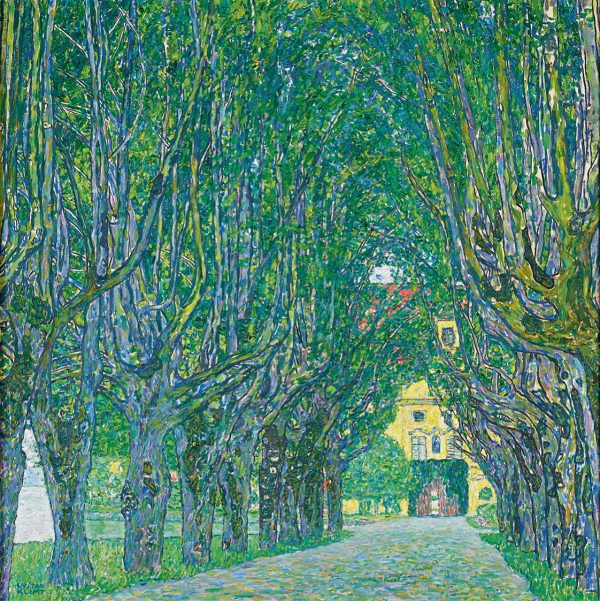
This is one of several paintings that Klimt created inside the beech forest. In this oil on canvas, the sky is out of reach, closed behind thick bars made of tree trunks.


“Beech Forest”, painted in 1903 by the Austrian artist Gustav Klimt, is considered one of the artist’s most serene and calm works. The picture depicts a dense beech forest, through the branches of which sunlight penetrates, creating a warm and inviting atmosphere.The painting is an excellent example of Klimt’s Art Nouveau style, which was characterized by the use of ornate patterns, bold colors and sensual themes. Beech trees are depicted in a highly stylized manner, with elongated branches and twisted trunks, giving the image an unearthly and dreamlike feel.One of the most striking features of “Beech Forest” is the use of bold colors and intricate patterns. The painting is a riot of color, with beech trees, leaves and sunlight all made up of swirling, interwoven patterns. The use of color and pattern creates a sense of movement and fluidity, which is appropriate given the nature and serenity of the painting’s theme.The symbolism of the painting is also rich. Beech trees are often considered symbols of longevity and resilience. A dense forest could represent the interconnectedness of all living things, and the sunlight filtering through the branches could symbolize the hope and vitality of nature. The peaceful atmosphere in the painting could represent the peace and tranquility that nature can bring to the human soul.The painting was well received by critics at its first exhibition and has since become one of Klimt’s most beloved and recognizable works. It is currently stored in the Museum of Fine Arts in Vienna, Austria.All in all, “Beech Forest” is a serene and calm painting that displays the ornate patterns, bold colors and sensual themes that are characteristic of Gustav.