






























































Description
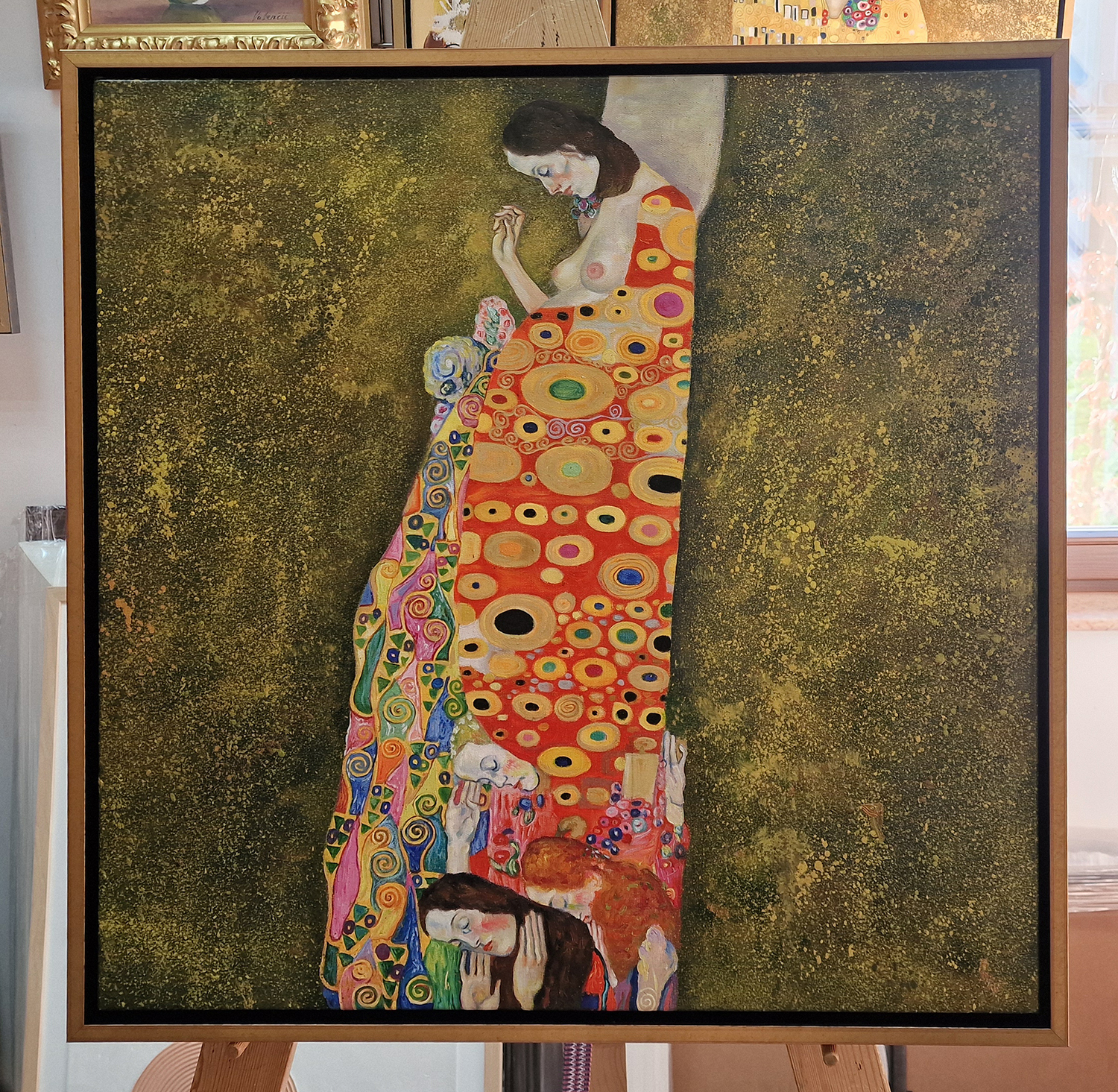
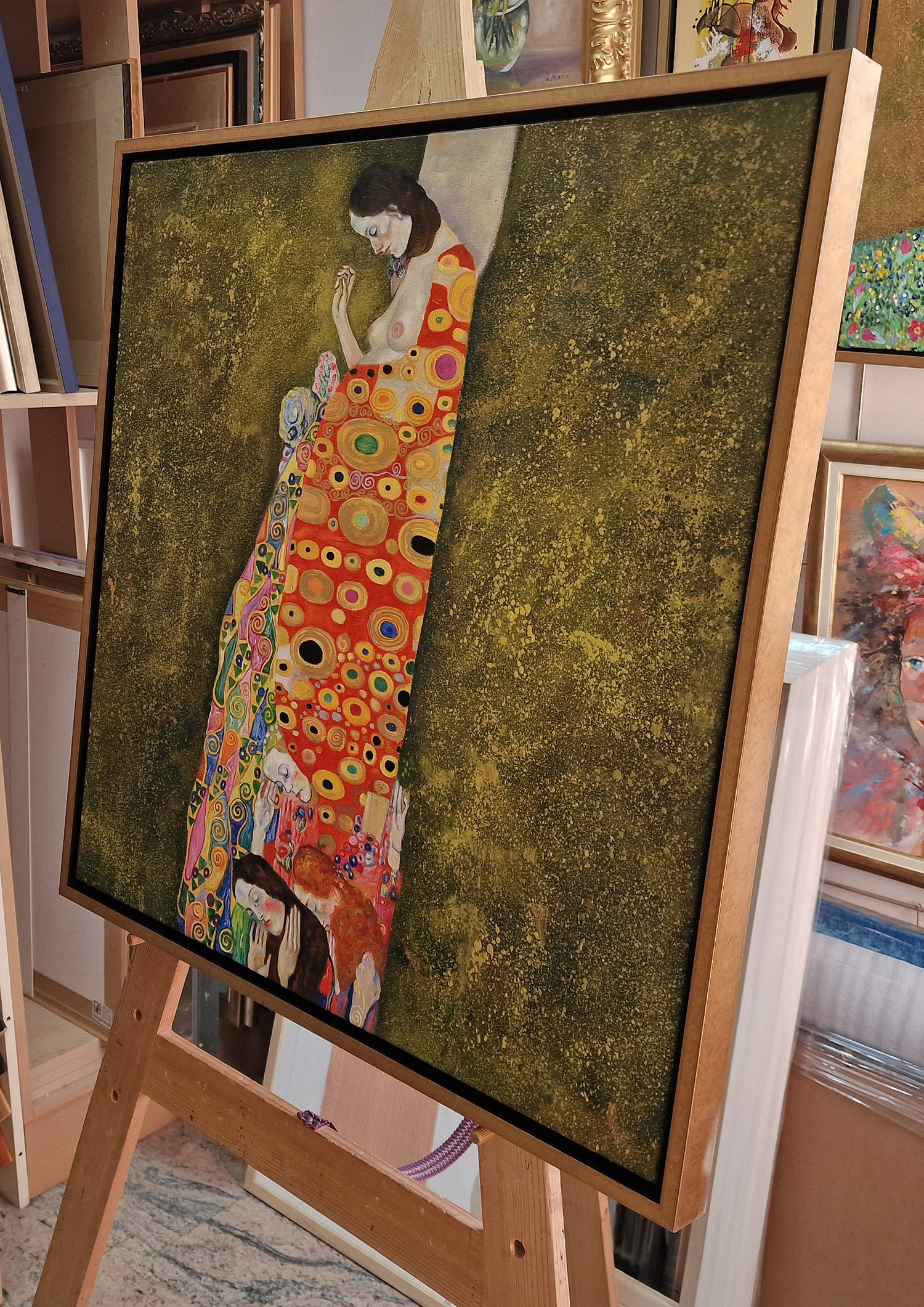
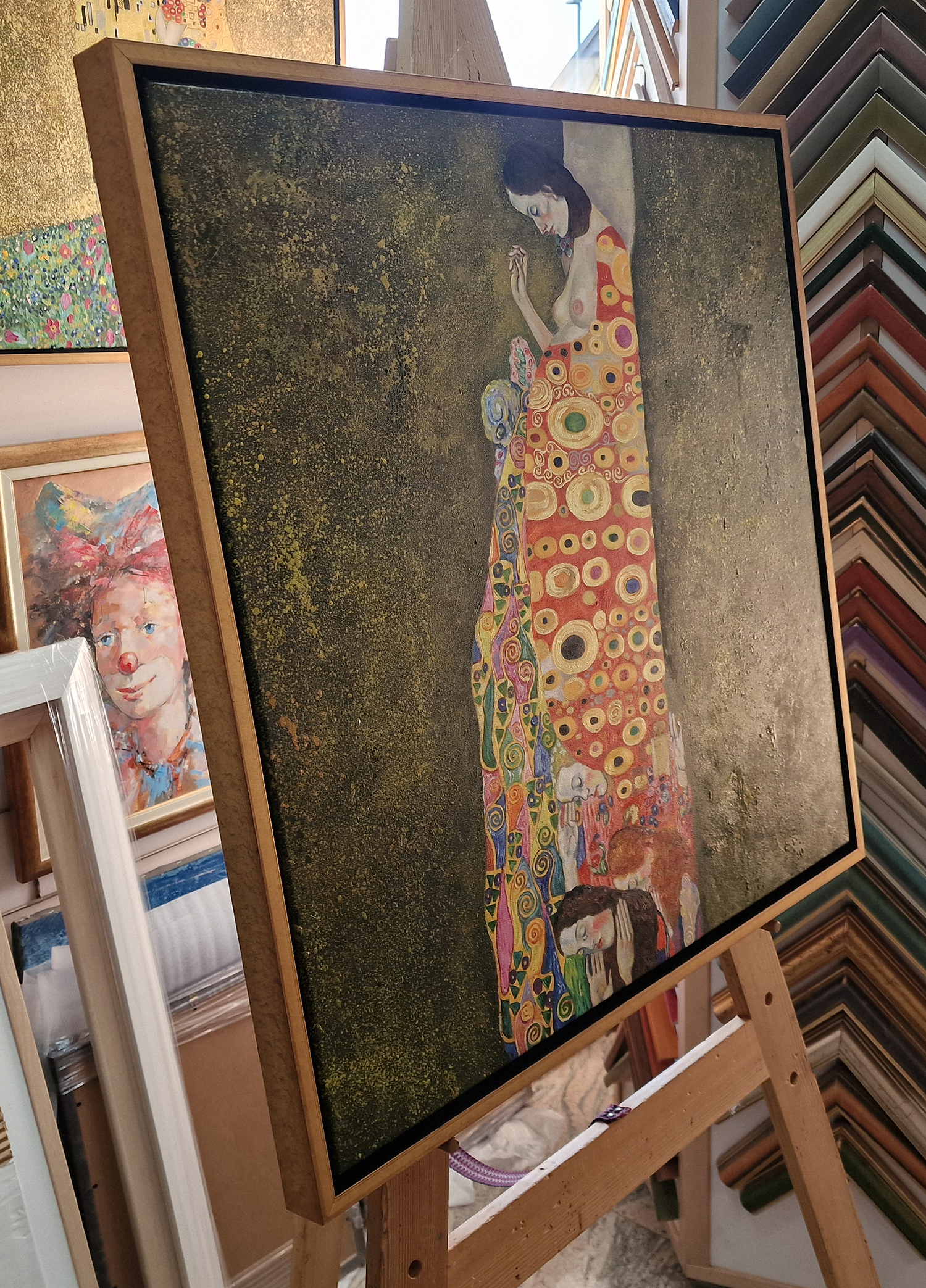
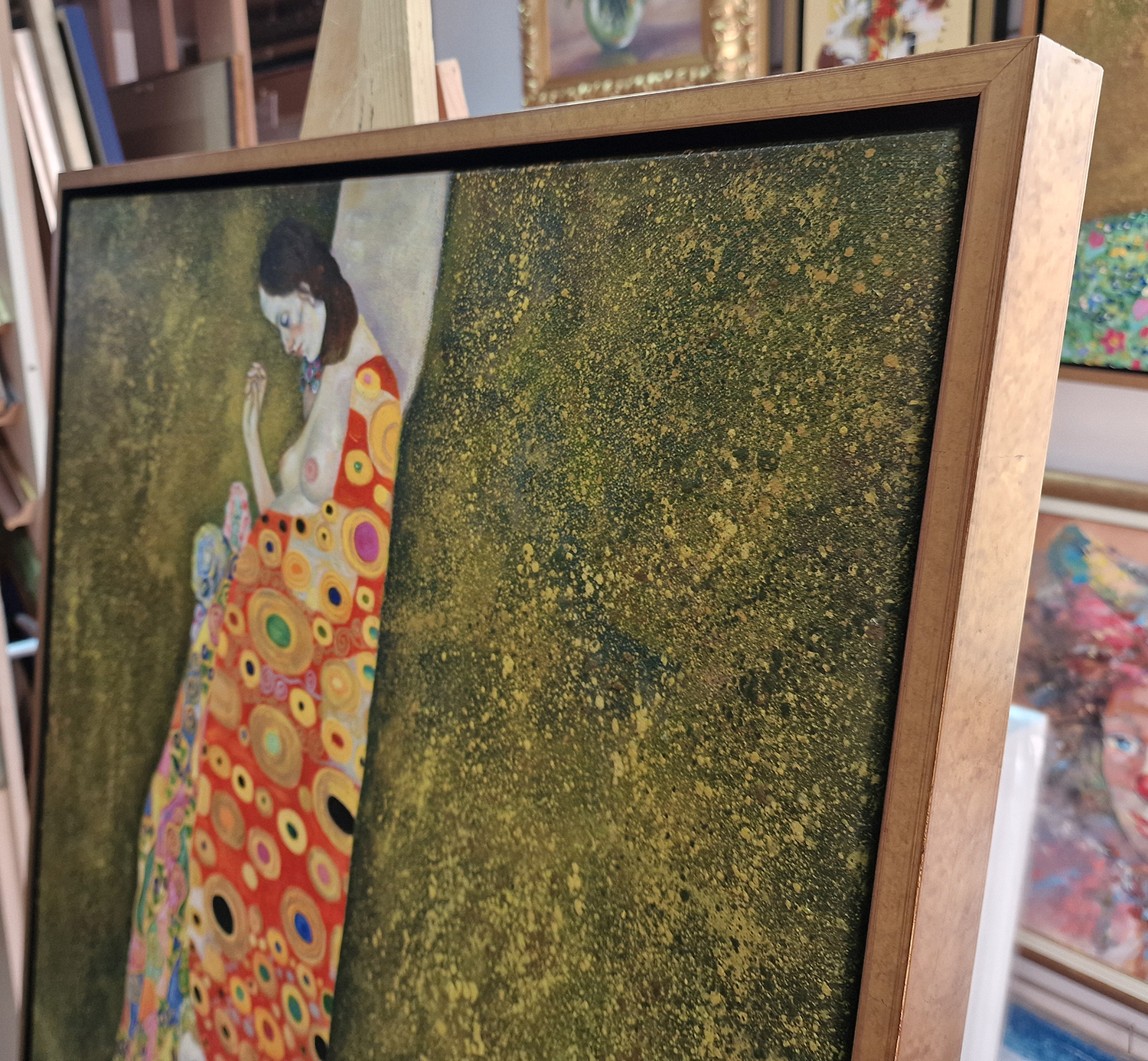
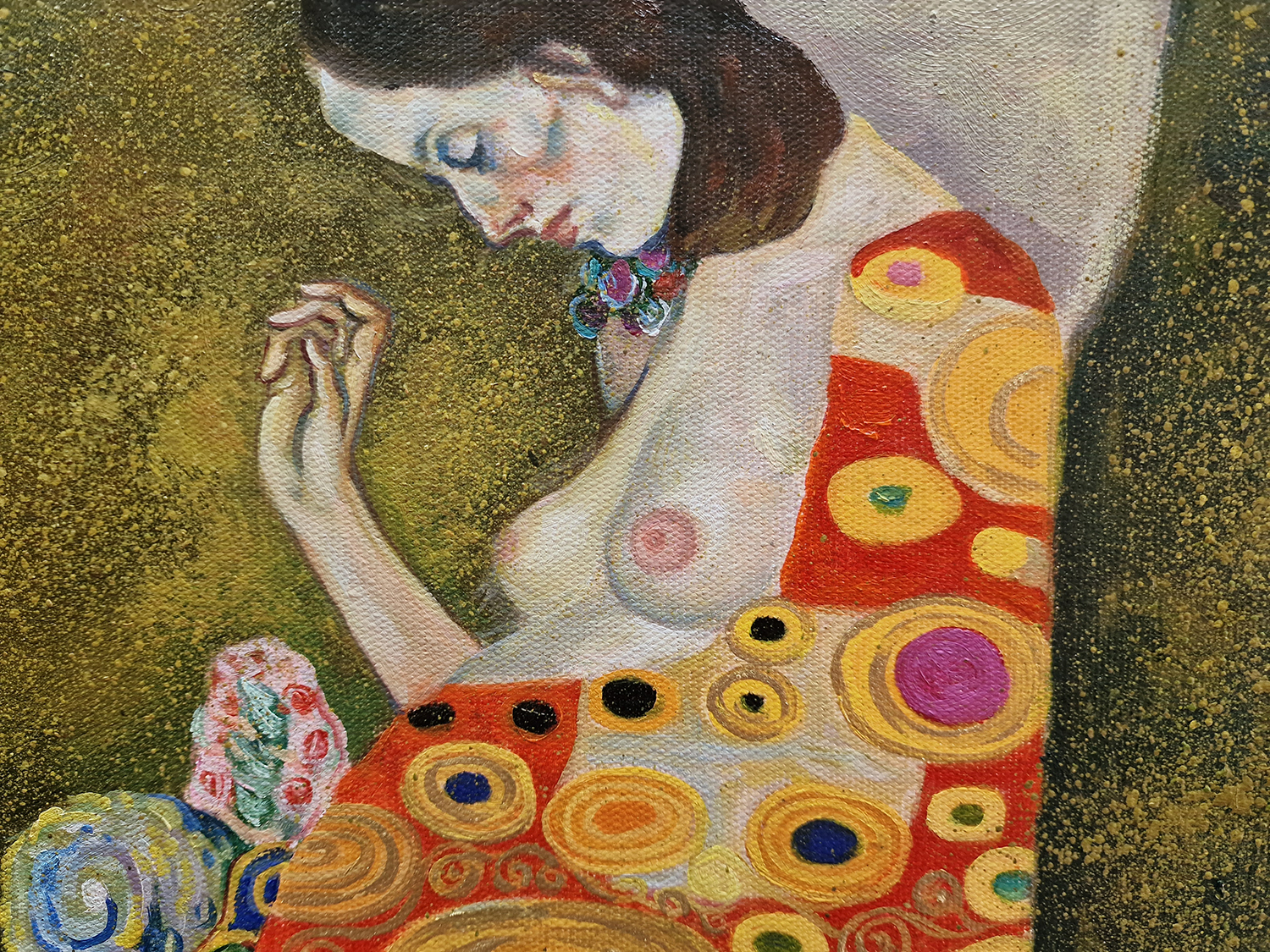
Gustav Klimt – Hope II
| Year created: | 1907-1908 |
| Original size: | 110 x 110 cm |
| Painting Style: | Secession |
| Original technique: | Oil and gold on canvas |
| Located: | The Museum of Modern Art (MoMA), New York |
Although images of women and children are a common occurrence in the history of art, depictions of pregnancy are quite rare. In the oil on canvas Hope II, a pregnant woman bends her head and closes her eyes as if praying for the safety of her child. A human skull looks out from behind the edge of the dress, depicting death as the danger that threatens the child. At her feet, three women with bowed heads and raised hands pray for the child’s health – although their solemnity could also mean mourning, a prediction of the child’s fate.
“Hope II”, painted by the Austrian artist Gustav Klimt in 1907-1908, is considered one of the artist’s most powerful and thought-provoking works. The picture shows a pregnant woman sitting on a bench, holding her stomach and looking into the distance with a thoughtful look.
The painting is an excellent example of Klimt’s Art Nouveau style, which was characterized by the use of ornate patterns, bold colors and sensual subject matter. The woman in the picture is depicted in a highly stylized manner, with elongated limbs and simplified facial features, which gives the picture an otherworldly and dreamlike quality.
One of the most striking features of “Hope II” is its use of bold colors and intricate patterns. The painting is a riot of color, with the woman’s dress and background all made up of swirling, interwoven patterns. The use of color and pattern creates a sense of movement and fluidity, which is appropriate given the painting’s theme of hope and life.