








Description
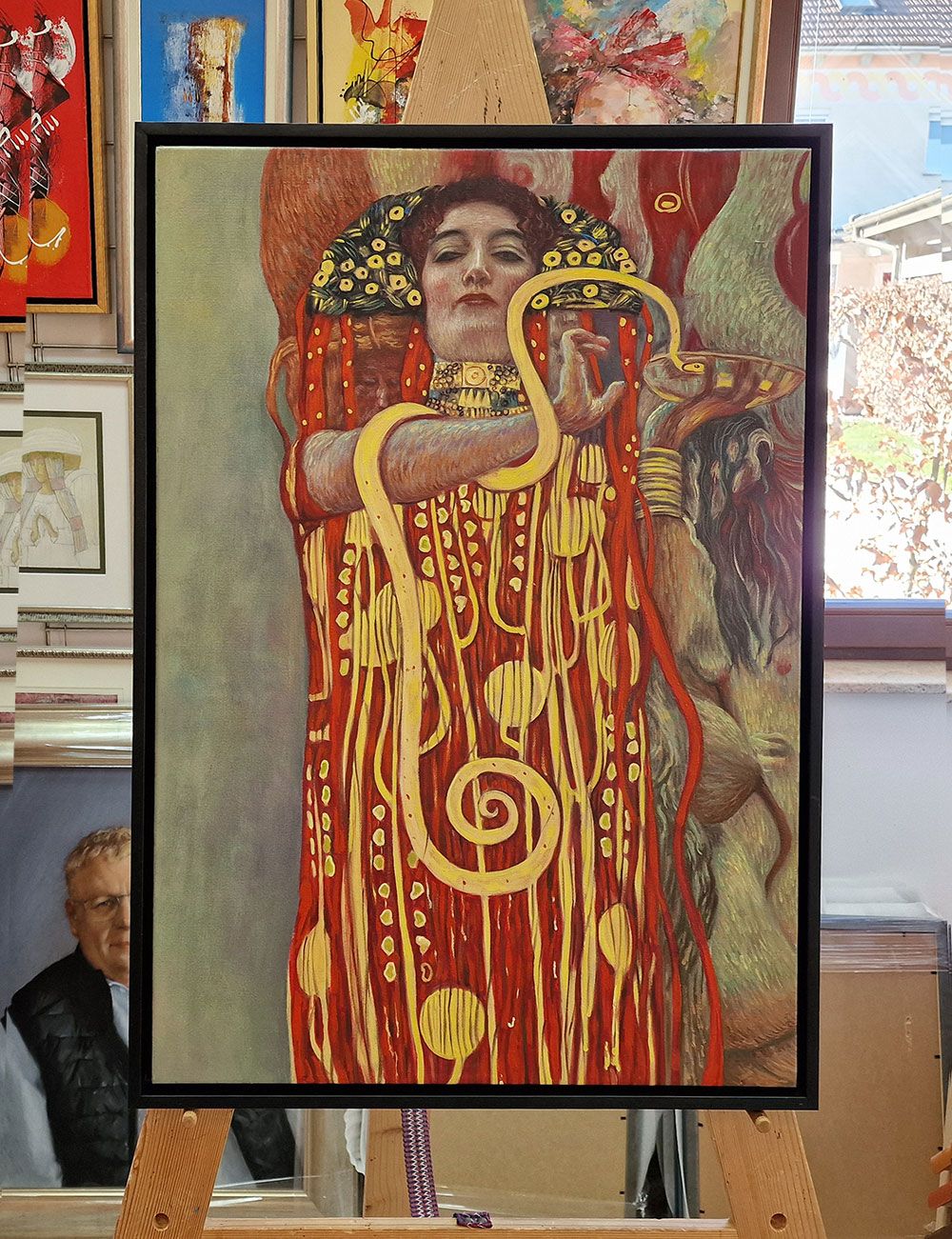
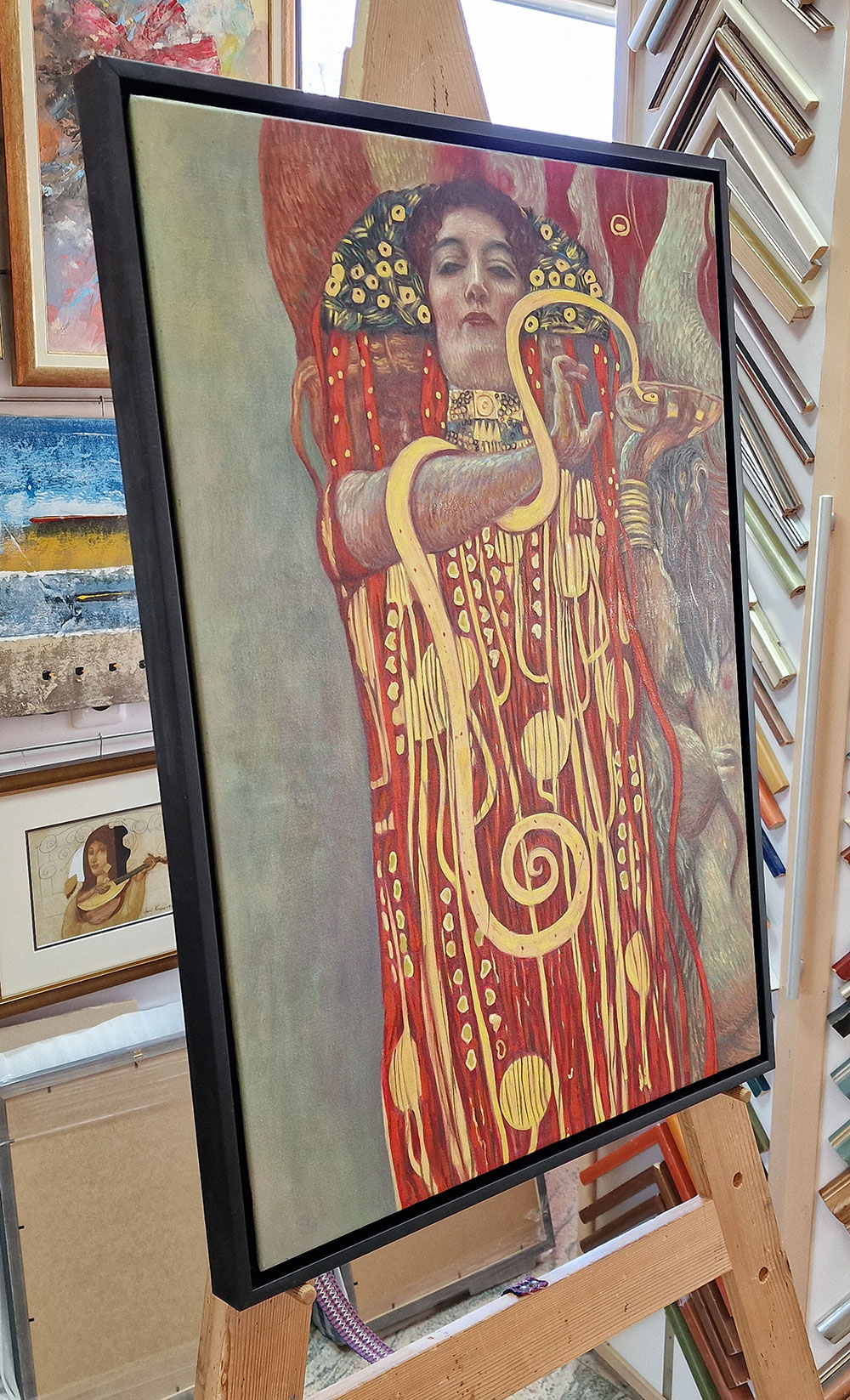
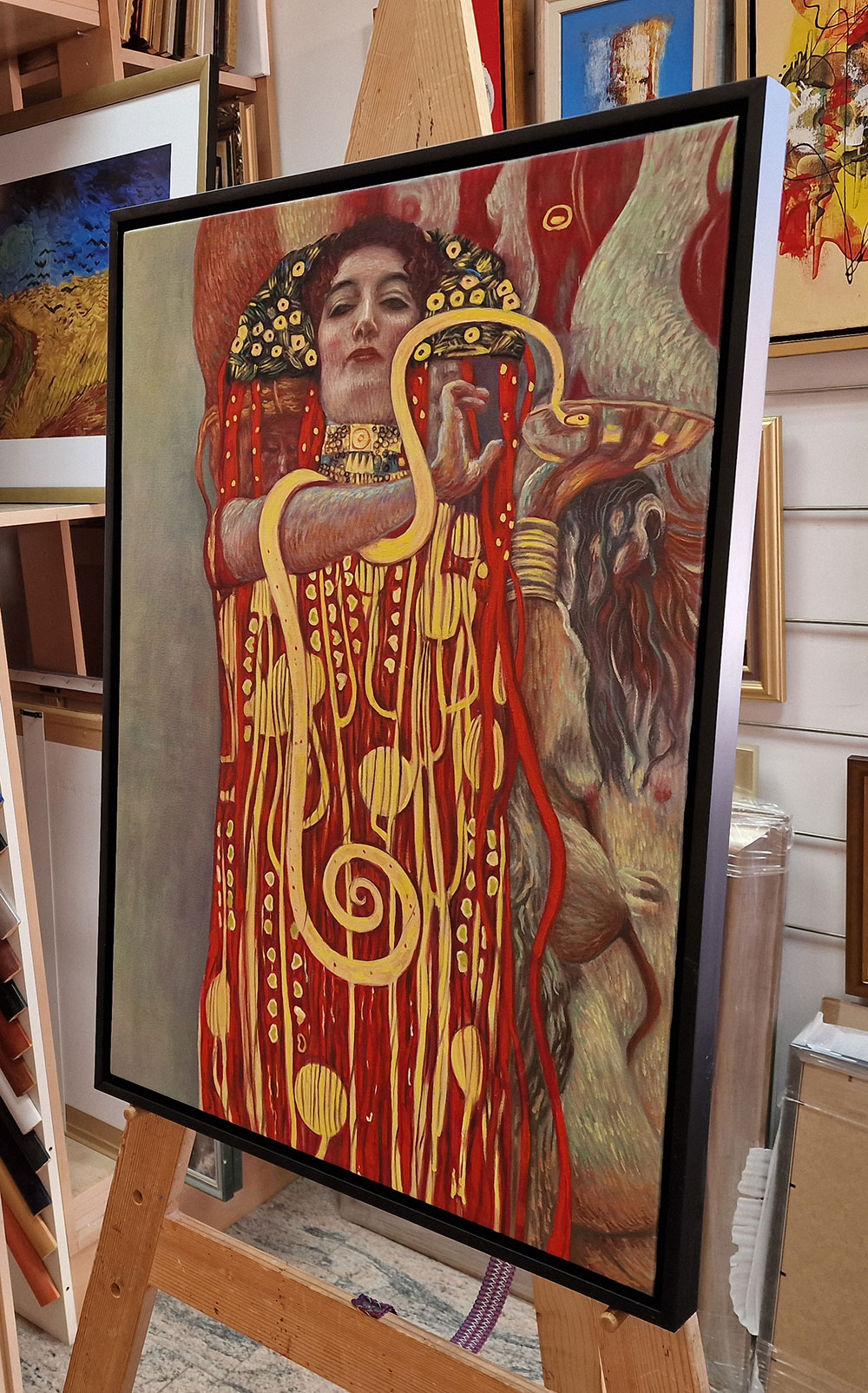
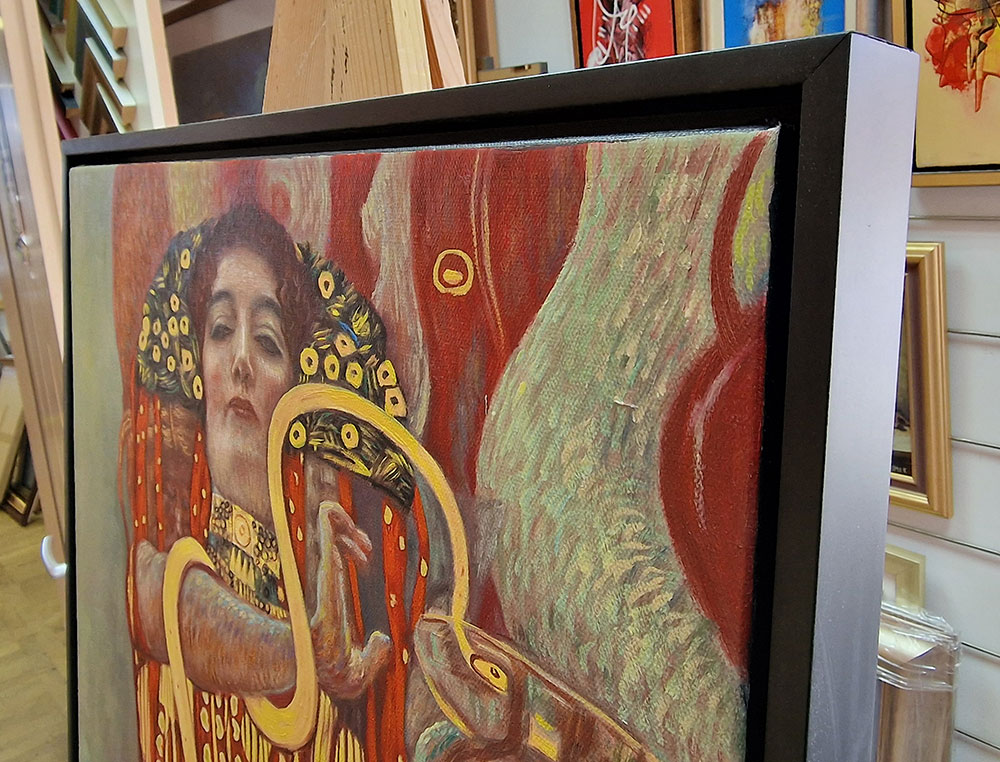
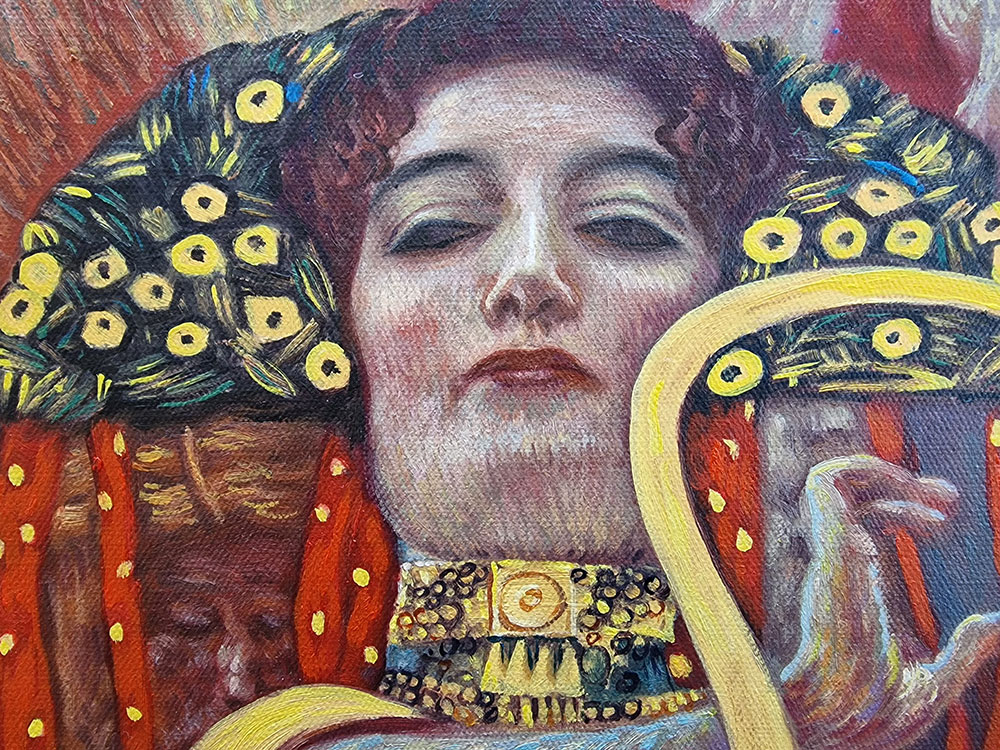
Gustav Klimt – Hygiea
| Year created: | 1897-1898 |
| Original size: | 55 cm x 72 cm |
| Painting style: | Secession |
| Original technique: | Oil on canvas |
| Located: | The original was destroyed in 1945 |
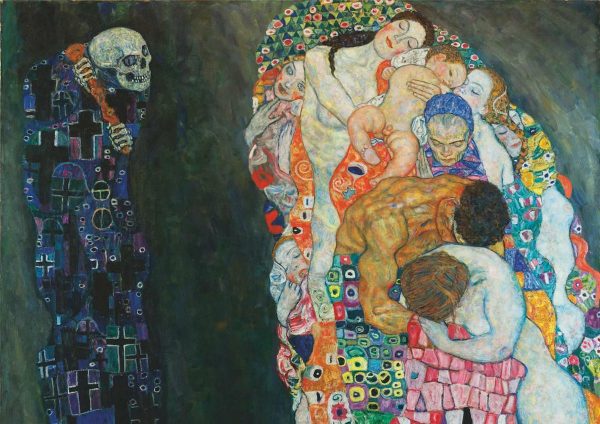
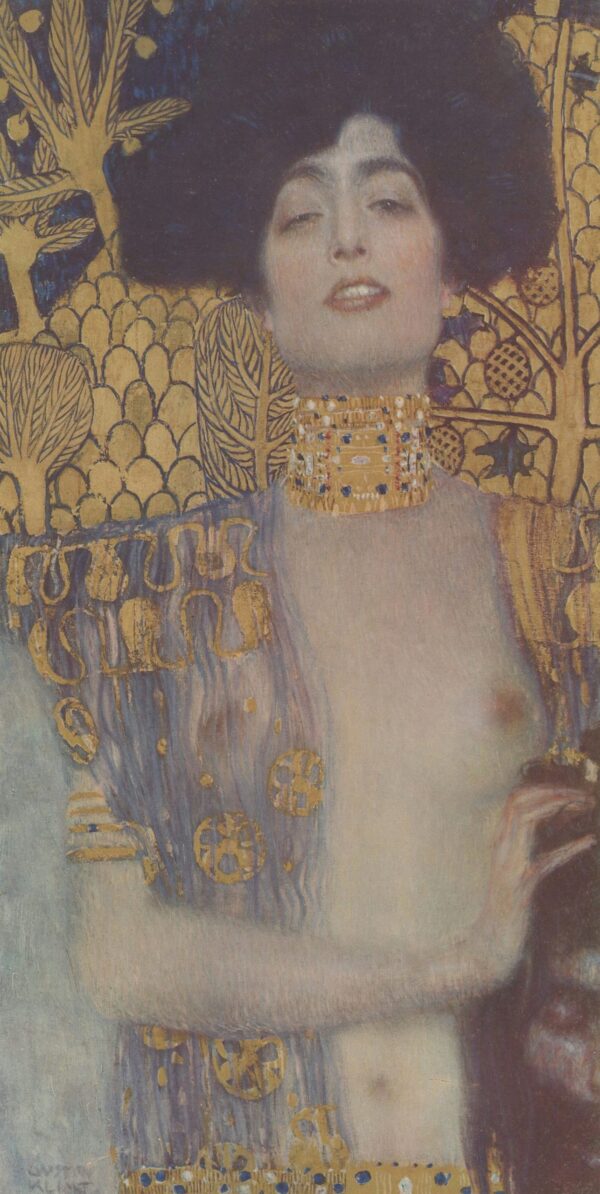
Oil on canvas Hygiea is a detail of the larger artwork Medicine. On the right side of the original painting, the painter depicted a column of naked figures representing the river of life. Next to this pillar stands a young naked woman hovering over a newborn baby – life. The skeleton in the river of life represents death. The only link between the floating woman and the river of bodies is a woman and a man’s hand in the background. At the bottom of the painting, Hygiea stands with a snake around one arm and time with water from the river Léte (river of oblivion) in the other hand, turning away from humanity. The oil on canvas Medicine was one of three works to adorn the ceiling of the great hall of the University of Vienna.The painting “Hygiea” by Gustav Klimt is a masterpiece of the Art Nouveau movement and one of the most famous and recognizable works of the Austrian painter. The painting is a depiction of Hygieia, the Greek goddess of health, cleanliness and hygiene and daughter of the god of medicine Asclepius.”Hygiea” is an oil painting on canvas. It depicts a beautiful woman sitting on a throne, holding a snake and surrounded by various objects related to health, cleanliness and hygiene. The painting is characterized by bold use of color and a unique sense of movement and emotion. The woman is painted in shades of white, gold and silver, while the background is in shades of blue and purple, giving the painting a sense of depth and movement. This painting also features the use of gold leaf, which Klimt used in many of his works.The painting is a depiction of Hygieia, the Greek goddess of health, cleanliness and hygiene. In Greek mythology, Hygiea was the daughter of the god of medicine Asclepius and was responsible for preventing disease and promoting health. It is often associated with a snake, a symbol of healing and renewal. Objects surrounding her are associated with health, cleanliness and hygiene, such as a jug of water, a bowl of fruit and a mirror. The background with intricate geometric patterns represents harmony and order in the universe. The painting evokes the feelings of beauty, health and cleanliness that are characteristic of Klimt’s art.Klimt’s painting “Hygiea” is a masterpiece of the Art Nouveau movement and is considered one of the artist’s most iconic works. It is a depiction of Hygieia, the Greek goddess of health, cleanliness and hygiene, and a symbol of the importance of health care. The painting is a must-see for art lovers and a great addition to any art collection.In short, the painting “Hygiea” by Gustav Klimt is a masterpiece of the Art Nouveau movement and one of the most famous and recognizable works of the Austrian painter. It is a depiction of Hygieia, the Greek goddess of health, cleanliness and hygiene, and a symbol of the importance of health care. The painting evokes feelings of beauty, health and cleanliness, making it a powerful and stimulating work. The use of gold leaf and intricate geometric patterns in the background add a unique and striking element to the image, making the image truly stand out. Painting is a great way to add a touch of beauty, health and cleanliness to any space, making it a great addition to any art collection.