










Description
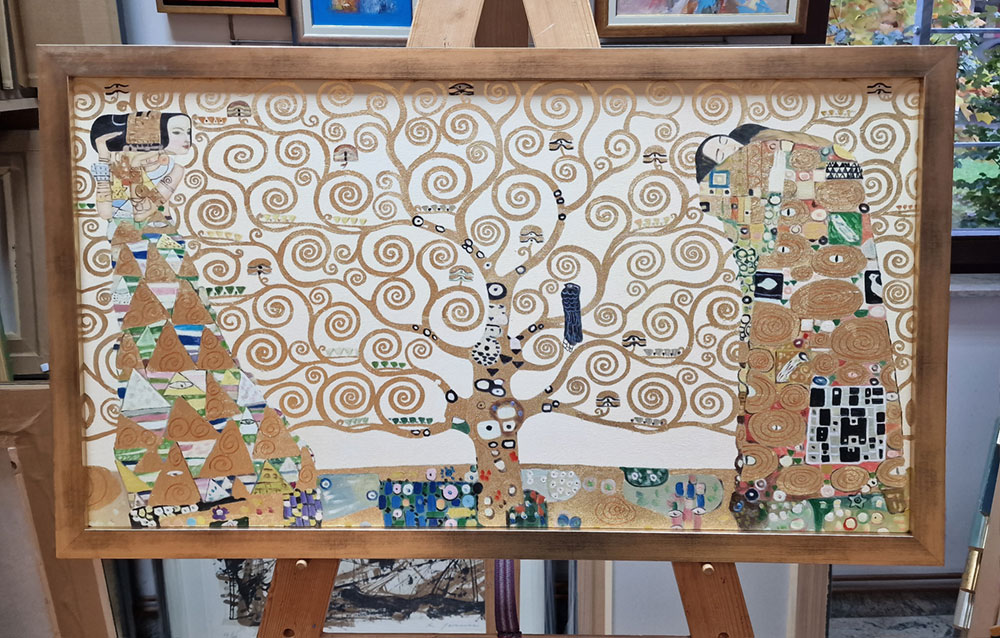
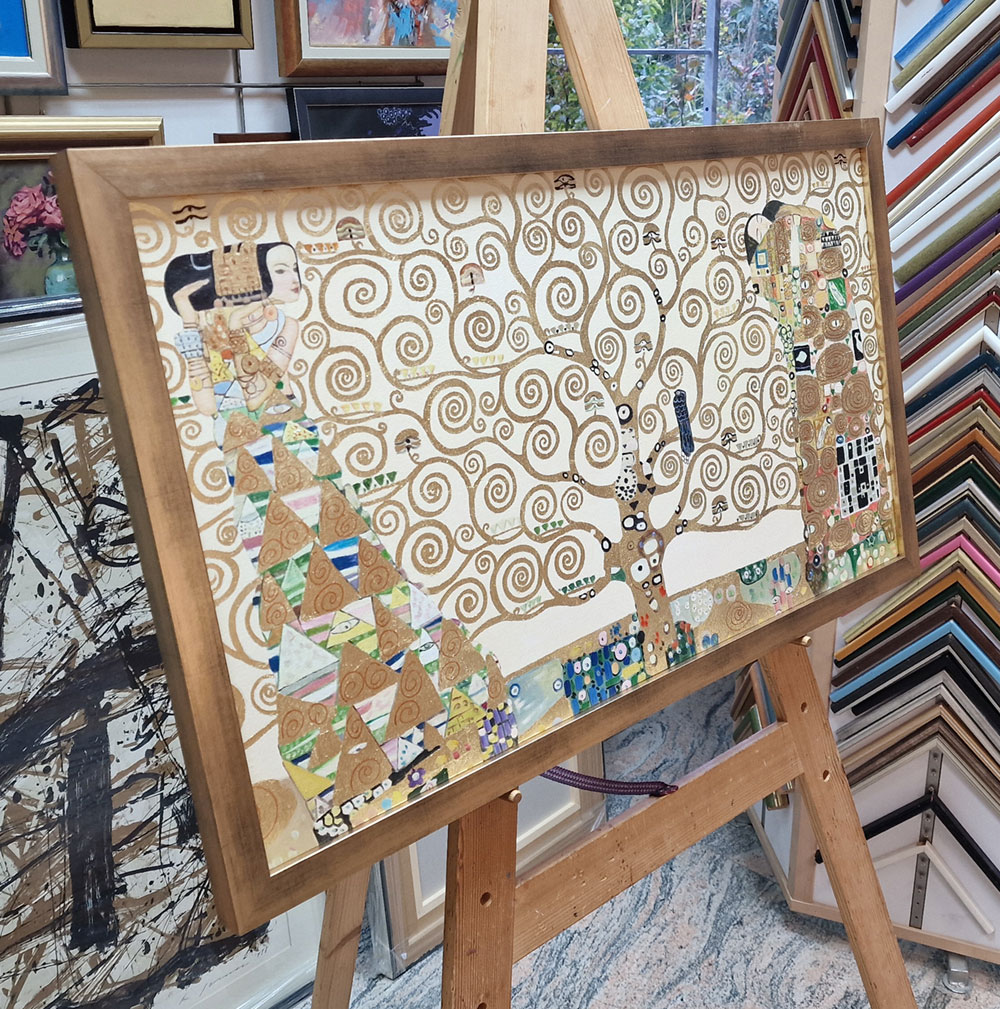
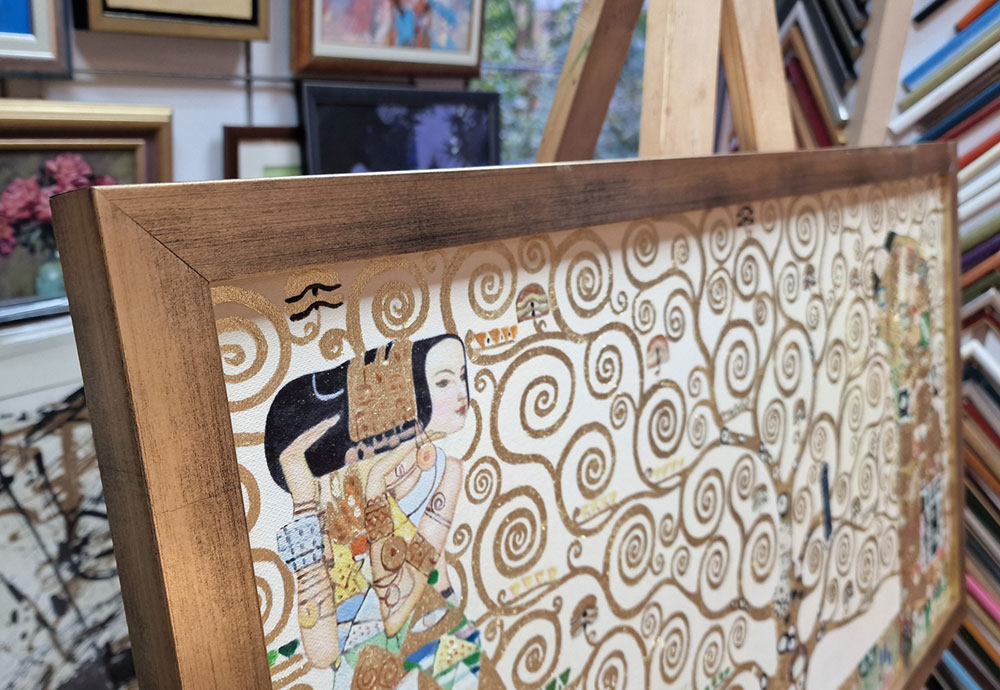
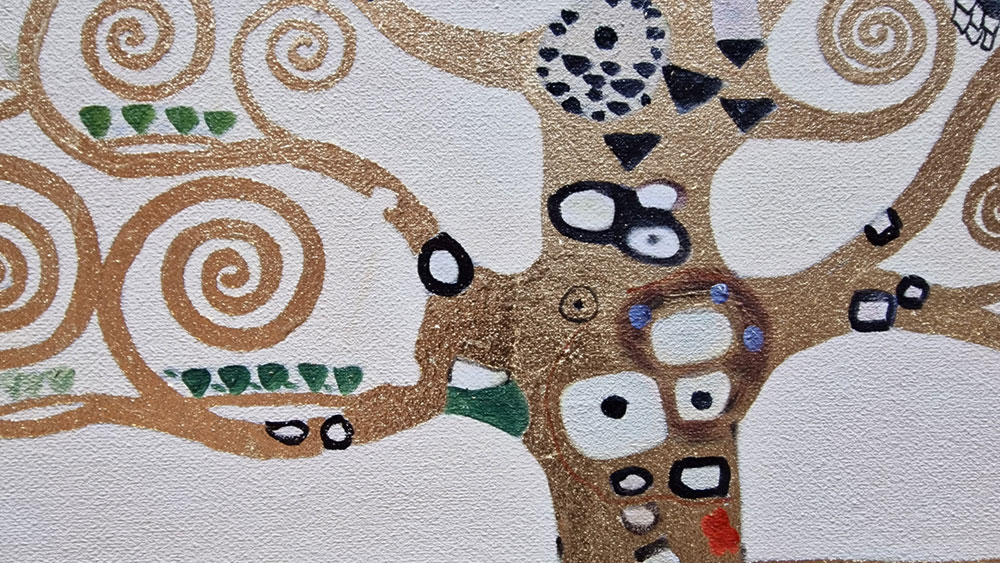


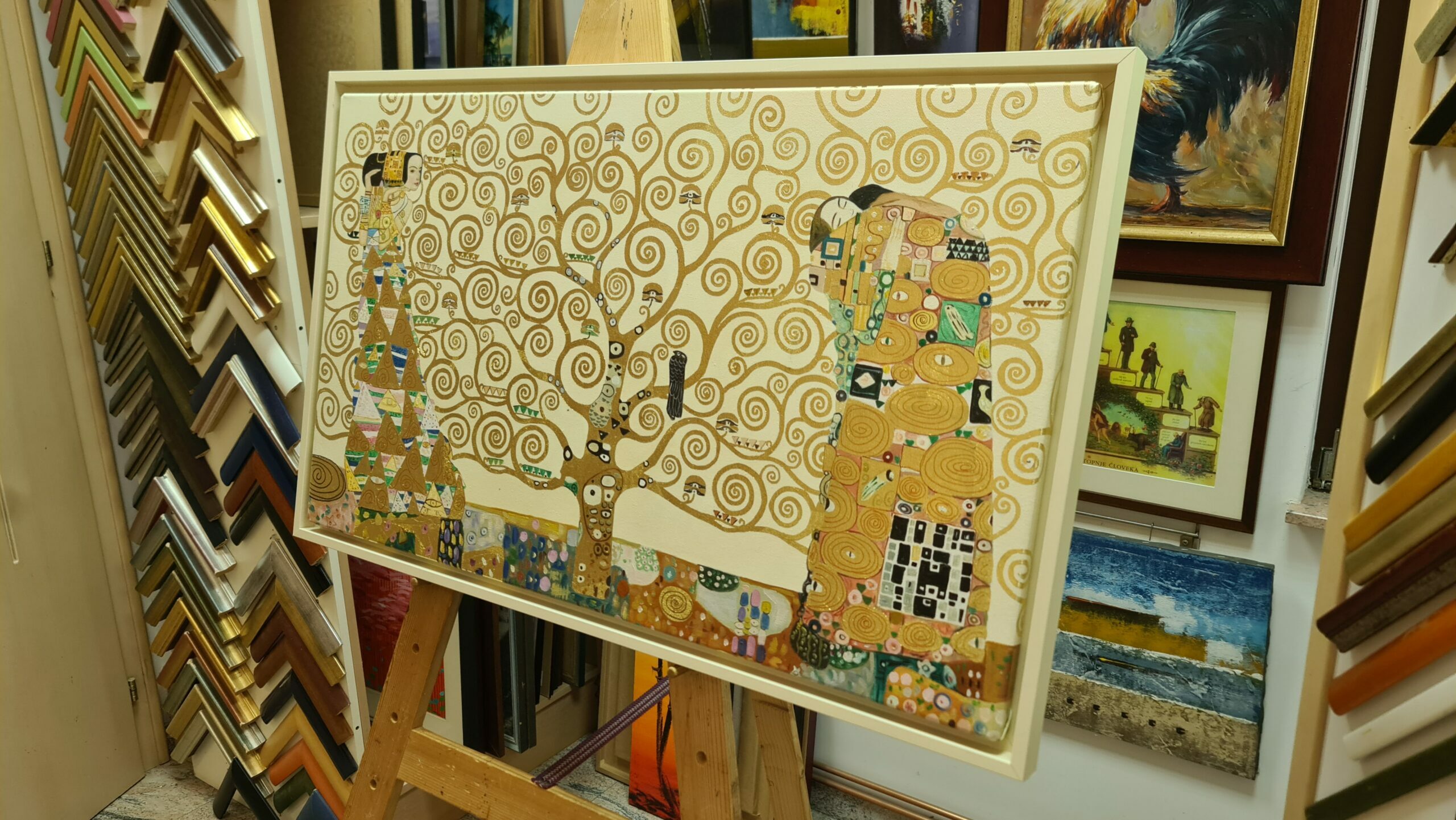


Gustav Klimt – Tree of life
| Year created: | 1909-1911 |
| Original size: | 195 x 102 cm |
| Painting style: | Secession |
| Original technique: | Fresco |
| Located: | Palace Stoclet, Brussels |
Oil on canvas Tree of Life is an important symbol in almost every culture. With branches reaching up to the sky and roots deep in the earth, it resides in the three worlds and connects the heavens, the earth and the underworld, uniting the upper and lower poles. The artwork simultaneously represents a female symbol, a source of fertility, and a male, visibly phallic symbol – the second union.
The “Tree of Life” painted in 1909 by the Austrian artist Gustav Klimt, is considered one of the artist’s most complex and enigmatic works. The picture depicts a large tree with a twisted trunk and gnarled branches, surrounded by a dense forest and shrouded in fog.The painting is an excellent example of Klimt’s Art Nouveau style, which was characterized by the use of ornate patterns, bold colors and sensual themes. The tree in the painting is depicted in a highly stylized manner, with elongated branches and a twisted trunk, giving the image an otherworldly and dreamlike quality.One of the most striking features of “Tree of Life” is its use of bold colors and intricate patterns. The picture is a riot of color, with trees, forest and mist all made up of swirling, interwoven patterns. The use of color and pattern creates a sense of movement and fluidity, which is appropriate given the painting’s theme of life and growth.The symbolism of the painting is also rich. A tree is often seen as a symbol of life, growth and connection to the earth. The twisted trunk and gnarled branches of the tree could represent the struggle and resilience of life. The dense forest surrounding the tree could symbolize the interconnectedness of all living things, and the mist enveloping the tree could represent the mystical and spiritual aspects of life.The painting was not well received by critics when it was first exhibited, but since then it has become one of Klimt’s most recognizable and celebrated works. It is currently located in the Stoclet Palace in Brussels, Belgium.All in all, “The Tree of Life” is an intricate and mysterious painting that displays the ornate patterns, bold colors, and sensuous darkness that are the hallmarks of Gustav Klimt’s art nouveau style. The use of color and pattern in the painting creates a sense of movement and fluidity, while the tree symbolizes life, growth and connection to the earth. The painting is considered one of Klimt’s most recognizable and celebrated works and is currently housed in the Stoclet Palace in Brussels, Belgium.