



Description


Mark Rothko – No.10
| Year of Creation: | 1950 |
| Original size: | 229.6 cm x 145.1 cm |
| Paint style: | Abstraction |
| Original technique: | Oil on canvas |
| Located: | New York |
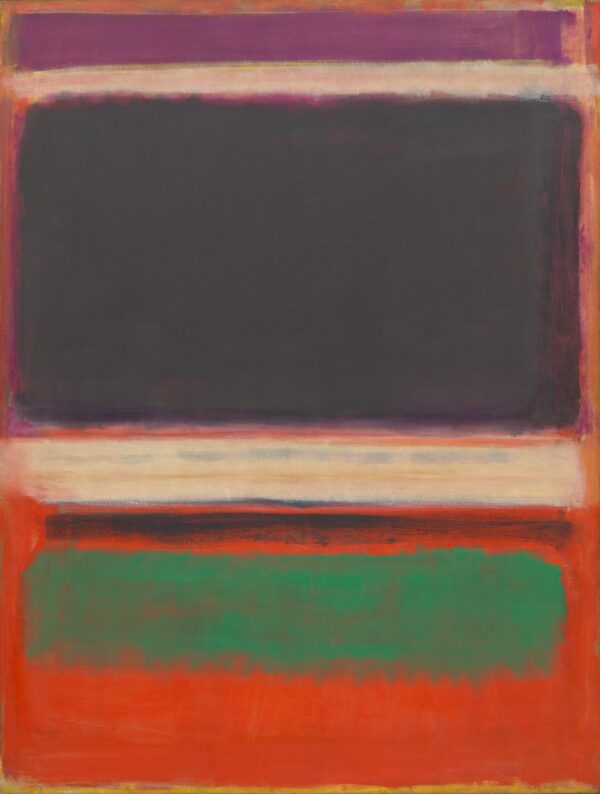
Image no. 10 is an image with a large central black rectangle surrounded by smaller white and gray rectangles. The central black rectangle is bordered on the left and right by a thin white rectangle, and above and below by a thin gray rectangle. The image is characterized by simplicity, where the focus is exclusively on the interweaving of three colors.
The painting was created in 1958 and is considered one of Rothko’s most powerful and striking works. It is a stunning work that demonstrates Rothko’s ability to use color to create a sense of depth and movement in an image. The use of a central black rectangle surrounded by white and gray rectangles creates a sense of tension and drama in the image.
Rothko’s works are known for their emotional impact and ability to evoke a sense of contemplation in the viewer. Image no. 10 is no exception, as it is strong and suggestive due to the simplicity of the composition and the use of only three colors, black, white and gray.
Image no. 10 is currently in the collection of the National Gallery of Art in Washington, USA, and is considered one of the most important works of Rothko’s career. She is still celebrated and admired by art lovers and critics alike.
In short, Mark Rothko was an American painter who was one of the leading representatives of the Color Field movement. One of his most famous works is work no. 10, also known as “Black, White and Grey”. This painting is a powerful and evocative work that demonstrates Rothko’s ability to use color to create a sense of depth and movement in an image. It is still celebrated and admired by art lovers and critics alike, and is considered one of the most important works of Rothko’s career.