

































































Description

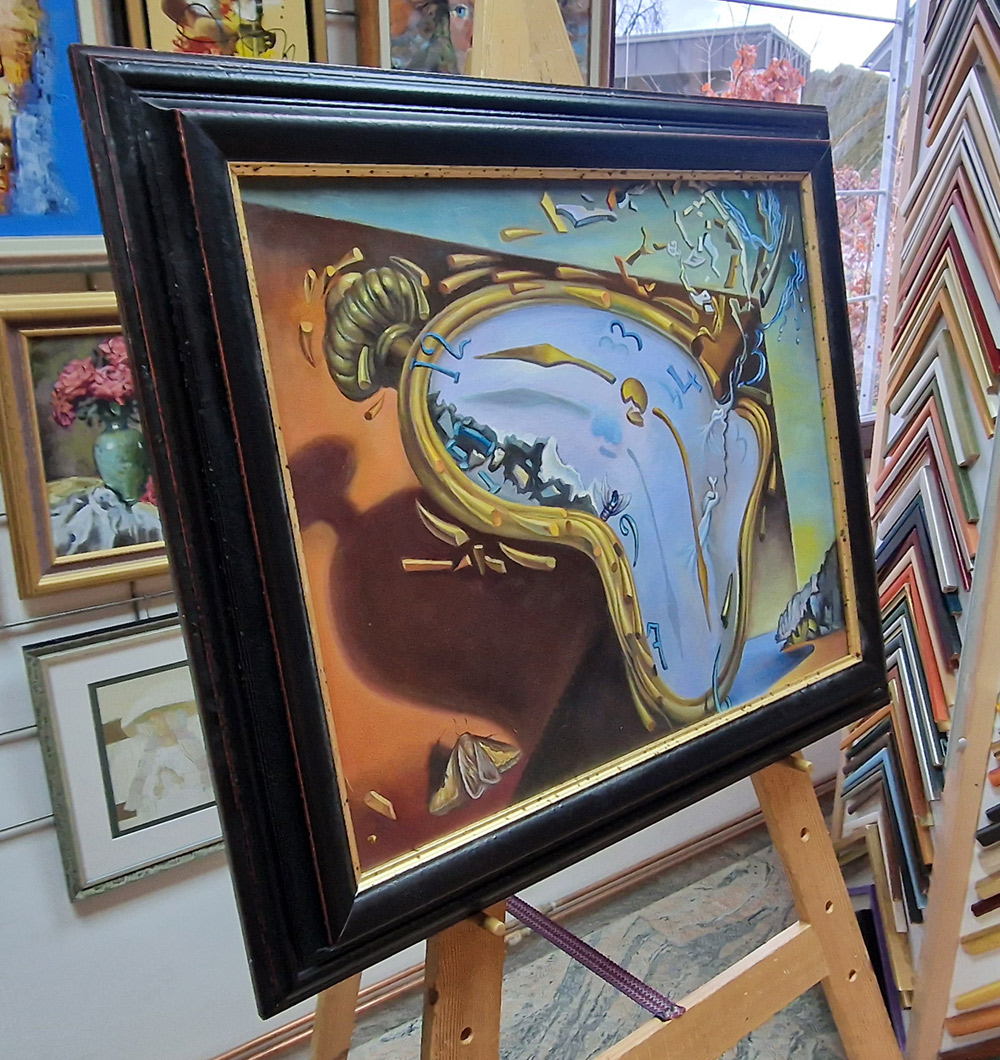
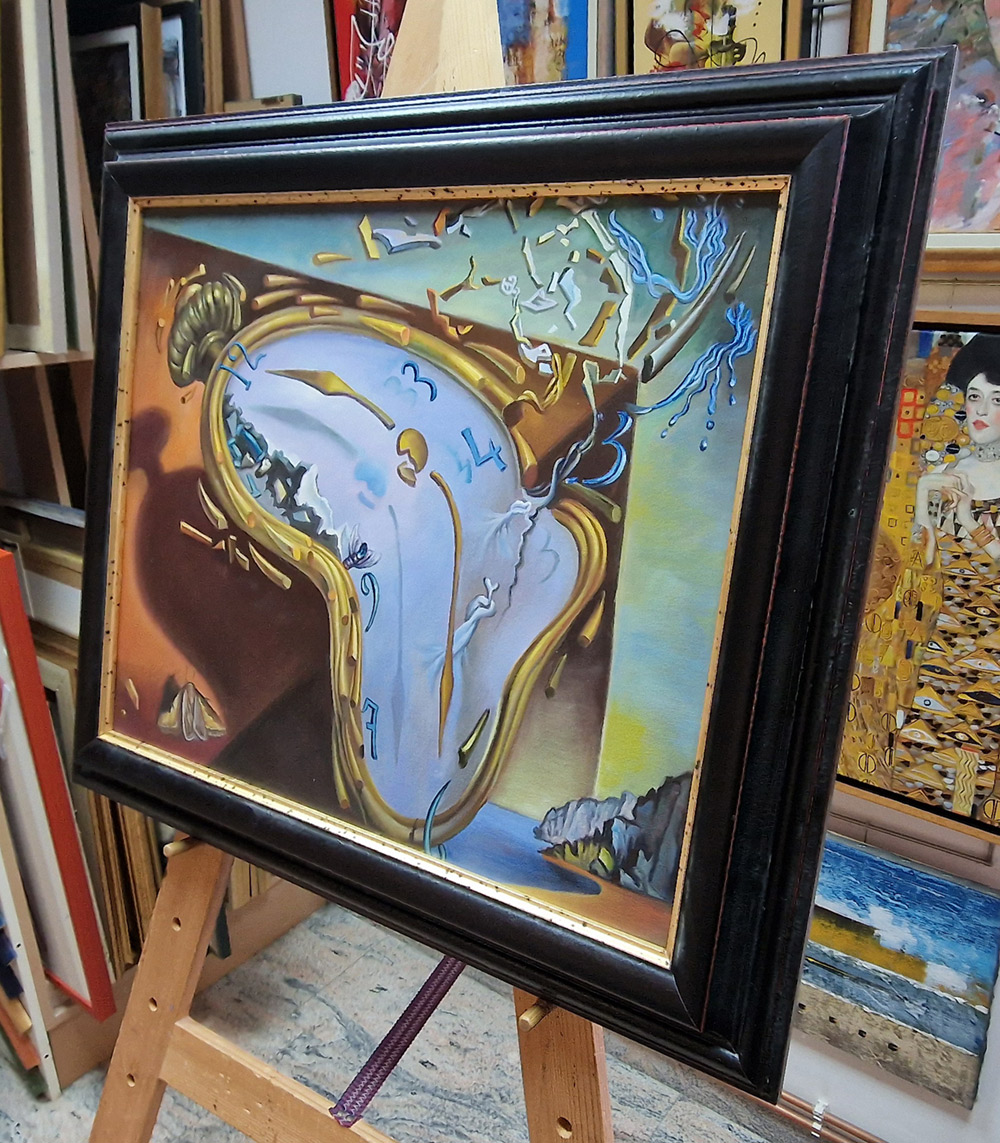

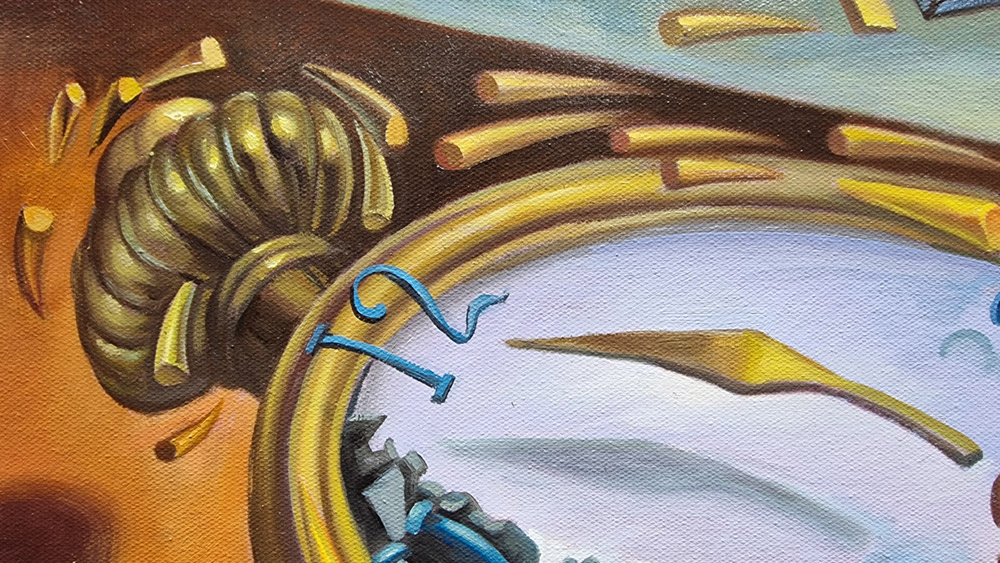
Salvador Dali – Soft Watch at the Moment of First Explosion
| Year of Creation: | 1954 |
| Original size: | 19.1 cm x 14 cm |
| Paint style: | Surrealism |
| Original technique: | Oil on canvas |
| Located: | Private collection |
Salvador Dalí’s “The Soft Clock at the Moment of the First Explosion” is a surrealist painting depicting a melting pocket watch, a frequent symbol in Dalí’s work. The painting is supposed to be a visual representation of the fluidity of time and the breakdown of the traditional conception of time. The use of melting clocks in Dalí’s art can also be understood as a metaphor for the chaos and destruction of war.
One of the most striking elements of the painting is the use of vibrant colors and bold brushstrokes that add to the dreamlike quality of the painting. The clock is depicted as dissolving and flowing, and its hands and numbers are distorted and elongated. The background is a chaotic mix of blues and greens with swirling patterns that heighten the sense of movement and change.
Dalí’s interest in Sigmund Freud’s theories about the subconscious is said to have influenced the painting. The melting of the clock is a visual representation of the disintegration of the ego and the release of repressed desires and memories.
The painting is currently housed in the Museum of Modern Art in New York. It is considered one of Dalí’s most important works and is an excellent example of his unique style and technique.
As one of the most recognizable and famous artists of the 20th century, Salvador Dali continues to delight audiences around the world with his works. His paintings are considered masterpieces of surrealism and have a lasting impact on the art world. “The Soft Clock at the Moment of the First Explosion” is a perfect example of Dalí’s ability to capture the subconscious through his art, and remains a must-see for anyone interested in Surrealism and the art of Salvador Dalí.