











Description
Wassily Kandinsky – Reciprocal Accords (Accord Réciproque)
| Year created: | 1942 |
| Original size: | 146 cm x 114 cm |
| Paint style: | Abstract Art |
| Original technique: | Oil on canvas |
| Located: | Museum of Modern Art Paris |
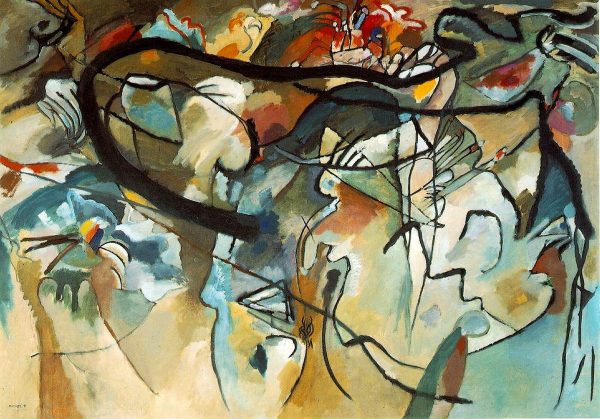
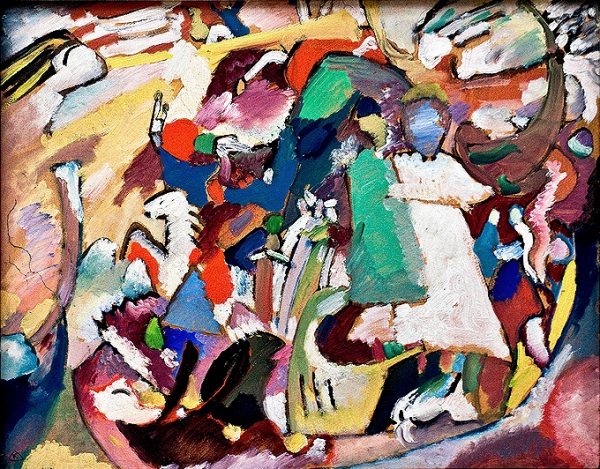
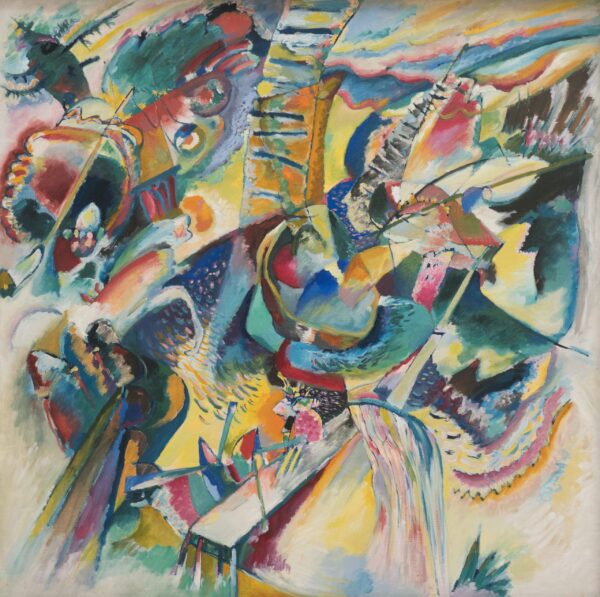
Wassily Kandinsky’s painting Accord Réciproque is a striking and dynamic painting that shows the artist’s unique use of color and form. The painting was created in 1913 and is part of Kandinsky’s “Improvisations” series, which he began creating in 1909.
One of the most striking features of this painting is the bold use of contrasting colors. The background is a deep, rich blue, while the foreground is dominated by bright red and orange shapes. The shapes in the painting are abstract and do not depict recognizable objects, but create a sense of movement and energy.
Kandinsky believed that color and form can evoke emotions in the viewer, so he strove to create a harmonious balance between them in his paintings. In the painting “Mutual Arrangements”, the balance between the cool blue background and the warm colors in the foreground creates a sense of tension and movement that is captivating and intriguing.
The title of the painting “Mutual Stacks” refers to the idea of balance and harmony in colors and shapes. The term “harmony” is also used in music, and Kandinsky often used musical terms to describe his paintings. He believed that color and form could create a similar emotional response to music, and that a painting could have its own “melody” and “harmony”.
Overall, the painting “Mutual Agreements” is a powerful and striking painting that shows Kandinsky’s unique use of color and form. Bold colors, abstract shapes and a sense of movement make this a compelling and thought-provoking piece of art. As it is part of Kandinsky’s Improvisations, it is considered a pioneering work in the development of non-representational art. Today it can be found in the Guggenheim Museum in New York.