


GUSTAV KLIMT – 10 attractions
Gustav Klimt – born June 14, 1862 – February 6, 1918
Founder of the school of painting known as the Vienna Secession. In 1883, he opened an independent studio specializing in the production of murals.
1. Gustav Klimt – Notorious Womanizer
Gustav Klimt was never married. He had many mistresses and was probably the father of 14 children. He painted a large number of portraits of women that are very erotic and sexual. To avoid personal scandal, he kept all his relationships and affairs secret. Gustav Klimt said: “I am interested in other people, especially women, as the subject of my painting.” p>


2. Gustav Klimt – Painter without a self-portrait
Almost all artists paint a self-portrait, especially if they are engaged in figurative drawing and painting, as Gustav Klimt. “I have never painted a self-portrait,” Gustav once said “I am not interested in myself”. If anyone wanted to know anything about him, he told them to look carefully at his pictures.
3. Gustav Klimt – The most expensive painting sold at auction
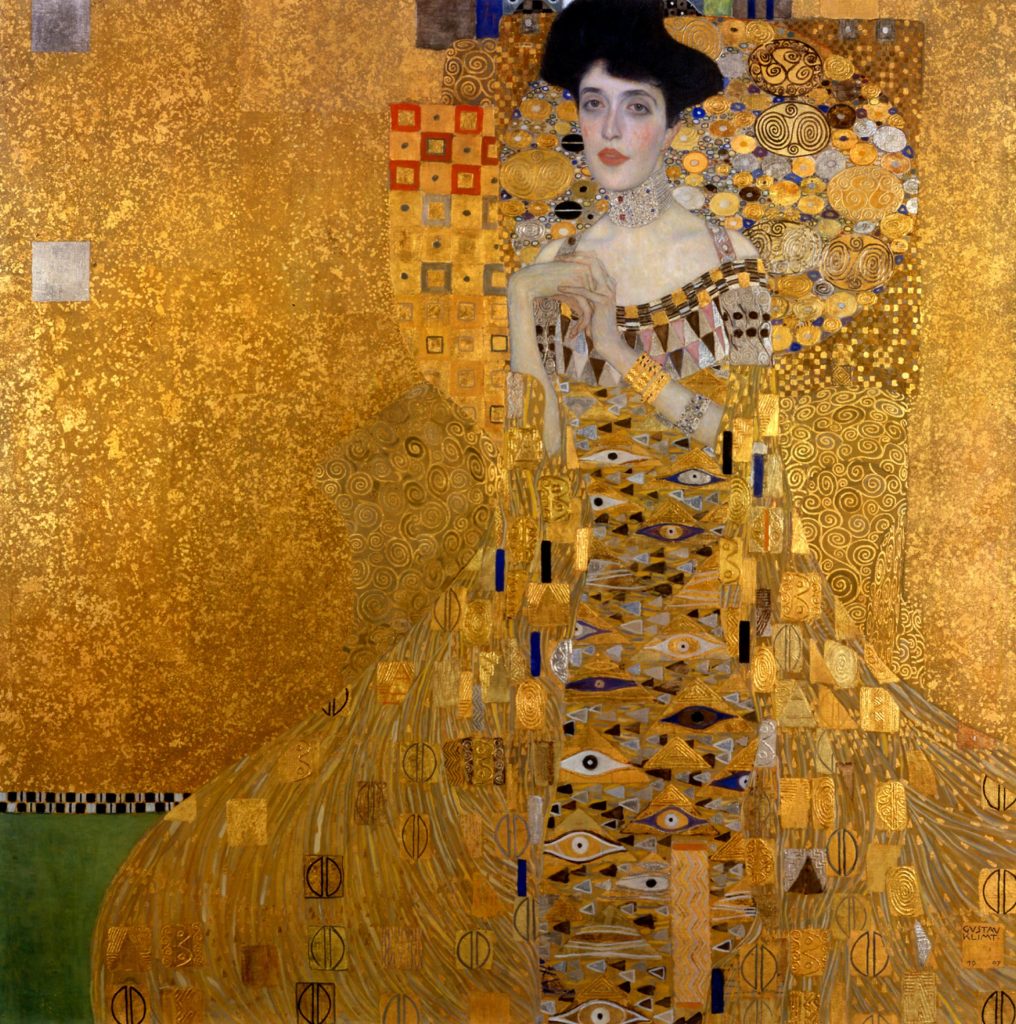
Gustav Klimt in 1907 painted a very elegant realism-inspired picture “Portrait of Adele Bloch-Bauer I” – in a long flowing dress, golden colors and surroundings. The painting was commissioned by her husband, an industrialist and sugar merchant and Jewish banker. Maria Altmann, one of Bloch-Bauer’s nieces, fought a lengthy legal battle for the painting and won ownership in 2006. In the same year, Maria sold the painting at auction for 135 million dollars, which was the highestyes price ever paid for artwork at auction. The buyer was the heir to the cosmetics empire Ronald S. Lauder.


4. Gustav Klimt – Destroyed paintings
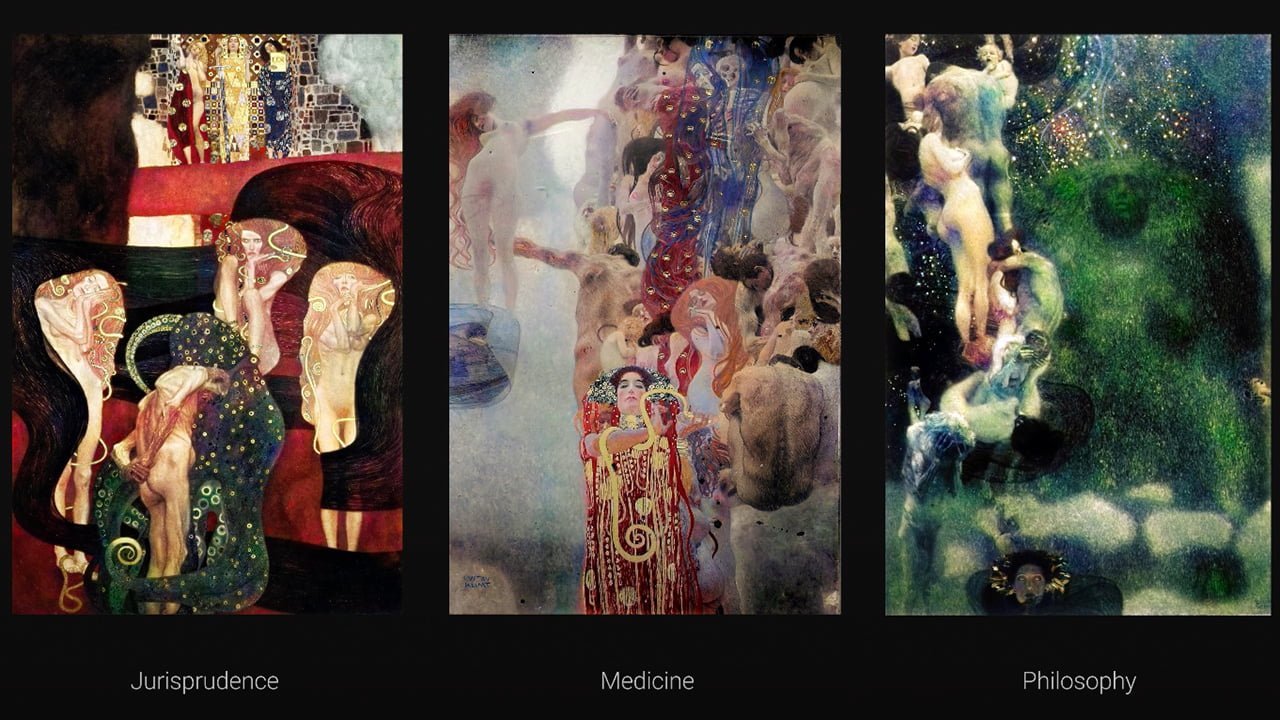
Immendorf Castle in a small Austrian village served as a safe depository for looted art during the war. It contained fourteen works by Klimt. All the paintings were destroyed and burned by the SS unit before the end of the war. Among them were the controversial paintings for the ceiling of the University of Vienna, which are preserved today only in the form of preparatory sketches and a few black-and-white photographs. However, they recently succeeded in retouching these photos with artificial intelligence and today we can admire them in color.


5. Gustav Klimt – The Golden Age of Gustav Klimt
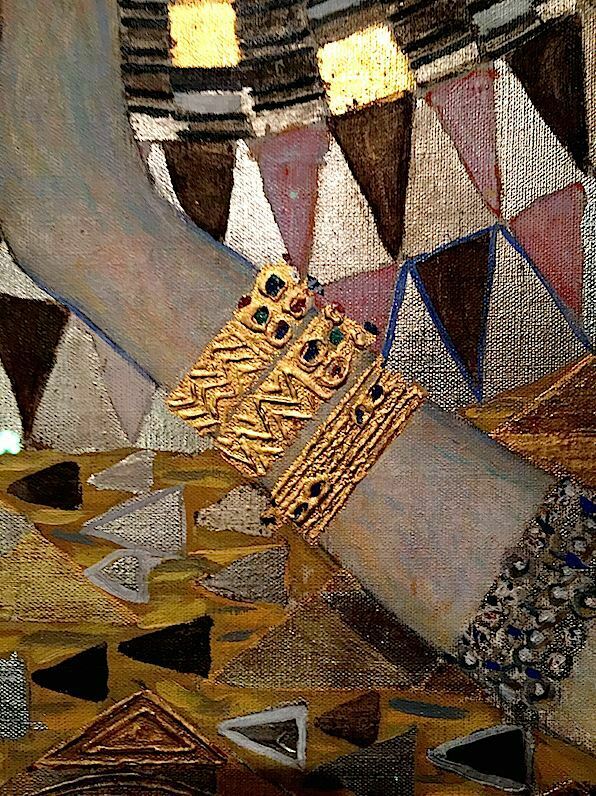
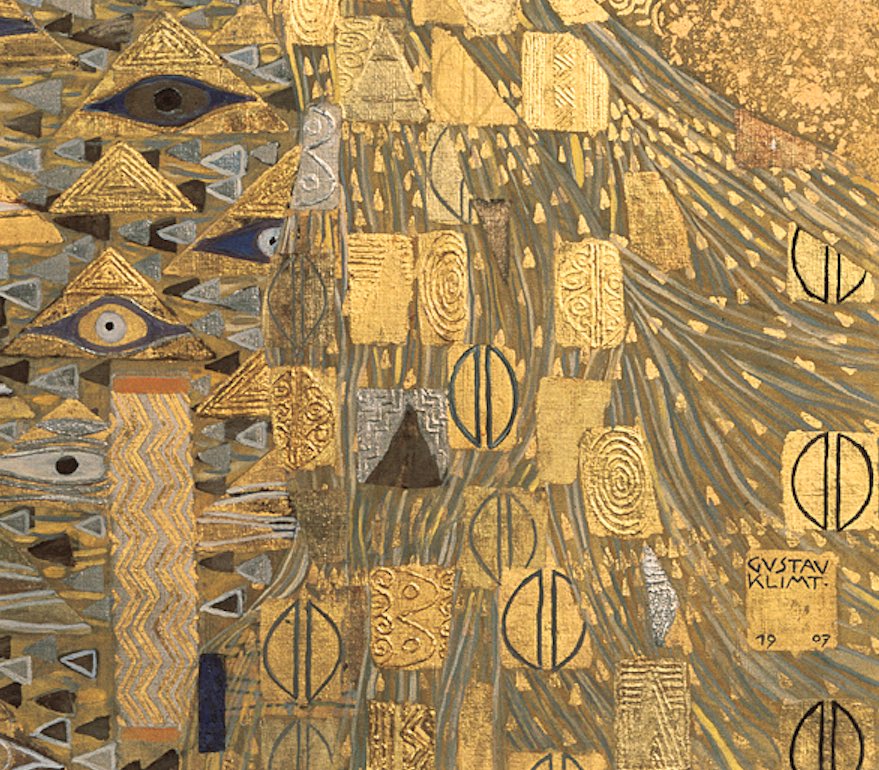
He used gold leaves in his paintings for the first time at the beginning of 1898 in the painting Pallas Athena. In the same period, he also used geometric and floral motifs. In 1903, he traveled to Ravenna, Italy and visited the Basilica of San Vitale – a church considered a masterpiece of Byzantine architecture and using mosaics. This style greatly inspired Gustav, as can be seen in his works such as “Portrait of Adele Bloch-Bauer I (1907)” and “Kiss (1907-1908)”. This golden phase didn’t come until the middle of his career, as he is best known for this golden glow in his works. Before the golden age, he painted mainly with oil paints and a lot of format paintings. His father taught him to paint with gold.
6. Gustav Klimt – Stolen paintings
When the Nazis occupied Austria during World War II, they confiscated the private property of Jewish families, including paintings. One of the pictures was “Portrait of Adele Bloch-Bauer I”. The pictures were stored in the Austrian Museum. Maria Altmann, niece of Ferdinand Bloch-Bauer, received the painting along with three other paintings through the court.
Gustav Klimt was the second of seven children in the family. His mother Anna was a talented musician who dreamed of becoming an opera singer. But due to many children and the pressures of motherhood, she was unable to realize this dream. His father Ernst was a gold engraver by profession and a skilled painter. He taught his children to paint at an early age. Gustav was so talented that at the age of 14 he received a full scholarship to the Vienna School of Arts and Crafts. His younger brother also followed him.
8. Gustav Klimt – “The Kiss” was almost not painted
Gustav Klimt wasn’t sure if he was sticking right direction in his career. In his last exhibition he was criticized and even removed for using radical motifs and materials and labeled as “pornographic”. He became panicked about his new paintings as soon as he started sketching them. He said: “Am I too old, too nervous or too stupid – something must be wrong.” This reflects very well the anxiety that “The Kiss” caused already on paper. /strong>– his most famous work.

9. Gustav Klimt – He adored the landscape
Gustav Klimt is best known for his passion for women in his paintings, but he was also interested in landscapes. The only thing , which he liked in addition to painting. Every year he went to Lake Attersee in Upper Austria and painted many landscapes. The natives of this area gave him the nickname “Waldschrat” – forest gnome. He looked at his compositions with a telescope.
10. Gustav Klimt – He started his career as an interior decorator
Gustav Klimt was the best in school and won several orders before he even graduated. Architectural painting was the focus of his studies, and his style was influenced by Hans Makart, the most historic Viennese painter at the time. Gustav, Ernst and their friend Franz founded an interior decoration studio that focused on private and public wall paintings in the famous historical style. They received many assignments and commissions, including the famous mural in Vienna’s Burgtheater and the ceiling of the Museum of Art History. Emperor Franz Joseph I recognized the quality of their works and awarded them the Golden Order of Merit.

