




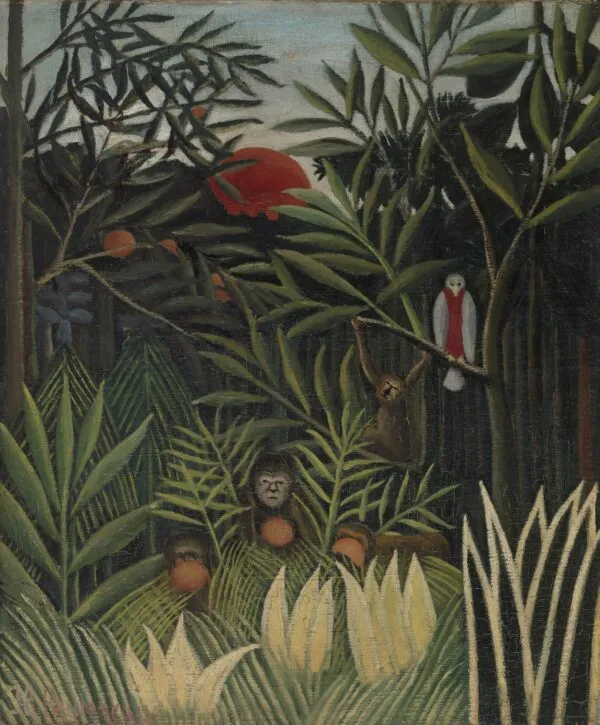
Henri Rousseau – hand-painted paintings in oil on canvas
At SvetSlik.si you can order 67 paintings by Henri Rousseau as hand-painted oil reproductions on canvas: his famous jungles with tigers, lions and monkeys, the dreamlike scenes, the Paris views and the portraits, including Tiger in a Tropical Storm, The Equatorial Jungle and The Dream. Every painting is painted to order by hand by our painters – it is not a print. Each comes in several sizes, from 50 x 35 cm up to 300 x 221 cm, or in a size you give us, and prices start at 124 €. Before dispatch we send you a photograph of the finished painting for your approval, and delivery takes 15 to 45 working days.
The jungles of a painter who never left France
Rousseau painted the best-known jungles in European art without ever seeing one. The National Gallery in London, which holds Tiger in a Tropical Storm (1891), his first jungle painting, records that his jungles are imaginary: he studied tropical plants in the Paris botanical garden, the Jardin des Plantes, watched the animals in its zoo, and worked from mounted specimens and illustrated magazines. That is why his animals are exact in every detail and strange as a whole, and why every leaf in the thicket is painted as sharply as the one in front of it.
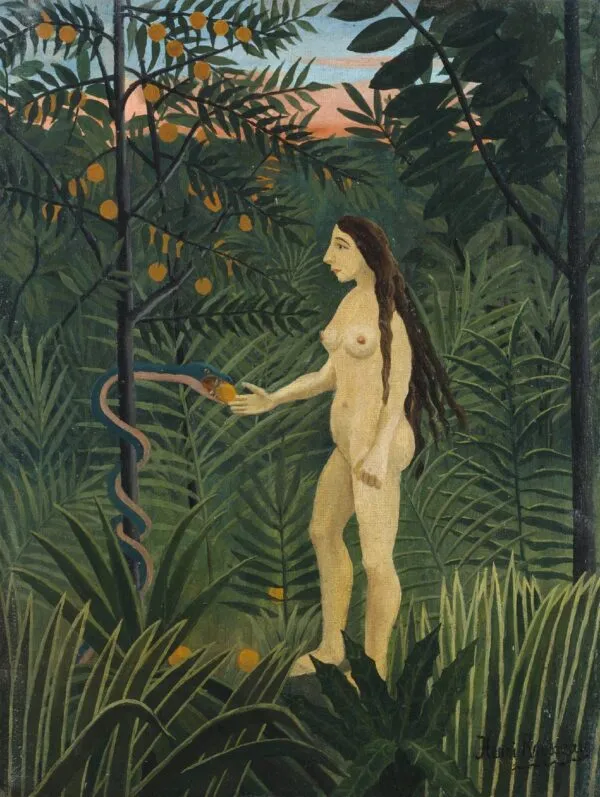
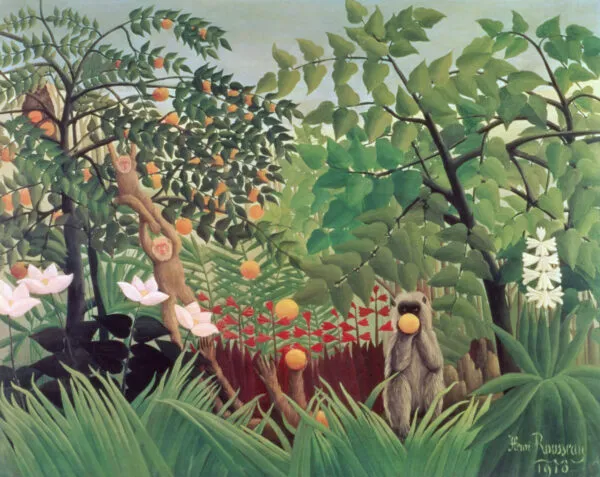
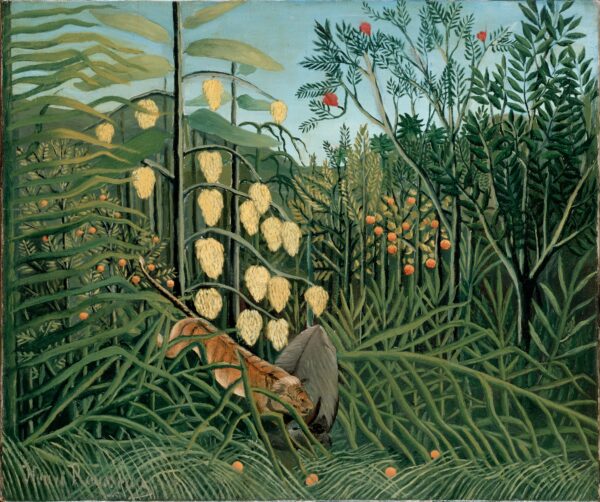
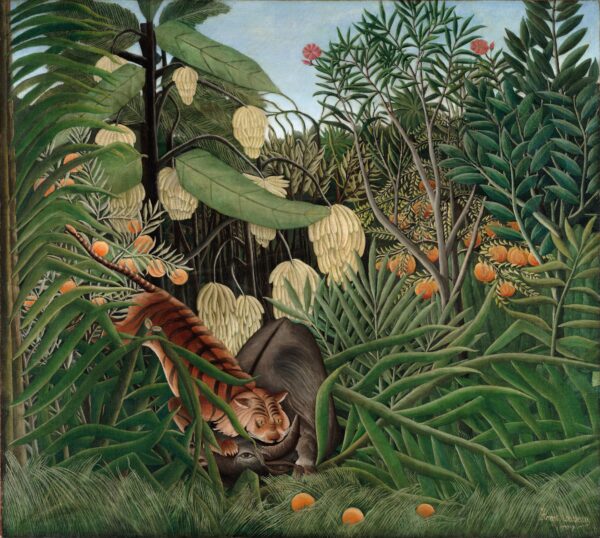
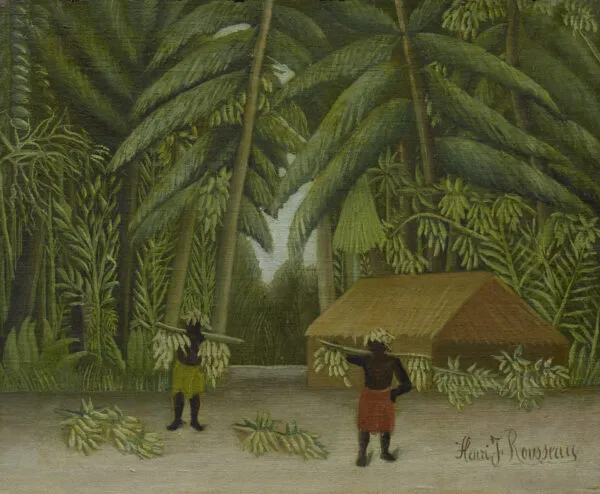
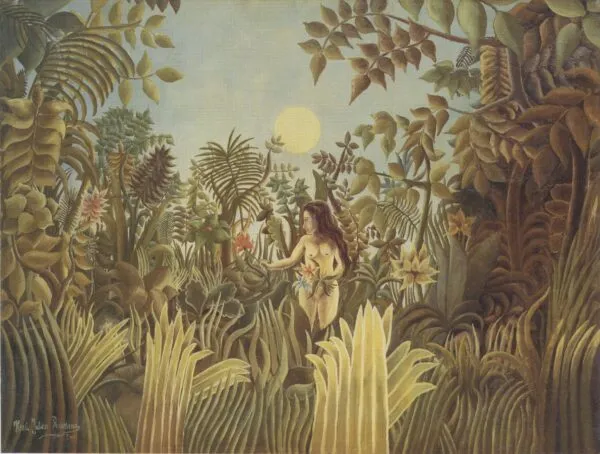
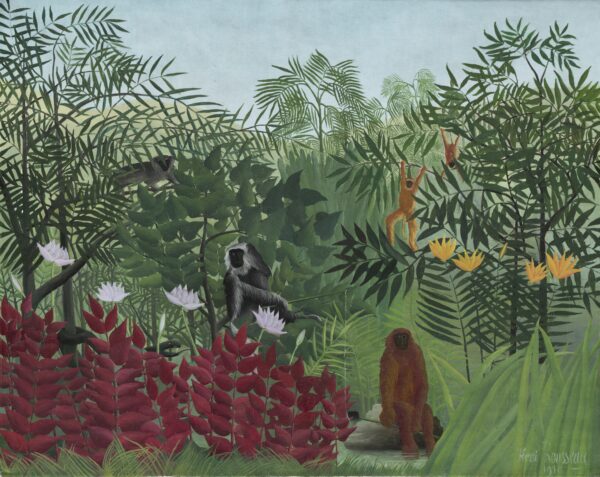
Among our jungle paintings are The Equatorial Jungle, Virgin Forest at Sunset, Monkeys and Parrot in the Virgin Forest, The Waterfall, Woman Walking in an Exotic Forest, Banana Harvest and Eve in the Garden of Eden, and the dramatic animal scenes The Hungry Lion Throws Itself on the Antelope, The Repast of the Lion, Scouts Attacked by a Tiger and Fight between a Tiger and a Buffalo. The Hungry Lion Throws Itself on the Antelope hung in 1905 at the Salon d’Automne, in the same exhibition where the Fauves first caused a scandal.
The Dream, The Snake Charmer and other visions
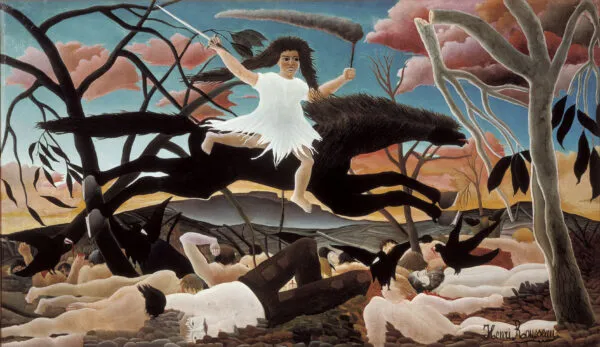
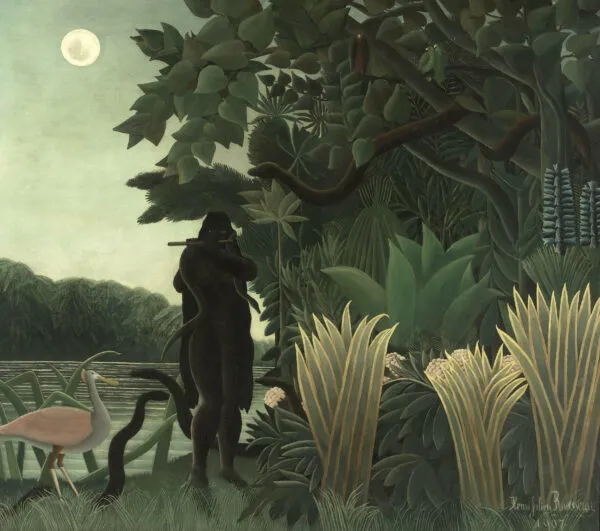
The Dream (1910) is his last completed painting and his largest: a woman on a red sofa lies in the middle of a moonlit jungle, among lions, birds and a snake charmer playing a flute. The Snake Charmer (1907) was painted for the mother of the painter Robert Delaunay: a dark figure plays to the snakes on a riverbank under the moon. A Carnival Evening (1886) was among the paintings he showed at his first Salon des Indépendants, and La Guerre (1894) is a large allegory of war riding over the dead.
Paris, everyday life and portraits
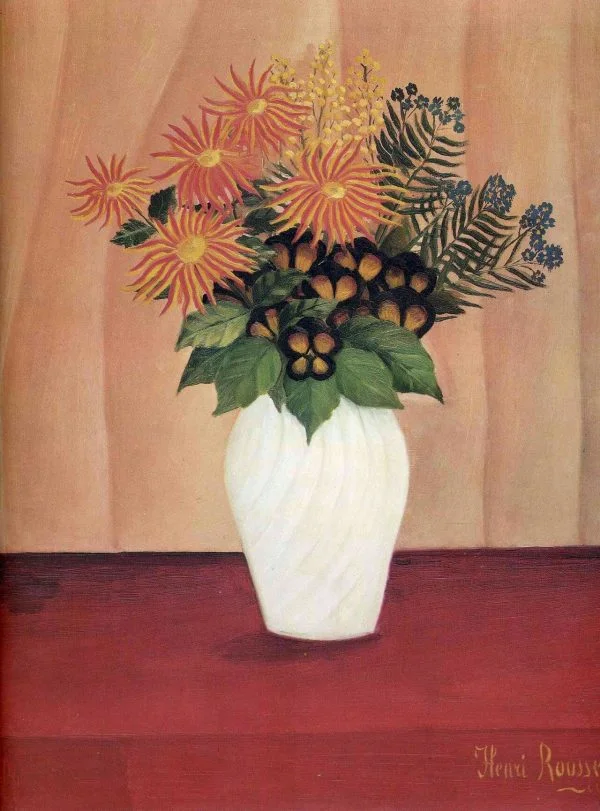
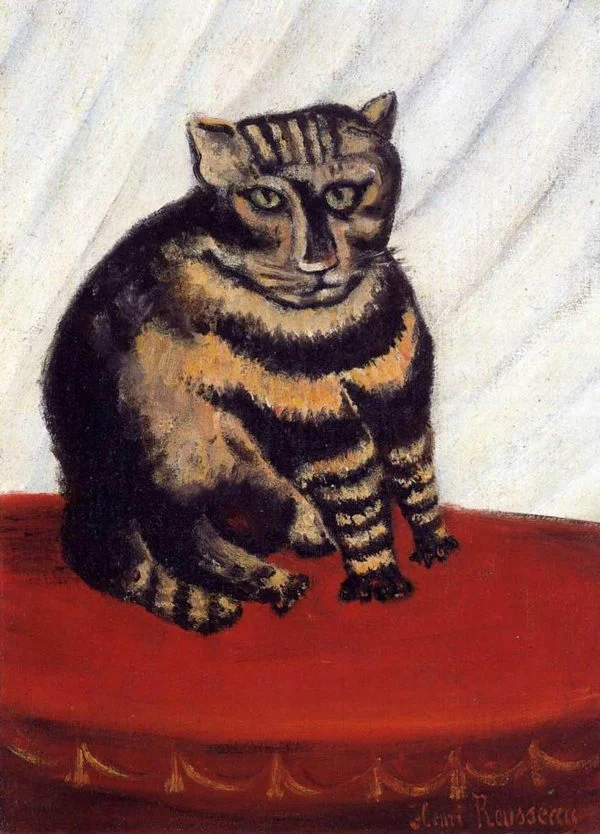
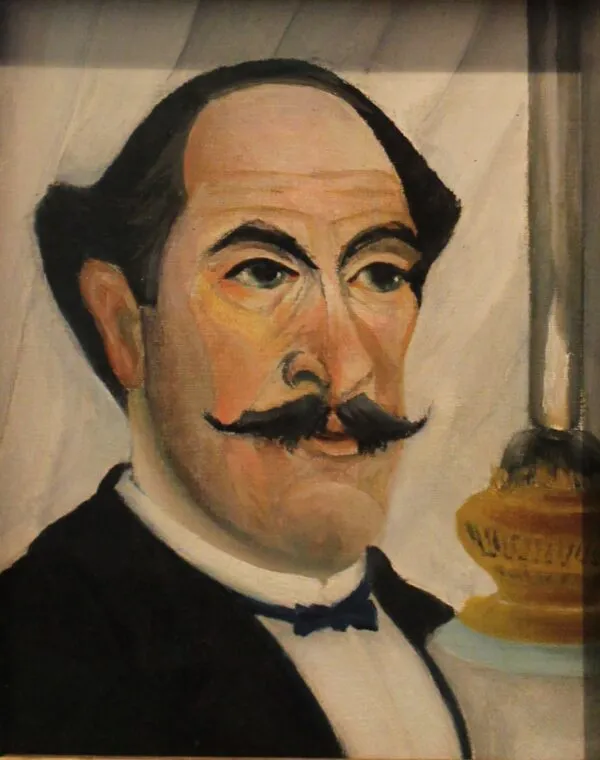
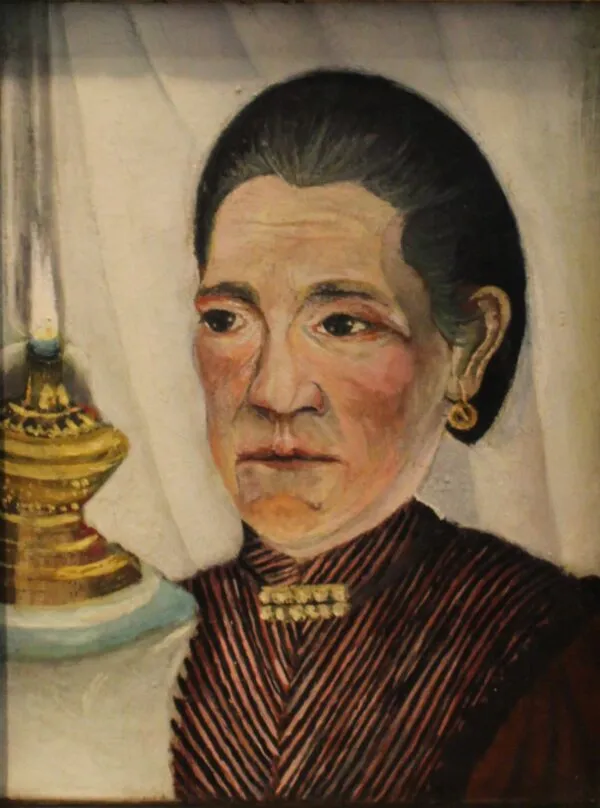
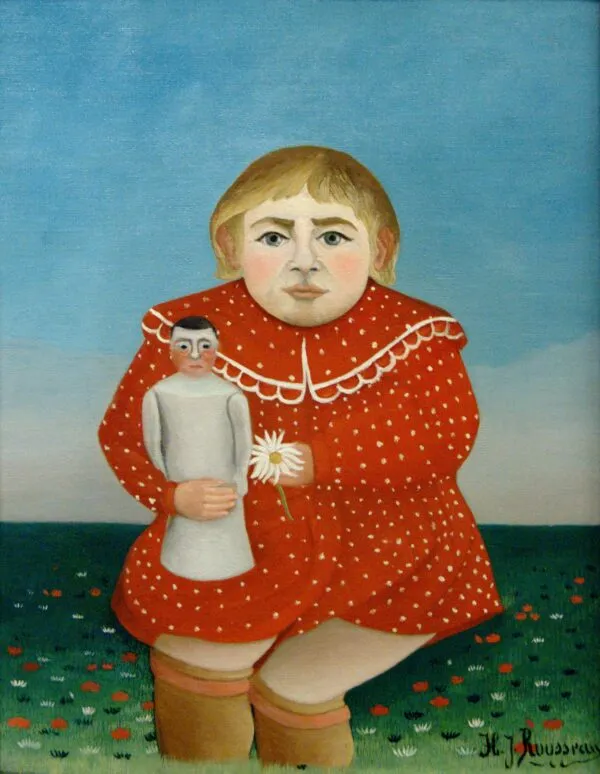
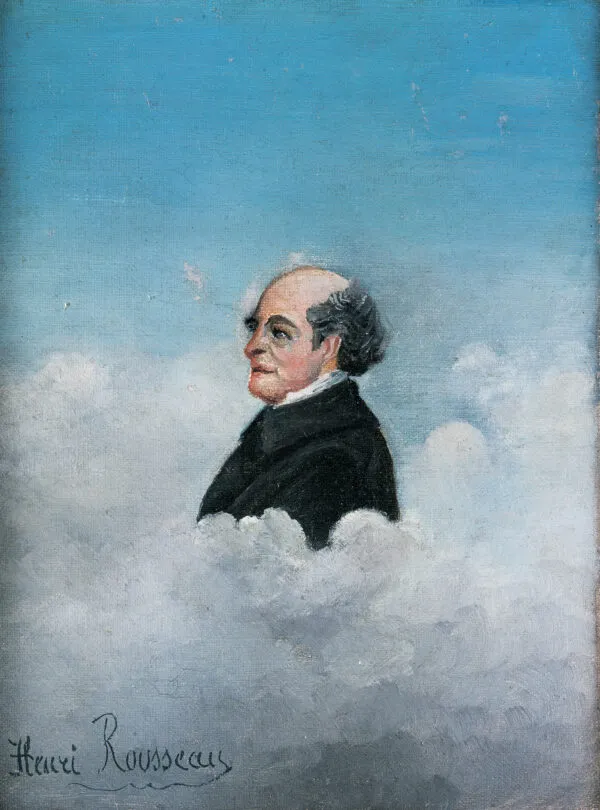
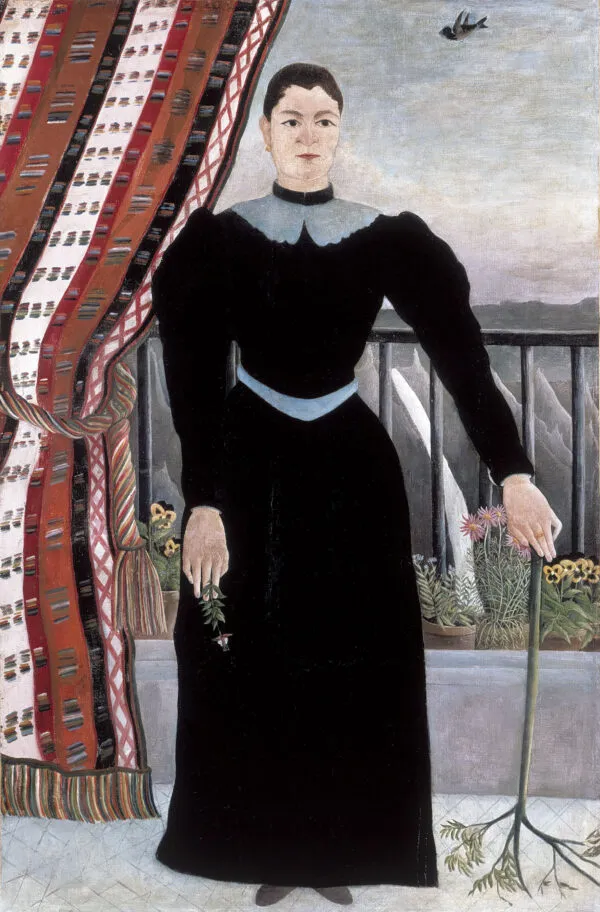
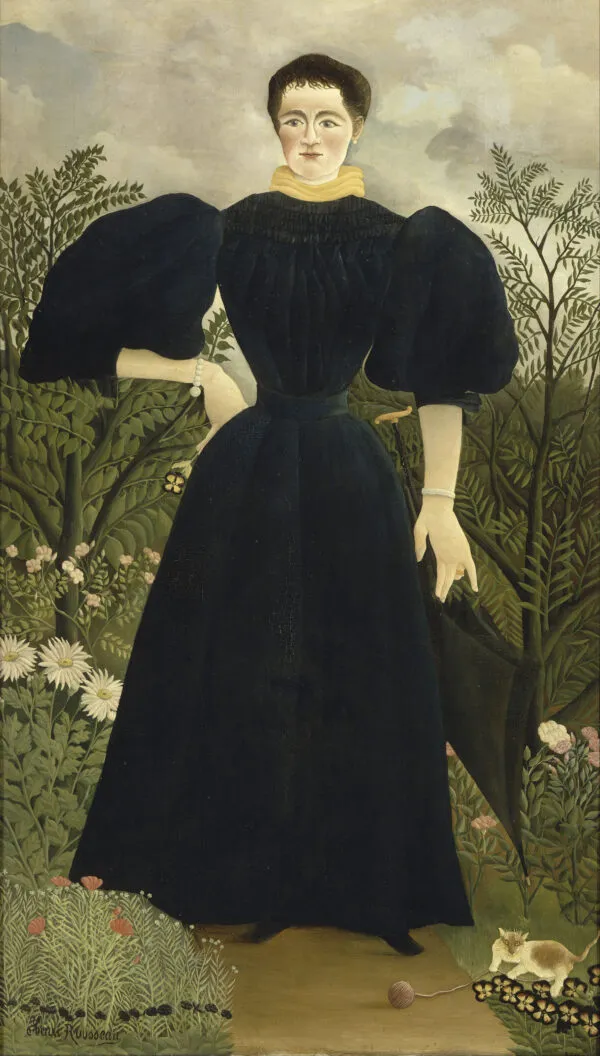
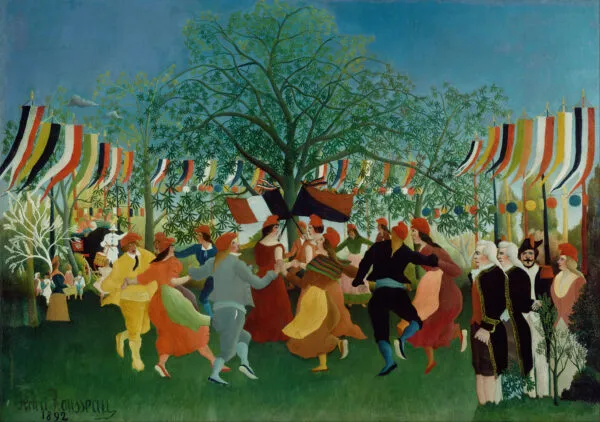
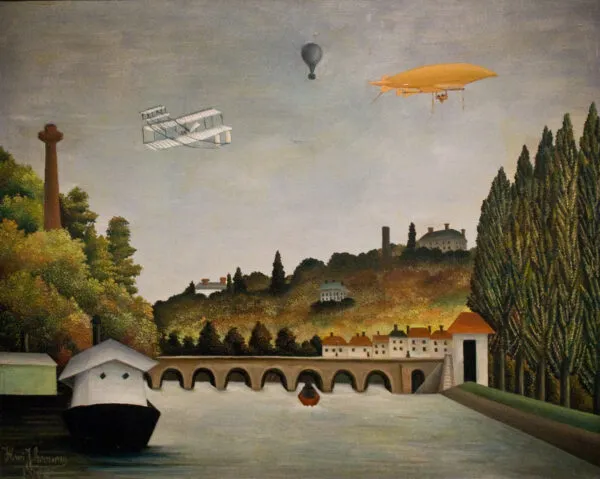
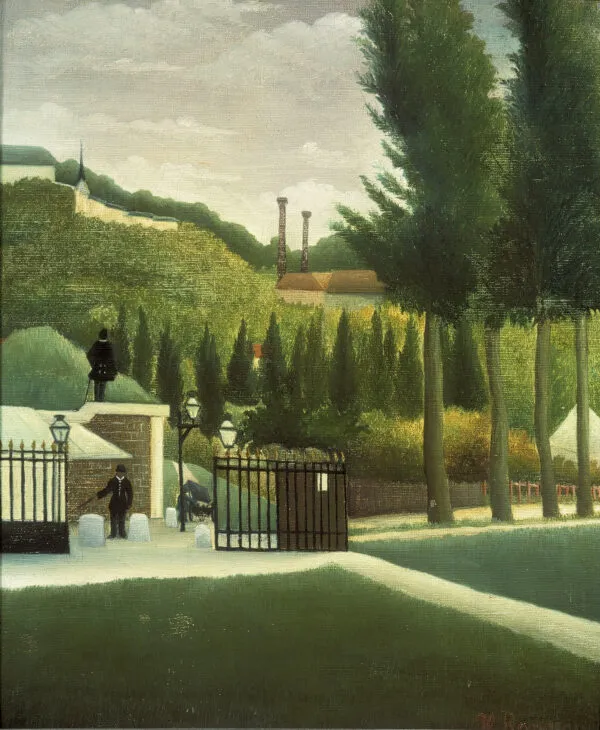
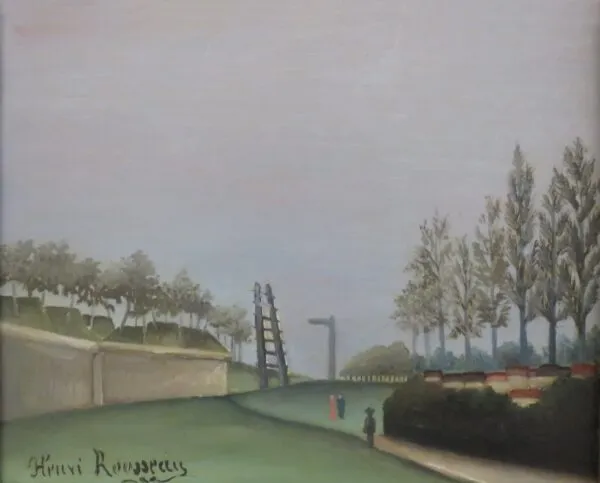
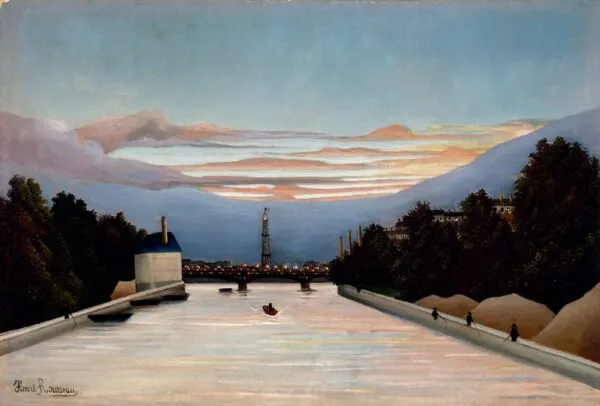
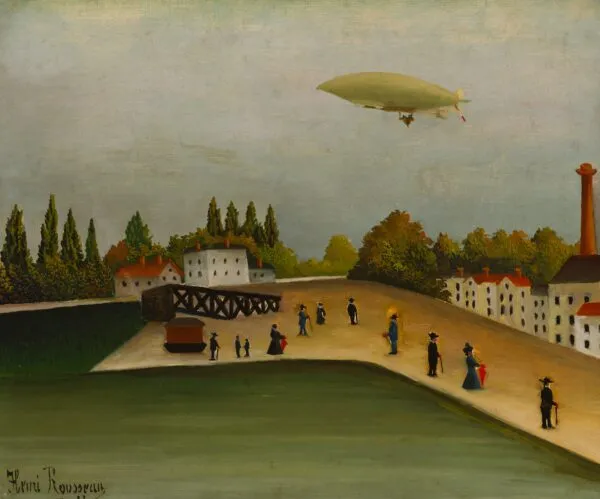
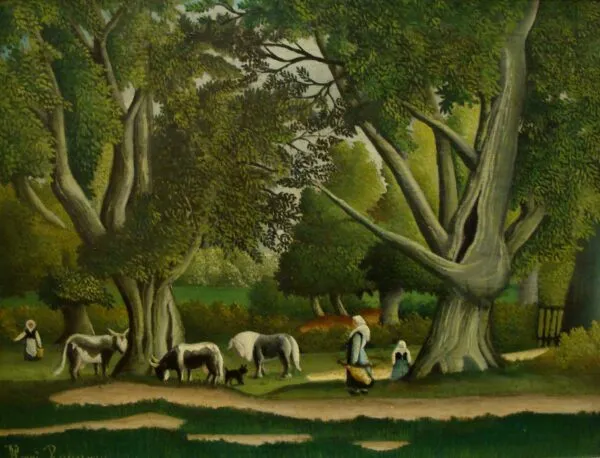
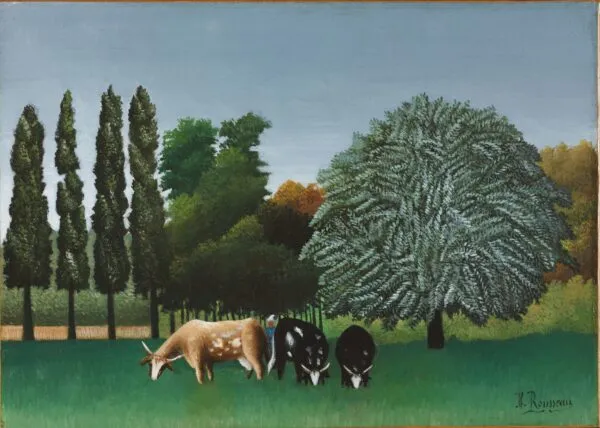
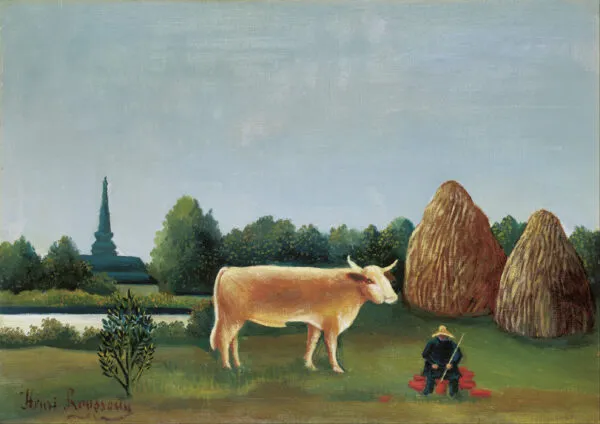
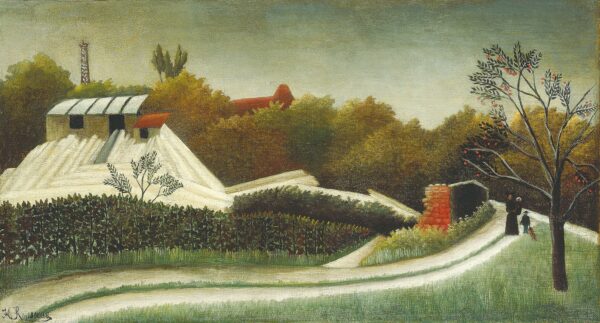
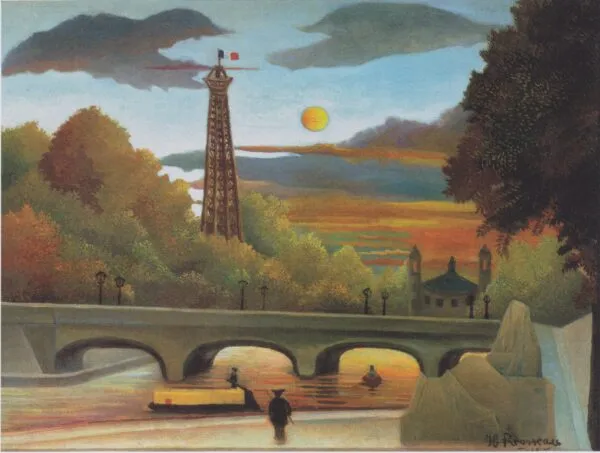
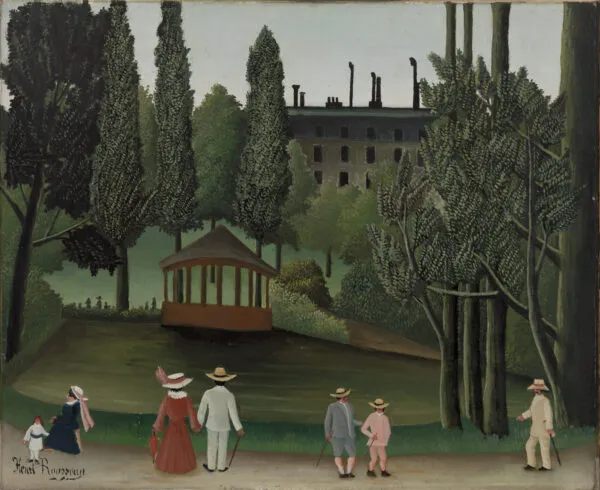
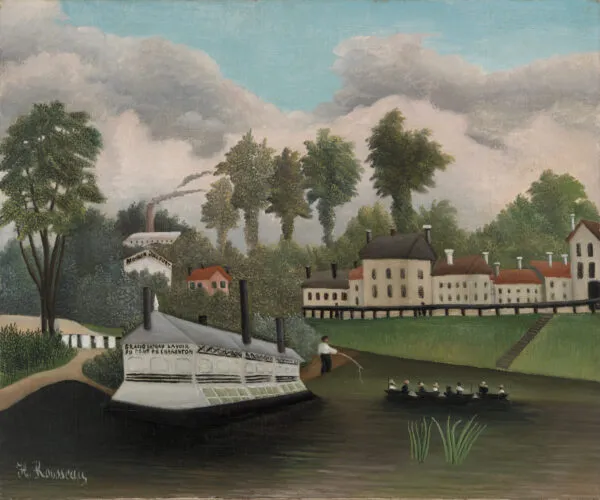
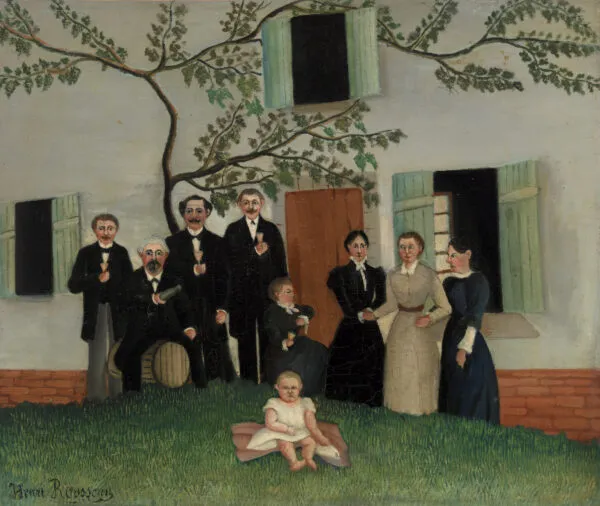
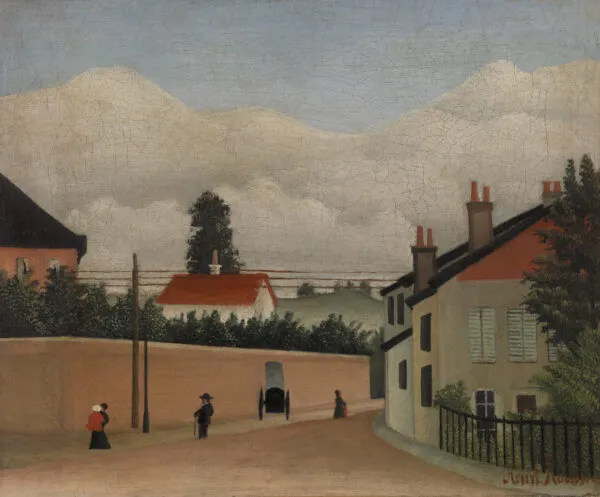
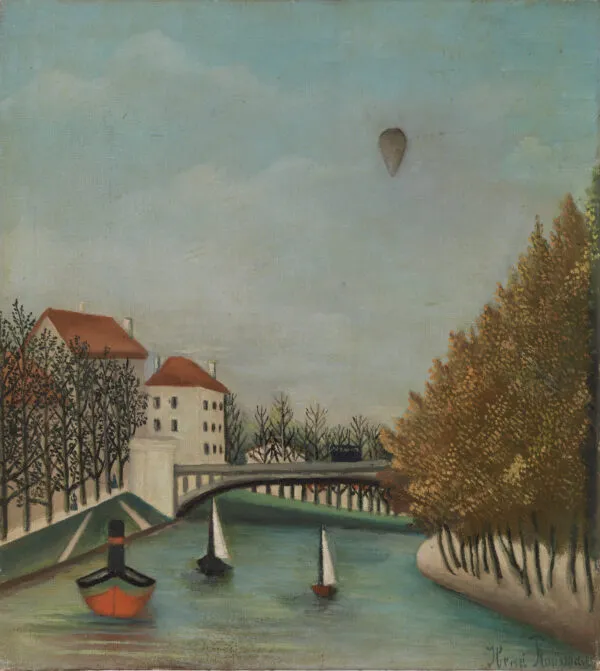
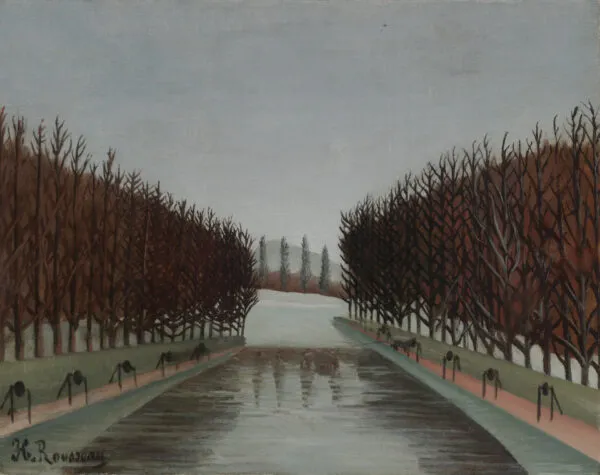
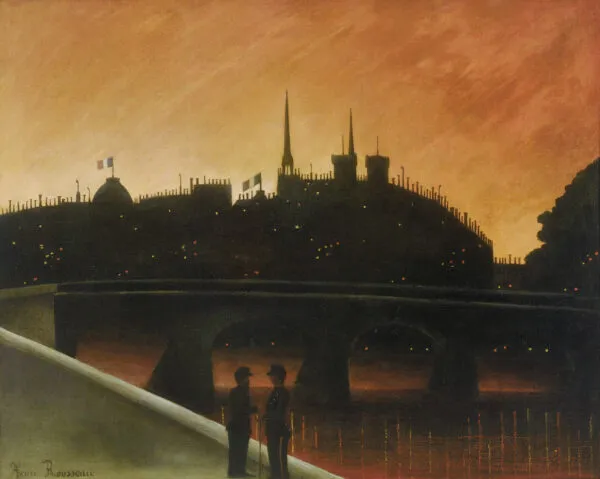
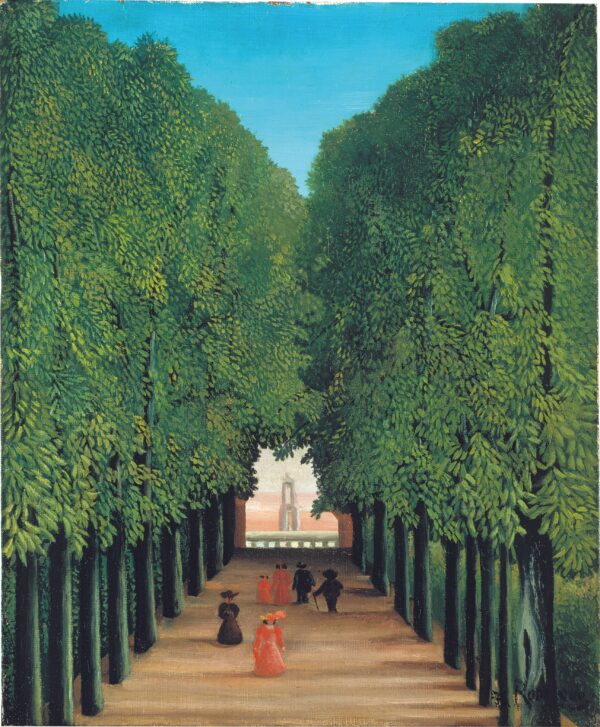
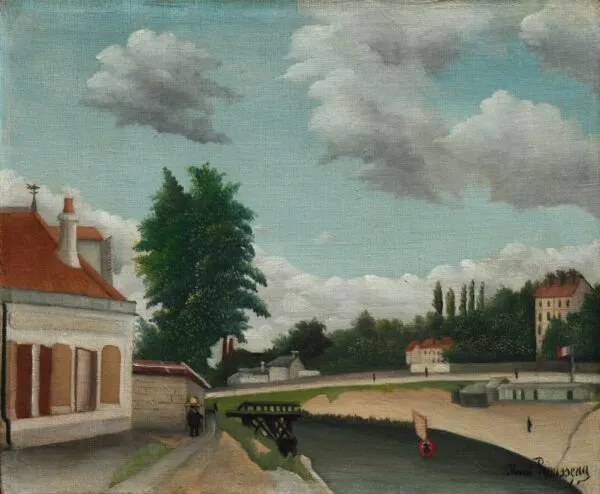
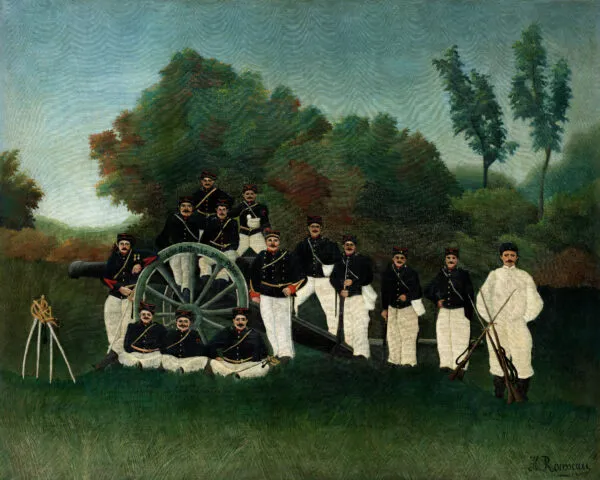
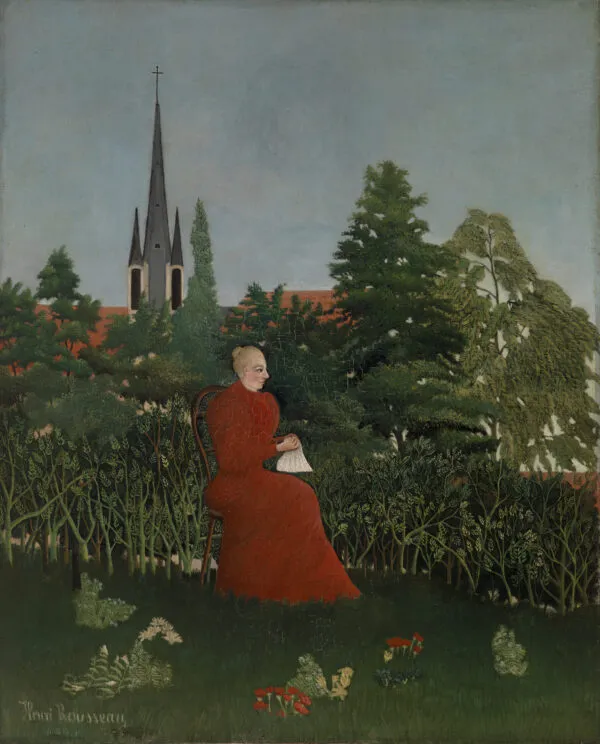
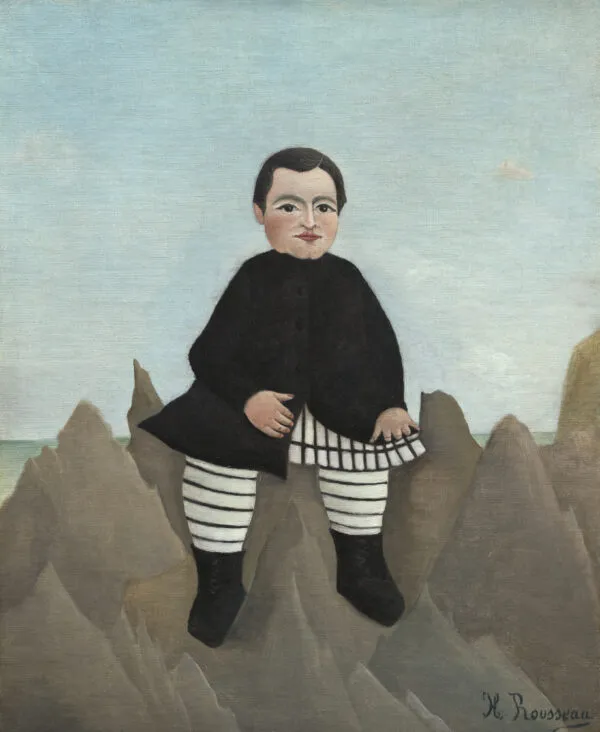
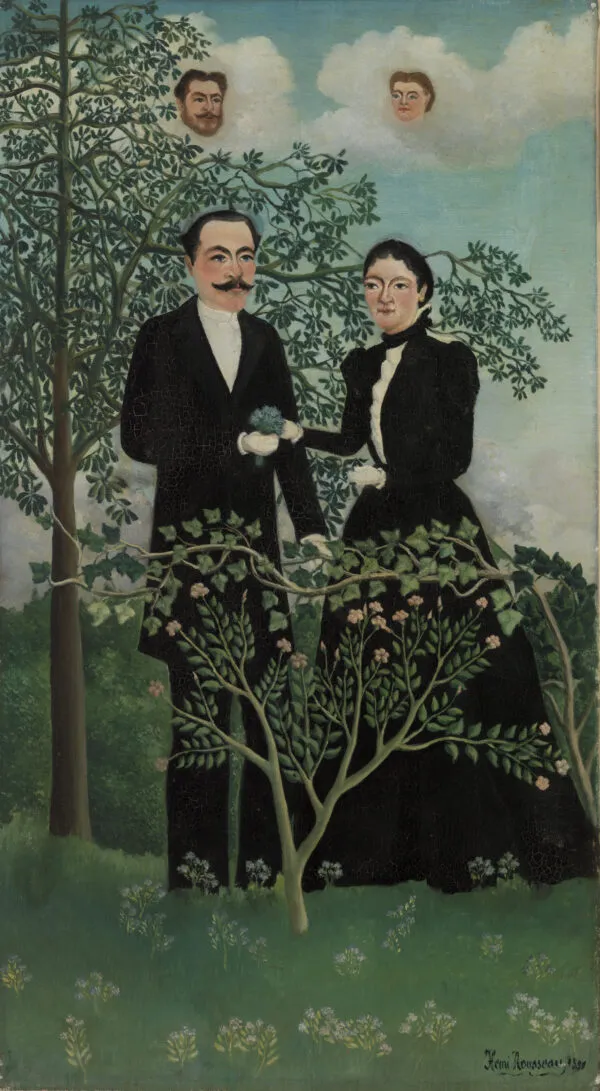
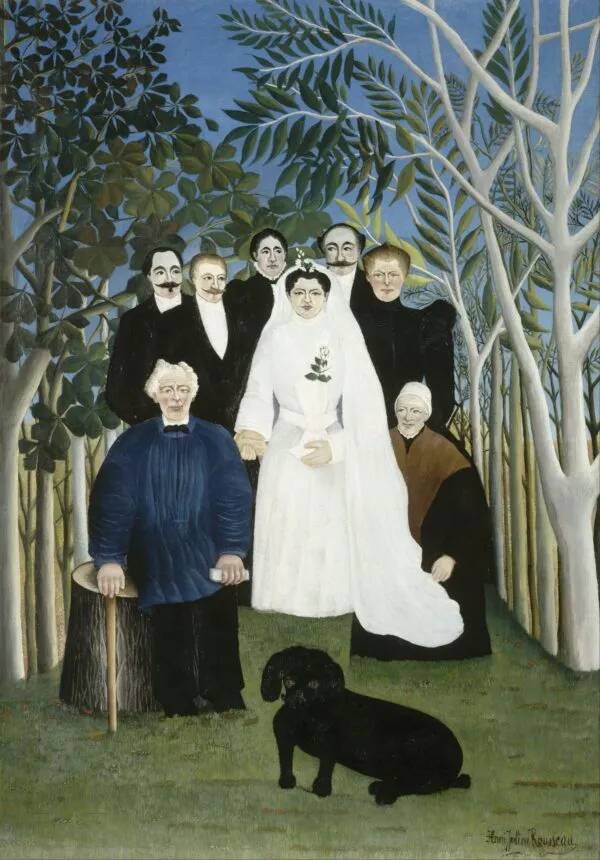
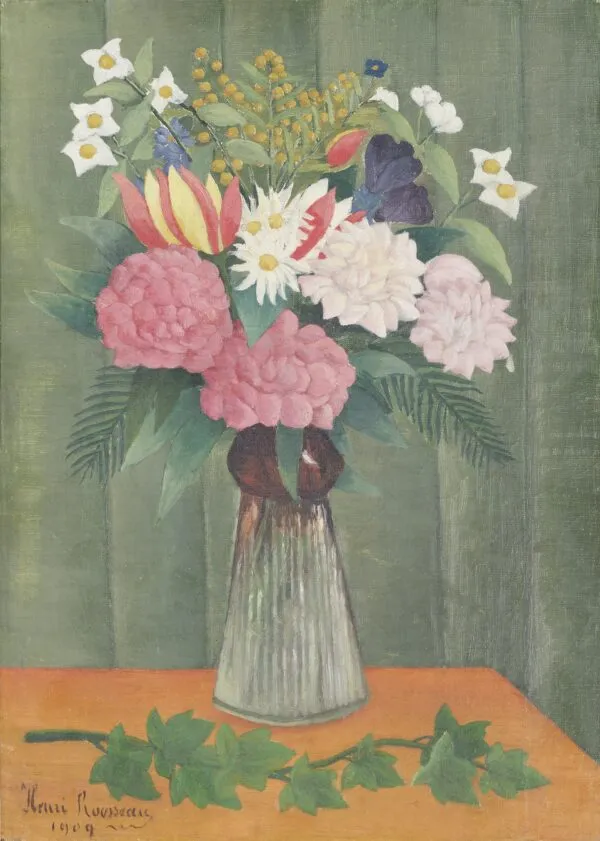
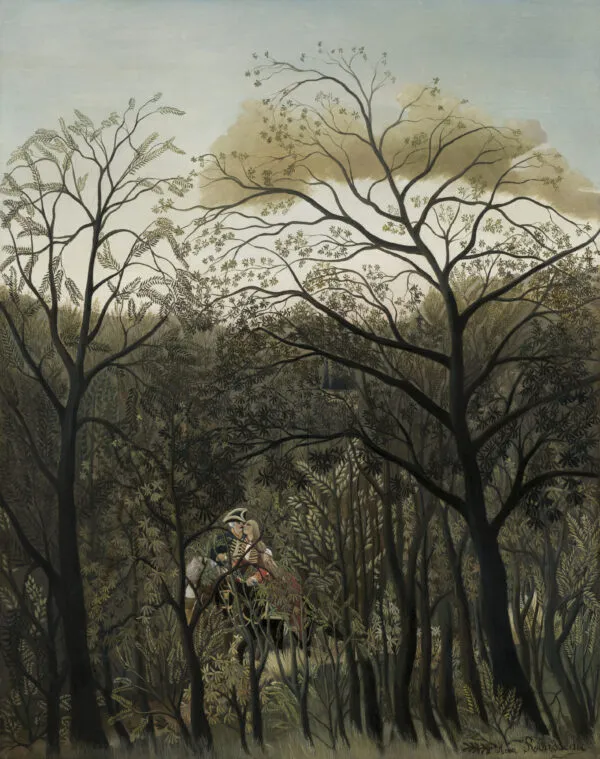
Rousseau also painted the Paris he knew from his work at the city’s toll gates: View of the Eiffel Tower and the Trocadéro, View of Montsouris Park, the Kiosk, Jardin du Luxembourg, The Banks of the Bièvre near Bicêtre and Meadowland. His scenes of daily life include The Football Players, The Wedding Party, The Merry Jesters and Rendezvous in the Forest, and among the portraits and children are Boy on the Rocks, Child with Puppet (To Celebrate the Baby), The Tiger Cat and Portrait of the Artist with a Lamp, his portrait of himself beside an oil lamp. For flowers, there is Bouquet of Flowers.
Which Rousseau suits which room?
The large jungles – Tiger in a Tropical Storm, The Equatorial Jungle or The Dream – need a big, calm wall: a living room, a dining room, a waiting room or a hotel lobby. They lose their detail when they are small, so choose at least 90 cm in width. The Paris views and portraits suit a hallway, a study or an alcove, and the monkeys, tigers and the boy on the rocks are a cheerful choice for a child’s room. Two or three paintings can hang together, for instance The Hungry Lion Throws Itself on the Antelope beside The Snake Charmer. Choose a painting about two thirds as wide as the furniture below it, and hang it so that its centre sits about 145 to 150 cm above the floor.
Sizes, prices, custom size and frame
Each painting has its own range of sizes, matched to the proportions of the original, and the product page shows the price of every size. Sizes run from 50 x 35 cm up to 300 x 221 cm, and prices start at 124 €. If your wall needs a different measurement, send us the width and height: we paint the painting in your size. A frame is available on request, and our 3D application shows our frame profiles on the painting you choose. For a gift, a wall art voucher lets the recipient choose the painting and the size.
How we hand-paint a Rousseau
Every painting is painted to order by hand in oil or acrylic on canvas, layer by layer, by our painters, who work in different locations. Rousseau is the best-known painter of naive art, self-taught and outside the academic rules: flat areas of colour, sharp outlines and leaves stacked in planes one in front of another. Our painters keep exactly that, building the jungle in the same order – the foliage first, then the animal, then the light and the weather over everything. Because each canvas is painted by hand, every copy is slightly different. Stretching and framing are done in our workshop in Slovenia, and you choose how the painting is sent: rolled, stretched on a wooden stretcher ready to hang, or framed. Before dispatch we send you a photograph of the finished painting, and if something is not right, we correct it before the painting is sent.
Henri Rousseau in brief
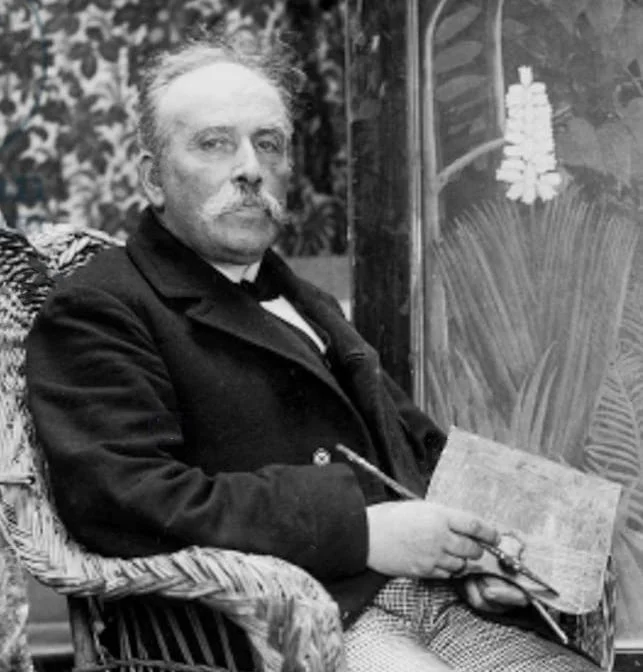
Henri Rousseau was born on 21 May 1844 in Laval. From 1871 to 1885 he worked as an inspector at a toll station on the edge of Paris, which gave him his nickname le Douanier, the customs officer, although he never worked for customs. He taught himself to paint and from 1886 exhibited at the Salon des Indépendants. Critics mocked him for years, but Picasso, Robert Delaunay and the poet Guillaume Apollinaire admired him, and in 1908 Picasso gave a famous banquet in his honour. He died in Paris on 2 September 1910. Read more in Henri Rousseau – life and interesting facts.
Frequently asked questions
Did Rousseau ever see a jungle?
No. He never left France. He painted his jungles from the tropical plants of the Jardin des Plantes in Paris, the animals in its zoo, mounted specimens and illustrations in magazines, which is why they look precise and dreamlike at the same time.
Why is Rousseau called le Douanier?
From 1871 to 1885 he collected the municipal toll at a gate on the edge of Paris. The nickname means “the customs officer”, although strictly speaking he never worked for customs.
What is naive art?
Naive art is the work of painters without academic training who paint outside the rules taught in art schools. Rousseau is its most famous representative: flat colour, sharp outlines, depth built from overlapping planes instead of light, and a stillness that makes his paintings unforgettable.
Which are Rousseau’s most famous paintings?
The best known are Tiger in a Tropical Storm (Surprised!), The Dream, The Snake Charmer, The Equatorial Jungle, The Hungry Lion Throws Itself on the Antelope and The Football Players. All are available in our gallery as hand-painted oil paintings.
How much does a hand-painted Rousseau copy cost?
Prices start at 124 € and depend on the painting and the size you choose; every product page lists the price of each size.
Which size should I choose?
Measure the furniture below where the painting will hang and choose a painting about two thirds of its width: above a three-seater sofa that is usually 120 to 160 cm, above a desk or in a hallway 50 to 70 cm. The large jungles keep their detail best from about 90 cm in width. If none of the listed sizes fits, we paint the painting in your size.
How is the painting sent – rolled, stretched or framed?
As you choose: rolled, stretched on a wooden stretcher and ready to hang, or framed. Stretching and framing are done in our workshop in Slovenia, and the painting is wrapped in protective film and packed in a sturdy box.
How long does delivery take?
Each painting is painted to order, so delivery takes 15 to 45 working days, depending on the size. Before dispatch you receive a photograph of the finished painting.