



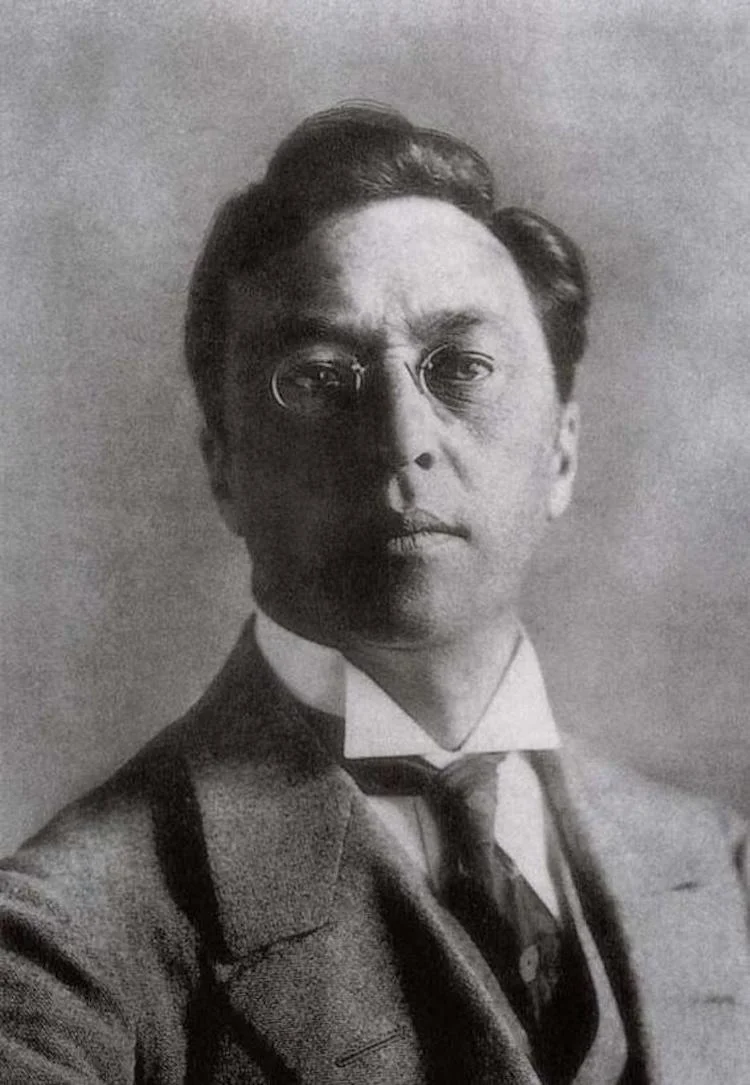
Wassily Kandinsky was a Russian-born painter and art theorist who is widely recognized as one of the pioneers of abstract art. He was born in Moscow in 1866 and studied law and economics before turning to art. He began his artistic journey as a landscape painter, but soon became interested in the works of impressionists and post-impressionists, which inspired him to experiment with new forms of expression.
In 1911, Kandinsky moved to Germany, where he became a member of the Blue Horseman movement, a group of artists who wanted to break free from the constraints of traditional art and create a new form of expression. In 1913, he created one of his most famous paintings, “Composition VII”, which is considered a masterpiece of his work.
Kandinsky’s art is characterized by bold use of colors, dynamic compositions and the ability to evoke emotions through his art. He believed that color was the most powerful element in art, so he used it to express emotion and create a sense of movement and energy. He also believed that art should be a form of spiritual expression and that it should evoke emotions and feelings in the viewer.
Theories and the art of Kandinsky had a significant impact on the development of abstract art, which is why they are still studied and admired by art lovers and experts. He died in 1944 in Neuilly-sur-Seine, France, but his legacy lives on through his art and theories. His works can be seen in important museums around the world, including the Guggenheim Museum and the Museum of Modern Art in New York, the Center Georges Pompidou in Paris and the State Hermitage Museum in St. Petersburg, Russia.
In addition to painting, Kandinsky also wrote a lot about art and its role in society. He published several books, including the book “On the Spiritual in Art” in 1911, which is considered one of the most important texts in the history of abstract art. In this book, he argues that art should be a form of spiritual expression and should be able to evoke emotions and feelings in the viewer. He also believed that art should be a means by which people connect with their inner selves, and that it should be accessible to everyone, not just the elite.
Throughout his career, Kandinsky continued to experiment with new forms of expression and push the boundaries of what was considered possible in art. He worked in a variety of media, including oil paint, watercolor and printmaking, and his works evolved over time to become increasingly abstract and expressive.
One of the most striking things about Kandinsky’s work is the way he uses color to create a sense of movement and energy. Believing that color can evoke emotions and feelings in the viewer, he used it to create dynamic compositions that seem to move and change before our eyes. In his later works, he used color to create a sense of depth and space, creating a sense of movement and energy with overlapping shapes and contrasting colors.
Kandinsky’s influence on the development of abstract art cannot be overestimated. He was one of the first artists to break free from the constraints of traditional art and create a new form of expression. His works continue to inspire and influence artists today, and his theories about art and its role in society are still studied and debated. If you want to know more about Wassily Kandinsky and his paintings, his works are on display in many museums around the world, and you can also find books and other resources about him. His abstract compositions are among the most popular motifs for hand-painted reproductions of Kandinsky paintings.
Wassily Kandinsky – 10 Interesting Things
- Wassily Kandinsky was a Russian-born painter , who is considered one of the founders of abstract art.
- He was born in 1866 in Moscow and began his professional career as a lawyer and then studied art at the Munich Academy of Fine Arts.
- Kandinsky’s early works were heavily influenced by Impressionism, but he eventually developed his own style and became one of the leading figures of the Expressionist movement.
- He is considered one of the first artists to create completely abstract paintings, and his painting “Composition VII” from 1910 is one of the first examples of pure abstraction.
- Kandinsky was strongly influenced by his interest in music, so he often said that the colors on hisimages of his individual “sound” and “tone”.
- He believed that art should be able to convey emotions and ideas without using traditional themes and that colors should be used to create a sense of movement and rhythm.
- Kandinsky was a member of the Blue Horseman movement, a group of artists who sought to express emotions and feelings through abstract forms.
- He taught at the Bauhaus School of Art and Design in Germany, where he helped develop the curriculum and emphasized the importance of color theory in art.
- Kandinsky’s work was banned by the Nazis in 1933, so he left Germany and went to France, where he continued to paint and exhibit his work.
- Kandinsky’s works had a significant impact on the development of abstract art and were often exhibited in museums and galleries around the world.