




“It is a transformation during which imagination collaborates with memory.”
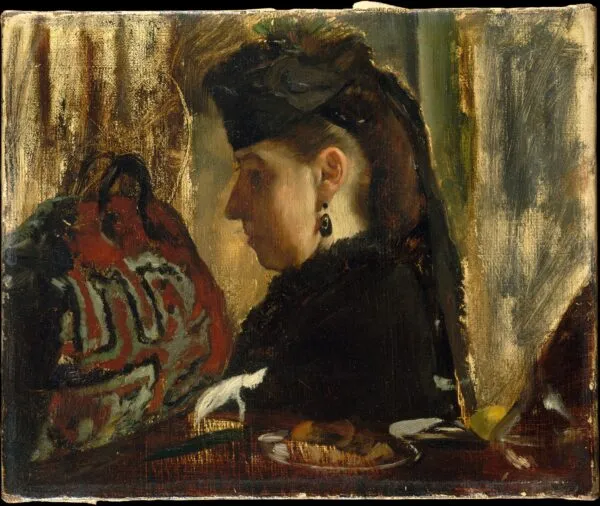
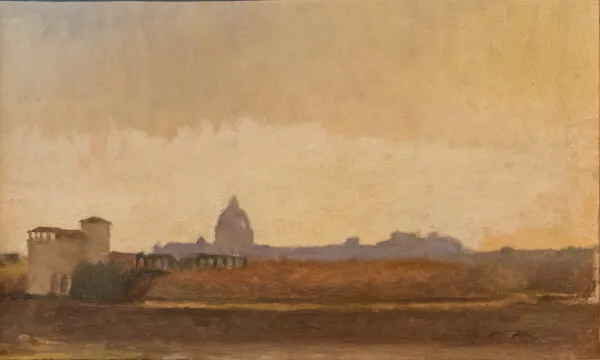
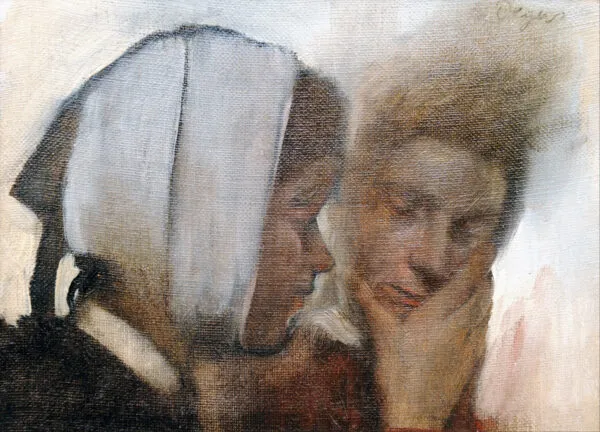
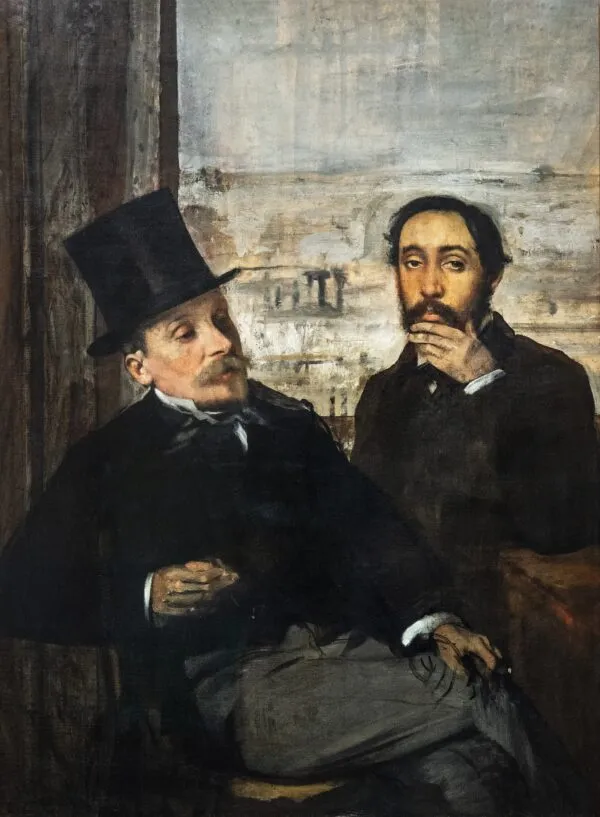
Edgar Degas – hand-painted paintings in oil on canvas
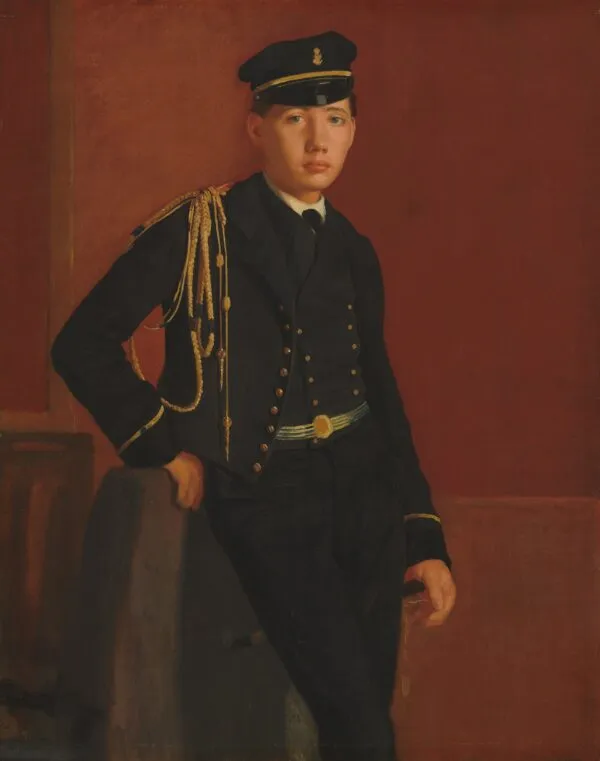
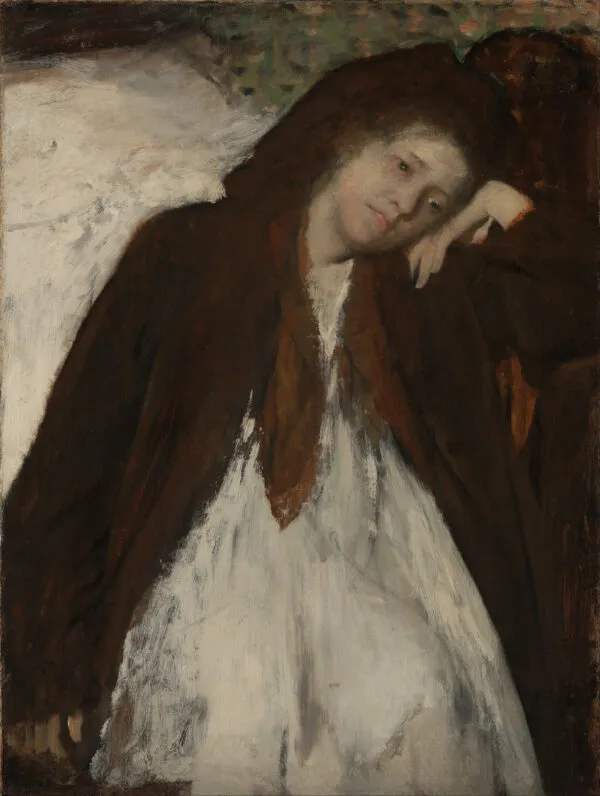
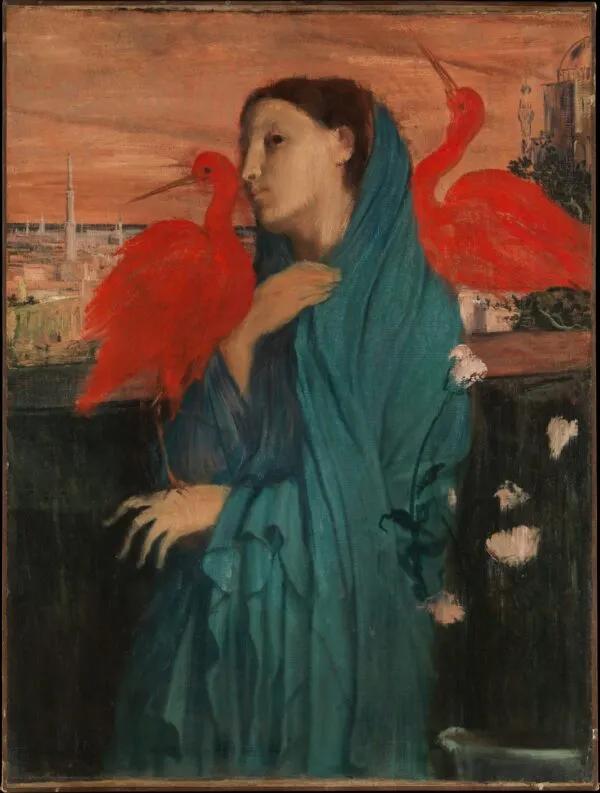
At SvetSlik.si you can order 63 paintings by Edgar Degas as hand-painted oil reproductions on canvas: ballet dancers in class, in rehearsal and on stage, the cafés and laundresses of Paris, racehorses and portraits, including Two Dancers, The Absinthe Drinker and Young Spartans Exercising. Every painting is painted to order by hand by our painters – it is not a print. Each comes in several sizes, from 27 x 20 cm up to 150 x 210 cm, or in a size you give us, and prices start at 108 €. Before dispatch we send you a photograph of the finished painting for your approval, and delivery takes 15 to 45 working days.
Degas and the ballet
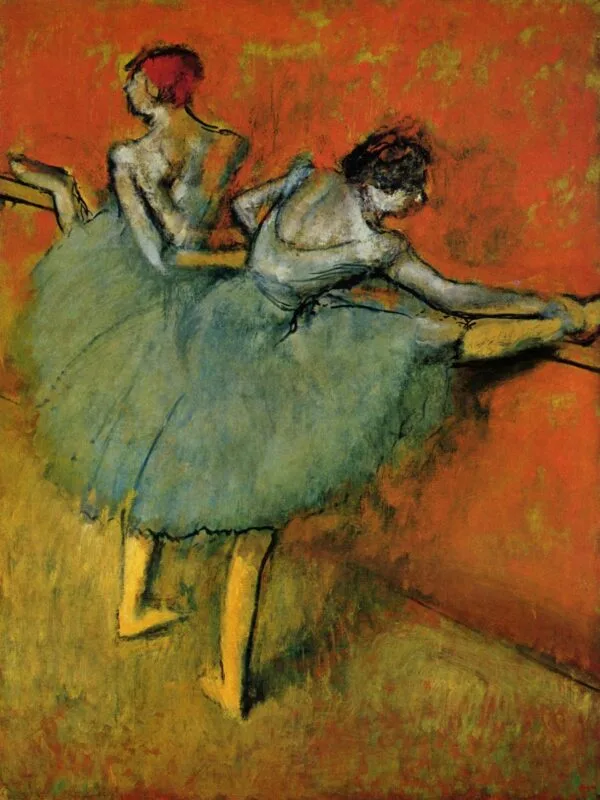
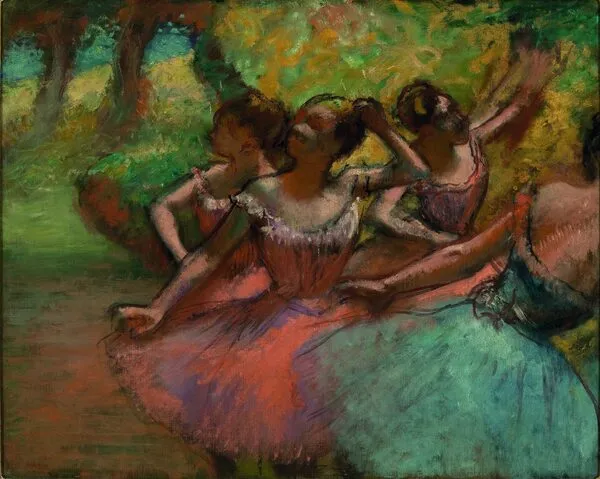
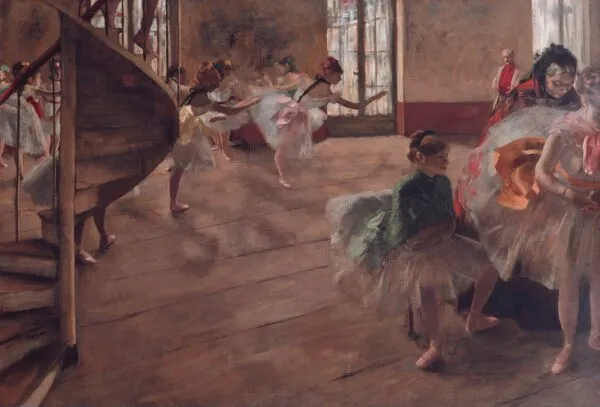
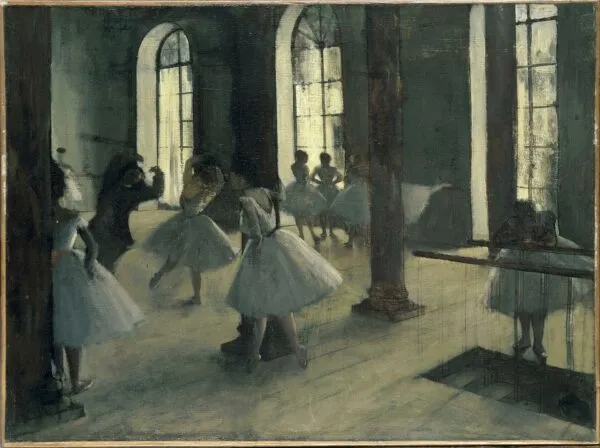
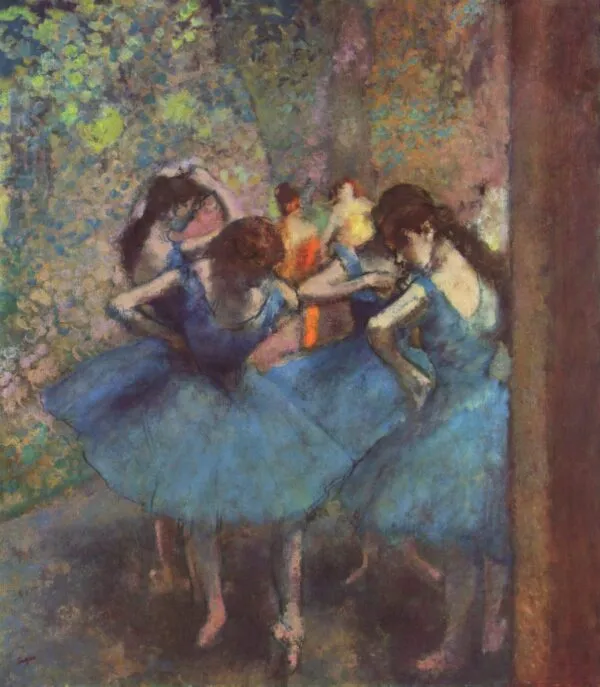
Degas is the painter of dancers: he painted and drew them hundreds of times, from the rehearsal rooms of the Paris Opéra to the stage itself. He was less interested in the performance than in the moments around it – stretching at the barre, waiting in the wings, tying a shoe. Many of his dance scenes are pastels; our painters reproduce them in oil or acrylic on canvas, keeping the soft, chalky light of the originals.
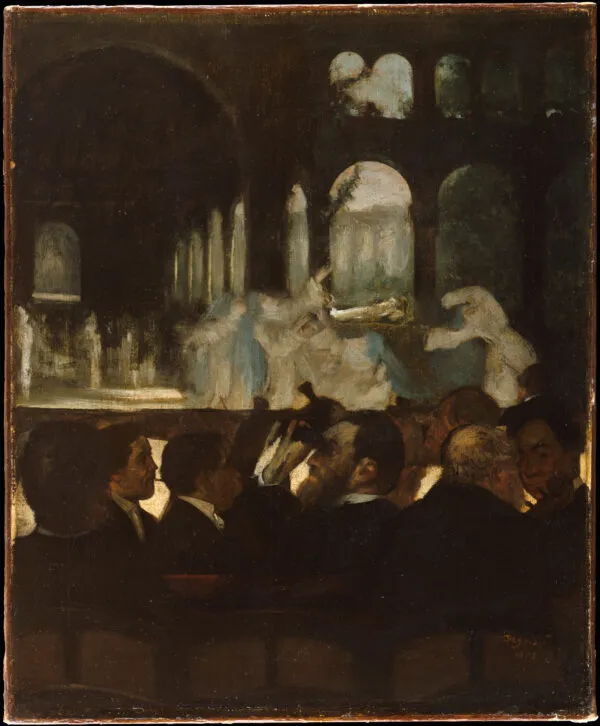
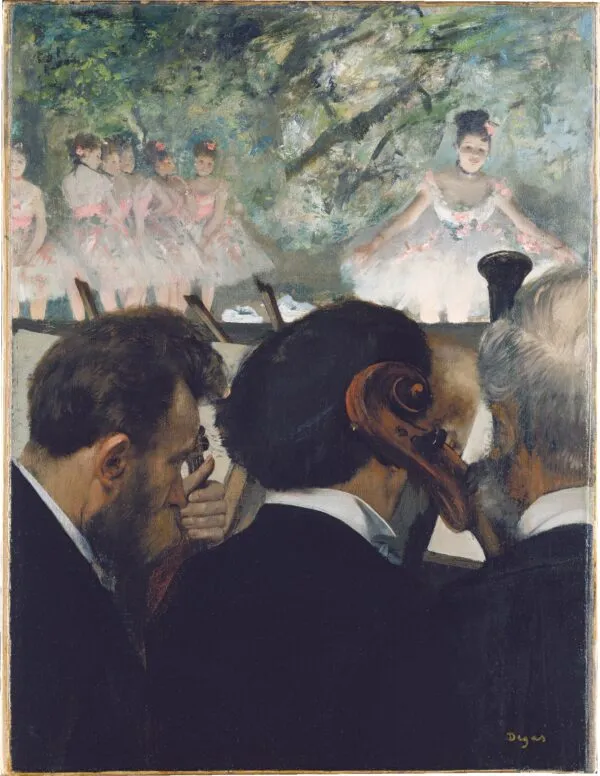
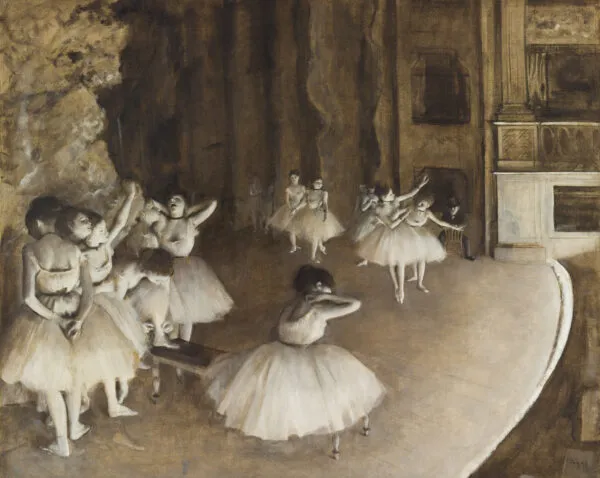
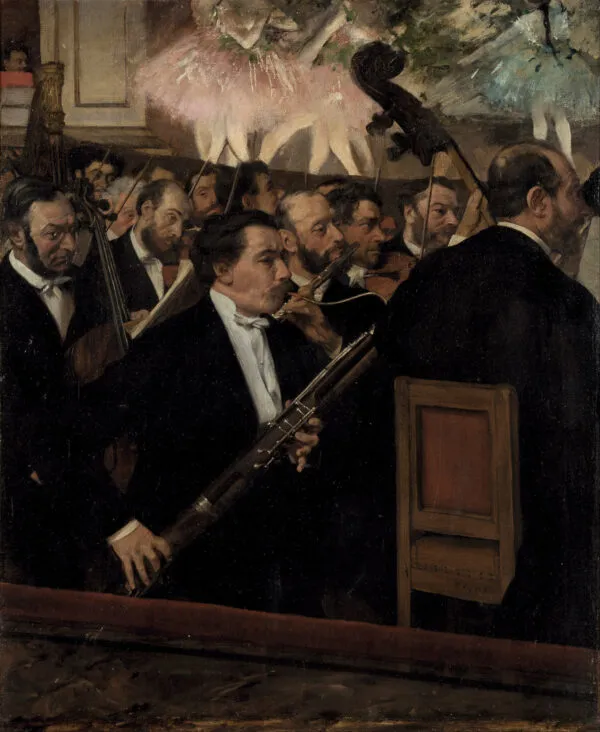
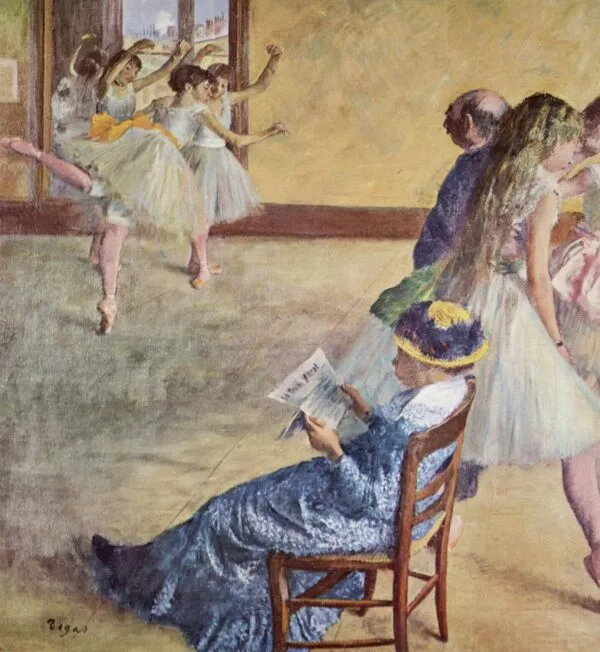
Our dance paintings include Two Dancers, Ballet Dancers in the Wings, Dancers at the Barre and Seated Dancer Adjusting Her Shoes, the classroom scenes The Dance Class, The Dancing Class, The Ballet Class and Dance Rehearsal in the Foyer, and the stage scenes Ballet Rehearsal on Stage, Four Ballerinas on Stage, Four Dancers, Dancers in Pink and Blue Dancers. In The Orchestra at the Opera and The Ballet from Robert le Diable the musicians sit in the foreground while the dancers glow on the stage behind them.
The Absinthe Drinker and Young Spartans
The Absinthe Drinker (1875–76) shows a woman sitting alone in a Paris café in front of a glass of absinthe, with a man in a hat beside her; the models were the actress Ellen Andrée and the painter Marcellin Desboutin. The original is in the Musée d’Orsay in Paris.
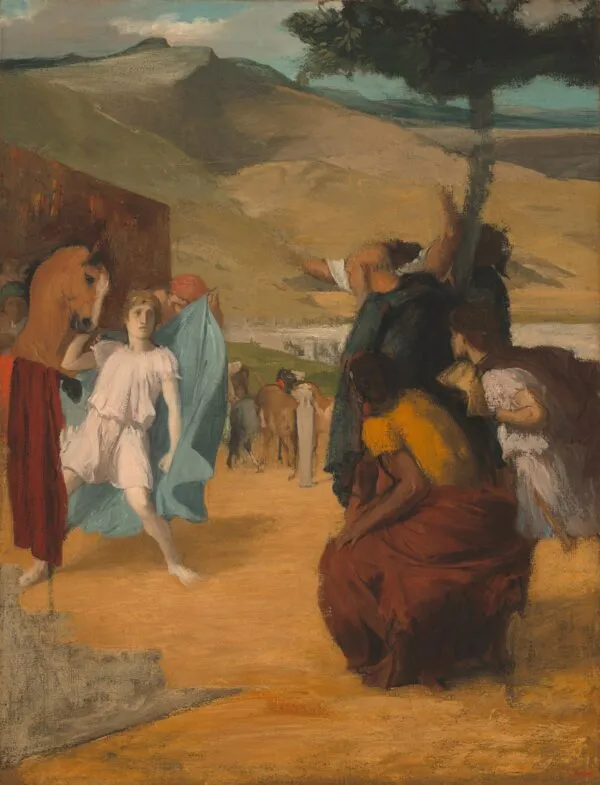
Young Spartans Exercising is an early history painting from about 1860: on a plain outside Sparta, a group of girls challenges a group of boys. It hangs in the National Gallery in London.
Paris, the sea and the races
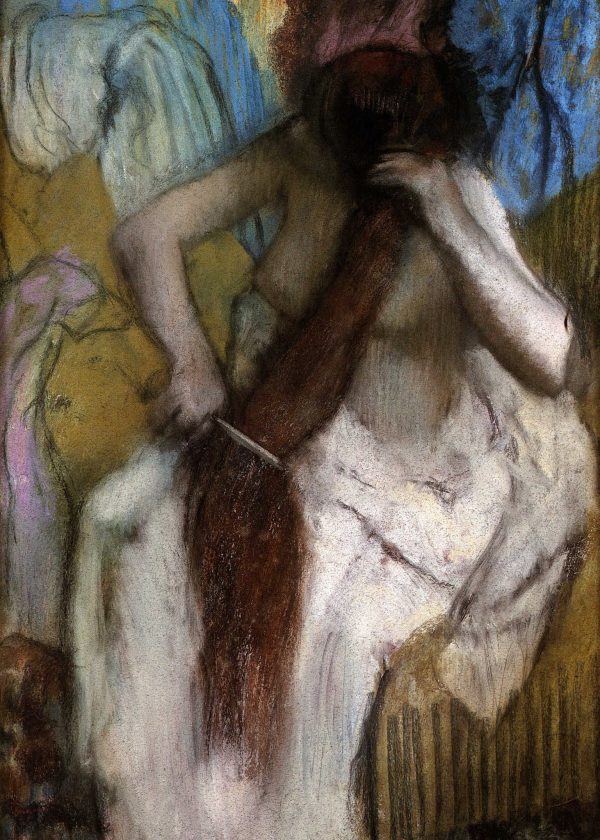
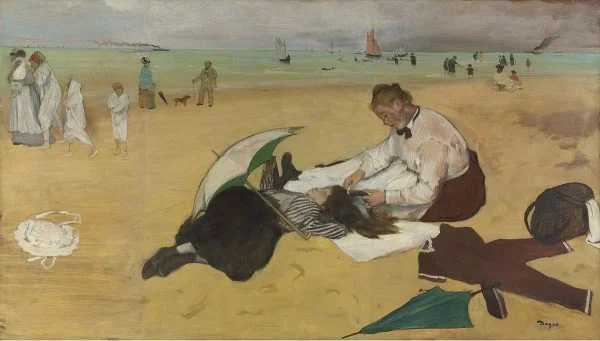
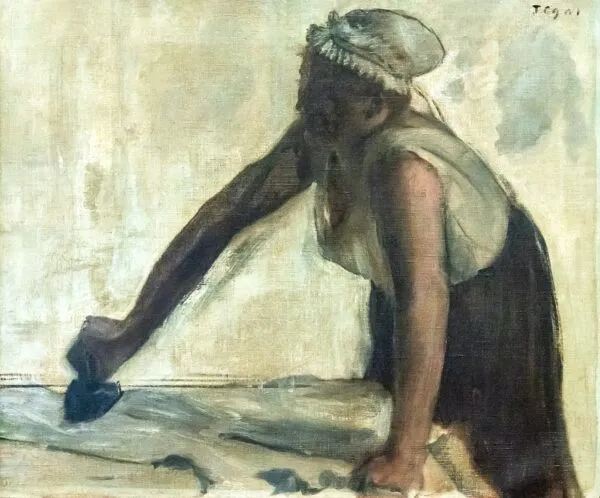
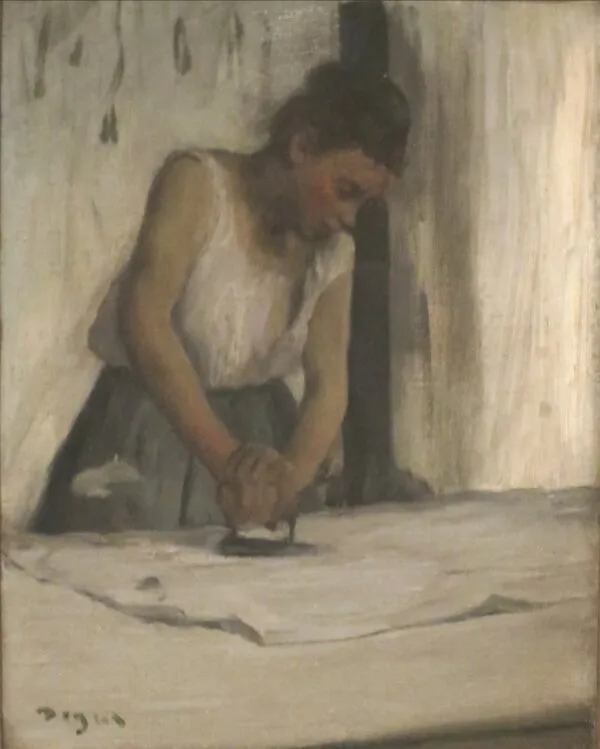
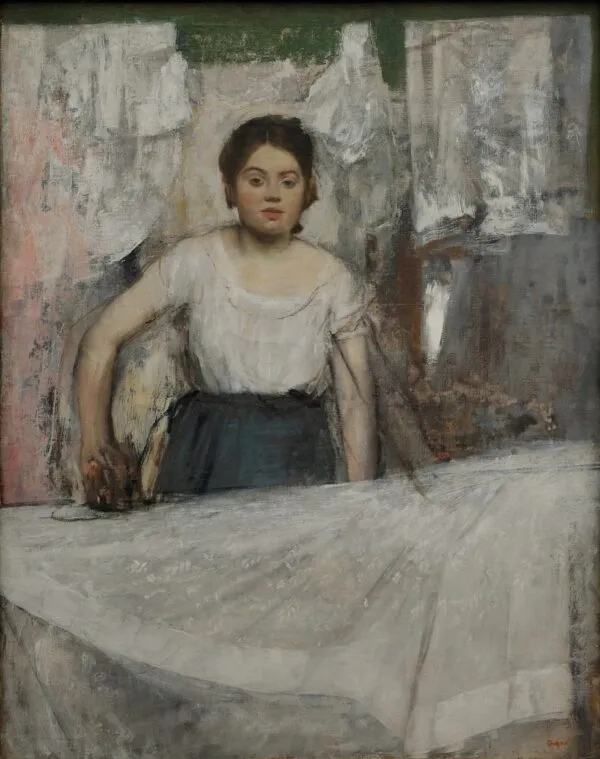
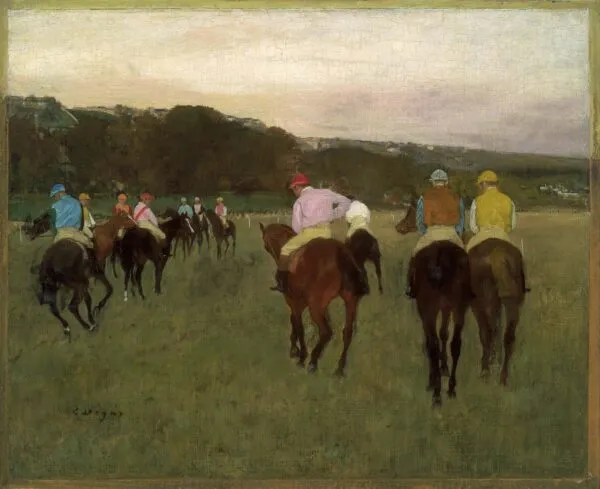
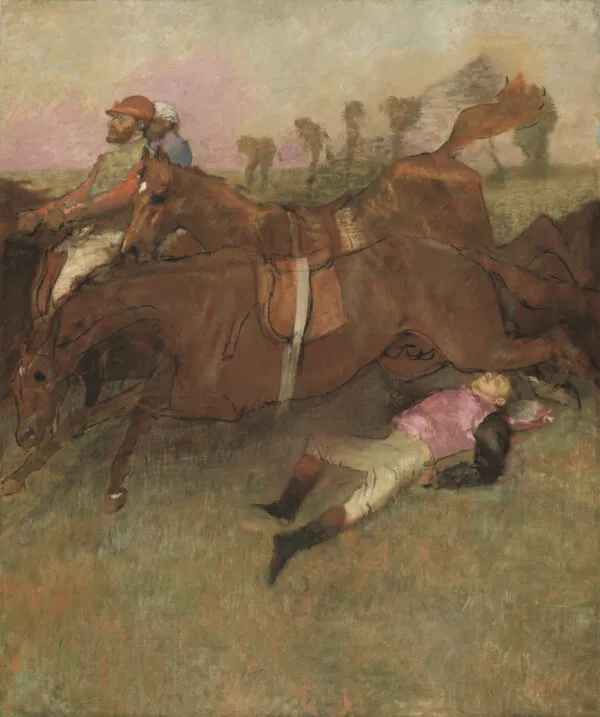
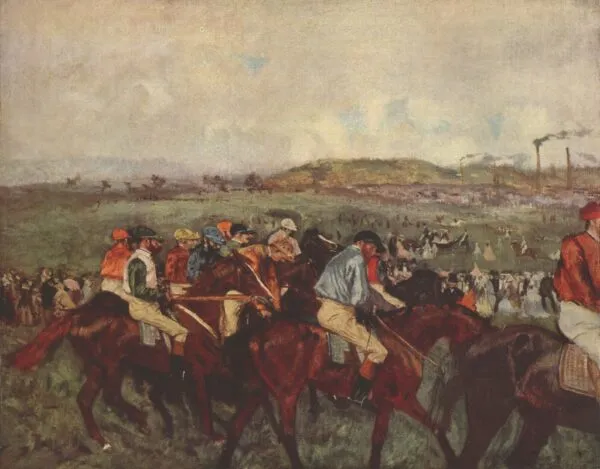
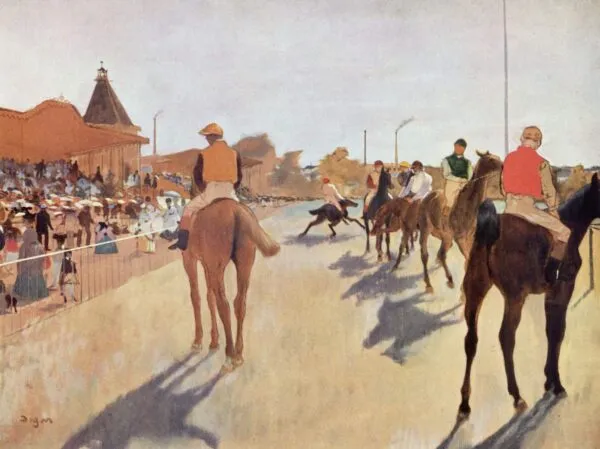
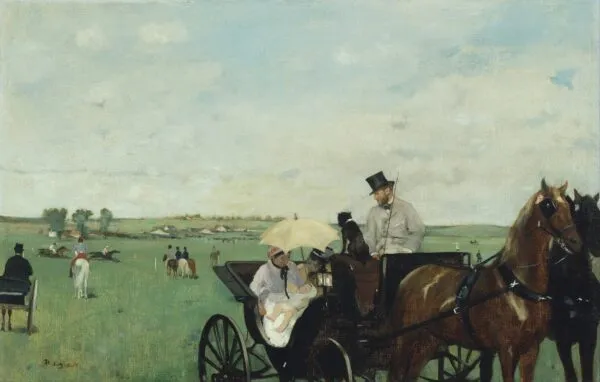
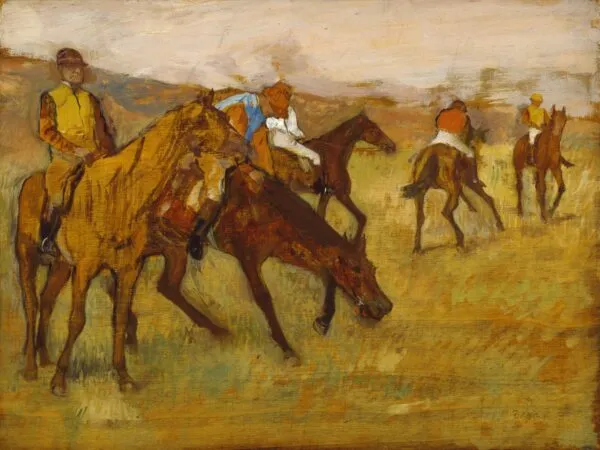
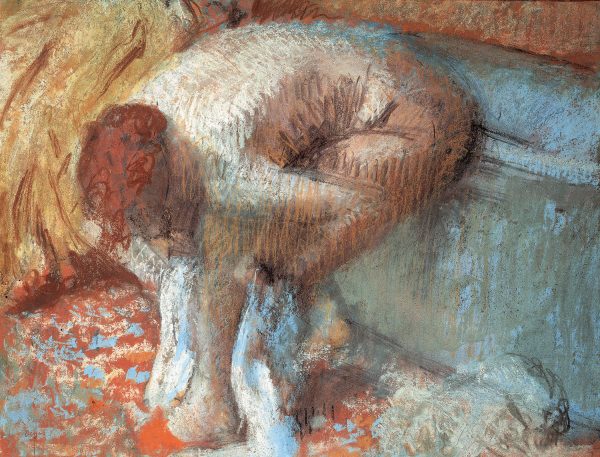
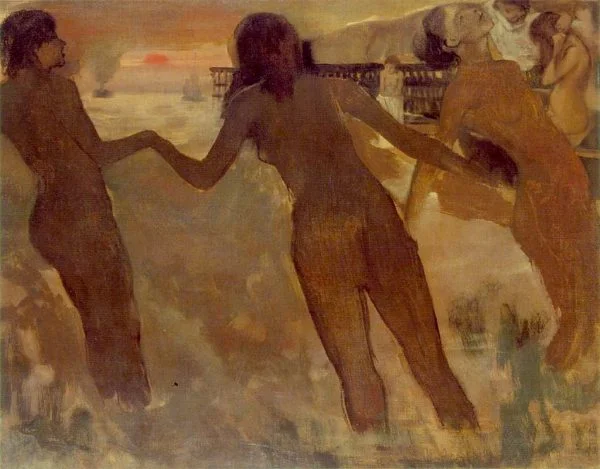
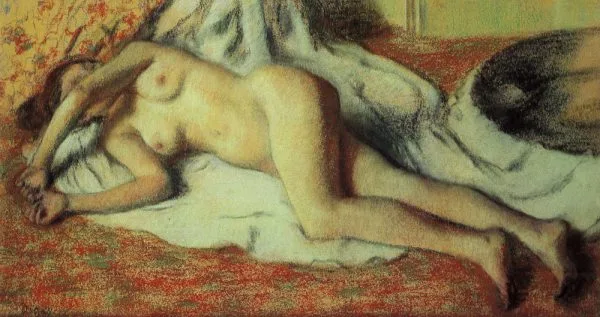
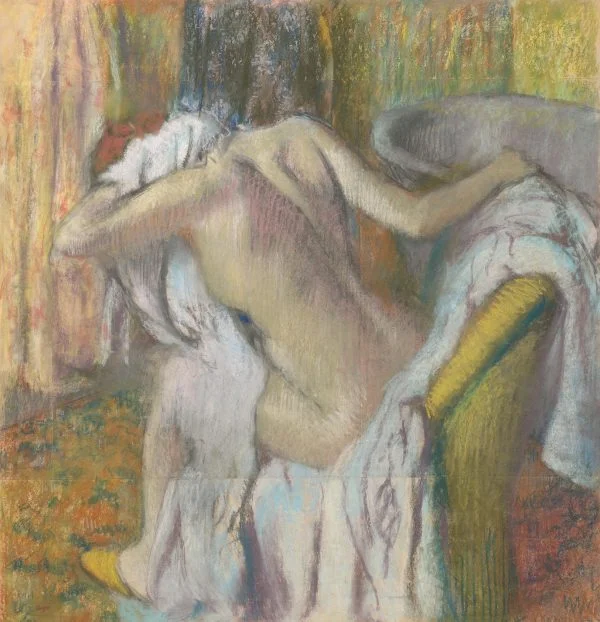
Degas also painted everyday working Paris: Woman Ironing and The Laundress show women at work, and Woman Combing Her Hair and After the Bath, Woman Drying Herself belong to his late series of women at their toilette. By the sea he painted Beach Scene, Peasant Girls Bathing in the Sea at Dusk and Landscape by the Sea. Racing fascinated him for decades: Racehorses at Longchamp, Race Horses before the Stands and Scene from the Steeplechase: The Fallen Jockey capture horses and riders before and during the race.
Portraits
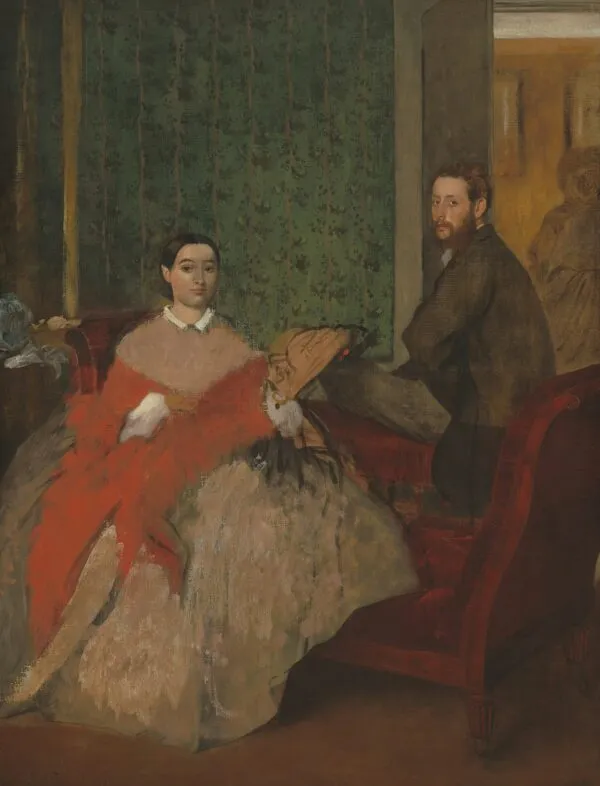
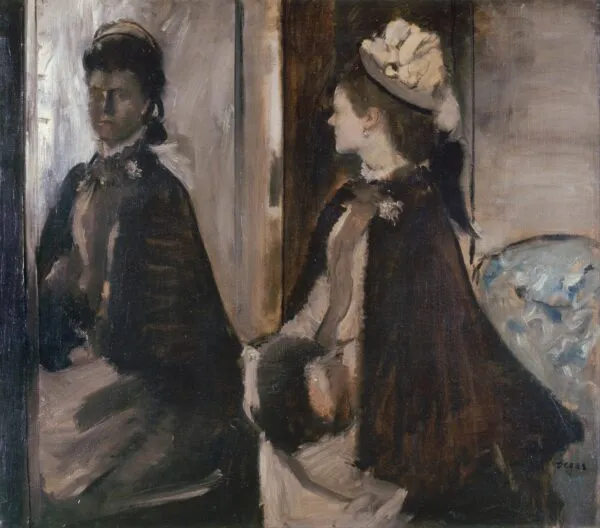
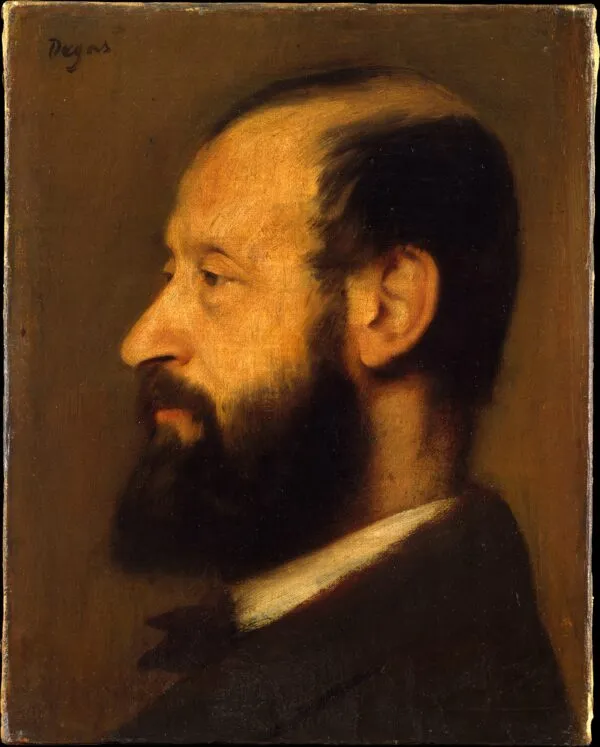
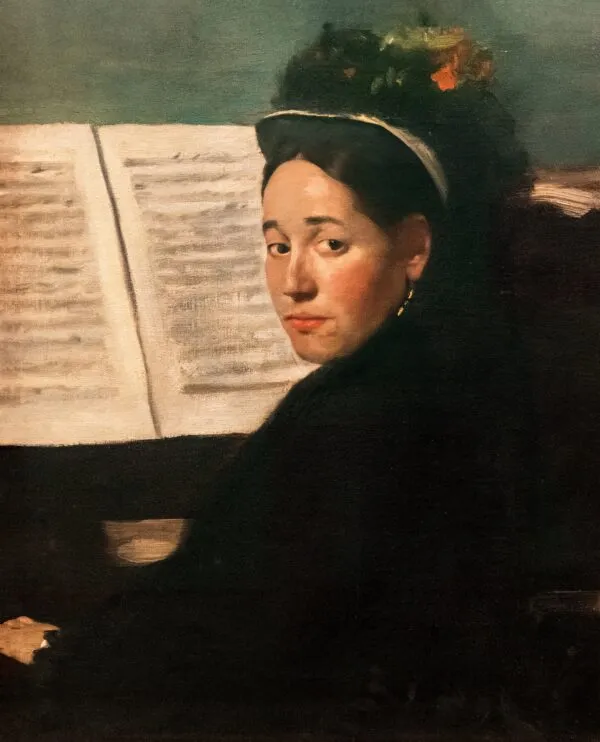
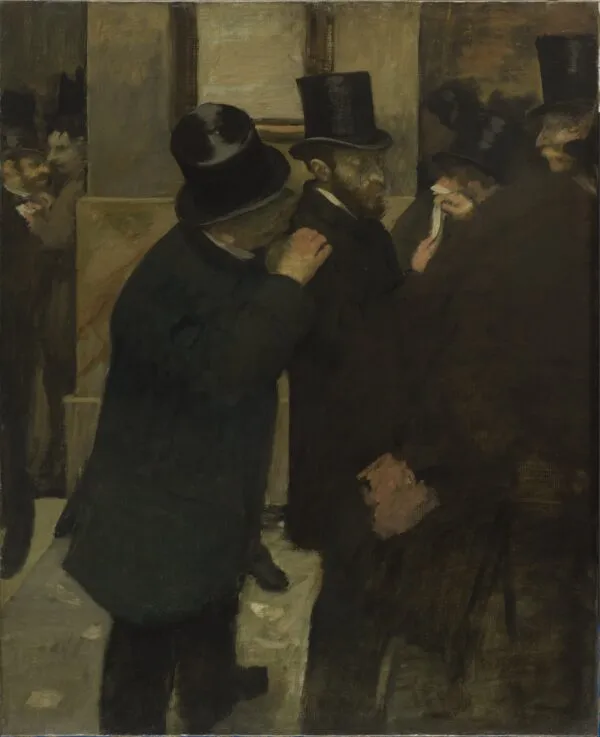
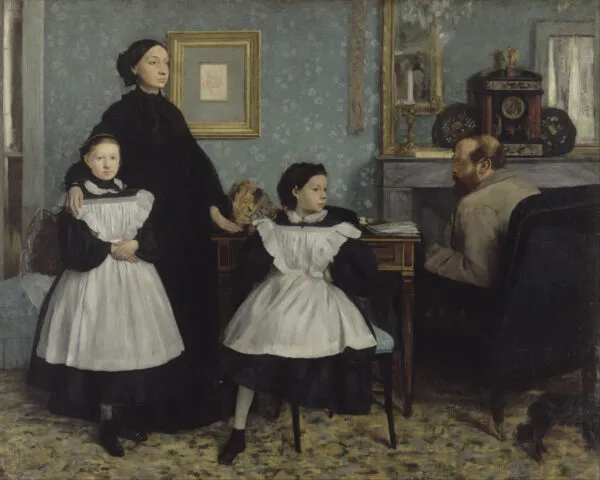
The Bellelli Family is his large early portrait of his aunt’s family in Florence, which hangs in the Musée d’Orsay. Portrait in a New Orleans Cotton Office shows his uncle’s cotton business in New Orleans in 1873; in 1878 it became the first painting by Degas bought by a museum. Mademoiselle Dihau at the Piano is a portrait of a musician friend at the piano.
Which Degas suits which room?
The dancers are the classic choice for a girl’s room, a bedroom, a dance studio or a hallway: Two Dancers, Dancers in Pink or Seated Dancer Adjusting Her Shoes work well in small and medium sizes. The Absinthe Drinker and The Orchestra at the Opera are atmospheric paintings for a study, a bar or a dining room, the racehorses suit an office or a living room, and the beach scenes bring light into a bathroom or a bedroom. Choose a painting about two thirds as wide as the furniture below it, and hang it so that its centre sits about 150 cm above the floor.
Sizes, prices, custom size and frame
Each painting has its own range of sizes, matched to the proportions of the original, and the product page shows the price of every size. Sizes run from 27 x 20 cm up to 150 x 210 cm, and prices start at 108 €. If your wall needs a different measurement, send us the width and height: we paint the painting in your size. A frame is available on request, and our 3D application shows our frame profiles on the painting you choose. For a gift, a wall art voucher lets the recipient choose the painting and the size.
How we hand-paint a Degas
Every painting is painted to order by hand in oil or acrylic on canvas, layer by layer, by our painters, who work in different locations. With Degas the work is in the light and the movement: the glow of the stage lights on a tutu, quick lines that catch a dancer mid-gesture, and the soft surface of his pastels translated into paint. Because each canvas is painted by hand, every copy is slightly different. Stretching and framing are done in our workshop in Slovenia, and you choose how the painting is sent: rolled, stretched on a wooden stretcher ready to hang, or framed. Before dispatch we send you a photograph of the finished painting, and if something is not right, we correct it before the painting is sent.
Edgar Degas in brief
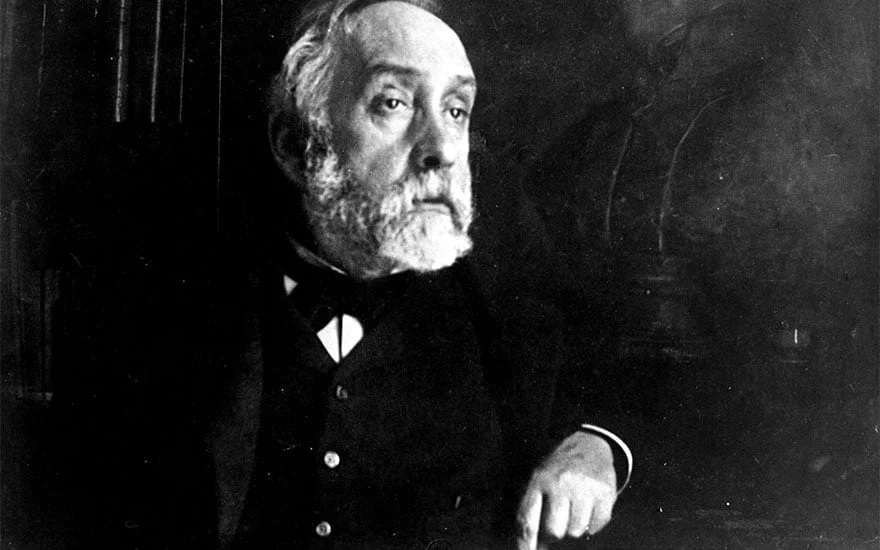
Edgar Degas was born on 19 July 1834 in Paris into a banking family. He trained as a classical history painter, then turned to modern life: the ballet, cafés, laundresses and the racecourse. He exhibited with the Impressionists, though he preferred to call himself a realist, and he died in Paris on 27 September 1917. Read more in Edgar Degas – life and interesting facts.
Frequently asked questions
Why did Degas paint so many ballet dancers?
The ballet of the Paris Opéra gave him what he was looking for: bodies in movement, artificial light and moments behind the scenes. He painted and drew dancers for more than thirty years, mostly in rehearsal and backstage rather than in performance.
What does The Absinthe Drinker show, and where is it?
It shows a woman and a man sitting in a Paris café, she with a glass of absinthe in front of her, both lost in their own thoughts. Degas painted it in 1875–76; the original is in the Musée d’Orsay in Paris.
Which are Degas’s most famous paintings?
The best known are his dance scenes – The Dance Class, Dancers in Pink, Blue Dancers – together with The Absinthe Drinker, The Bellelli Family and Portrait in a New Orleans Cotton Office. All of these are available in our gallery as hand-painted oil paintings.
Many of Degas’s dancers are pastels – do you paint them in oil?
Yes. We paint every work, including his pastels, in oil or acrylic on canvas, keeping the composition, the colours and the soft light of the original, so the painting can hang framed or unframed like any oil painting.
How much does a hand-painted Degas copy cost?
Prices start at 108 € and depend on the painting and the size you choose; every product page lists the price of each size.
Which size should I choose?
Measure the furniture below where the painting will hang and choose a painting about two thirds of its width: above a three-seater sofa that is usually 120 to 160 cm, above a desk or in a hallway 50 to 70 cm. If none of the listed sizes fits, we paint the painting in your size.
How is the painting sent – rolled, stretched or framed?
As you choose: rolled, stretched on a wooden stretcher and ready to hang, or framed. Stretching and framing are done in our workshop in Slovenia, and the painting is wrapped in protective film and packed in a sturdy box.
How long does delivery take?
Each painting is painted to order, so delivery takes 15 to 45 working days, depending on the size. Before dispatch you receive a photograph of the finished painting.