



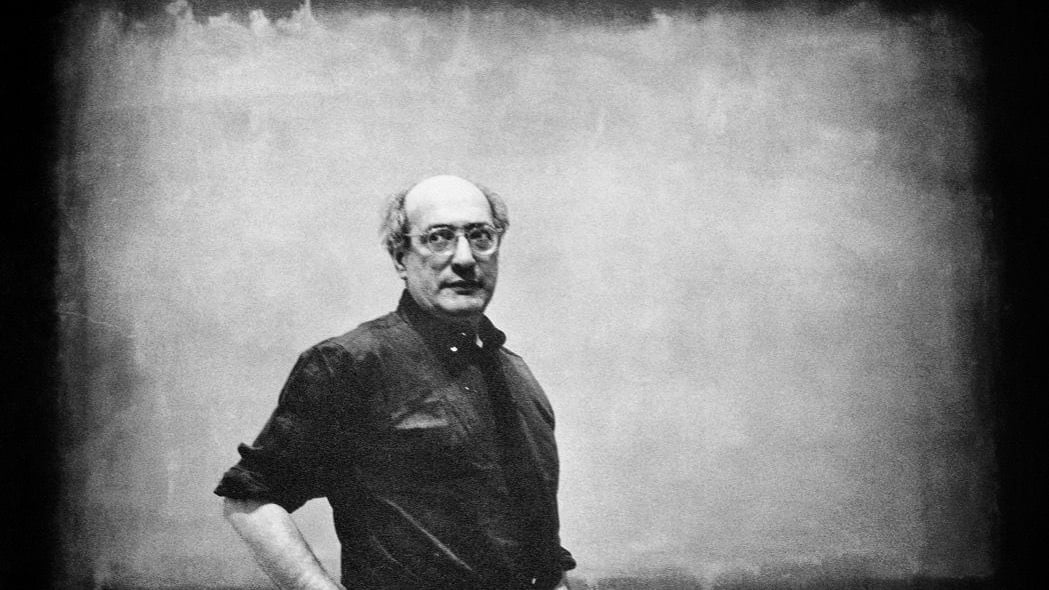
Mark Rothko was an American painter known for his large fields of color, heavily influenced by his interest in mythology and the unconscious. He is considered one of the most important figures in the development of abstract expressionism, a movement that emerged in the 1940s and 1950s and is characterized by the use of large canvases, gestural brushstrokes and non-representational images.
Rothko was born in 1903 in Russia and emigrated with his family to the United States in 1913. He began his artistic career as a figurative painter, but later turned to abstraction. In the 1940s, he began to develop his signature style, which involved creating large canvases with floating rectangles of color, often arranged in a horizontal format.
Rothk’s color field paintings are known for their ability to trigger strong emotional responses in viewers. He believed that art should be an emotional and spiritual experience, so he often used color to create a sense of depth and movement in his paintings. Rothko’s works are also characterized by the use of simple geometric shapes and a limited palette of colors.
One of Rothko’s most famous series of paintings are the “Seagram Murals” commissioned by the Four Seasons restaurant in New York in 1958 and eventually donated to the Tate Gallery in London. The series consists of large canvases with floating colored rectangles arranged in a horizontal format. The paintings are known for evoking a sense of mystery and contemplation in viewers.
Rothka’s works had a significant impact on the development of abstract expressionism and still have a significant influence on contemporary art. His paintings are held by major museums around the world, including the Museum of Modern Art in New York, the National Gallery of Art in Washington, and the Tate Gallery in London.
In short, Mark Rothko was an American painter known for his large-scale color field paintings, which were heavily influenced by his interest in mythology and the unconscious. He was considered one of the most important figures in the development of abstract expressionism, and his work still has a strong influence on contemporary art. Rothko’s most famous series of paintings, the Seagram Murals, is known for instilling a sense of mystery and contemplation in viewers. His paintings are held by major museums around the world, and his influence and legacy continue to be celebrated. His large colour fields make a rewarding motif for hand-painted reproductions of Rothko paintings.
Mark Rothko – 10 curiosities
- Mark Rothko was born in Russia and emigrated to the United States with his family in 1913.
- Rothko’s early paintings were figurative, but in the 1940s he switched to abstraction.
- Rothko’s color field paintings were heavily influenced by his interest in mythology and the unconscious.
- Rothko believed that art should be an emotional and spiritual experience, so he often used color to create a sense of depth and movement in his paintings .
- Rothko was one of the most important figures in the development of Abstract Expressionism, a movement that emerged in the 1940s and 1950s.
- Rothka’s most famous series of paintings is the “Seagram Murals “, which was commissioned by the Four Seasons restaurant in New York in 1958, but was eventually donated to the Tate Gallery in London.
- Rothka’s works had a significant impact on the development of abstract expressionism and still have a significant impact on contemporary art.
- Rothko was also a teacher, teaching at the California School of Fine Arts and the Brooklyn Museum School of Art.
- Rothko’s works have been the subject of numerous retrospectives and exhibitions, and his paintings are still highly sought after by collectors and museums.
- Rothko committed suicide in 1970, leaving behind a vast body of work that is still celebrated and studied today.