



Giuseppe Arcimboldo – hand-painted paintings in oil on canvas
At SvetSlik.si you can order 14 paintings by Giuseppe Arcimboldo and in his manner as hand-painted oil reproductions on canvas: the complete Four Seasons and Four Elements, The Librarian, Rudolf II (Holy Roman Emperor) as Vertumnus, Flora and Portrait with Vegetables (The Greengrocer). Every painting is painted to order by hand by our painters – it is not a print. Each comes in several sizes, from 24 x 35 cm up to 131 x 170 cm, or in a size you give us, and prices start at 350 €. Before dispatch we send you a photograph of the finished painting for your approval, and delivery takes 15 to 45 working days.
Faces made of fruit, flowers and books
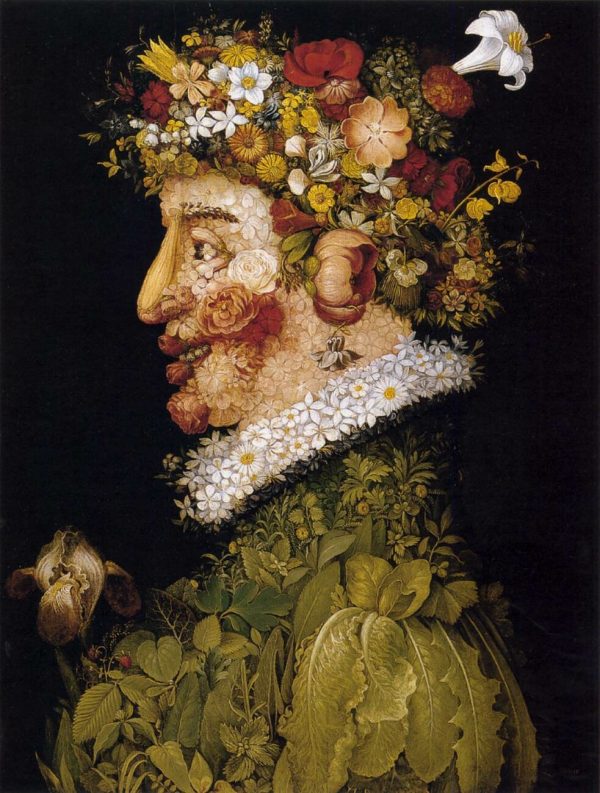
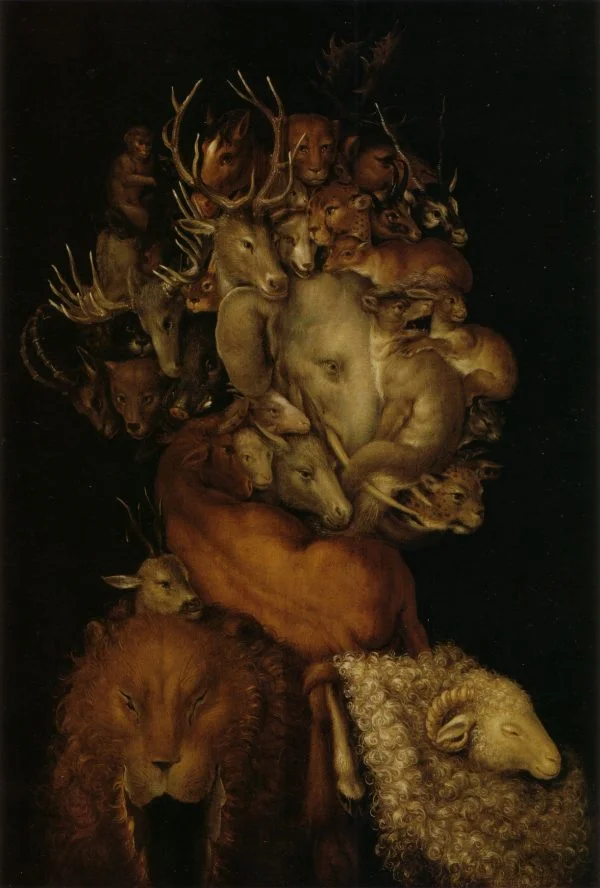
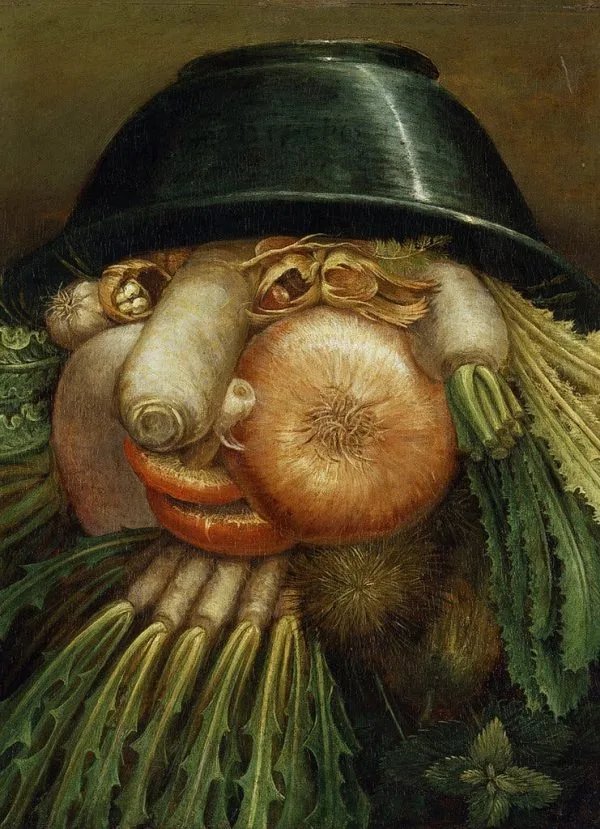
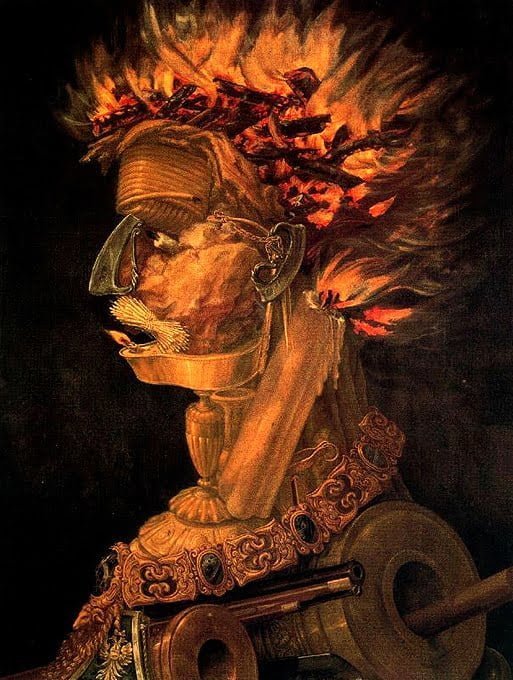
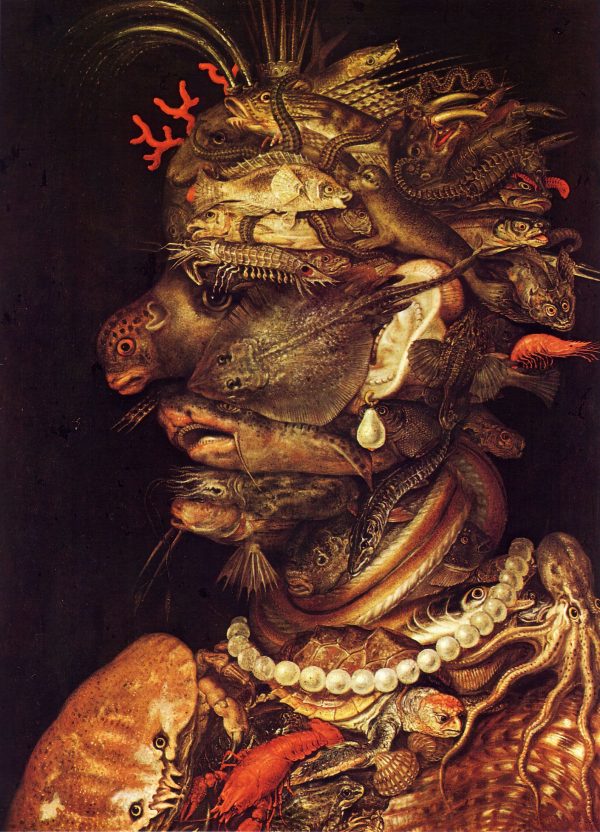
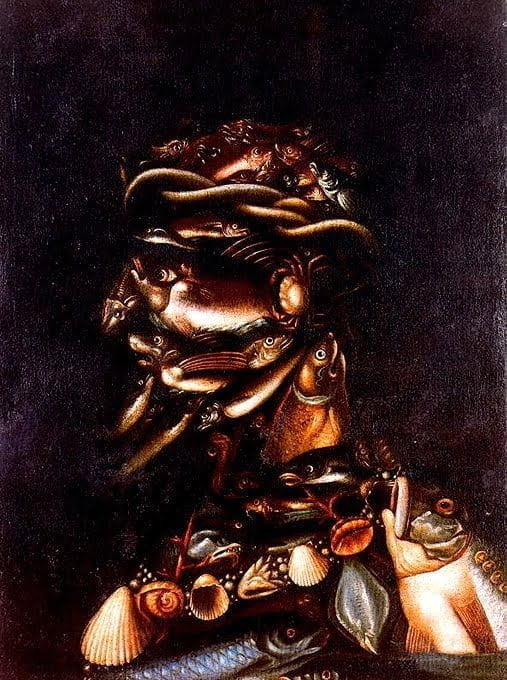
Arcimboldo painted heads that, close up, are not heads at all. Step in and you see fruit, vegetables, flowers, fish, birds or books; step back and they close into a profile with a brow, a cheek and an ear. A painting like this reads twice – as a portrait from across the room and as a still life up close – which is why it keeps a room’s attention long after it is hung.
At the Habsburg court these heads were admired as wit and learning, not as oddities: the abundance of nature, the turning year and the elements of the world were arranged into a compliment to the emperor.
The Four Seasons and the Four Elements
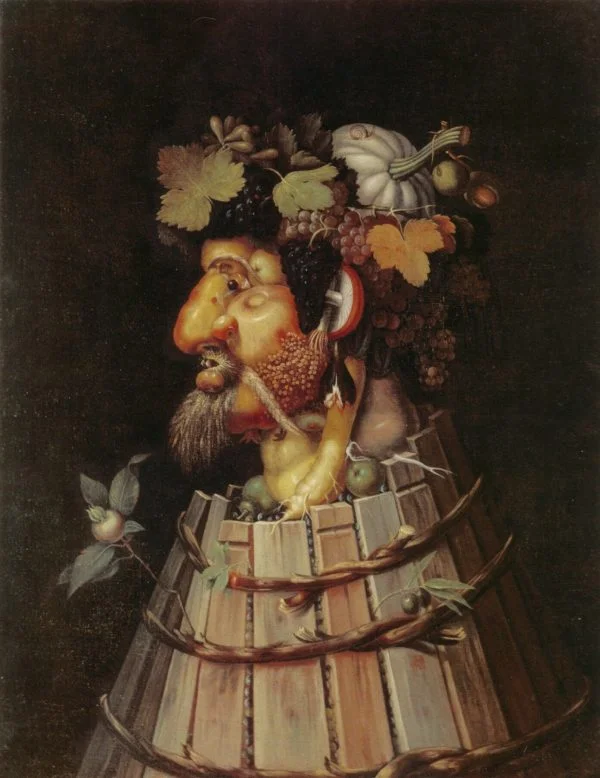
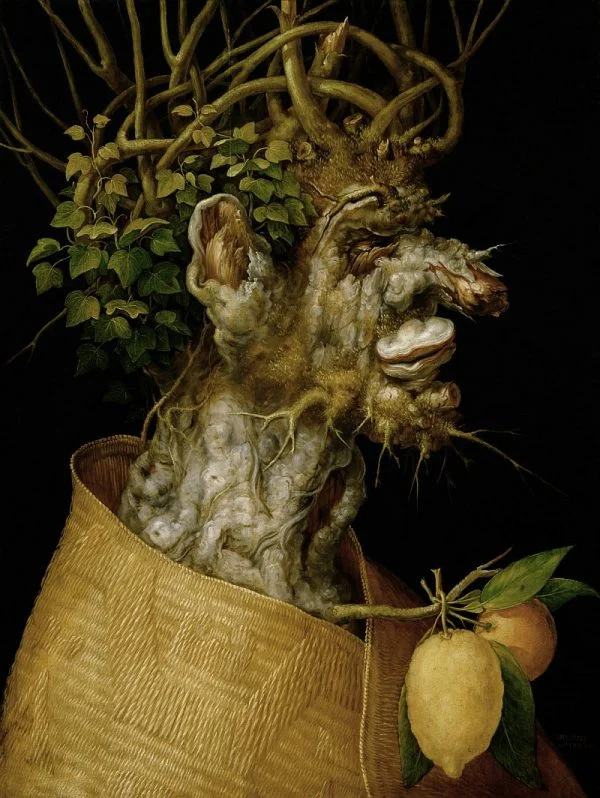
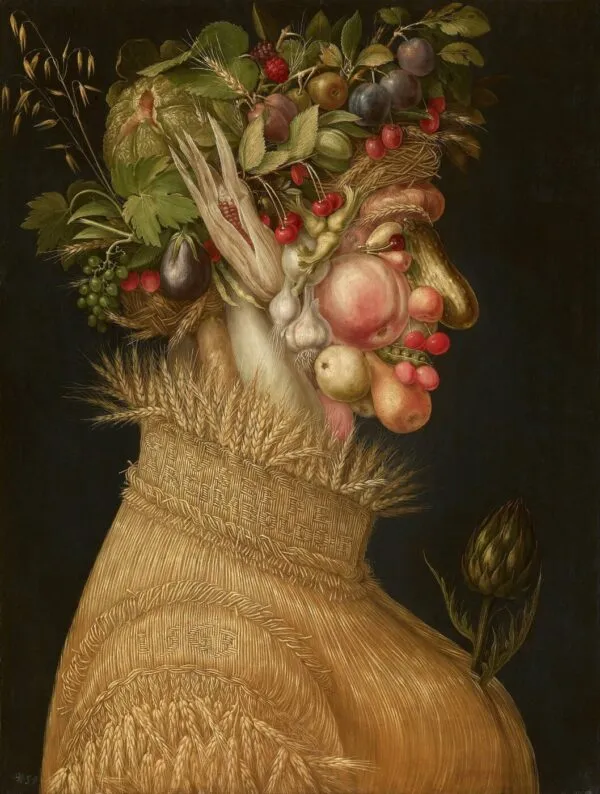
Both cycles are available in full. The Seasons – Spring, Summer, Autumn and Winter – were first painted in 1563 for Emperor Maximilian II, and Arcimboldo repeated them later; a complete set from 1573 is in the Louvre in Paris. Spring is a head of flowers, Summer of ripe fruit and grain, Autumn of grapes, apples and a barrel, and Winter an old, gnarled tree trunk. Our Autumn follows Arcimboldo’s design.
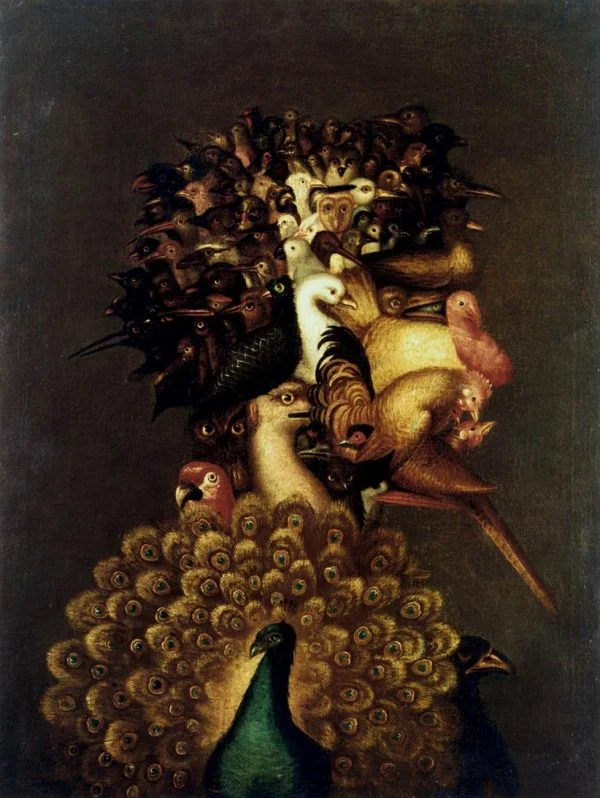
The Elements – Air, Fire, Earth and Water – followed in 1566. Air is made of birds, Fire of burning wood, candles and weapons, Earth of animals, and Water of fish, shells and other sea creatures. The heads of the two cycles were designed in facing pairs, so they look at one another; hung as a set of four on one wall, they read first as a group and only then as separate paintings. The originals of Water and Fire are in the Kunsthistorisches Museum in Vienna.
The Librarian, Vertumnus and other portraits
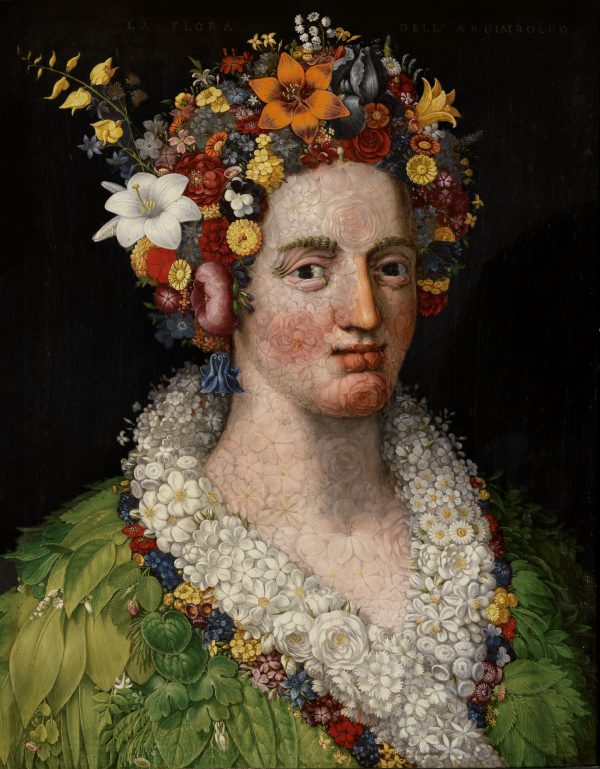
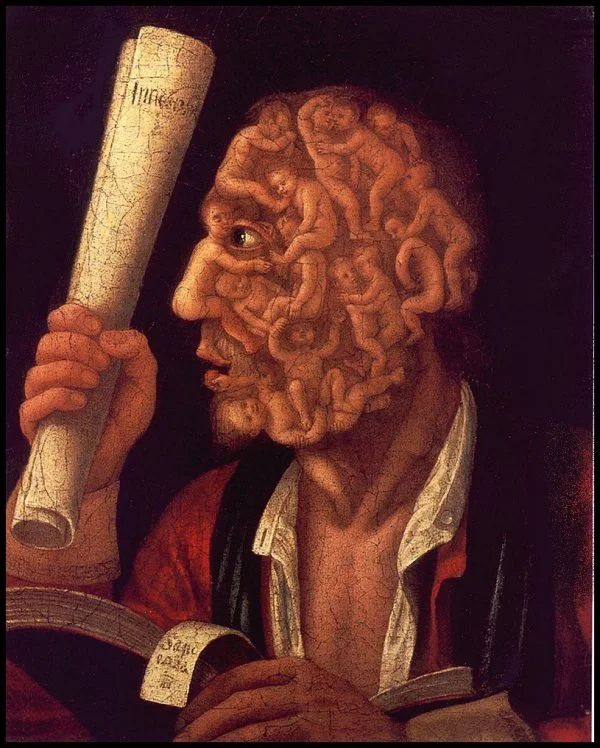
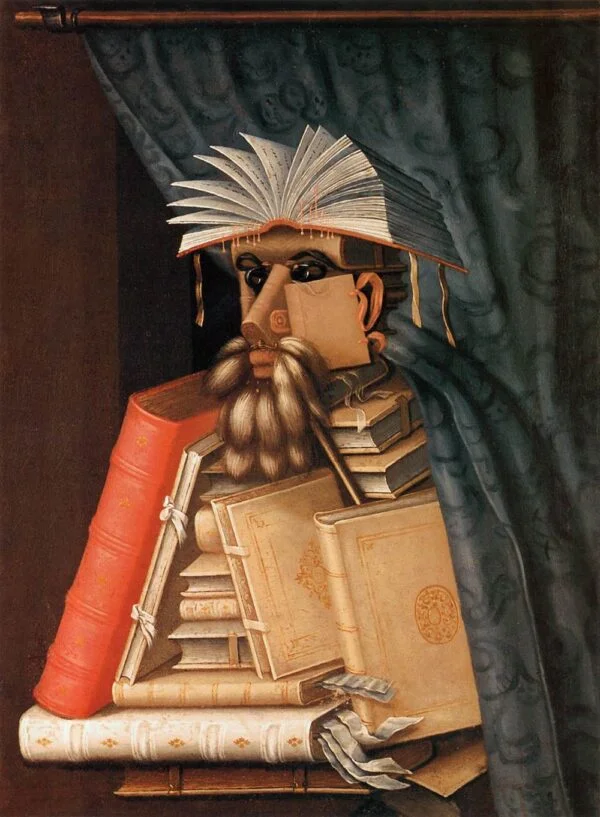
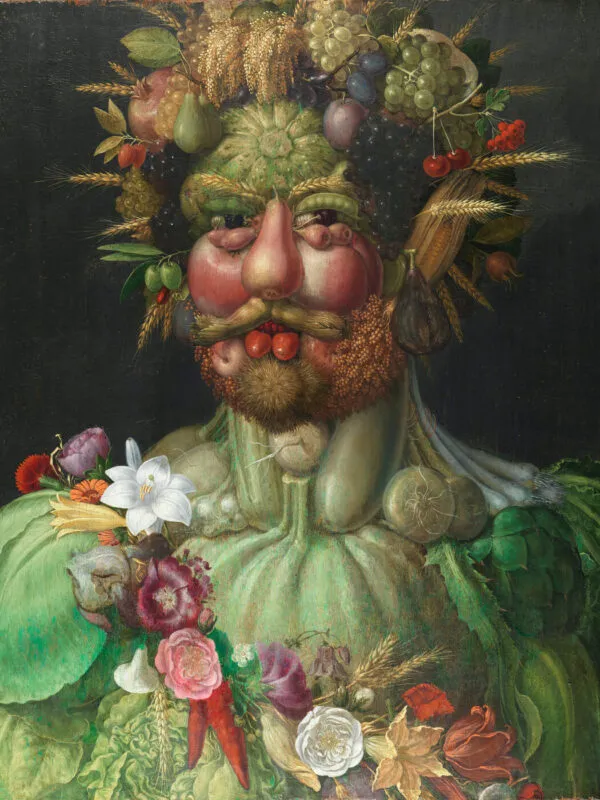
The Librarian (about 1566) is a man built entirely from books; the original is at Skokloster Castle in Sweden. Rudolf II (Holy Roman Emperor) as Vertumnus (1590–91) shows Emperor Rudolf II as Vertumnus, the Roman god of the seasons and of growth, made of fruit, vegetables and flowers from every season of the year; it is also at Skokloster. Flora is the goddess of flowers composed of blossoms. Portrait with Vegetables (The Greengrocer) is one of his reversible pictures: one way up it is a bowl of vegetables, turned upside down it becomes a man’s face; the original is in the Museo Civico Ala Ponzone in Cremona. Admiral and Adam are composite heads painted in the manner of Arcimboldo.
Which Arcimboldo suits which room?
The heads of fruit and vegetables – Summer, Autumn, Rudolf II (Holy Roman Emperor) as Vertumnus and Portrait with Vegetables (The Greengrocer) – belong in a kitchen, a dining room, a restaurant or a wine bar, where the painting answers the table. The Librarian suits a study, a home library, a law office or a bookshop. Spring and Flora bring colour into a bedroom or a hallway. A set of four – the Seasons or the Elements – needs a long wall: hang the four in one row with equal gaps of 5 to 10 cm, or two above two. For a single painting, choose one about two thirds as wide as the furniture below it, and hang it so that its centre sits about 150 cm above the floor.
Sizes, prices, custom size and frame
Each painting has its own range of sizes, matched to the proportions of the original, and the product page shows the price of every size. Sizes run from 24 x 35 cm up to 131 x 170 cm, and prices start at 350 €. Arcimboldo’s heads are dense with detail – every fruit, leaf and feather is painted separately – so these paintings take more work than most. For a set of four, choose the same size for all four paintings so that they line up on the wall. If your wall needs a different measurement, send us the width and height: we paint the painting in your size. A frame is available on request, and our 3D application shows our frame profiles on the painting you choose. For a gift, a wall art voucher lets the recipient choose the painting and the size.
How we hand-paint an Arcimboldo
Every painting is painted to order by hand in oil or acrylic on canvas, layer by layer, by our painters, who work in different locations. With Arcimboldo the work is in the detail and in the double reading: each fruit, flower, fish or book must be recognisable on its own, and together they must still form a convincing face against the dark ground. Because each canvas is painted by hand, every copy is slightly different. Stretching and framing are done in our workshop in Slovenia, and you choose how the painting is sent: rolled, stretched on a wooden stretcher ready to hang, or framed. Before dispatch we send you a photograph of the finished painting, and if something is not right, we correct it before the painting is sent.
Giuseppe Arcimboldo in brief
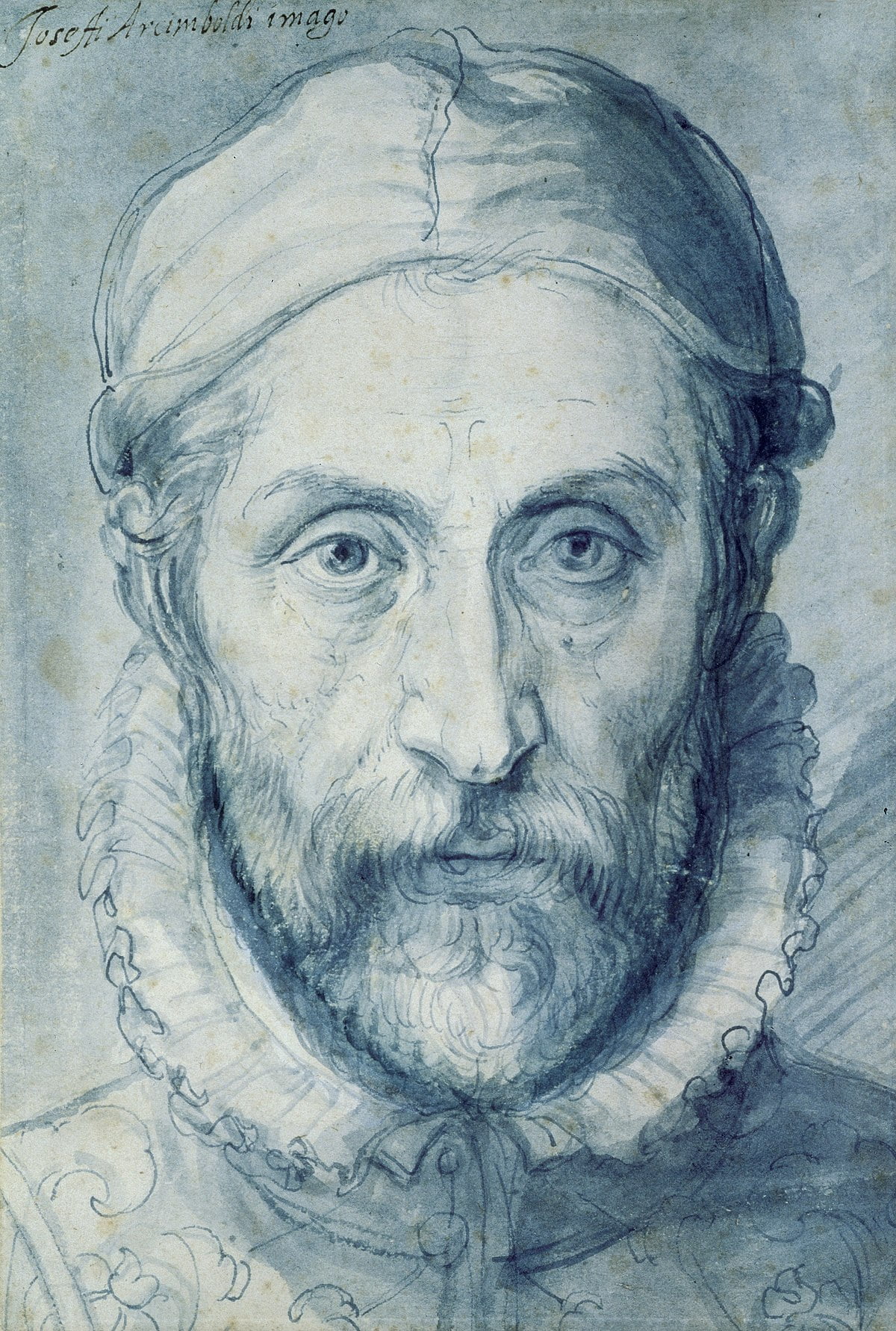
Giuseppe Arcimboldo was an Italian painter, born in Milan in 1526 or 1527, the son of the painter Biagio Arcimboldo. He began with designs for the stained-glass windows of Milan Cathedral, and in 1562 he moved to the Habsburg court in Vienna, where he served Ferdinand I, Maximilian II and then Rudolf II in Prague as portraitist and as designer of court pageants. He returned to Milan in 1587 and died there on 11 July 1593. Forgotten for centuries, he was rediscovered in the 20th century, when the Surrealists claimed him as a forerunner. Read more in Giuseppe Arcimboldo – life and interesting facts.
Frequently asked questions
Why did Arcimboldo paint faces made of fruit and vegetables?
At the Habsburg court his composite heads were a learned joke and a compliment at once: the seasons and the elements, made of the fruits, plants and animals of the world, stood for the harmony of nature under the emperor’s rule. Up close each detail is painted as precisely as a nature study.
What are the Four Seasons and the Four Elements?
Two cycles of four heads each: Spring, Summer, Autumn and Winter (first painted in 1563) and Air, Fire, Earth and Water (1566). All eight are available in our gallery as hand-painted oil paintings, one by one or as a set.
Where are the original Arcimboldo paintings?
Summer, Winter, Water and Fire are in the Kunsthistorisches Museum in Vienna, the 1563 Spring is in the Real Academia de Bellas Artes de San Fernando in Madrid, and a complete set of the Seasons from 1573 is in the Louvre. The Librarian and Vertumnus are at Skokloster Castle in Sweden, and The Greengrocer is in Cremona.
Can I order a whole set of four?
Yes. Order the four paintings of a cycle and choose the same size for each, so that they hang in one line. Each painting is painted by hand separately, and before dispatch you receive a photograph of every one.
How much does a hand-painted Arcimboldo copy cost?
Prices start at 350 € and depend on the painting and the size you choose; every product page lists the price of each size. Arcimboldo’s detailed compositions take more painting time than most works, which is reflected in the price.
Which size should I choose?
Measure the furniture below where the painting will hang and choose a painting about two thirds of its width: above a three-seater sofa that is usually 120 to 160 cm, above a desk or in a hallway 50 to 70 cm. A set of four needs a wall of at least 2 m for medium sizes. If none of the listed sizes fits, we paint the painting in your size.
How is the painting sent – rolled, stretched or framed?
As you choose: rolled, stretched on a wooden stretcher and ready to hang, or framed. Stretching and framing are done in our workshop in Slovenia, and the painting is wrapped in protective film and packed in a sturdy box.
How long does delivery take?
Each painting is painted to order, so delivery takes 15 to 45 working days, depending on the size. Before dispatch you receive a photograph of the finished painting.