




“What seems grey is a compound of light shades that a trained eye divines.”
Paul Gauguin – hand-painted paintings in oil on canvas
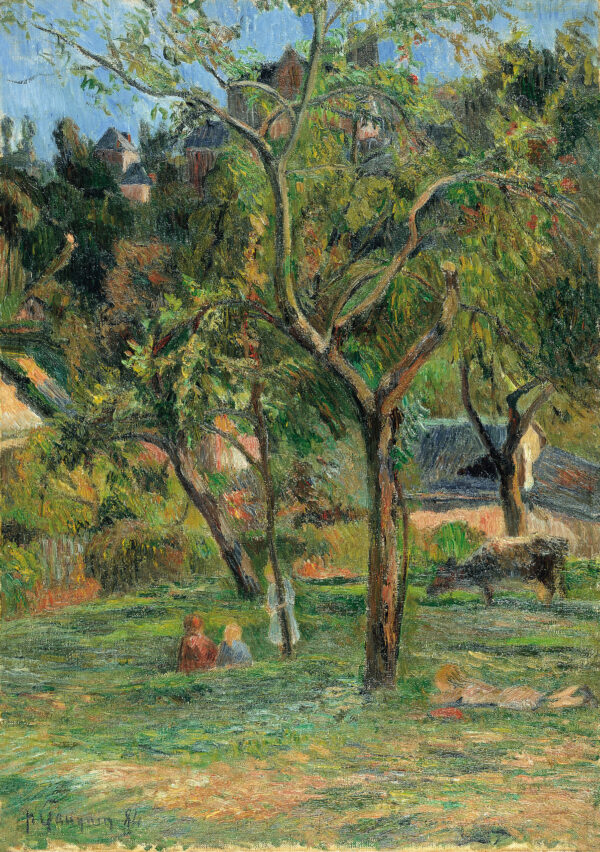
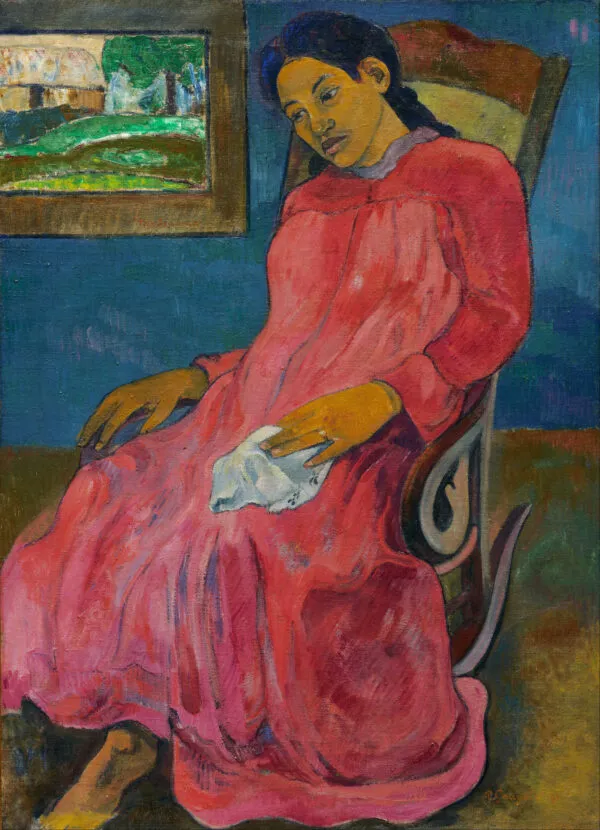
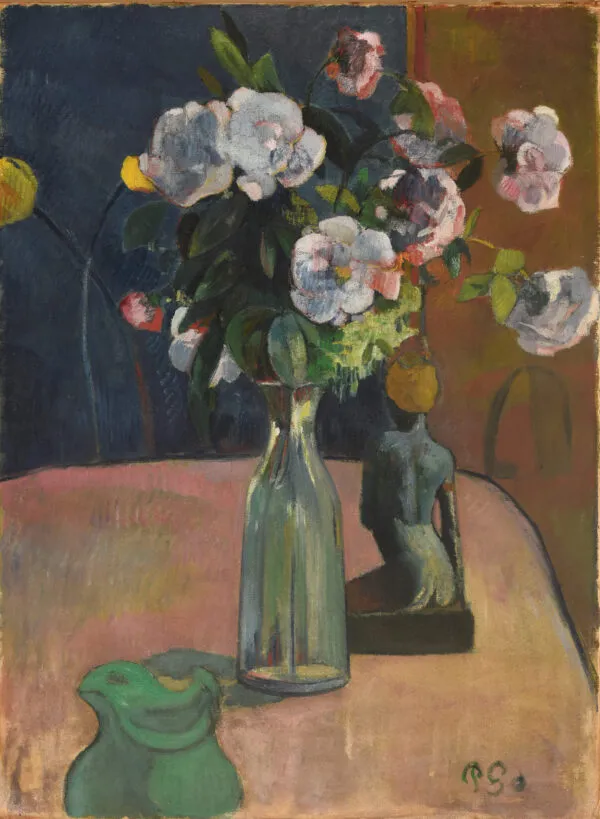
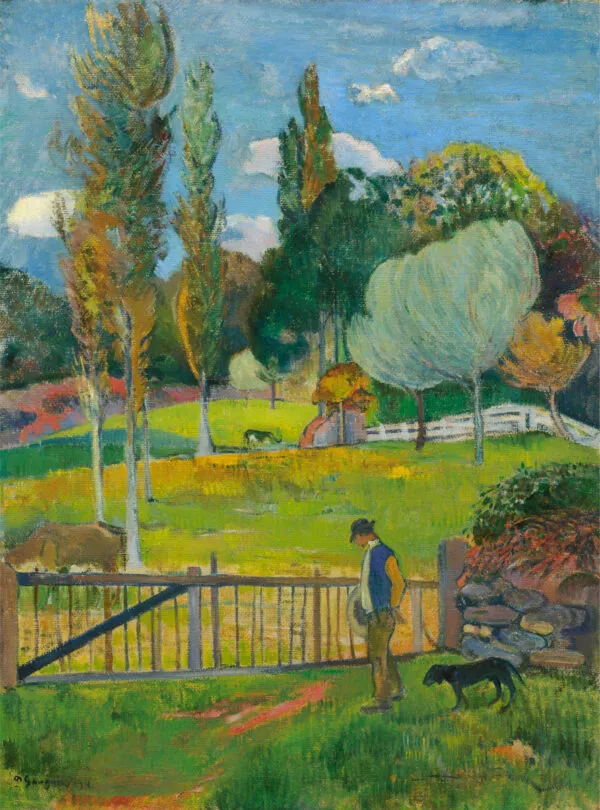
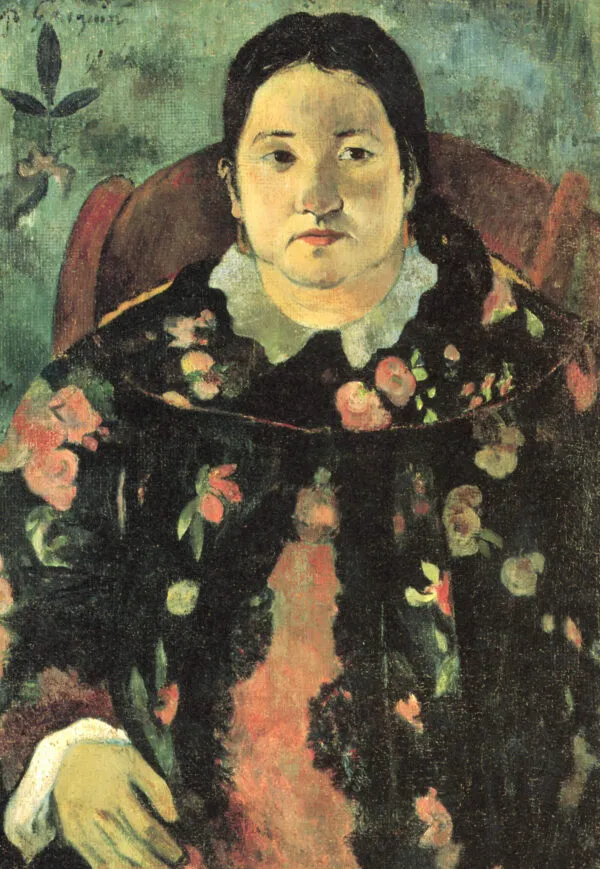
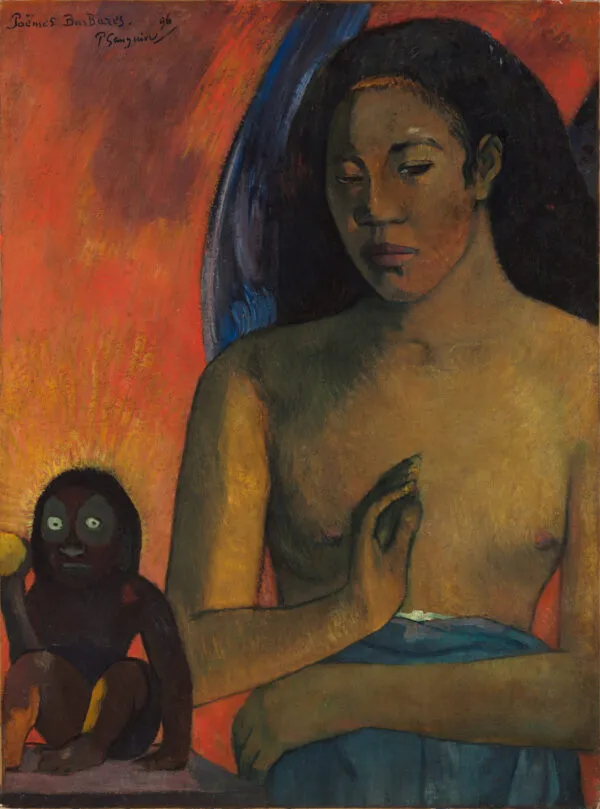
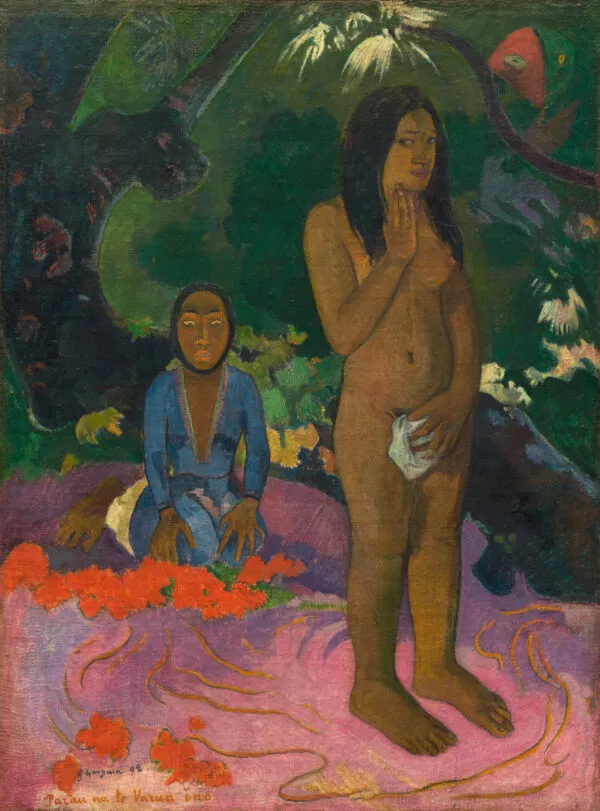
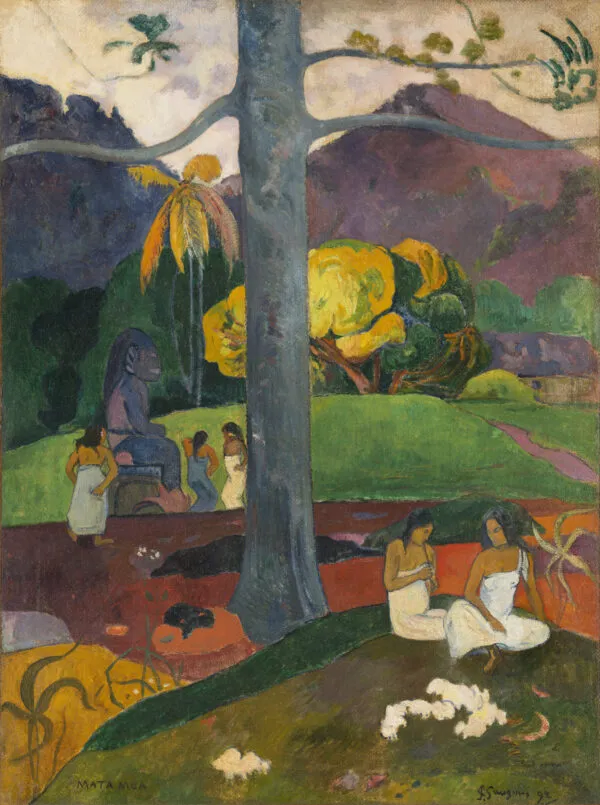
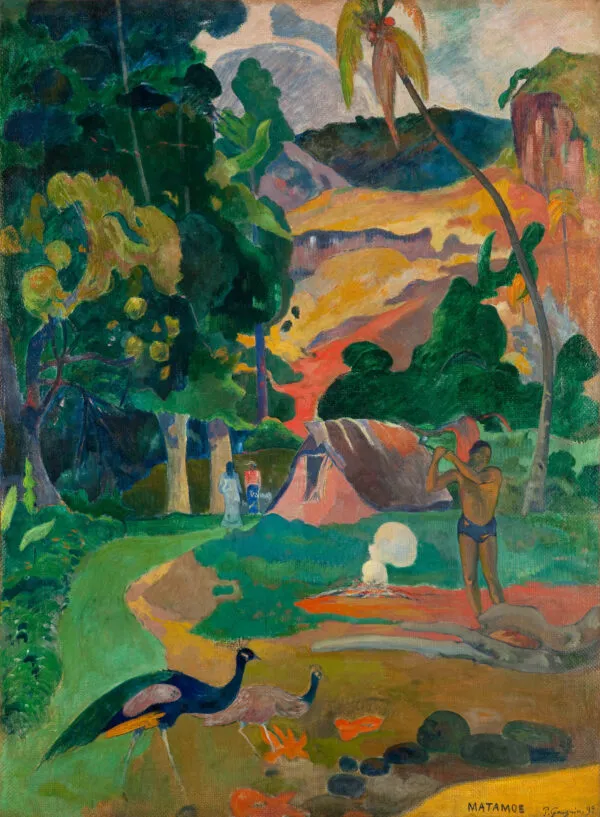
At SvetSlik.si you can order 81 paintings by Paul Gauguin as hand-painted oil reproductions on canvas, from the Breton scenes of Pont-Aven to the bright colours of Tahiti, including Where Do We Come From? What Are We? Where Are We Going?, Arearea (Joyousness) and Three Tahitian Women. Every painting is painted to order by hand by our painters – it is not a print. Each comes in several sizes – 156 formats across the gallery, from 23 x 19 cm to 375 x 139 cm – or in a size you give us, and prices start at 108 €. Before dispatch we send you a photograph of the finished painting for your approval, and delivery takes 15 to 45 working days.
Where Do We Come From? and Arearea – the most searched
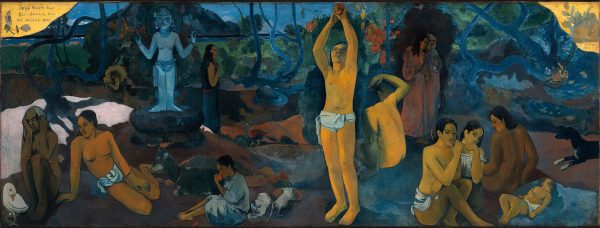
Where Do We Come From? What Are We? Where Are We Going? (1897–98) is the large frieze Gauguin painted in Tahiti and considered his most important work. It is read from right to left, from a sleeping baby to an old woman at the end of life, with a blue idol in the background. The original hangs in the Museum of Fine Arts in Boston. Its long, narrow format makes it a natural choice above a sofa or a sideboard.
Arearea (Joyousness) (1892) shows two Tahitian women sitting under a tree, one playing a flute, with a red dog in the foreground. The Tahitian title means joyfulness or amusement, and the painting hangs in the Musée d’Orsay in Paris.
Gauguin’s paintings in our gallery
Gauguin was a stockbroker in Paris before he became a painter, and his work reads as a journey south: from Paris to Brittany, Arles and finally the South Seas. Choose a period first and the painting second.
Paris and Brittany (1879–1890)
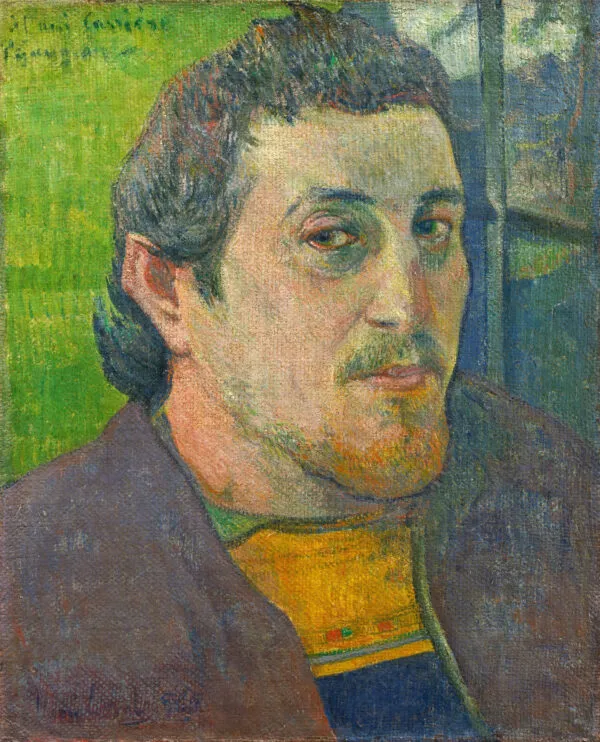
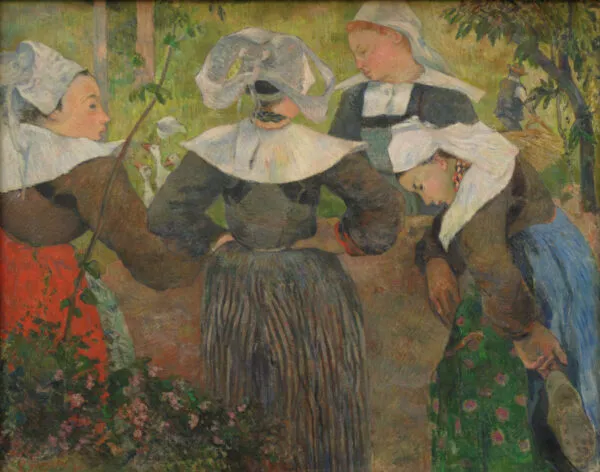
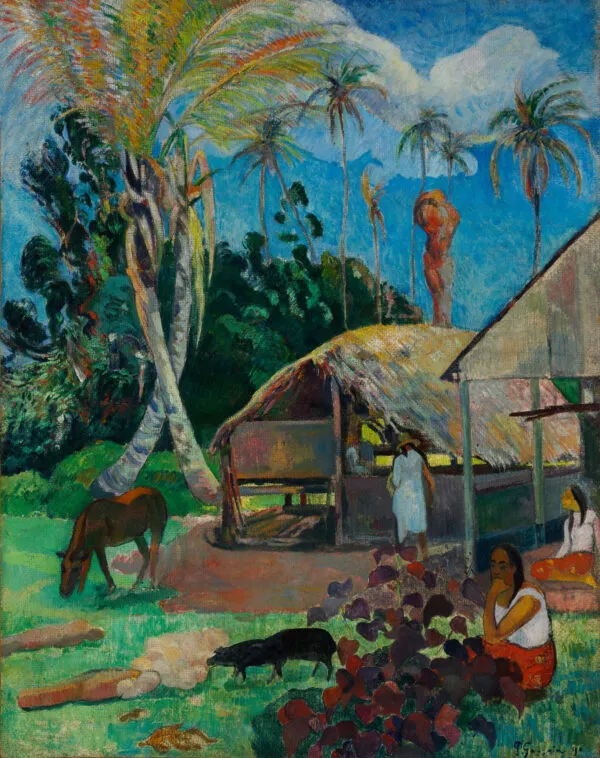
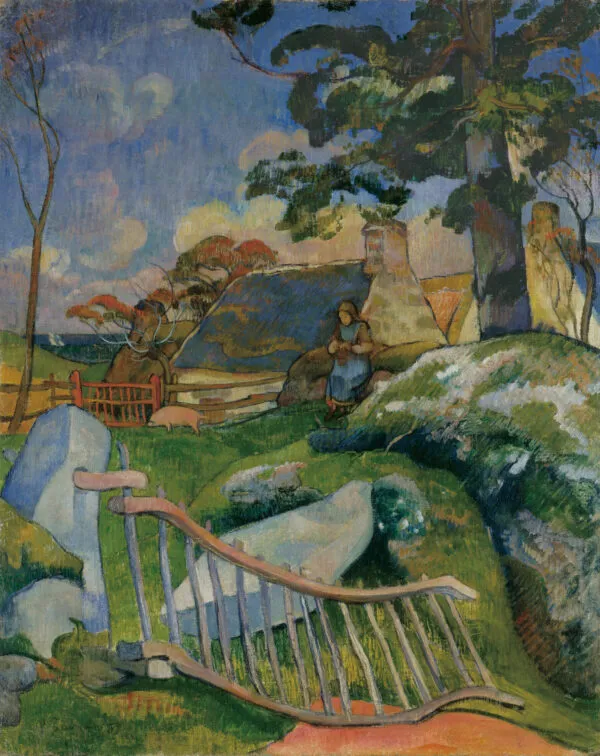
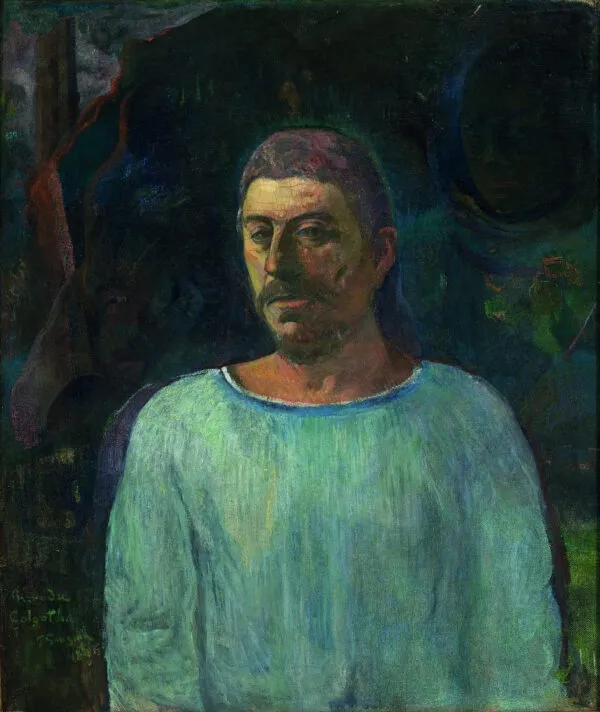
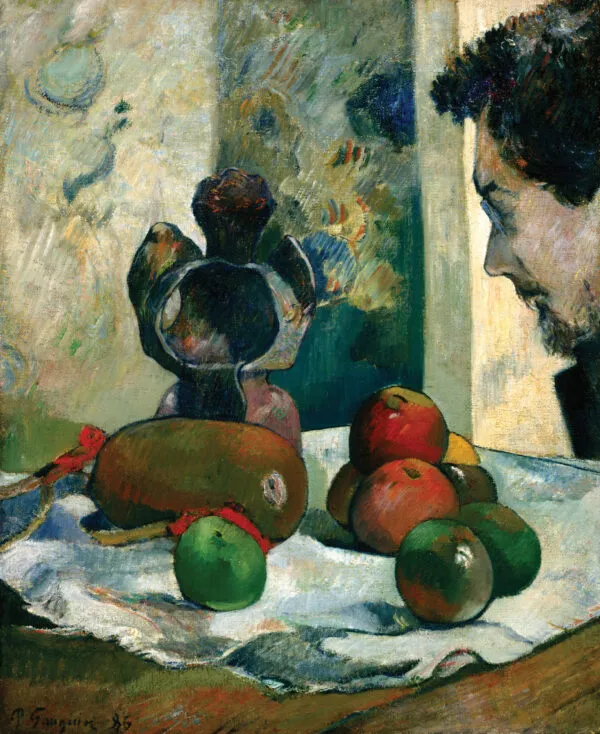
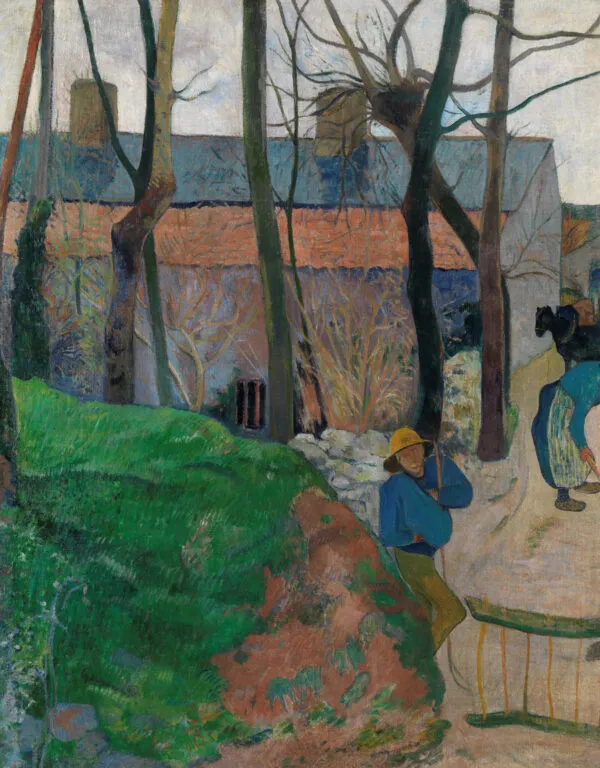
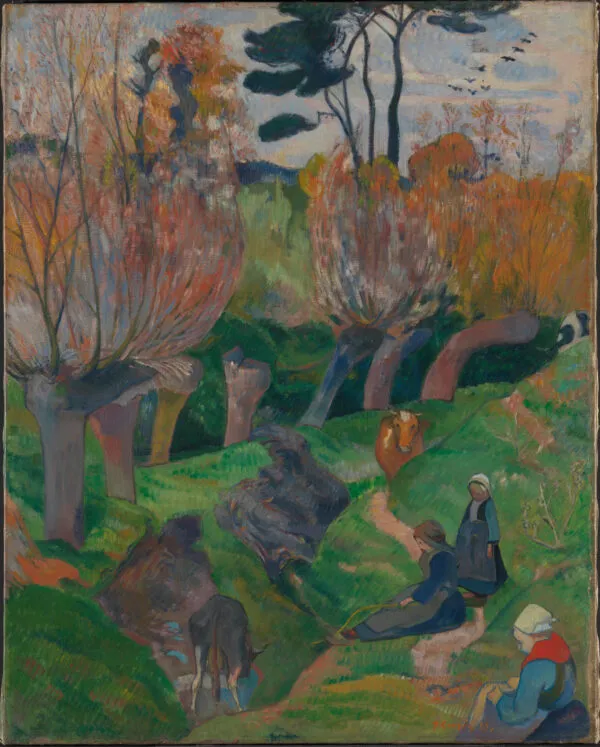
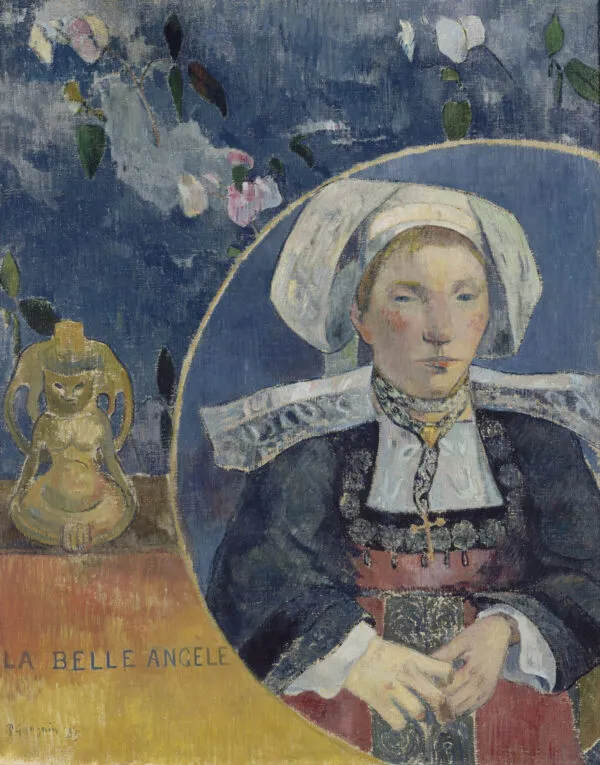
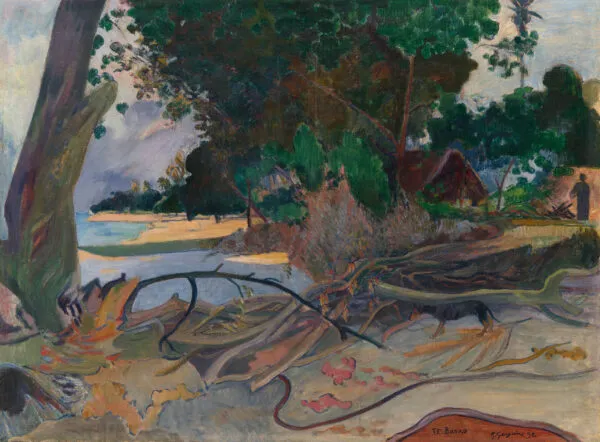
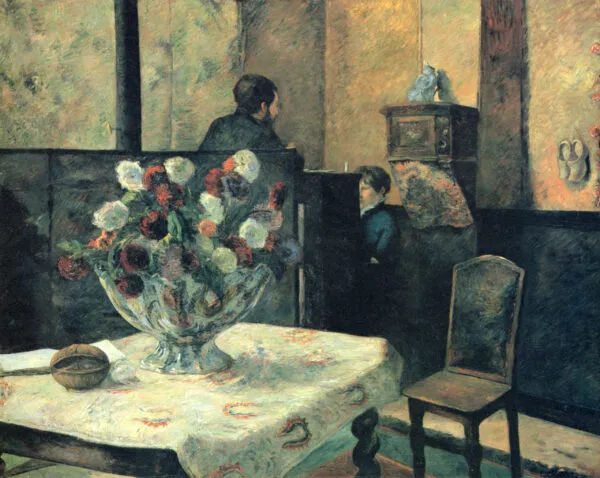
His early The Market Gardens of Vaugirard is still close to the Impressionists. In Pont-Aven in Brittany he began to paint in flat, outlined planes of colour: Breton Girls Dancing, Pont-Aven and Vision of the Sermon (Jacob Wrestling with the Angel), where Breton women after a sermon see Jacob wrestling with the angel. The Yellow Christ and The Green Christ place Christ in the Breton countryside among local women, and Portrait of the Artist with the Yellow Christ shows him in front of his own Yellow Christ. From the same years come La belle Angèle, Four Breton Women and The Black Pigs.
Arles with Van Gogh (1888)
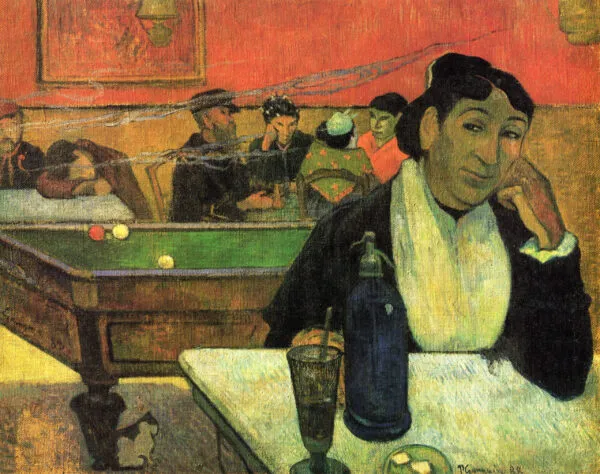
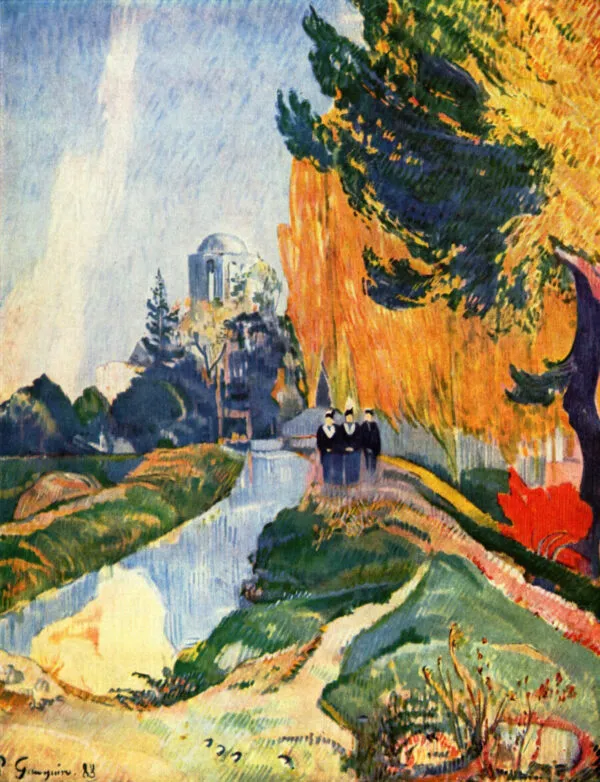
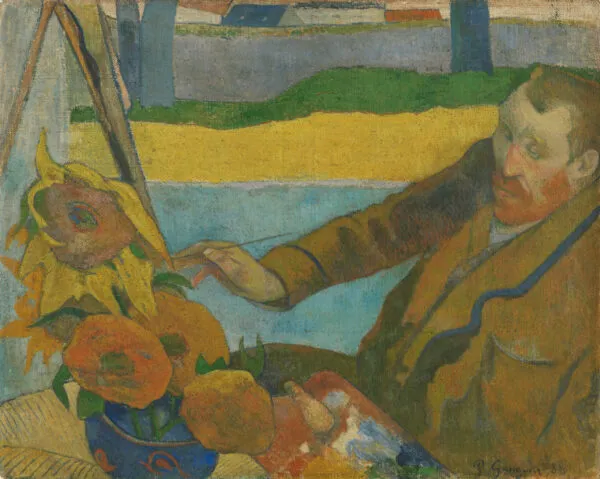
In late 1888 Gauguin spent nine weeks with Vincent van Gogh in Arles. There he painted Vincent van Gogh Painting Sunflowers, Les Alyscamps and Café at Arles – a short, intense stay that ended after their quarrel in December.
Tahiti and the South Seas (1891–1903)
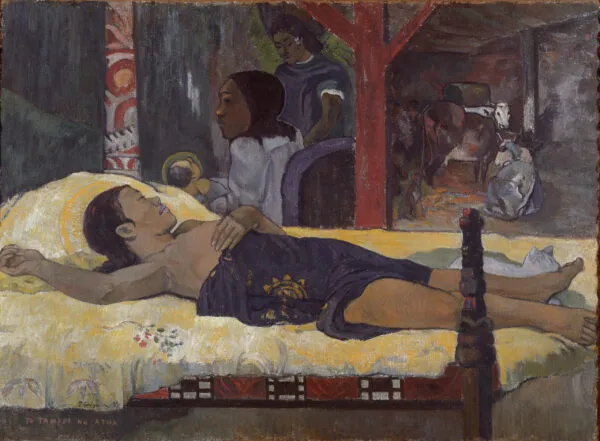
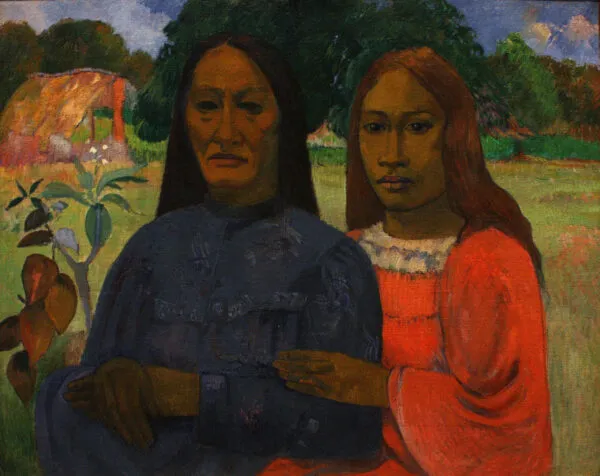
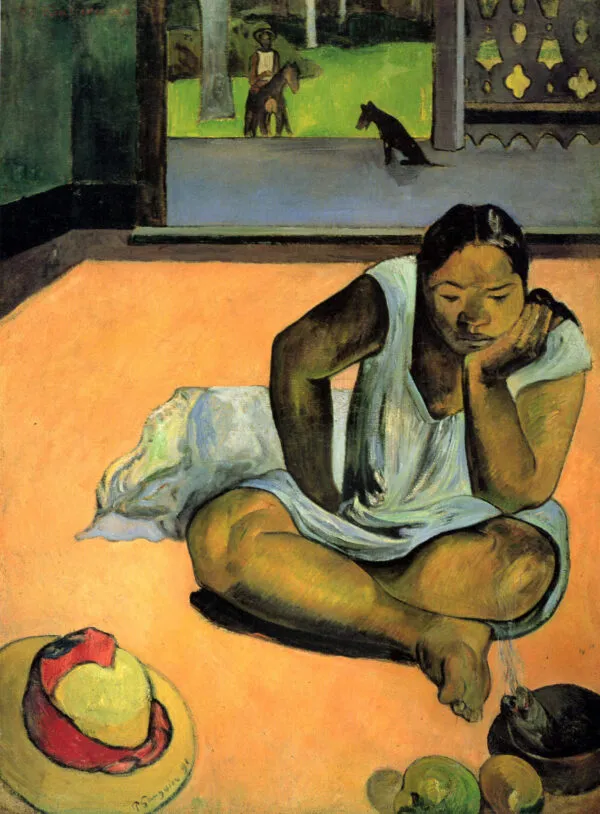
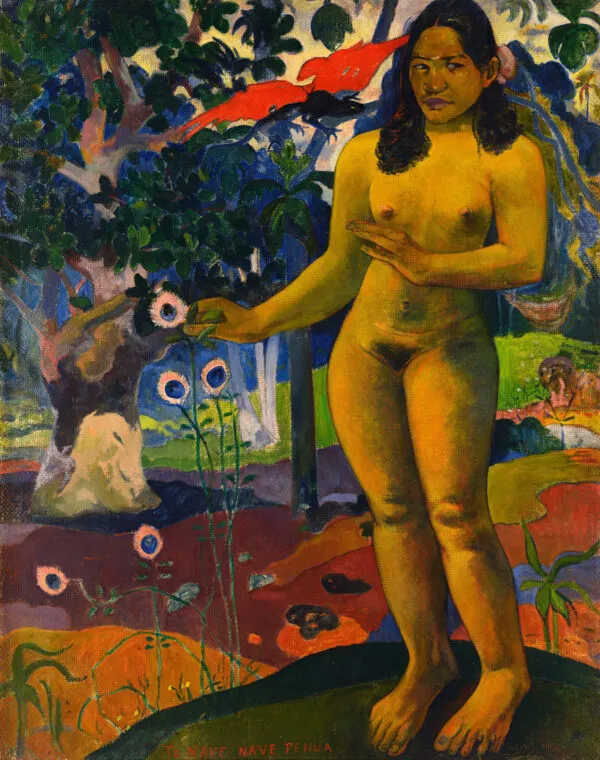
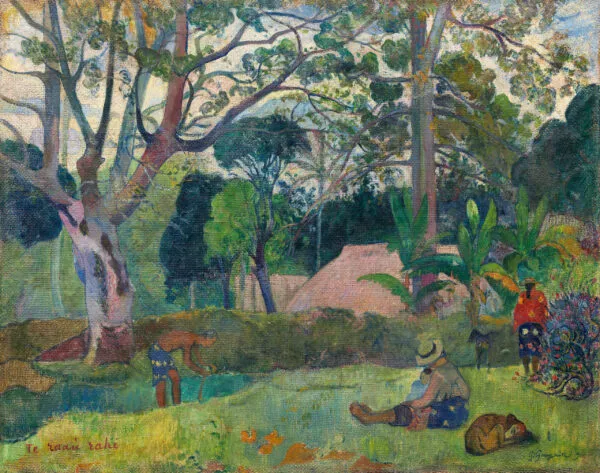
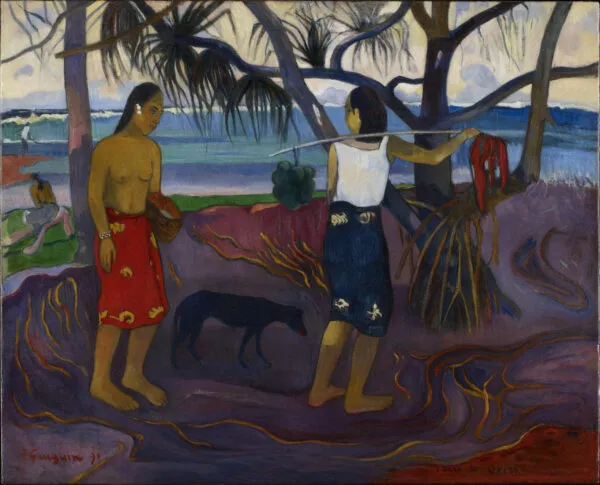
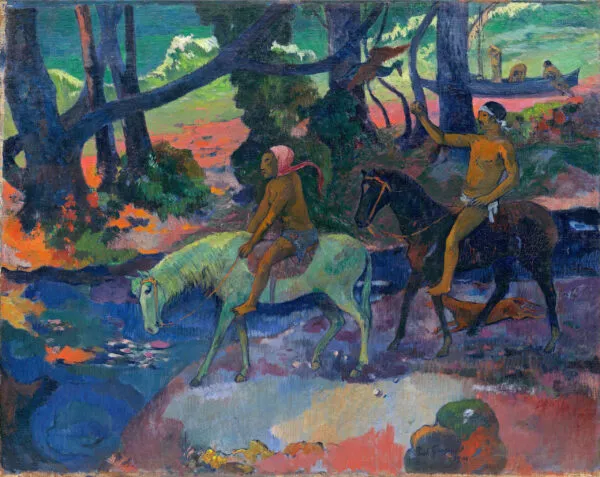
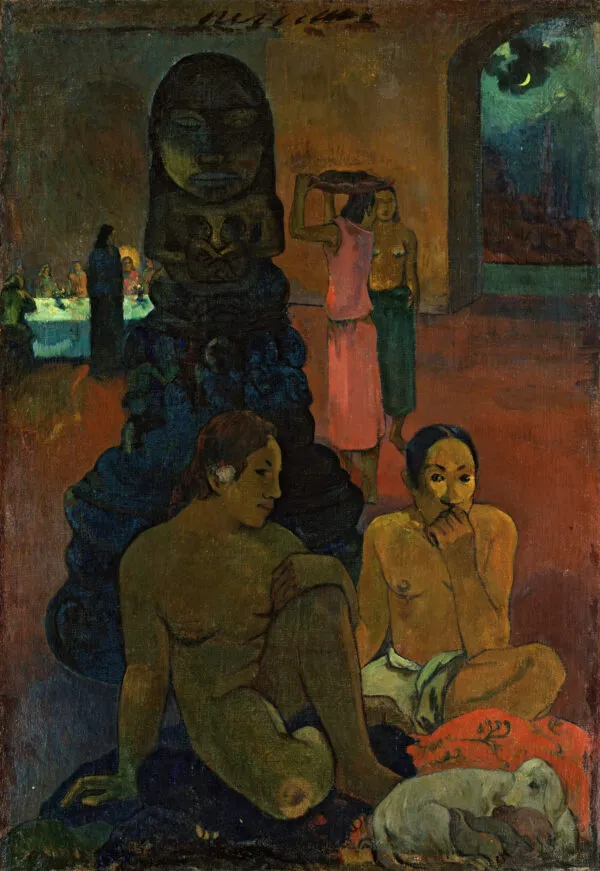
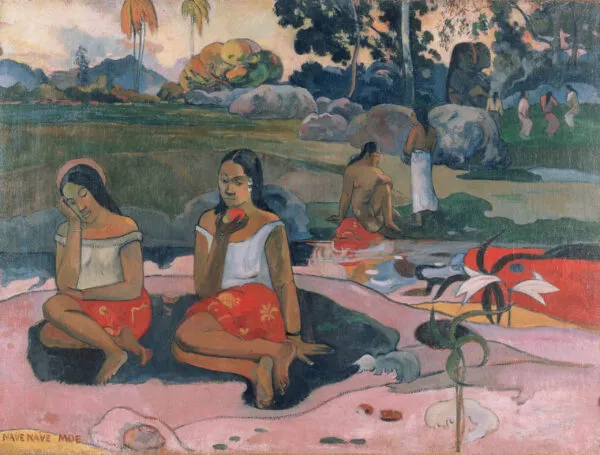
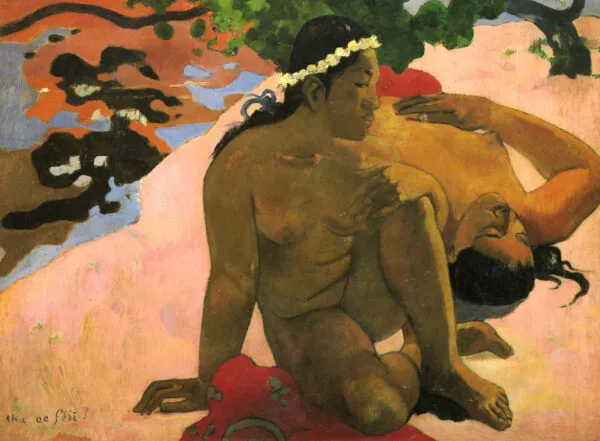
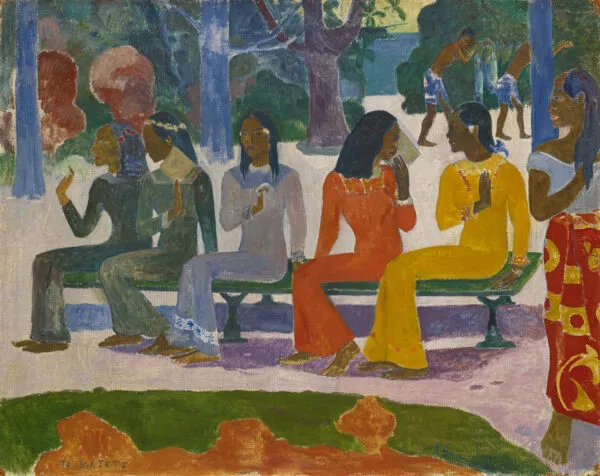
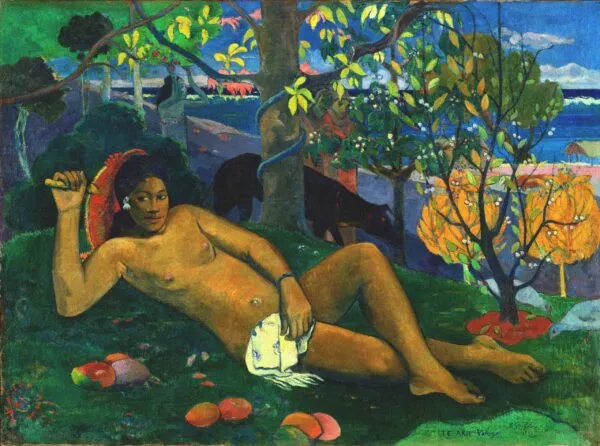
In 1891 Gauguin sailed to Tahiti, and his colours became bold and symbolic. Ia Orana Maria shows a Tahitian mother and child as the Virgin and Jesus, and Fatata te Miti (By the Sea) women bathing in the sea. Tahitian Women on the Beach, Two Tahitian Women, Three Tahitian Women and The Siesta are scenes of Tahitian women at rest, Ta matete (The Market) a group of women on a bench, and Mahana no atua (Day of the God) a celebration before a great idol. Spirit of the Dead Watching (Manao tupapau) and Nevermore (O Tahiti) are darker night scenes with a reclining nude, while Woman Holding a Fruit; Where Are You Going?, Aha oe feii? (What! Are You Jealous?), Nave nave moe (Sacred Spring) and The Birth (Te tamari no atua) belong to his most colourful Tahitian work.
Which Gauguin suits which room?
Gauguin’s Tahitian paintings bring warm, saturated colour into a room: Arearea (Joyousness), Three Tahitian Women or Tahitian Women on the Beach suit a living room, a dining room or a bright hallway. The wide Where Do We Come From? What Are We? Where Are We Going? belongs above a long sofa or a sideboard. The Breton scenes, such as Breton Girls Dancing, Pont-Aven or Vision of the Sermon (Jacob Wrestling with the Angel), are calmer and suit a study or a reading corner, while The Yellow Christ and Ia Orana Maria are a natural gift for a christening or a wedding. Choose a painting about two thirds as wide as the furniture below it, and hang it so that its centre sits about 150 cm above the floor.
Sizes, prices, custom size and frame
Each painting has its own range of sizes, matched to the proportions of the original, and the product page shows the price of every size. Across the gallery there are 156 formats, from 23 x 19 cm to 375 x 139 cm, and prices start at 108 €. If your wall needs a different measurement, send us the width and height: we paint the painting in your size. A frame is available on request, and our 3D application shows our frame profiles on the painting you choose. For a gift, a wall art voucher lets the recipient choose the painting and the size.
How we hand-paint a Gauguin
Every painting is painted to order by hand in oil or acrylic on canvas, layer by layer, by our painters, who work in different locations. With Gauguin the work is in the colour: large flat areas of pure, saturated paint, dark outlines and the slightly matt surface of his canvases. Because each canvas is painted by hand, every copy is slightly different. Stretching and framing are done in our workshop in Slovenia, and you choose how the painting is sent: rolled, stretched on a wooden stretcher ready to hang, or framed. Before dispatch we send you a photograph of the finished painting, and if something is not right, we correct it before the painting is sent.
Paul Gauguin in brief
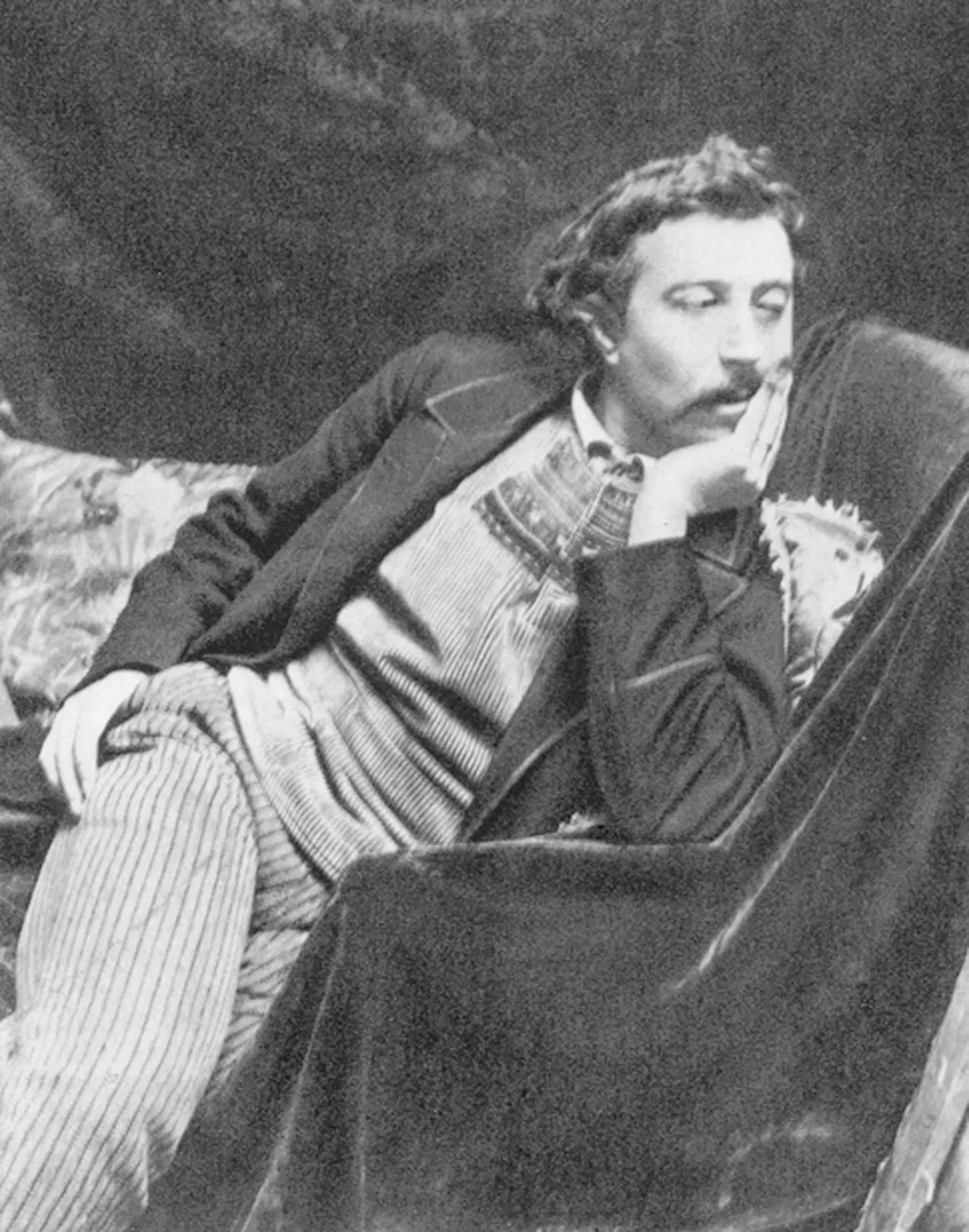
Paul Gauguin was born on 7 June 1848 in Paris and spent part of his childhood in Peru. He worked as a stockbroker and only became a full-time painter in 1883. He painted in Brittany, in Arles with Van Gogh and, from 1891, in Tahiti and the Marquesas Islands, and is counted among the founders of Synthetism and Symbolism in painting. He died on 8 May 1903 at Atuona on the island of Hiva Oa. Read more in Paul Gauguin – life and interesting facts.
Frequently asked questions
What does the painting Where Do We Come From? What Are We? Where Are We Going? mean?
Gauguin painted it in Tahiti in 1897–98 as a summary of human life. Read from right to left, it moves from a newborn child through youth and adulthood to an old woman near death; the idol in the background stands for the beyond. The original is in the Museum of Fine Arts in Boston.
What does Arearea mean?
Arearea is Tahitian for joyfulness or amusement. The painting from 1892 shows two women resting under a tree, one playing a flute, with a red dog in front of them; the original is in the Musée d’Orsay in Paris.
Which are Gauguin’s most famous paintings?
Besides Where Do We Come From? and Arearea, the best known are Vision of the Sermon, The Yellow Christ, Ia Orana Maria, Spirit of the Dead Watching, Nevermore and Tahitian Women on the Beach. All of them are available in our gallery as hand-painted oil paintings.
How much does a hand-painted Gauguin copy cost?
Prices start at 108 € and depend on the painting and the size you choose; every product page lists the price of each size. Large formats such as Where Do We Come From? cost more.
Is your Gauguin painting a print?
No – every painting is painted by hand in oil or acrylic on canvas; it is not a print or a poster. You can see the brushwork and the texture of the paint, every copy is slightly different, and you see your painting in a photograph before dispatch.
Which size should I choose?
Measure the furniture below where the painting will hang and choose a painting about two thirds of its width: above a three-seater sofa that is usually 120 to 160 cm, above a desk or in a hallway 50 to 70 cm. If none of the listed sizes fits, we paint the painting in your size.
How is the painting sent – rolled, stretched or framed?
As you choose: rolled, stretched on a wooden stretcher and ready to hang, or framed. Stretching and framing are done in our workshop in Slovenia, and the painting is wrapped in protective film and packed in a sturdy box.
How long does delivery take?
Each painting is painted to order, so delivery takes 15 to 45 working days, depending on the size. Before dispatch you receive a photograph of the finished painting.