




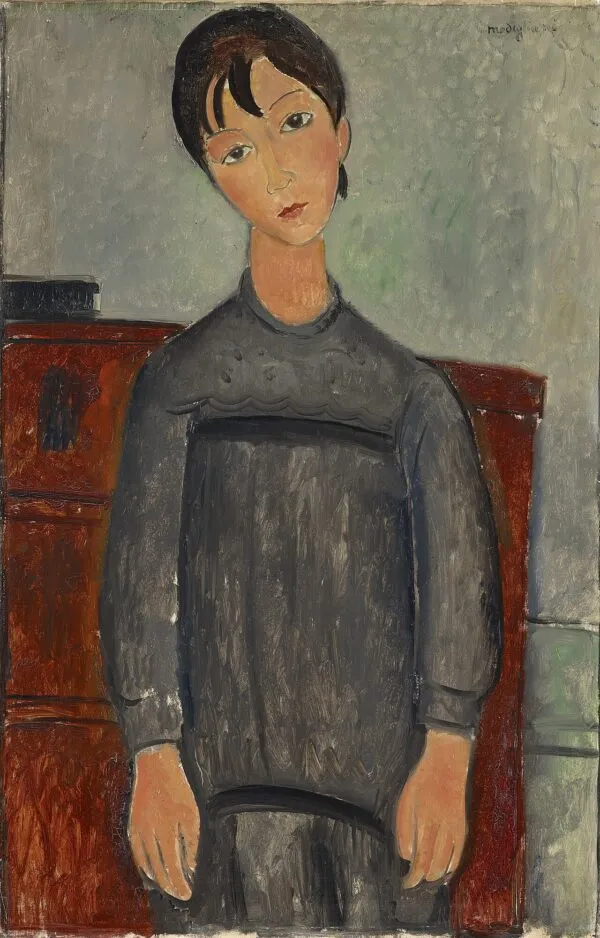
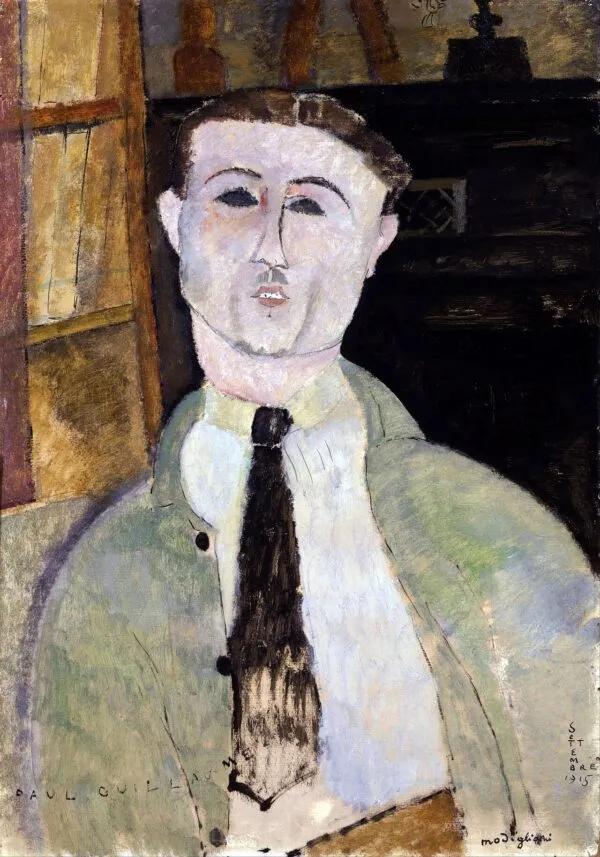
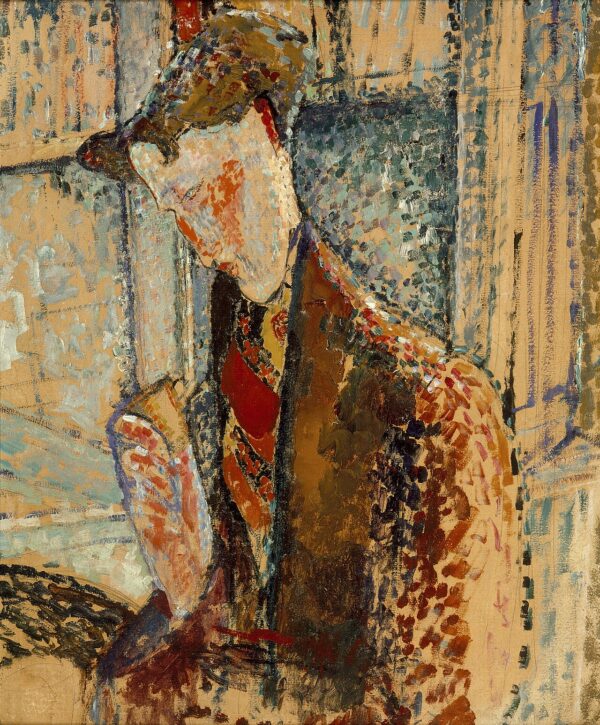
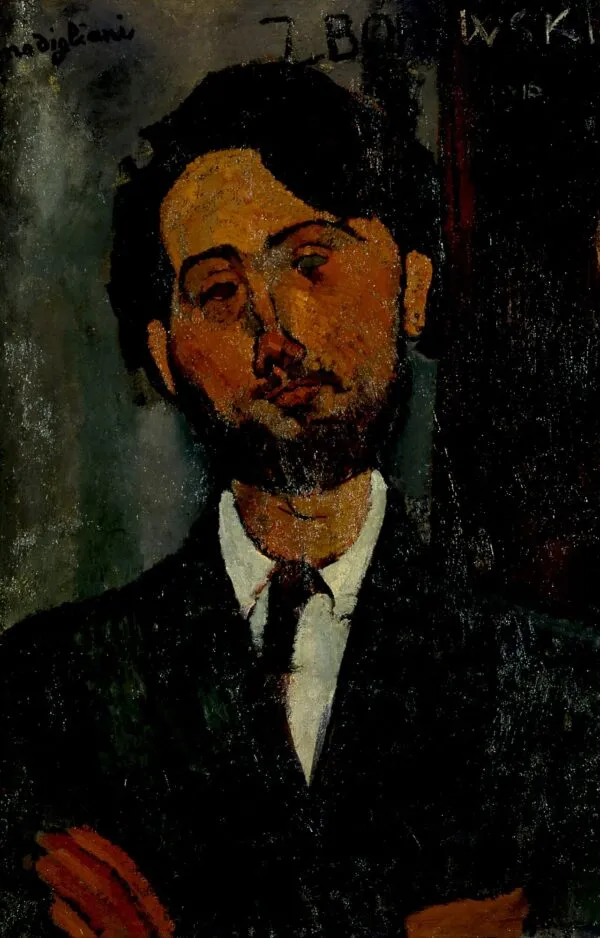
Amedeo Modigliani – hand-painted reproductions on canvas
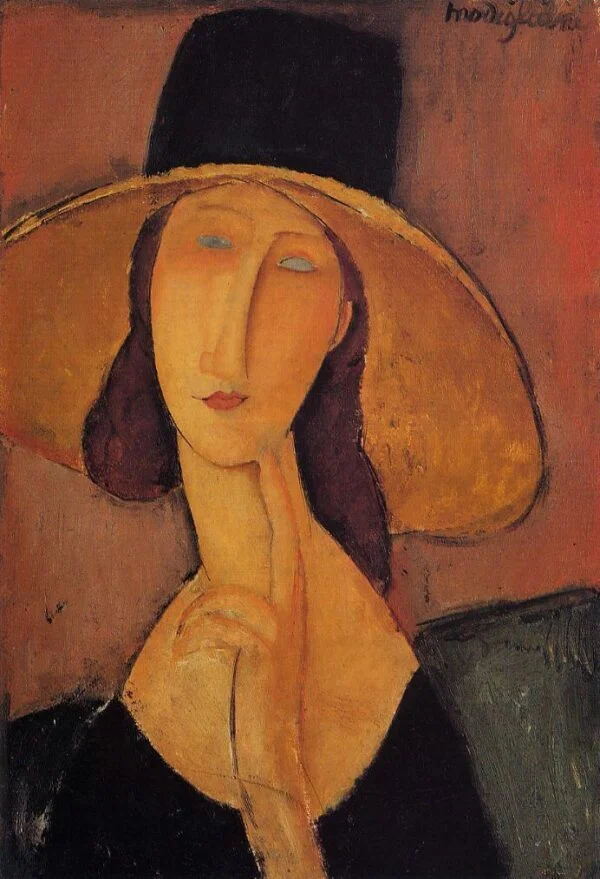
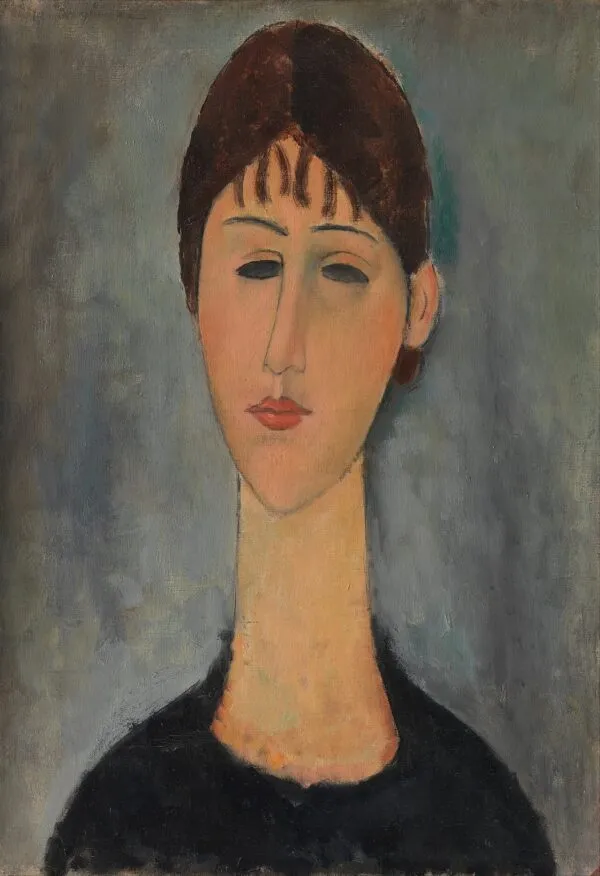
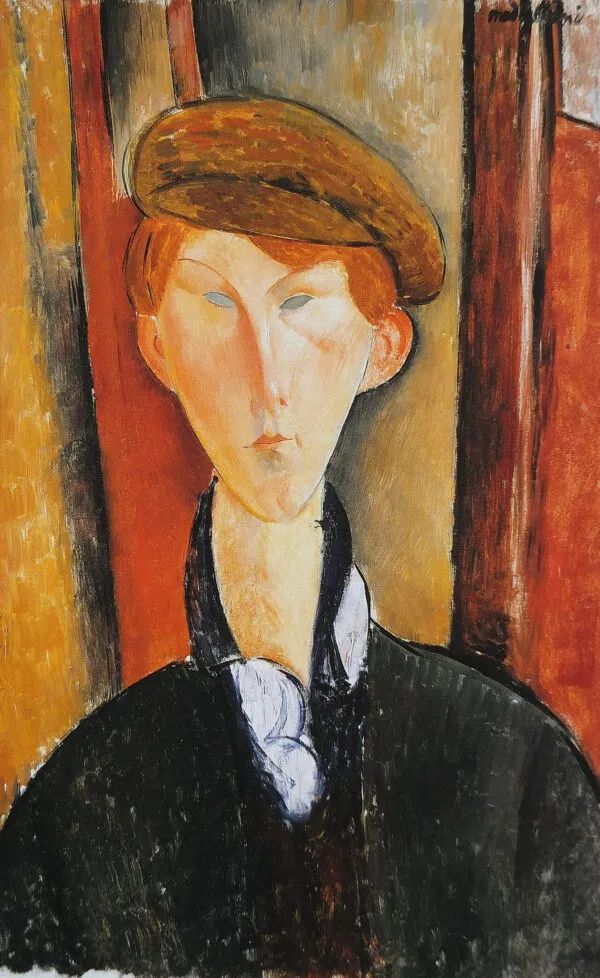
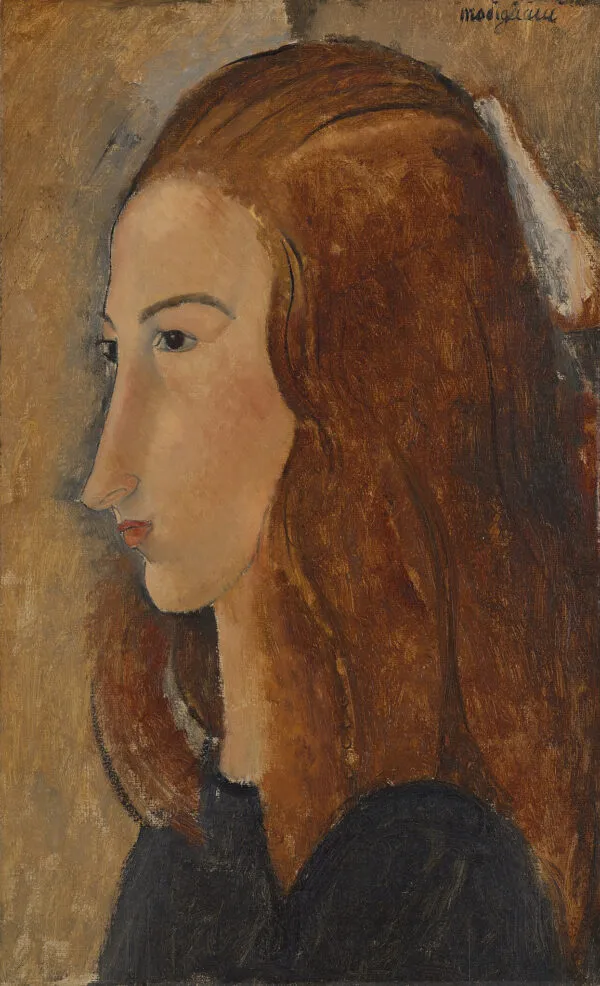
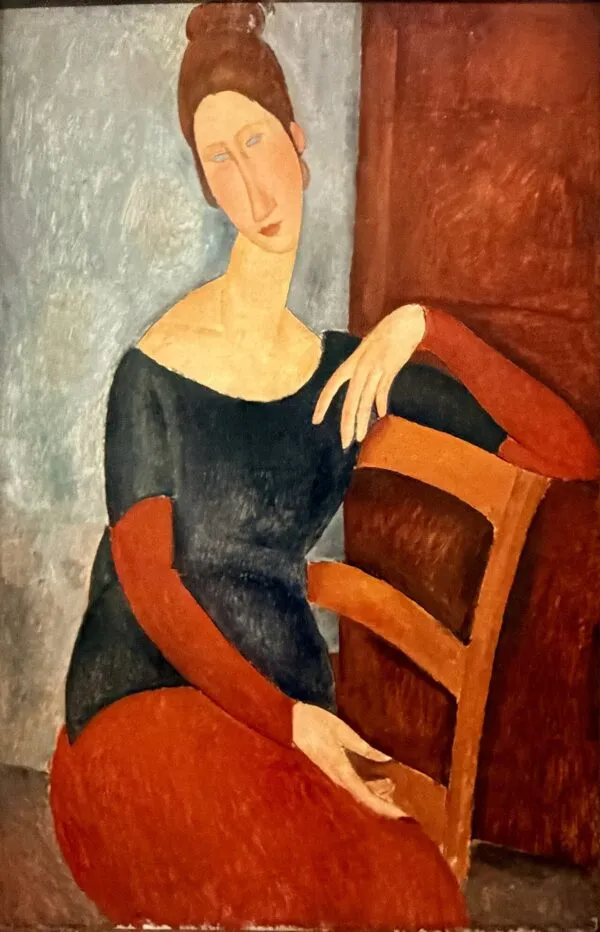
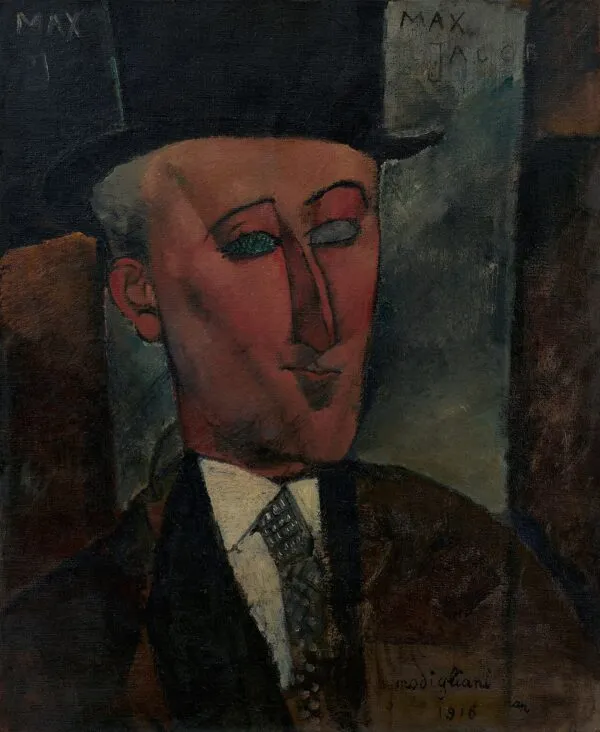
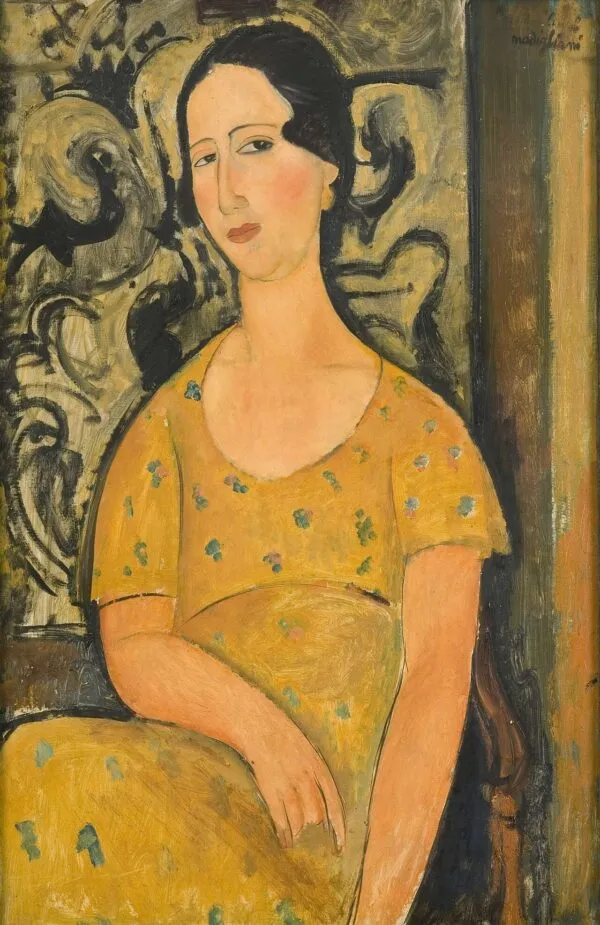
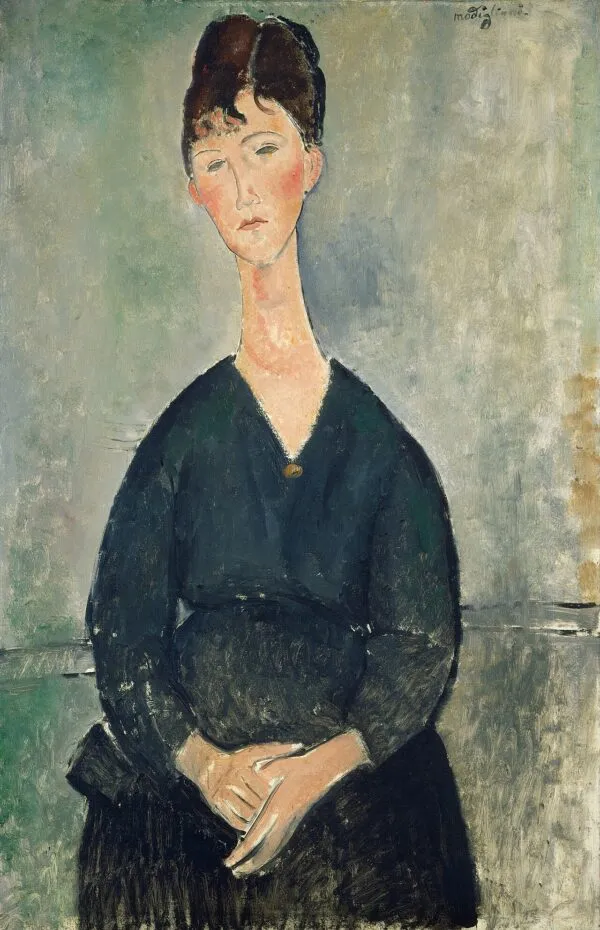
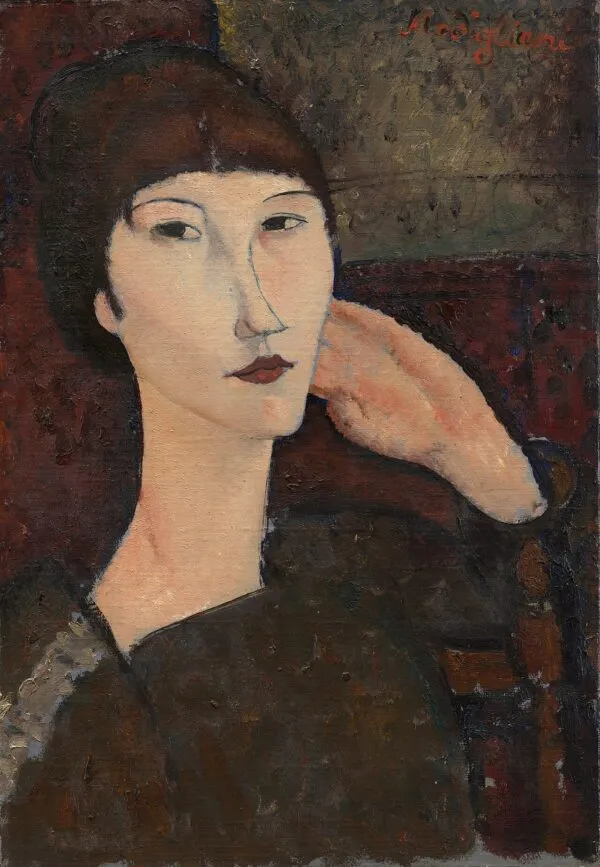
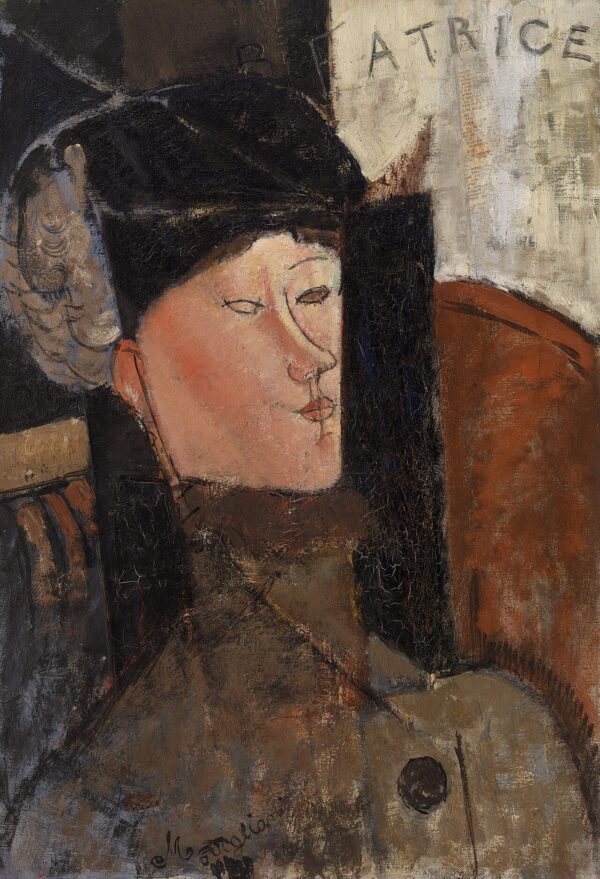
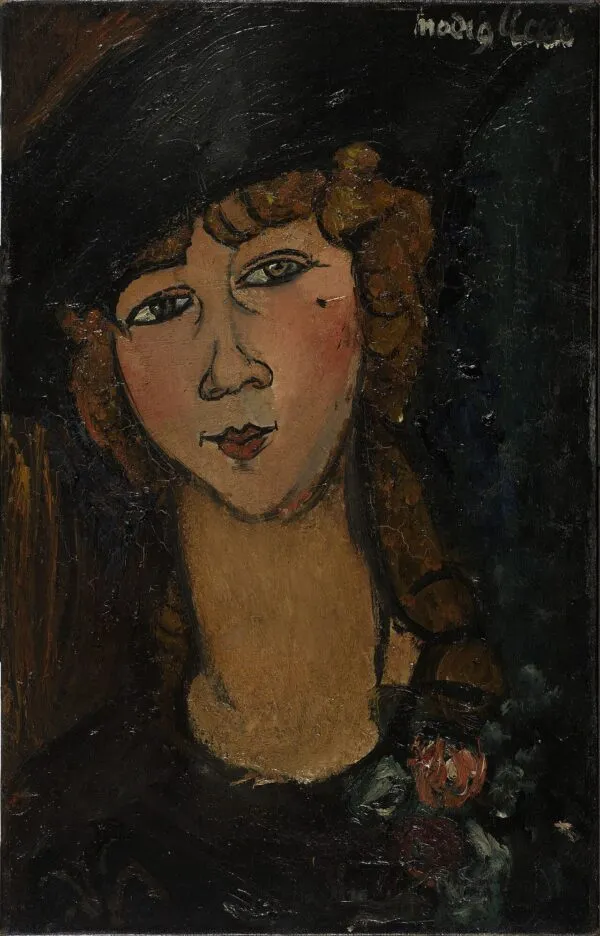
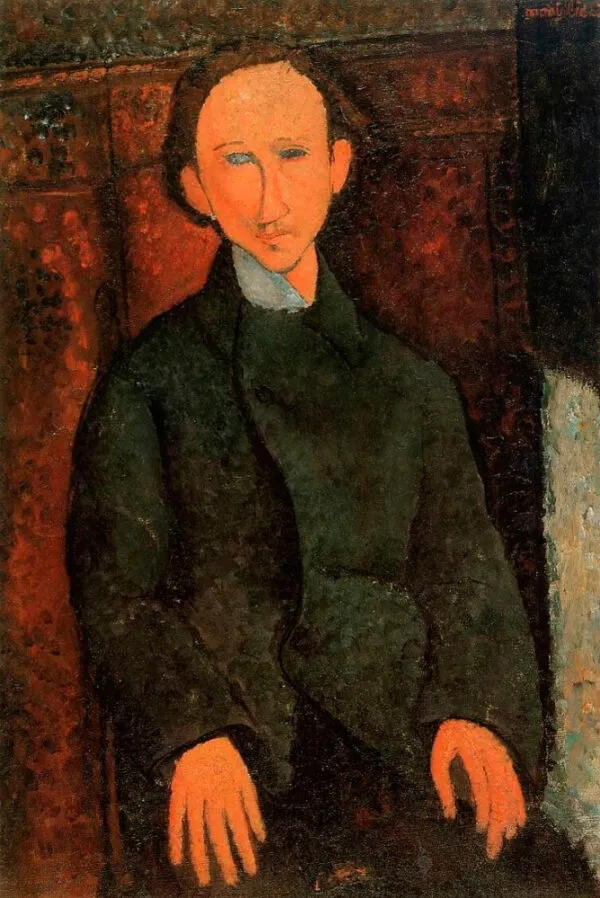
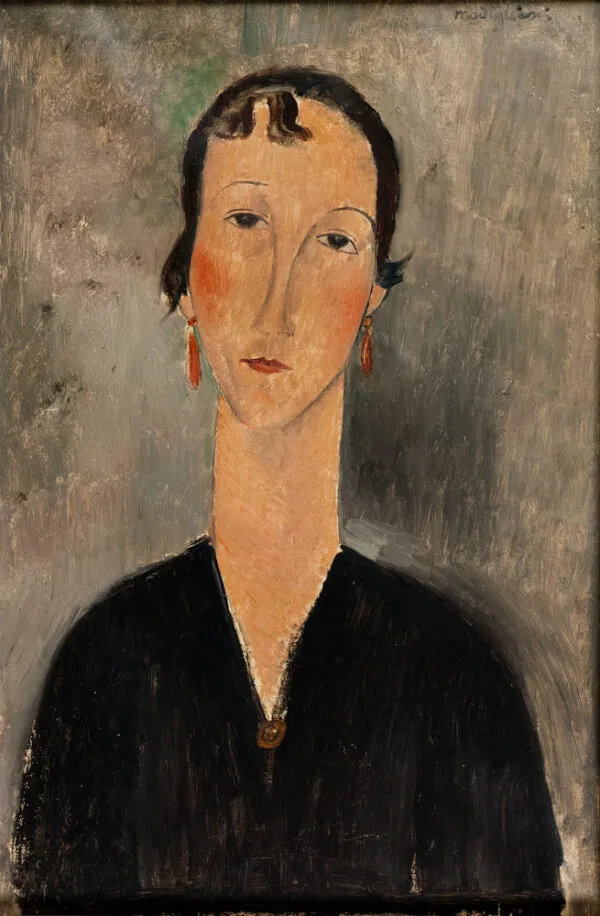
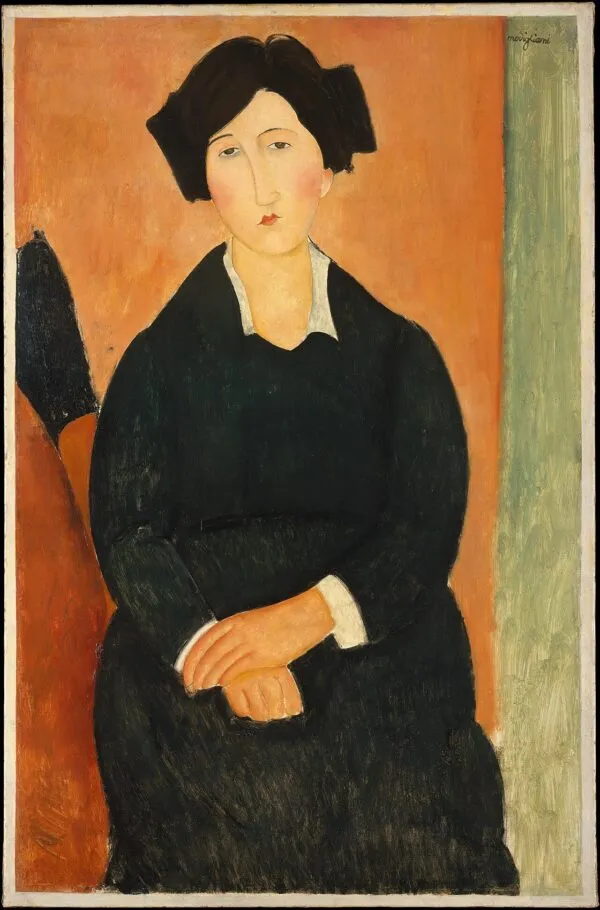
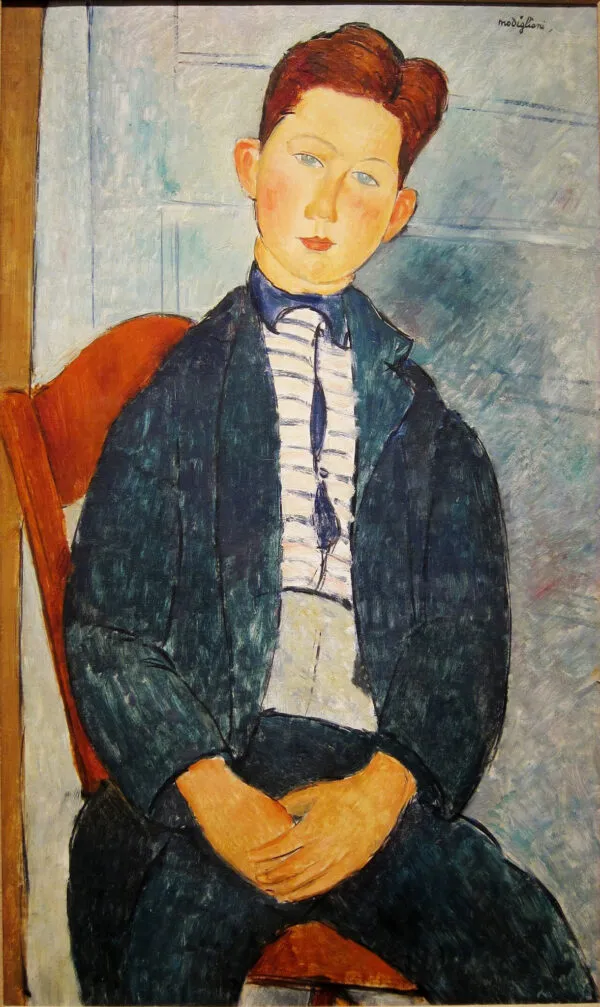
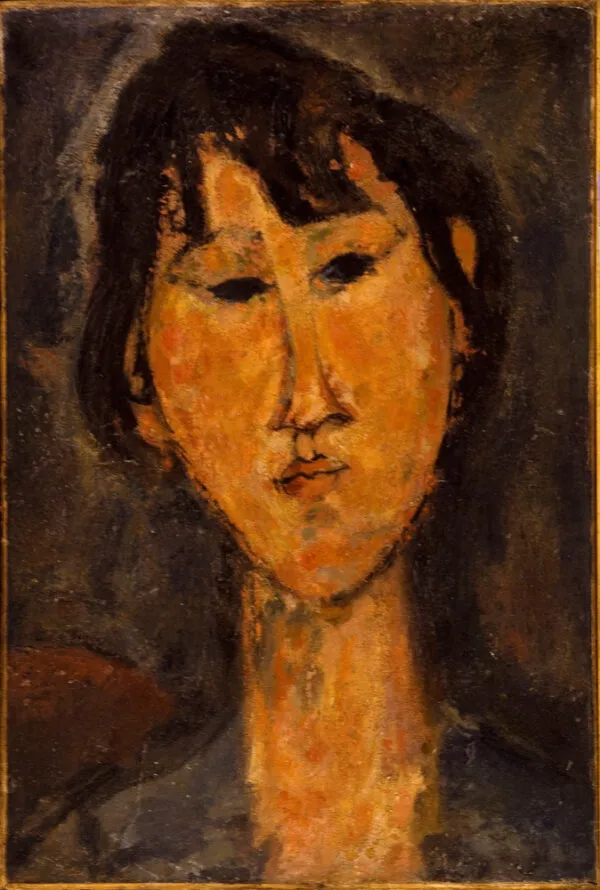
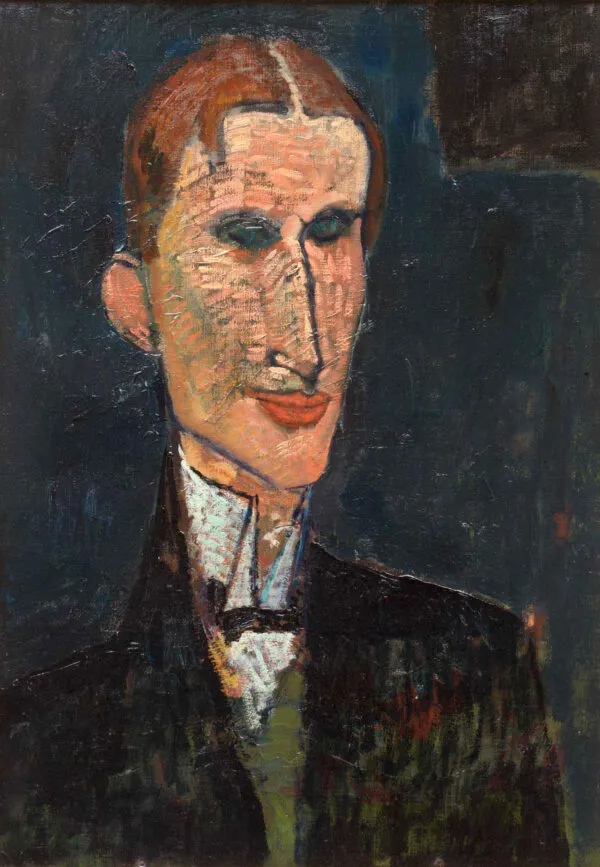
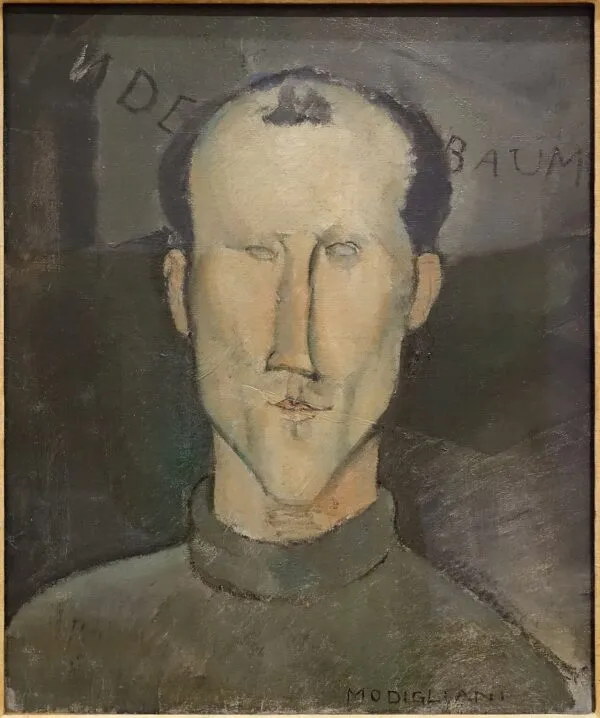
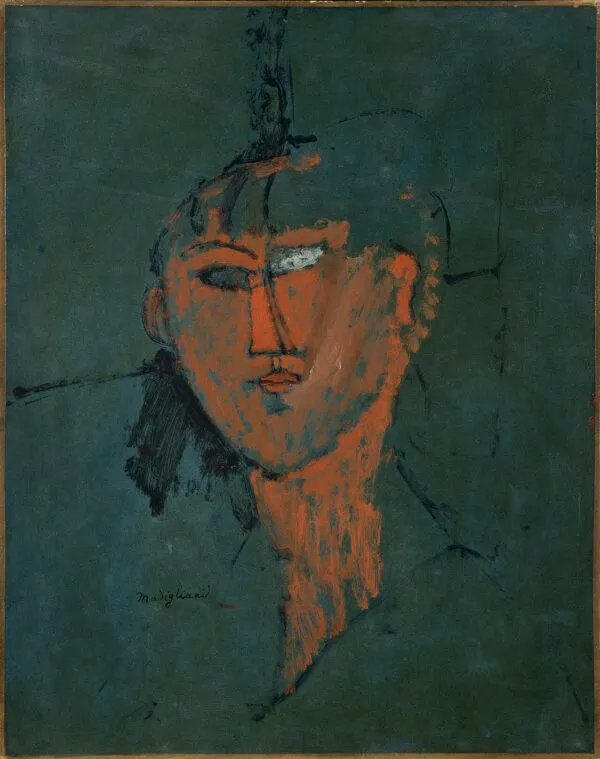
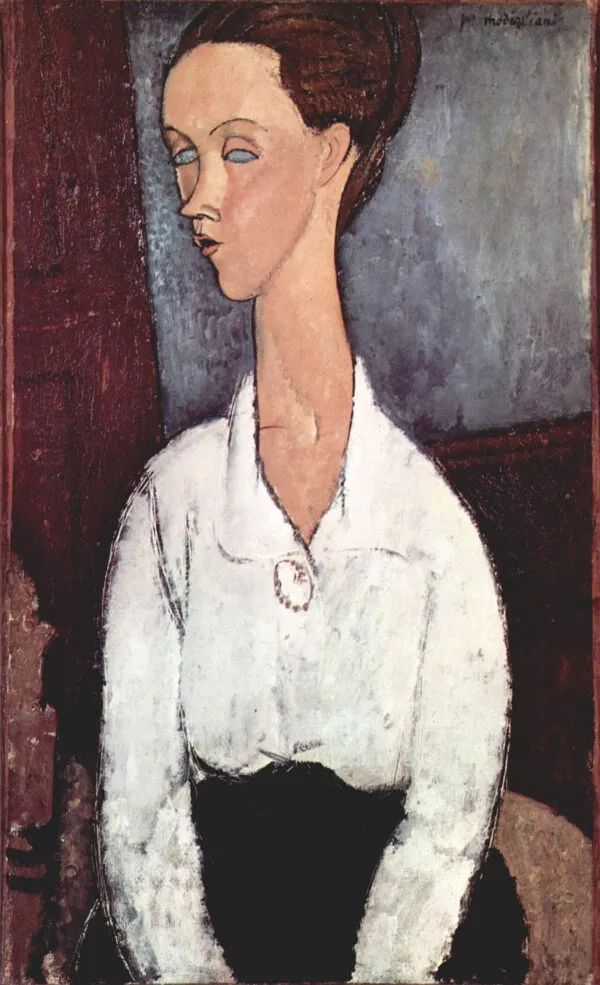
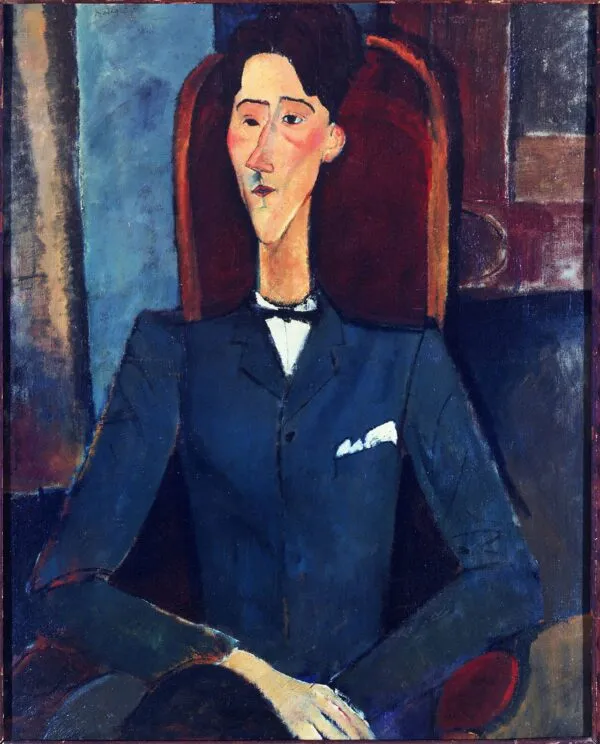
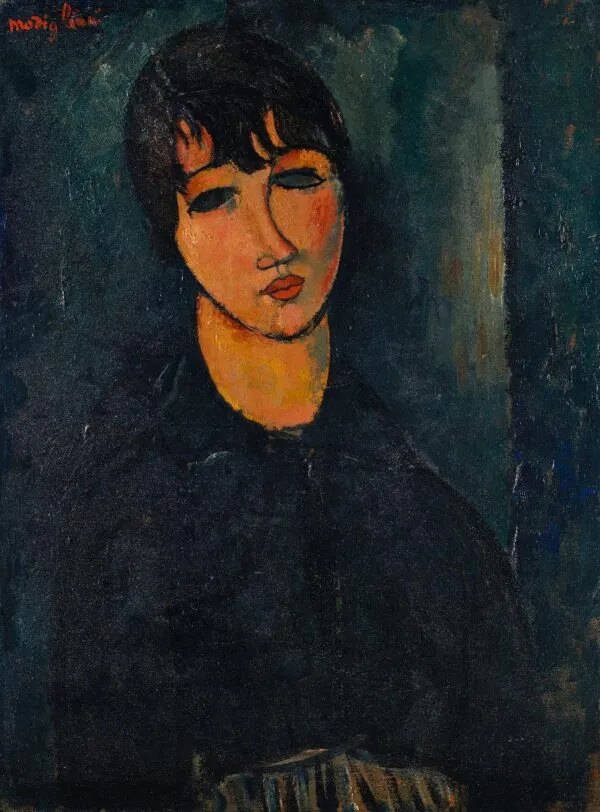
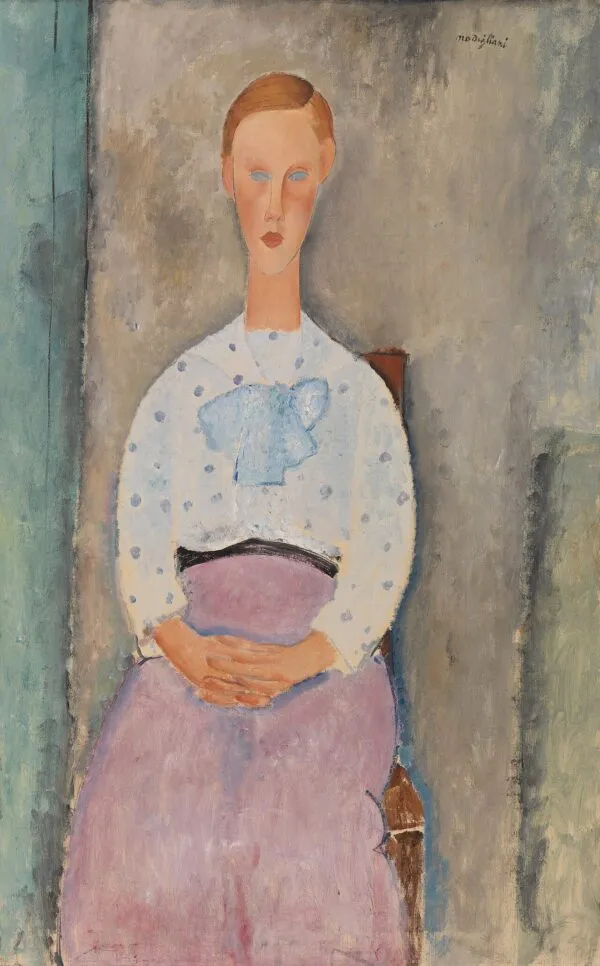
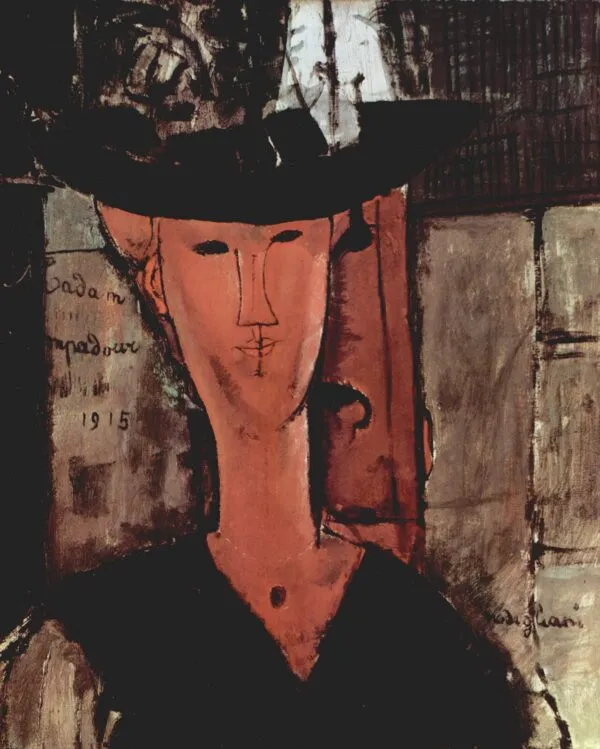
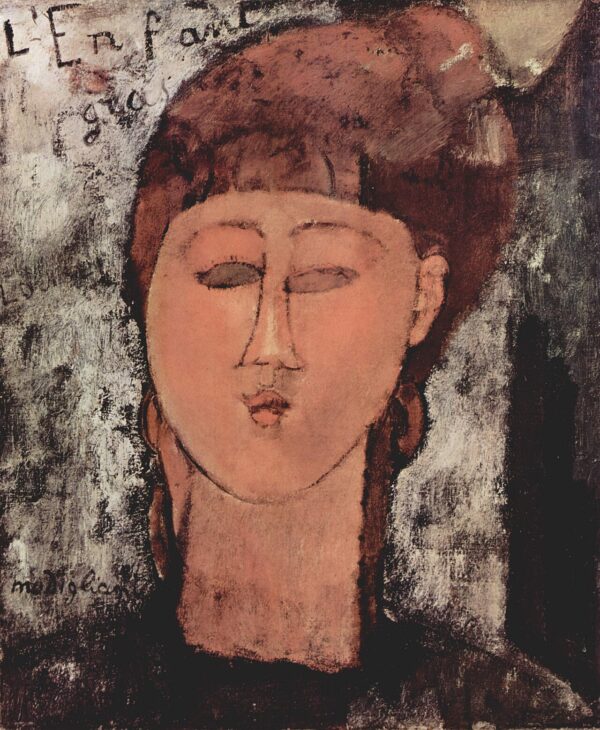
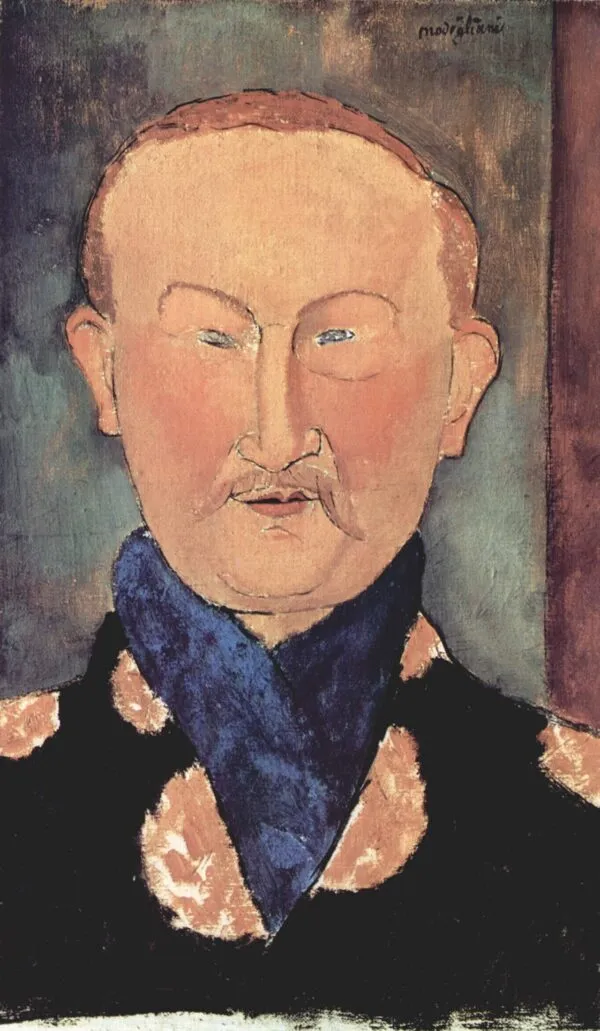
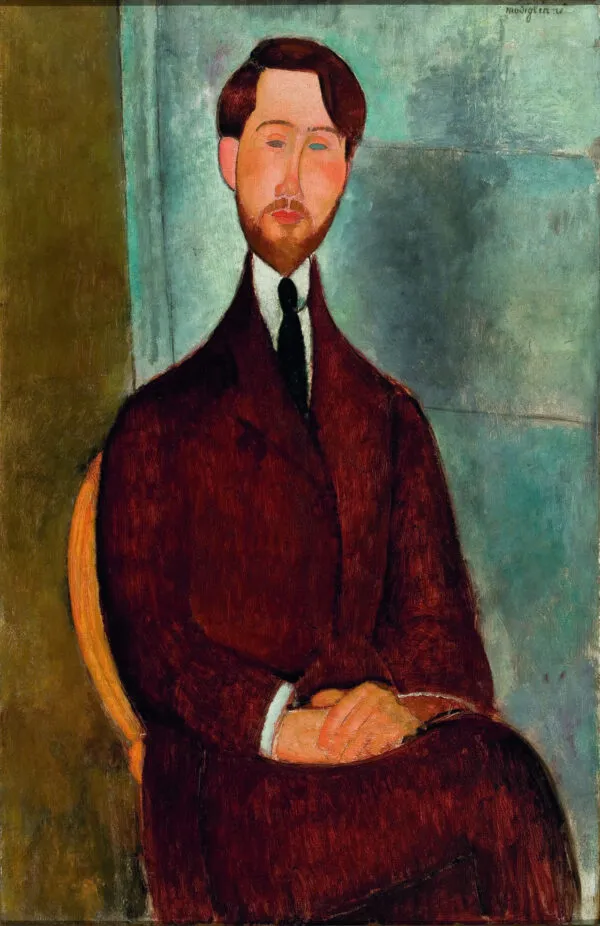
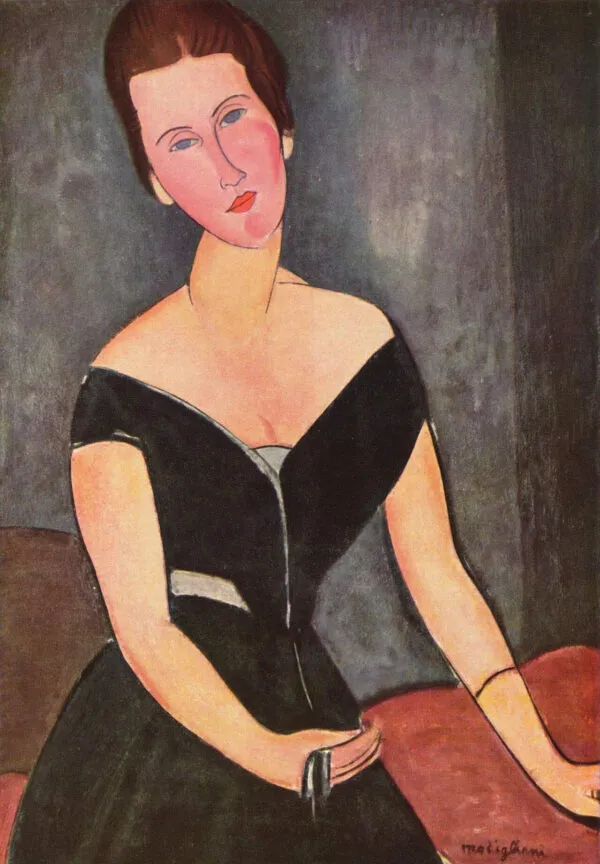
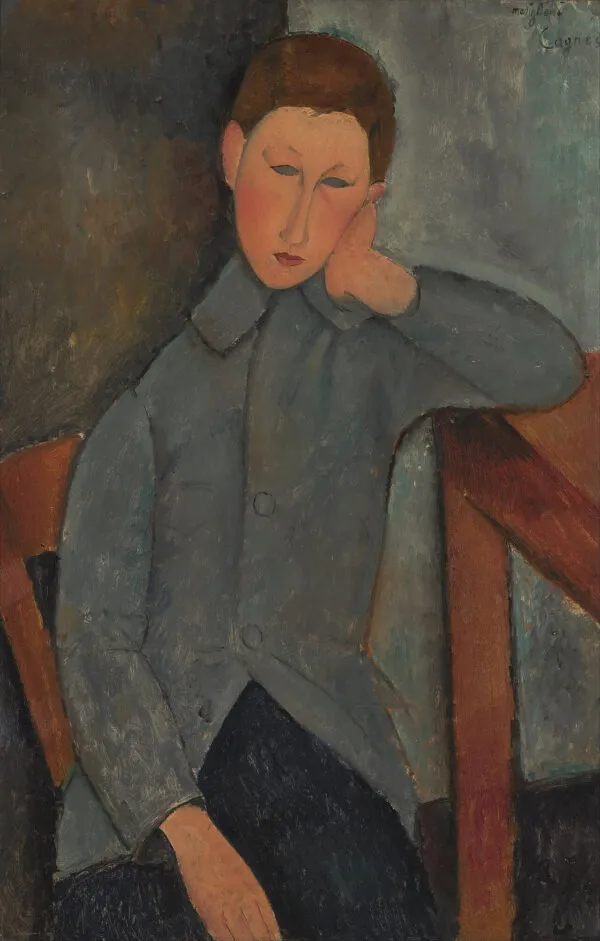
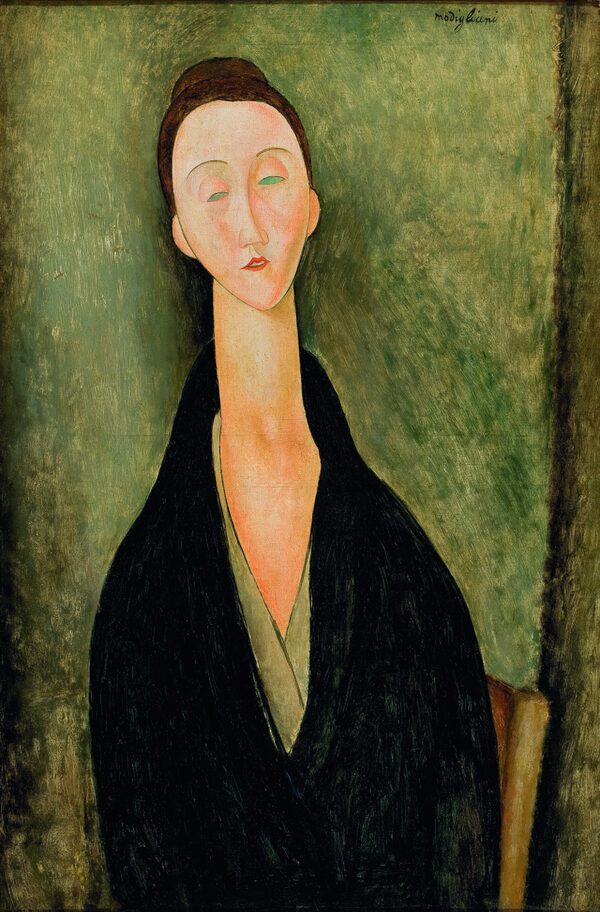
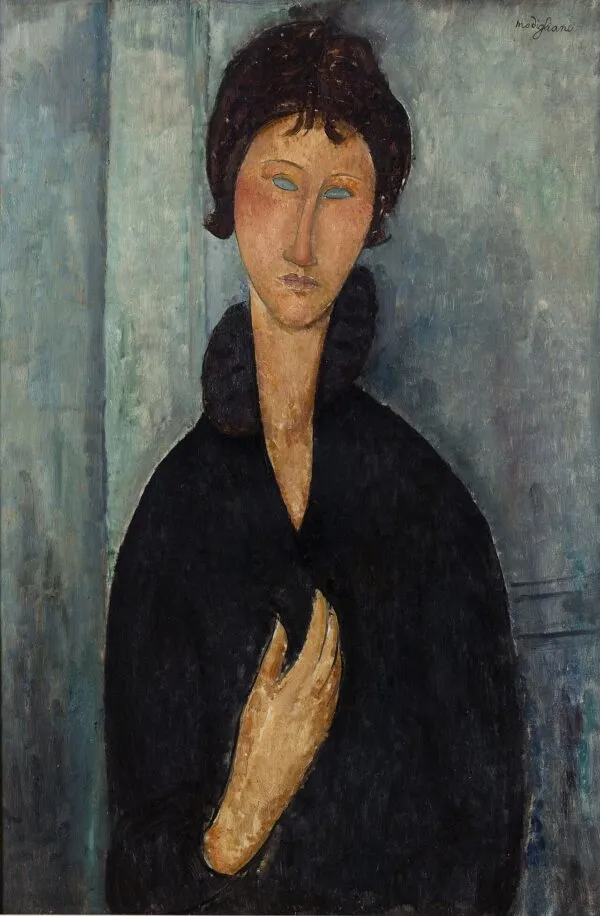
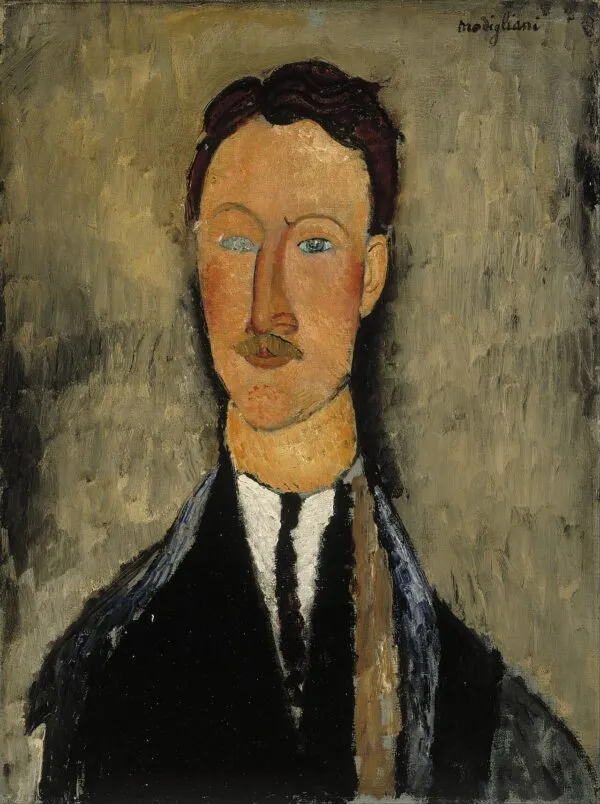
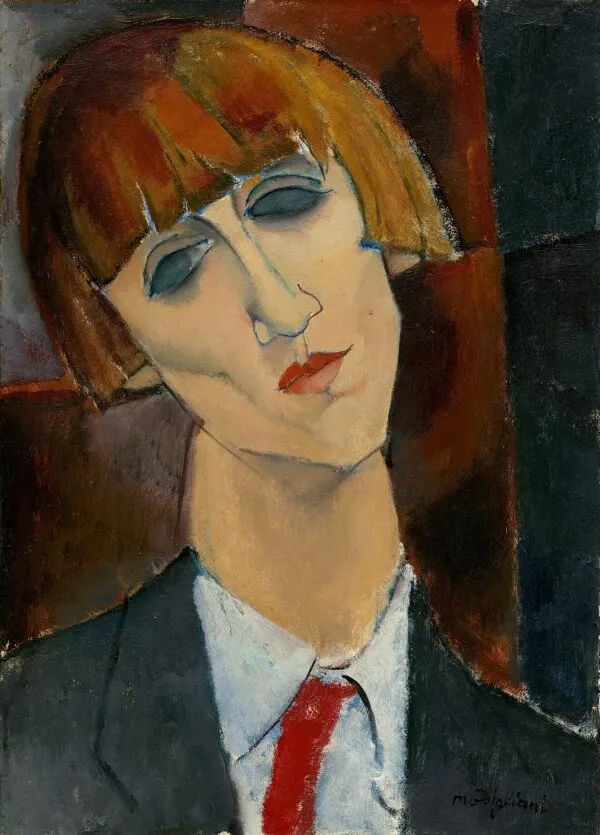
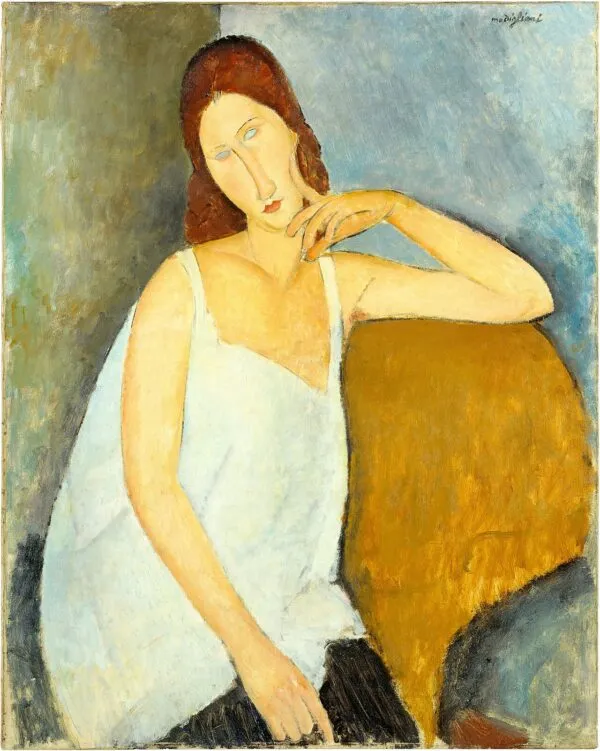
Amedeo Modigliani (1884–1920) is an Italian painter you recognise at a glance: the long neck, the oval face, the narrow almond eye he often left without a pupil. This category holds his portraits, his nudes and his caryatids – each one as a hand-painted copy, oil or acrylic on canvas, worked by a painter with a brush rather than run off a printer.
The painter, and what makes the work recognisable
He was born in Livorno, left for Paris in 1906 and stayed for the rest of his life – Montmartre first, then Montparnasse, among the painters we now call the École de Paris. The Musée de Grenoble describes in its own record how he was close first to the Fauves and the expressionists, to Toulouse-Lautrec, Matisse and Picasso, and how a deeper reckoning with Cézanne marked him afterwards.
His shape did not come out of painting. It came out of sculpture and out of the museum. The Nasjonalmuseet in Oslo, writing about one of its own works, says he was drawn to African sculpture and that its linear, elongated style gave his figures an air of sophisticated modernity; in colour, the same record says, he preferred the restrained, anti-naturalistic palette of Cubism. The Dallas Museum of Art adds the names beside its own work – Matisse, Picasso, Braque, Derain – and says they admired African masks together, the influence visible in Modigliani in the stylised treatment of the face. The curator of the Yale University Art Gallery, in the recording attached to its record, even names the places: the sculpture he saw in Paris, at the Trocadéro among others, and the masks of the Ivory Coast.
Likeness was not the object. That is exactly why the contour is a thin drawn line and the ground a flat wall of colour with no depth in it – and exactly why the work still looks modern a century later: there is nothing surplus in it. He died in Paris in 1920, aged thirty-five. More about Modigliani’s life and work.
“To work I need a living being, I have to see it in front of me.”
Amedeo Modigliani, as quoted by the Musée de Grenoble
The sculpture years and the caryatid
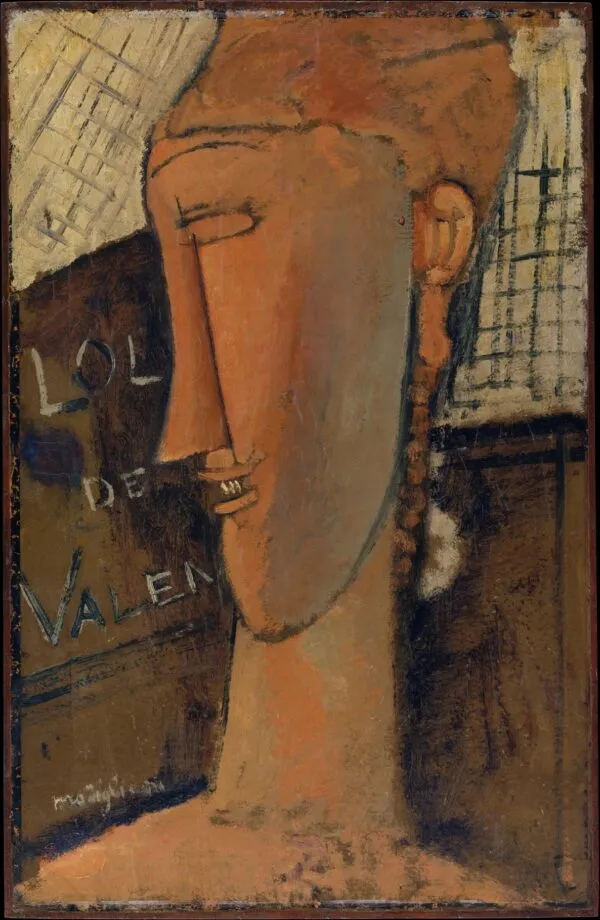
Between 1909 and 1913 Modigliani did not think of himself as a painter but as a sculptor. The Nasjonalmuseet writes that he was Constantin Brâncuși’s assistant for about a year and that Brâncuși’s sense of form can be traced in the mask-like portraits. The Musée de Grenoble records that, alongside African art, he was led by archaic Greek, Etruscan and Egyptian statuary, and that these years produced a series of Heads and Caryatids in which the expression rests on the simplification of volumes and on the constructive rhythm of the line.
From the same years comes the motif that runs through his whole body of work: a female figure carrying the weight above her on raised arms – the Caryatid. The idea was architectural, the body as a column, and he drew it far more often than he ever managed to carve it.
He gave up carving in the middle of the decade. The Musée de Grenoble gives the reason as fragile health and material difficulty, which returned him to painting and to the commissioned portrait. He came back with a sculptor’s eyes, and that is what is still visible in the canvases.
The sitters: a circle painting itself
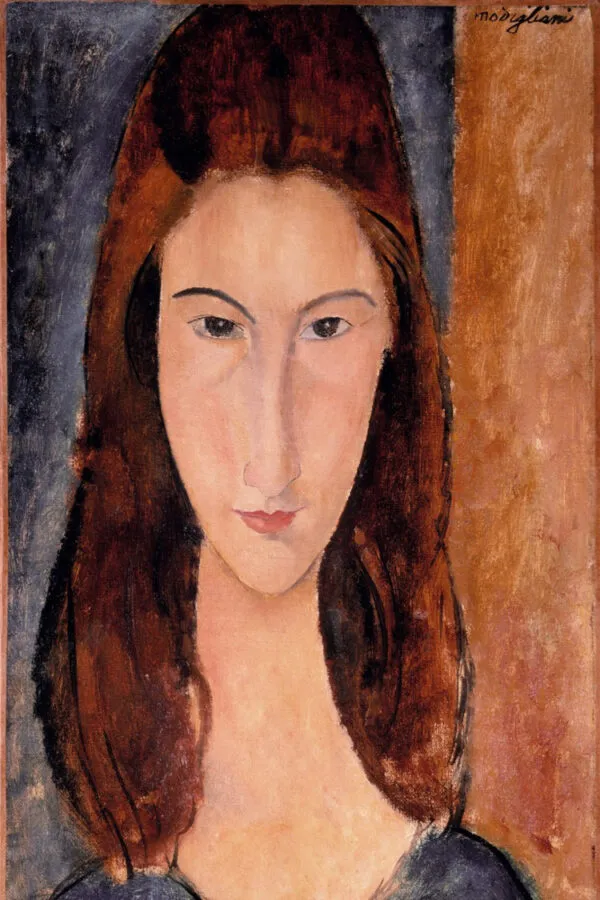
Modigliani painted the people he knew, which is why with him we so often know exactly who is on the canvas. Jeanne Hébuterne, his companion in the last years, recurs across this shelf – in a white chemise, in a yellow sweater, in a black and red dress, seated and half-length; Jeanne Hébuterne in a Yellow Sweater is one of them.
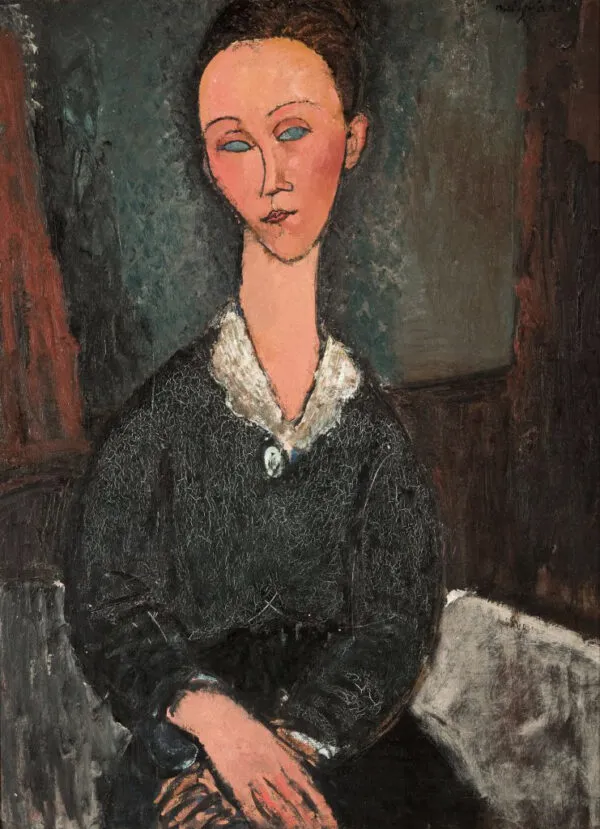
Lunia Czechowska, a young Polish woman from the circle of the dealer Léopold Zborowski, returns as well, and no two of those works are the same canvas. One of them the Musée de Grenoble titles simply Woman with a White Collar, and only the museum’s record says who is sitting for it. Zborowski is on the shelf himself, as Portrait of Léopold Zborowski, and with him his wife, Madame Hanka Zborowska: the dealer who paid for the painter’s models and canvas, commissioned him, sold him and kept him alive – and who sat for his own painter.
Beside them stand the painters and poets of the same circle: Moïse Kisling and Madame Kisling, Chaïm Soutine, the sculptor Jacques Lipchitz with his wife Berthe, Léopold Survage, Léon Indenbaum, Max Jacob, Léon Bakst, Jean Cocteau, Juan Gris, Viking Eggeling, the painter Pinchus Krémègne, the dealer Paul Guillaume and the writer Beatrice Hastings. This is not a gallery of famous names. It is a neighbourhood – the École de Paris portraying itself, because it could not afford other models.
The nudes, and the only exhibition
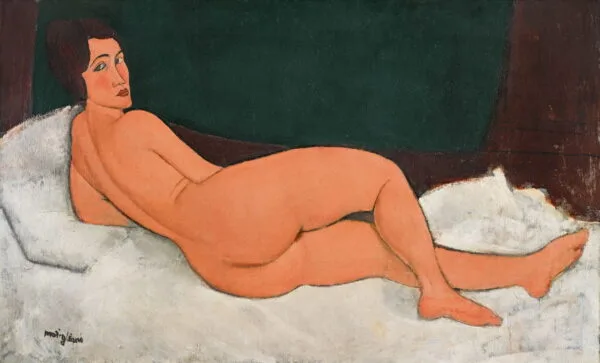
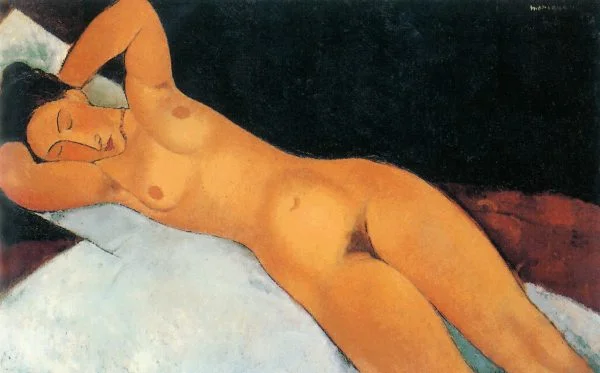
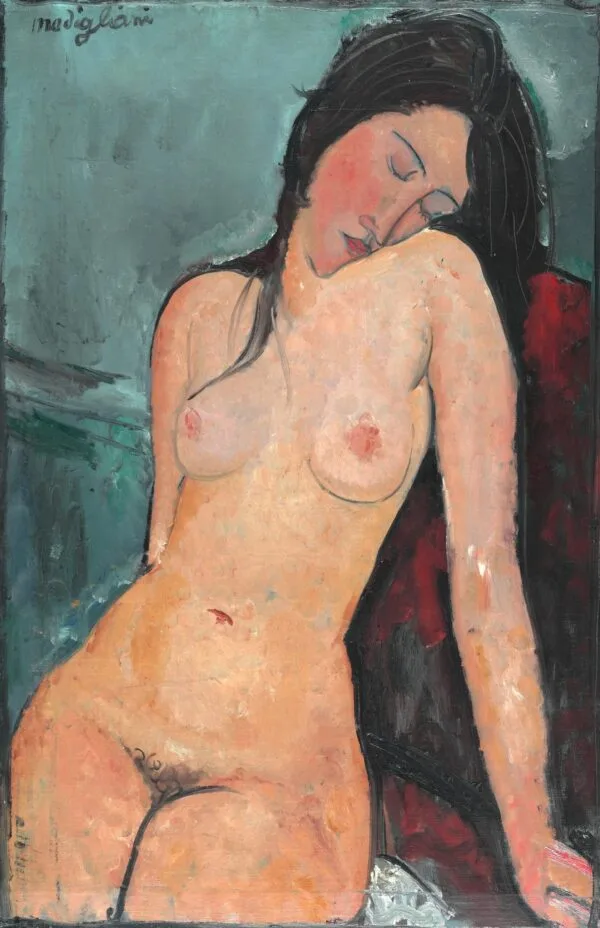
The nudes are his best-known series and there is a full run of them here – reclining, seated, on a blue cushion, with loose hair. Reclining Nude is among them. It was the nudes that gave him the only solo exhibition of his lifetime, in December 1917 at Berthe Weill’s gallery in Paris. She hung a nude in the window; a crowd gathered in front of it, and the police ordered the works taken down the same day. The show closed almost immediately and sold next to nothing.
What he painted on
Modigliani was poor for his whole working life and the supports show it. He did not always paint on canvas. Among the works in this gallery the museum records name cardboard, paper laid down on a wood panel, a canvas with newsprint behind it, linen, a rigid support, and oil with graphite on card. The support was not an aesthetic decision. It was whatever was to hand that week.
That is not a general claim: it is what stands in our own records of those works. Where a museum record disagreed with what we had, the museum won; where the catalogues disagree with each other, the description of that work says so, because the disagreement is part of the truth about the object.
Where the originals hang
The records these descriptions were built from come from museums and collections around the world. Among them are the Metropolitan Museum of Art and the Solomon R. Guggenheim Museum in New York, the National Gallery of Art in Washington, the São Paulo Museum of Art, the Barnes Foundation and the Philadelphia Museum of Art, the Musée national d’art moderne – Centre Pompidou, the Musée de l’Orangerie and the Musée d’Art moderne de Paris, the Musée de Grenoble, the LaM near Lille, Tate and The Courtauld Gallery in London, the Kunstmuseum Basel, the Kunstmuseum Bern and the Kunsthaus Zürich, the Albertina in Vienna, the Pinacoteca di Brera in Milan, the Moderna Museet in Stockholm, the Nasjonalmuseet in Oslo, the Ateneum in Helsinki, the Israel Museum in Jerusalem, the Yale University Art Gallery, the Art Institute of Chicago, the Detroit Institute of Arts, the Dallas Museum of Art, the Norton Simon Museum, the Toledo Museum of Art, the Cincinnati Art Museum, the Honolulu Museum of Art, the Indianapolis Museum of Art, the Pola Museum of Art and the Nakanoshima Museum of Art in Japan, the Long Museum in Shanghai and the Cerruti Collection at the Castello di Rivoli. Some of the works are in private collections, and where that is so the work’s own page says it.
Where a museum record could not be read, we do not hide it: the page says the figure was not verified rather than guessing at one. And where an institution hedges, its hedge stays in our text – if the museum writes “possibly” or “probably”, so do we.
When a record contradicts itself
With Modigliani this happens more often than you would expect, and on these pages we do not smooth it – we print both sides and say whose each one is.
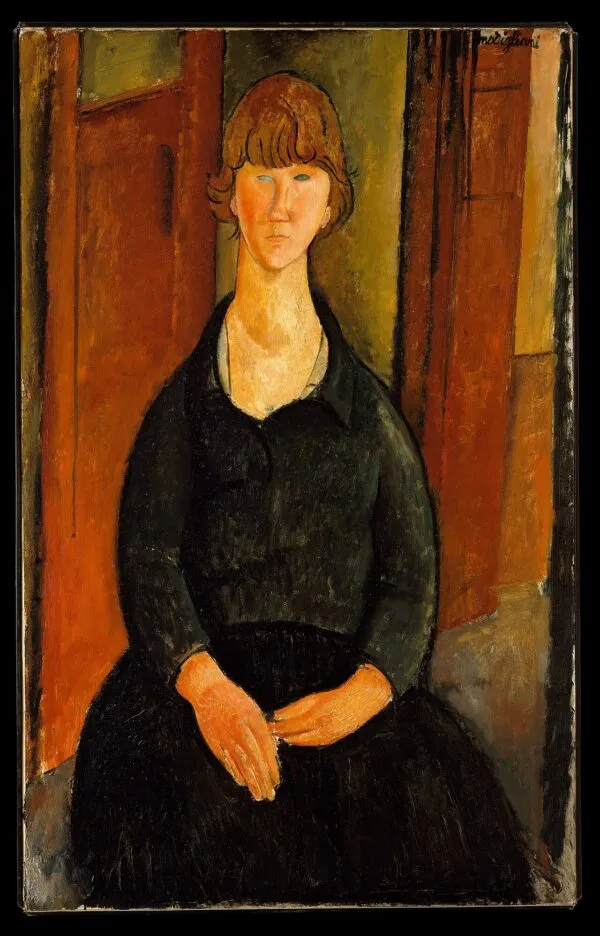
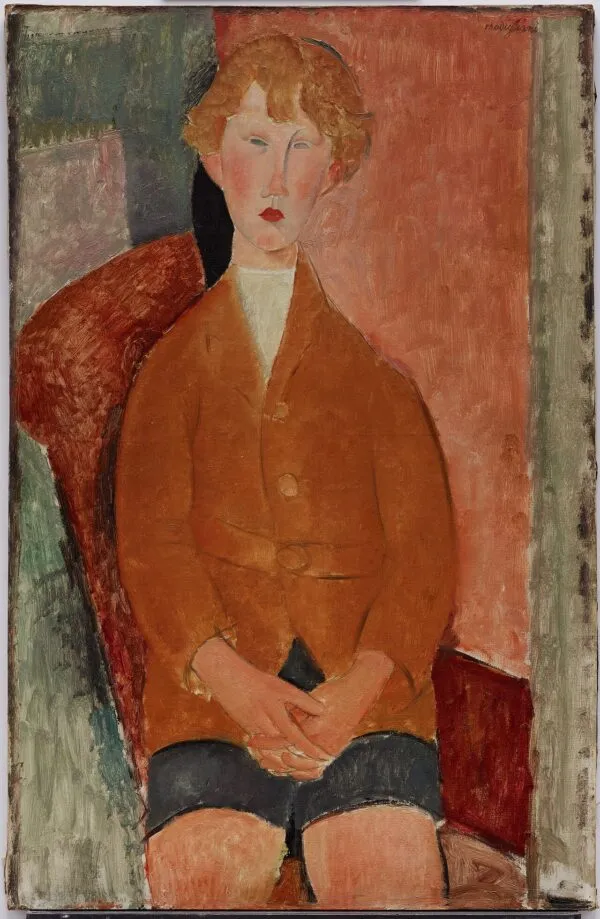
The Yale University Art Gallery titles its work so that it names nobody, while its own curator, in the recording attached to the same record, names Jeanne Hébuterne without hesitation; both are the museum’s, and both stand on the page for Portrait of a Young Woman (Yale). The Nasjonalmuseet in Oslo does the reverse: its catalogue field names Anna Zborowska, and two paragraphs above, in its own text, it writes that the sitter is probably unknown – Young Woman (Oslo). The Dallas Museum of Art publishes a sight size and a framed size, and no canvas measurement at all – Boy in Short Pants. The Detroit Institute of Arts dates a work only to “the early 20th century”, with no year – Young Man with a Cap. And the Metropolitan Museum of Art titles one of its works Flower Vendor although there is not a single flower in it; the catalogues therefore carry a plainer title beside that one, young woman seated.
What a hand-painted Modigliani asks of a painter
A reproduction is a repetition of an existing painting. Here that does not mean a print: it means a new painting. A painter lays the same subject, the same composition and the same colours onto canvas in oil or acrylic, with his own brushstroke.
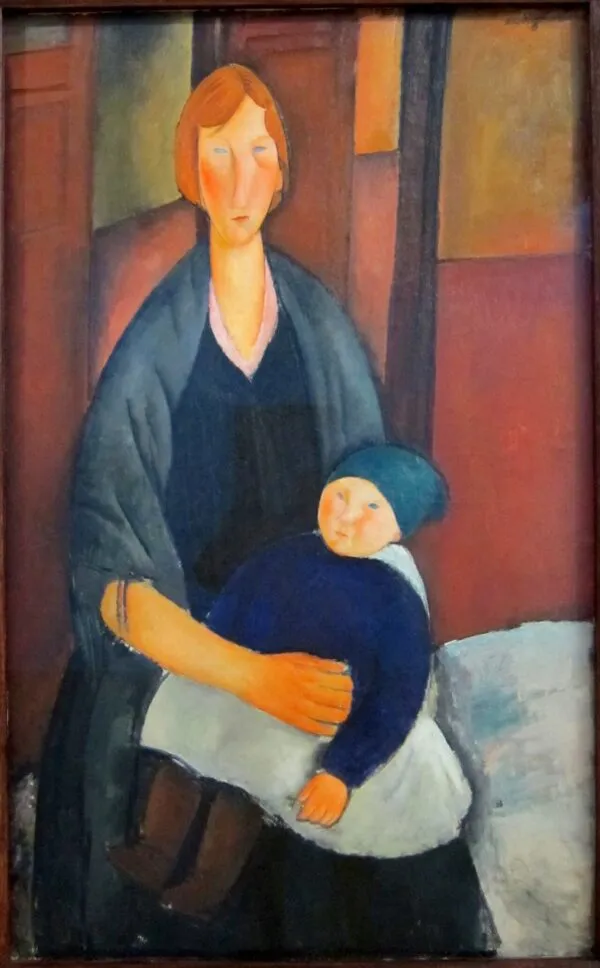
With Modigliani that is harder than it looks, and therefore matters more. The grounds are flat and close to a single colour, so every unevenness in the laying-on shows. The colour does not model the form with light and shade – it fills it, so the tone has to be right immediately. The outline is a drawn line that must sit in one movement; correct it and the correction is visible. And the eye: in some works it is an almond with no pupil, a flat field, and in others the pupil is there and the gaze comes back at you. Which of the two a given work has is not a detail. It is its character.
A print can copy the image but not the laying-on: flat colour on canvas carries the weave underneath it and the edge of the stroke, and a print carries neither. Among reproductions on canvas, this is exactly the kind of work where a painter’s copy is visibly the right answer.
Choosing one, and where it hangs
The portraits are upright and quiet; they work in a bedroom, a hallway or an office, where the viewer stands close. The nudes are horizontal and want a wider wall – above a sofa or a bed. The caryatid and the studies from the sculpture years are graphic and carry a smaller format well, including in a row of two or three.
Because the grounds are flat and quiet, a Modigliani does not argue with the colour of the wall behind it. It works on white and equally on a dark or warm-toned wall, and because every shape in it is large, it stays readable when the canvas is small. In a heavily furnished room that is a further advantage: the work adds no clutter, it adds a still figure.
How ordering works
Choose the subject first, then the size. Every work is painted at the size you choose, and if your size is not on the list we make it to order. You choose the frame in our 3D application, which draws the chosen frame realistically. If you want to see how the work will look on your own wall, use our visualisation service – that is a separate service from choosing the frame. When the canvas is finished we photograph it and send you the photograph for approval before dispatch. If you would rather leave the choice to the person receiving it, there is a gift voucher.
Frequently asked questions
What is a hand-painted reproduction?
A new painting, not a print. A painter uses a brush and oil or acrylic colour to lay the same subject, the same composition and the same colours onto canvas as the original. Because a person is working, individual strokes and shades differ a little between copies; that is not a fault, it is the difference between a painting and a print.
Where should a portrait hang, and where a nude?
Portraits are upright and quiet and belong where the viewer stands close – a hallway, a bedroom, an office. Nudes are horizontal and want a wider, clear wall, above a sofa or a bed for instance. The caryatid and the sculpture studies are graphic and work well in a smaller format or in a row.
Can I have a work in a size that is not on the list?
Yes. Every work is made at the size you choose, and if yours is not among those offered we paint it to order.
Why do the eyes have pupils in some works and not in others?
Because Modigliani painted them that way. On some canvases the eye is an almond with no pupil, a flat field of colour; on others the pupil is painted and the gaze comes back to the viewer. The curator of the Yale University Art Gallery connects that withheld, empty look to African masks. In a copy this is not a detail but the character of the work, so we keep it as it is in the original. We counted all 76 works in this gallery: 53 have no pupils, 17 do, three have one of each, two have their eyes shut, and on one we could not reach a verdict – work by work.
Are two copies of the same work identical?
No, and they cannot be. Every canvas is painted by a painter, so each copy comes out slightly its own. Before dispatch you receive a photograph of the finished canvas and approve it.
How do I choose a frame and see the work on my own wall?
You choose the frame in the 3D application, which draws the chosen frame realistically. How the work will look on your wall is shown by our visualisation service; that is a separate service from choosing the frame.
Is it suitable as a gift?
Yes. If you would rather not pick the size there is a gift voucher the recipient redeems themselves. With the nudes the subject is candid, so it helps to know where the work will hang: in a bedroom it reads as natural, in a living room it is a choice.
How does it arrive?
Whichever you choose: stretched on a wooden frame and ready to hang, rolled in a tube, or framed. Both travel in protective packaging.