



“Harmony is the analogy of contraries, the analogy of similars, of tone, of colour, of line, considered by the dominant and under the influence of a lighting, in gay, calm or sad combinations.”
Hand-painted canvases after Georges Seurat
This page gathers the works of Georges Seurat that our painters paint by hand, in oil, on canvas. Nothing here is printed. Every canvas is painted one at a time, to order, and because a person paints it, no two are ever identical. We answer enquiries in six languages and ship anywhere in the EU, with no customs charges.
Who was Georges Seurat?
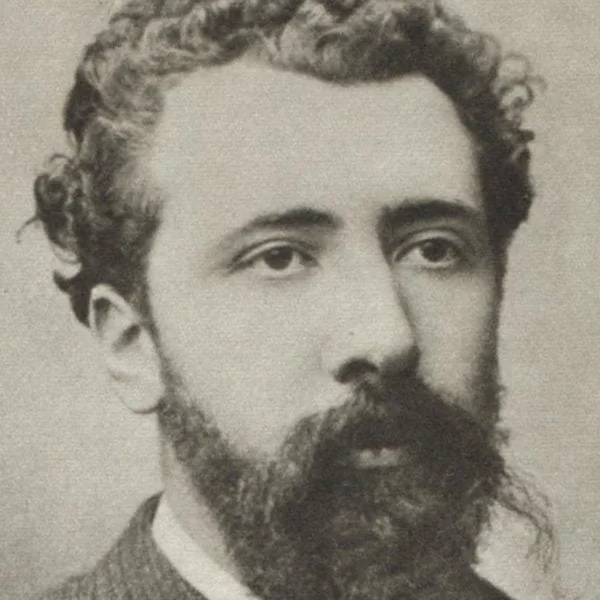
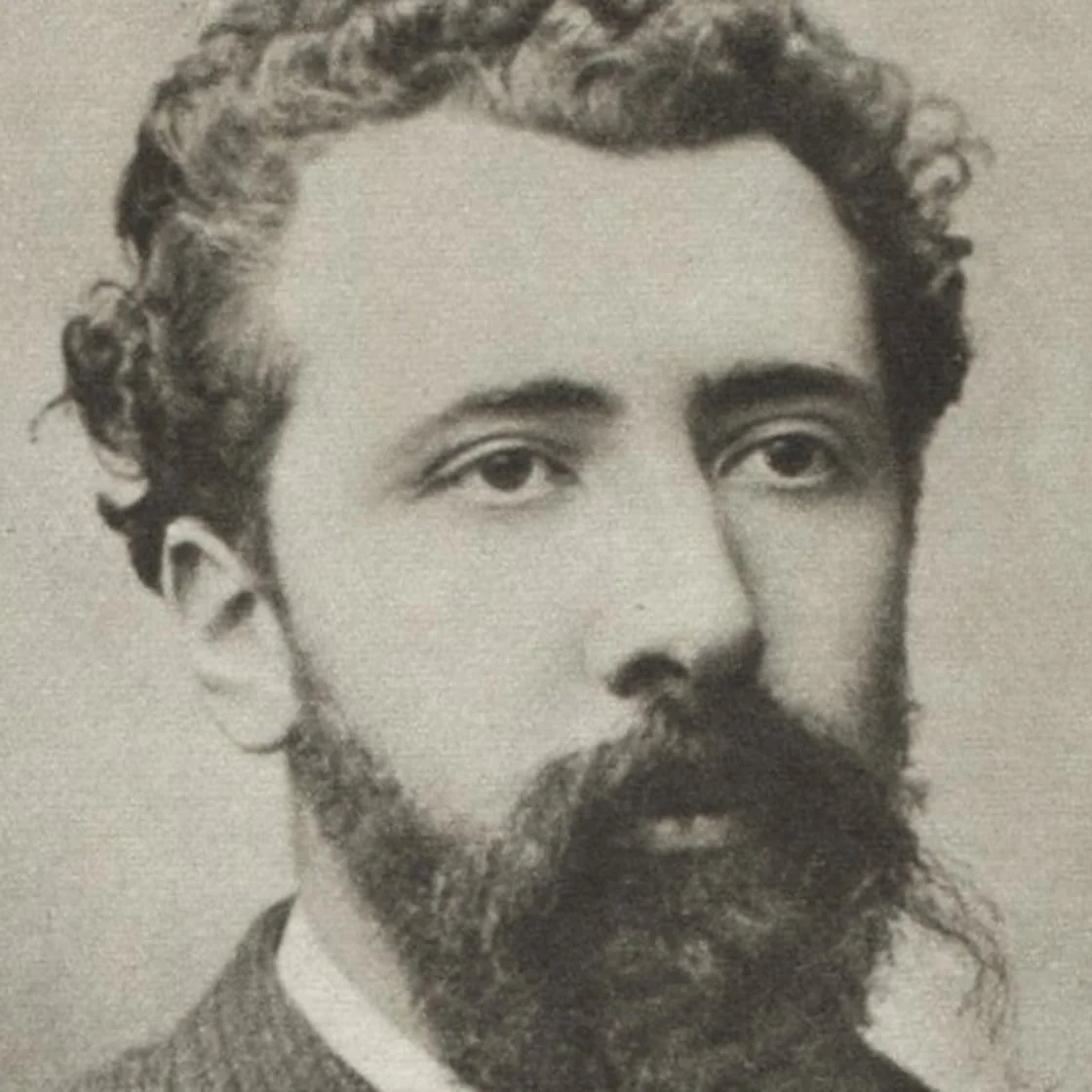
Seurat was a French painter, born in 1859, who died in 1891 at the age of thirty-one. In that short span he carried European painting past impressionism. Catching the moment was not enough for him: he wanted to know why the eye sees colour the way it does, and he built each canvas according to rules he set himself. Out of that came neo-impressionism, a movement whose name was coined in a review of the exhibition where his Sunday Afternoon on the Island of La Grande Jatte first hung.
What is pointillism, and why did Seurat call it something else?
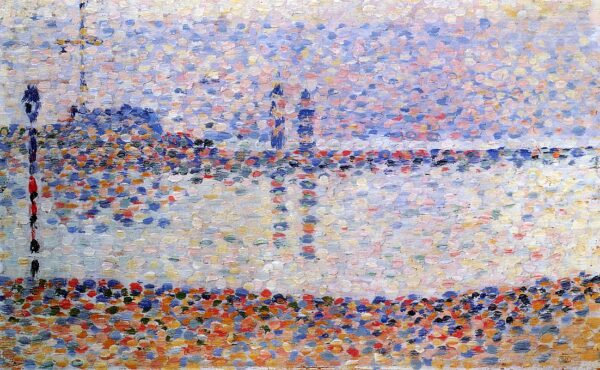
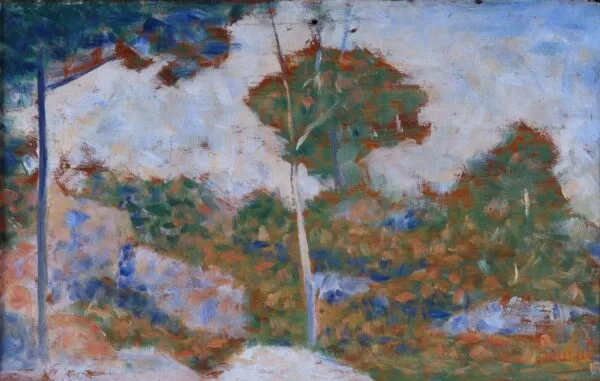
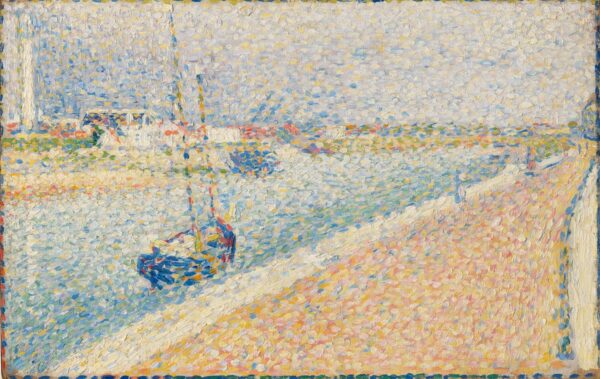
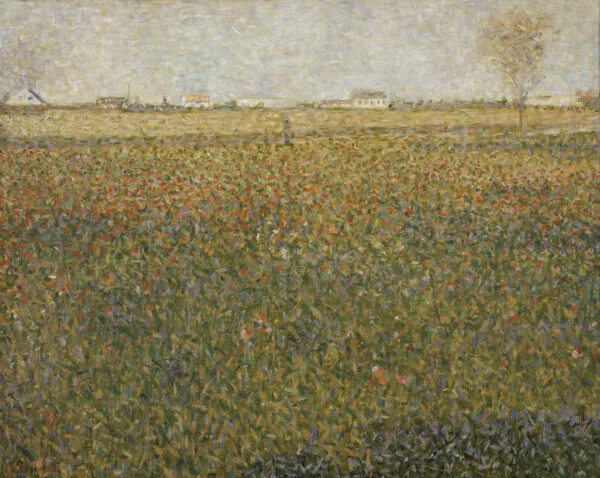
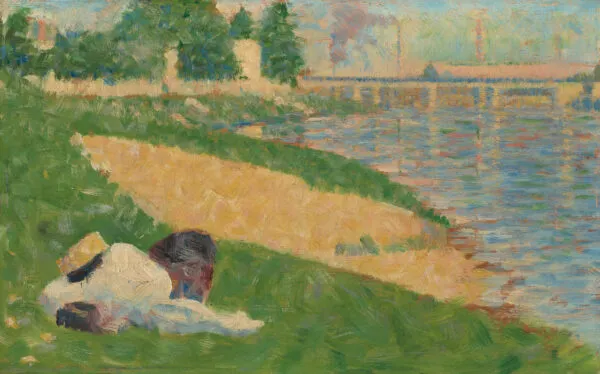
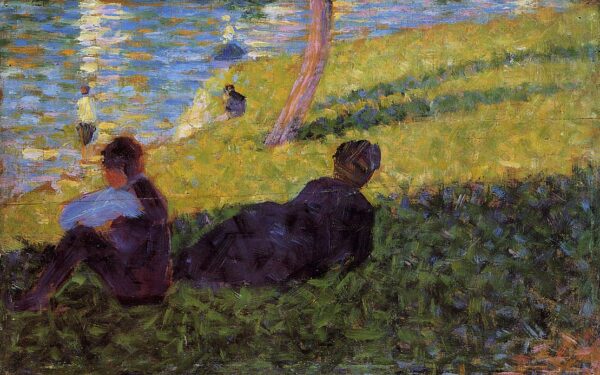
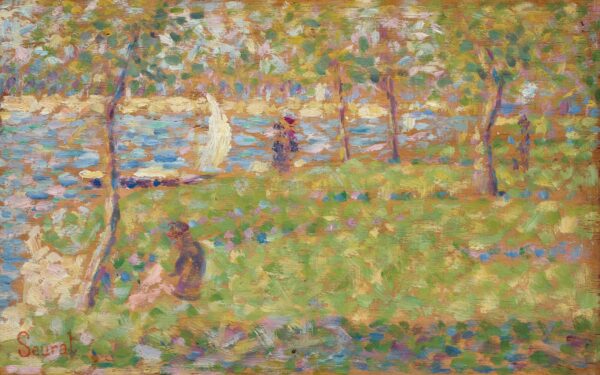
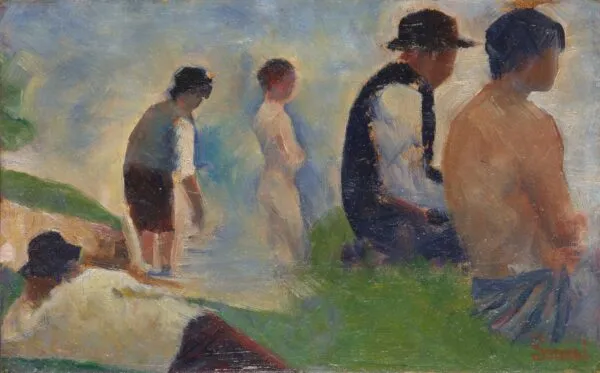
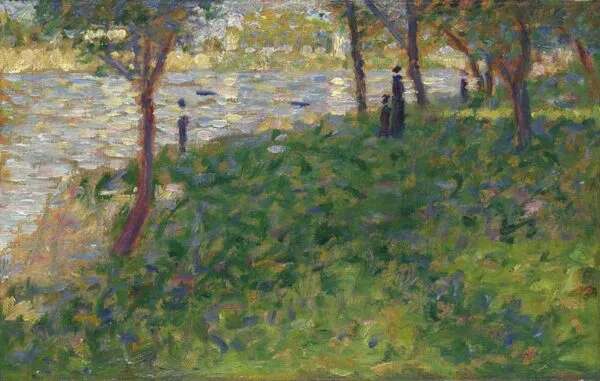
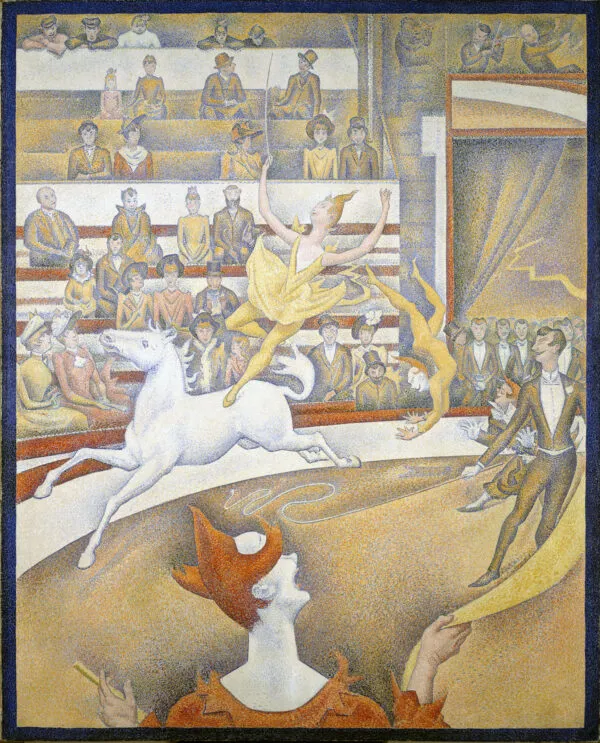
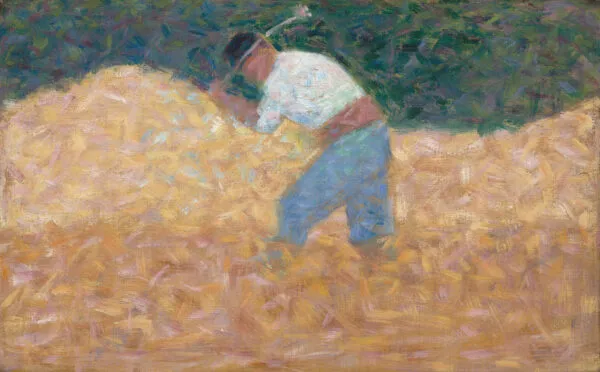
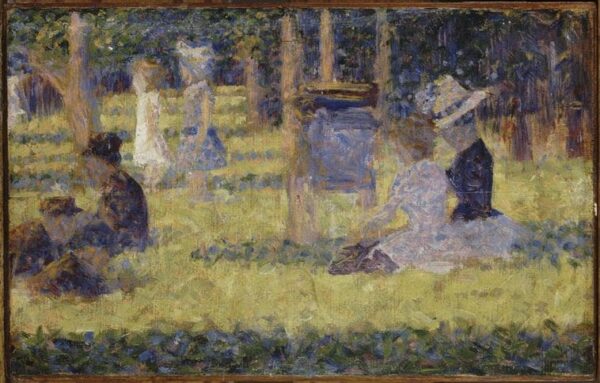
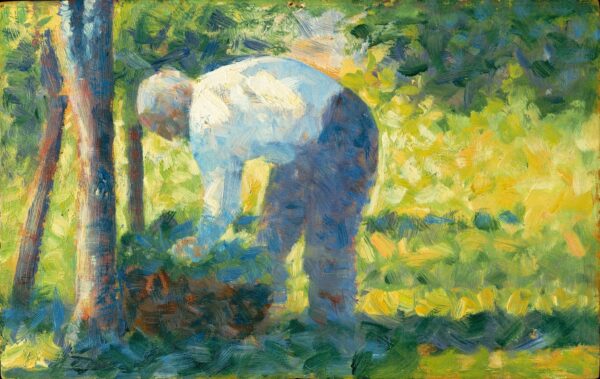
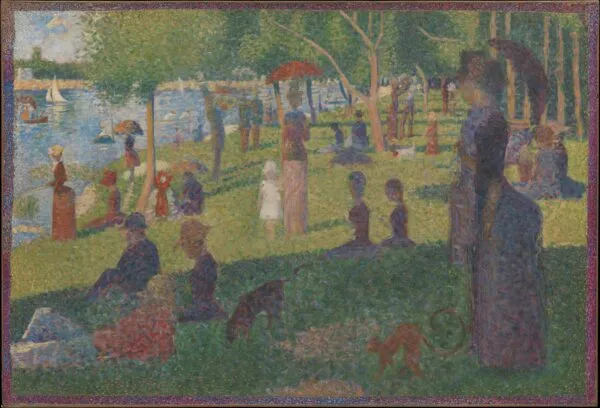
The name comes from the French word for a dot, but the Metropolitan Museum, in its own entry, points out that the painter preferred to speak of Divisionism: colour separated into small touches set side by side, meant to blend only in the eye of the viewer. The difference is not a quibble. In the study held by the Metropolitan the touches are not yet dots but diagonal, crisscross strokes; the dots arrive only on the finished canvas. Where the method had not yet settled, the brushwork on the panel shows it.
Where are the originals?
Most of the originals hang in museums on two continents, and wherever a public collection holds the work we name the institution and the inventory number. Among them are the Art Institute of Chicago, the Musée d’Orsay, the National Gallery in London, the Metropolitan Museum of Art, MoMA, the Kröller-Müller, the Courtauld, the Barnes Foundation, the Harvard Art Museums, the Norton Simon Museum, the Guggenheim, the Phillips Collection, the Indianapolis Museum of Art and the Wallraf-Richartz in Cologne. The details come from the museum that holds the work; where another source disagrees, we follow the museum.
Which works do we paint?
The selection is deliberate: beside the finished canvases stand the studies that led to them, so you can see how a work grew. Where an oil painting reproduction makes sense only alongside its study, we paint both.
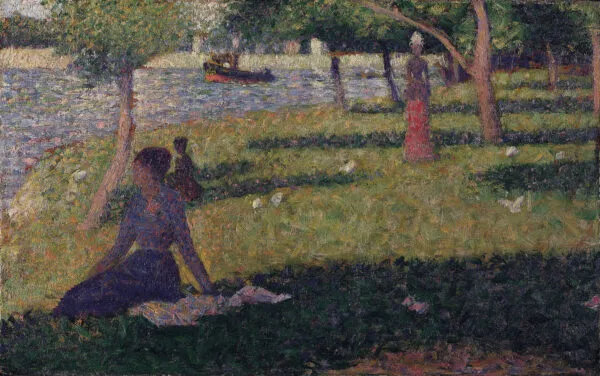
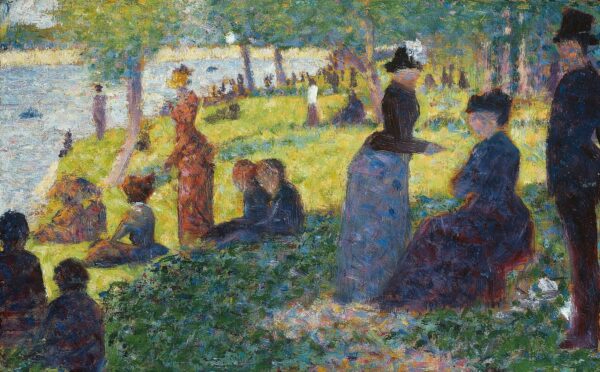
Sunday Afternoon on the Island of La Grande Jatte, and its studies: Sunday Afternoon on the Island of La Grande Jatte · Study for A Sunday on La Grande Jatte · Study for La Grande Jatte (right) · Study for La Grande Jatte (London) · Gray Weather, Grande Jatte · Oil Sketch for La Grande Jatte (Chicago) · Study for La Grande Jatte (Washington) · Study for La Grande Jatte (Buffalo) · Study for La Grande Jatte (two figures)
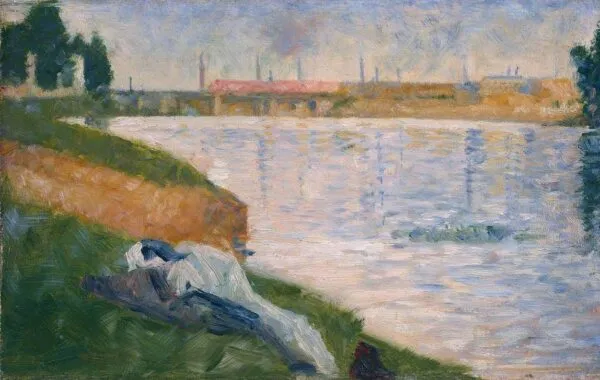
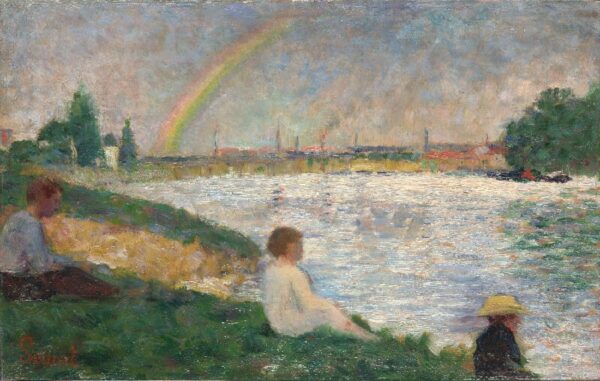
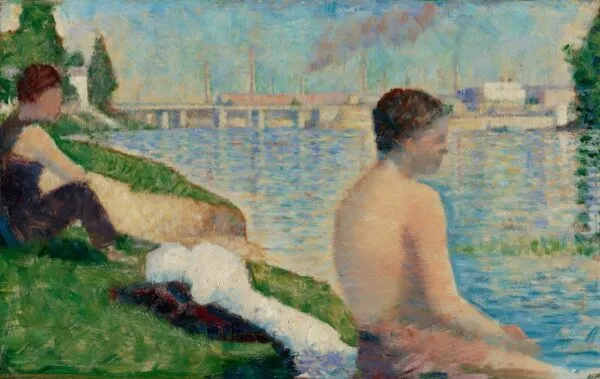
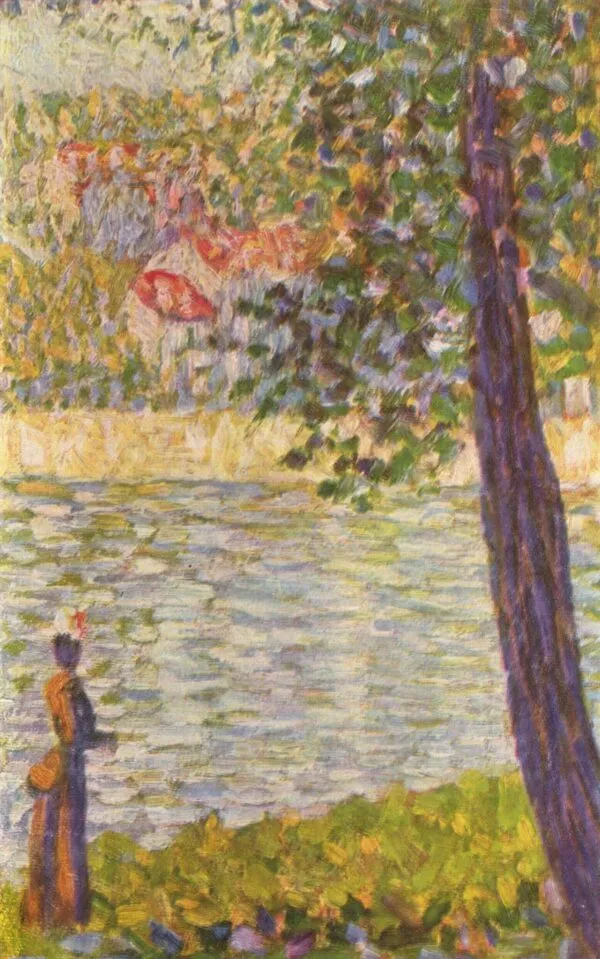
Bathers at Asnières, and its studies: Bathers at Asnières · Study for Bathers at Asnières (London) · Study for Bathers at Asnières (Kansas City) · The Rainbow: Study for Bathers at Asnières · Clothes on the Grass · The Seine with Clothing on the Bank
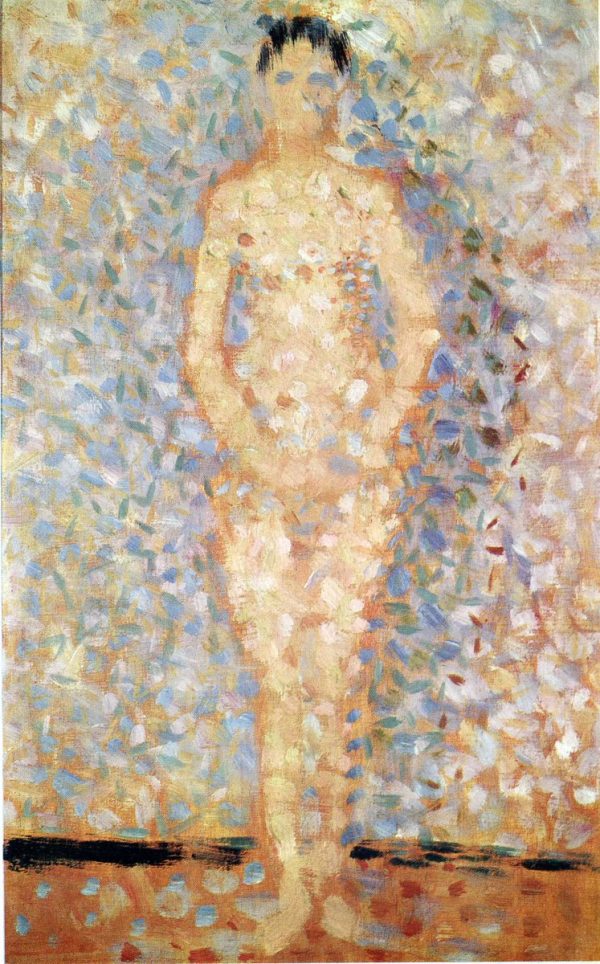
The models in the studio: The Models (Les Poseuses) · Model Facing Front (Study for Models) · Model Facing Front (Study for Models) II
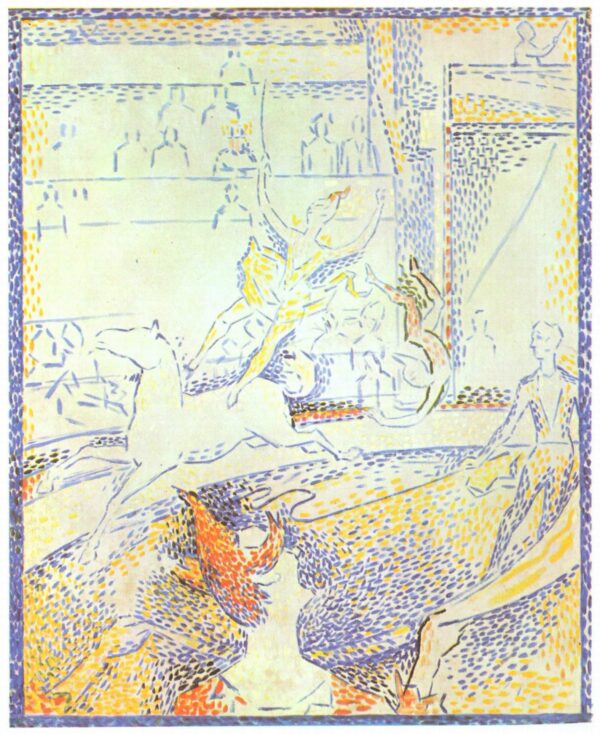
Paris after dark: cabaret, sideshow, circus: Le Chahut · Invitation to the Sideshow (La Parade de Cirque) · The Circus · Sketch for The Circus
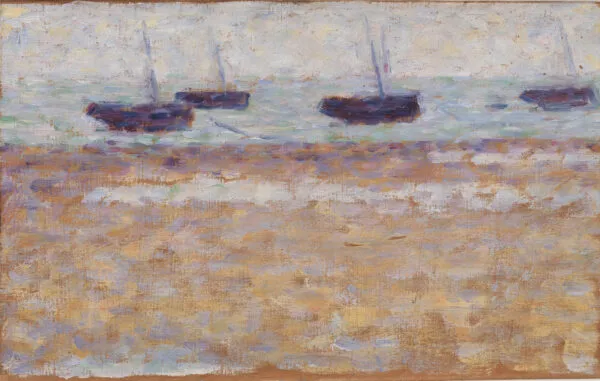
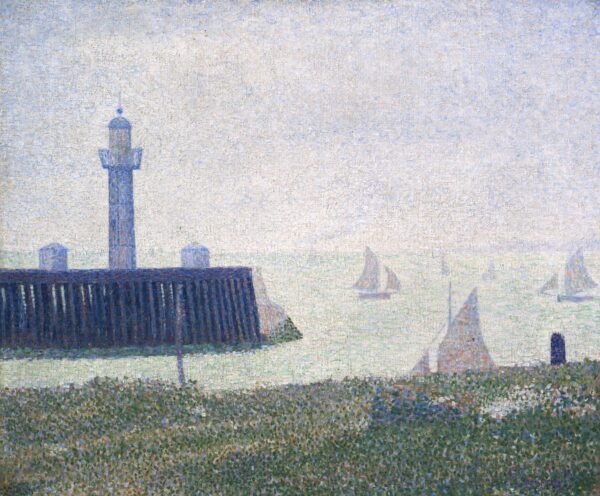
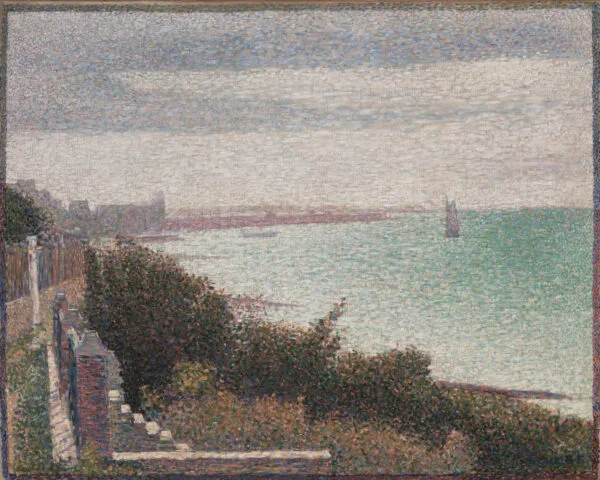
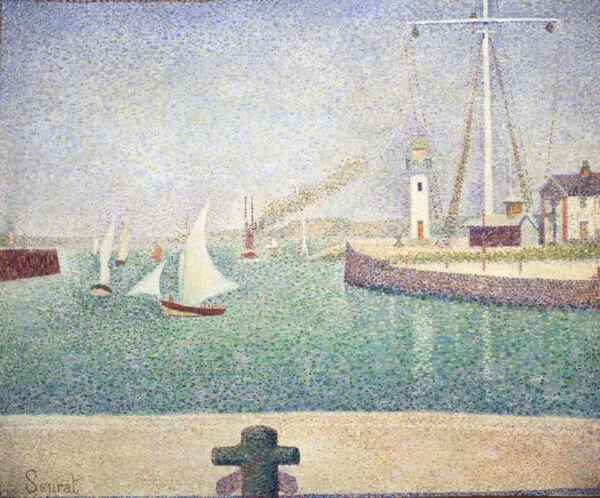
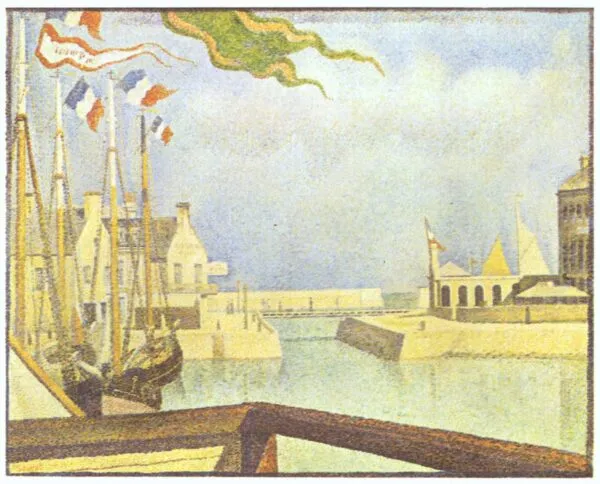
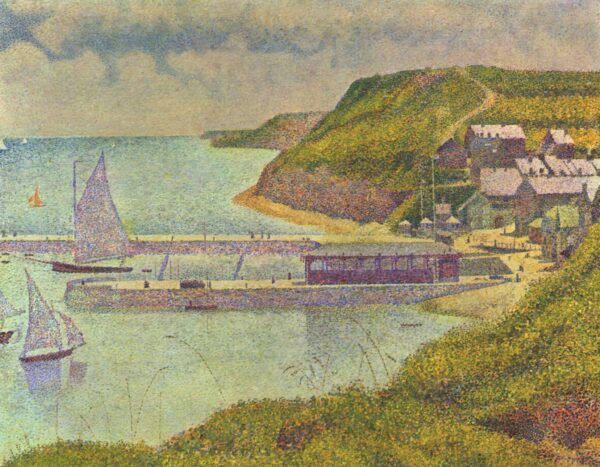
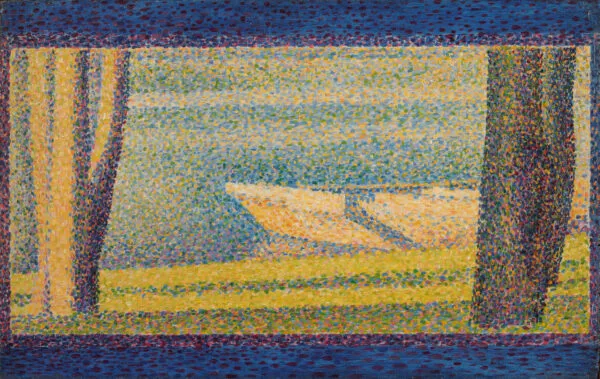
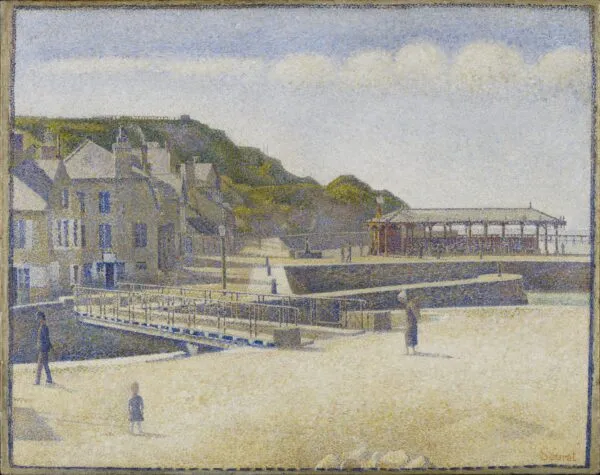
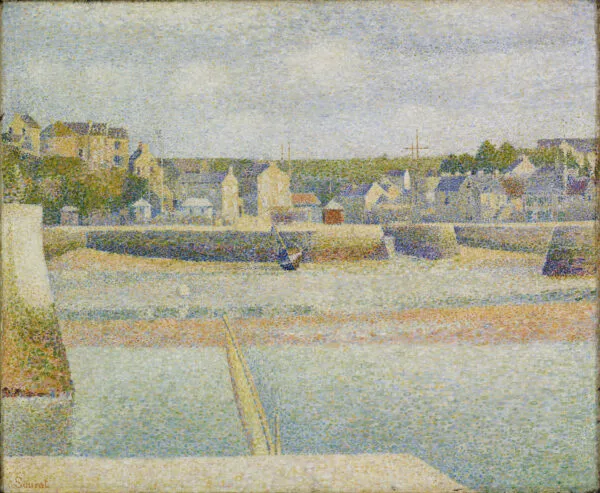
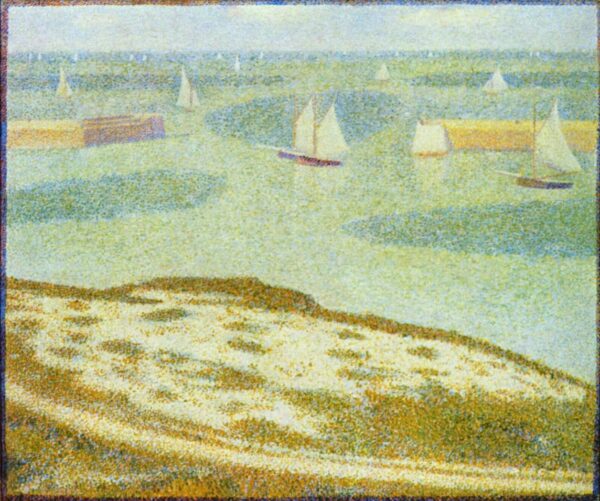
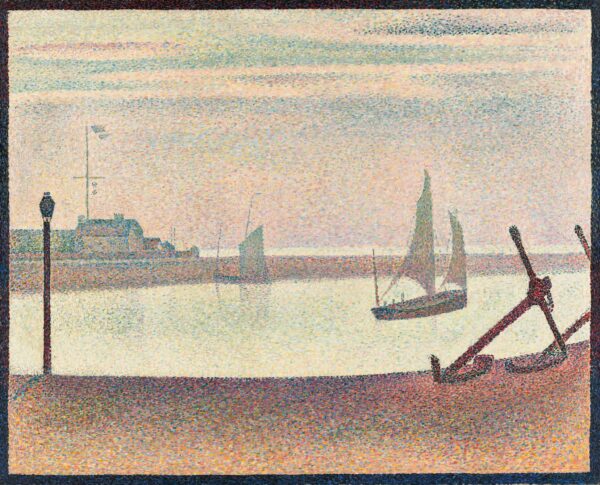
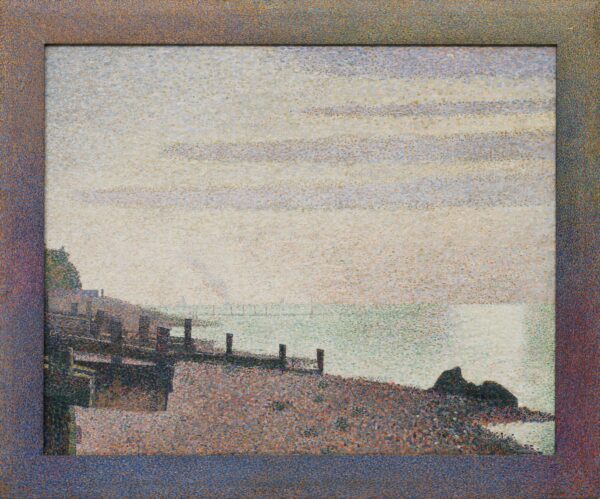
The coast: Gravelines, Grandcamp, Normandy, Honfleur: The Channel of Gravelines, Grand Fort-Philippe · The Channel of Gravelines, Petit Fort-Philippe · Study for The Channel of Gravelines, Petit Fort-Philippe · The Channel at Gravelines (Saint-Tropez) · The Channel at Gravelines, Evening · Boats, Low Tide, Grandcamp · Seascape at Port-en-Bessin, Normandy · Port-en-Bessin, Entrance to the Harbor · Evening, Honfleur · Port-en-Bessin, the Outer Harbor at Low Tide · Port-en-Bessin, the Outer Harbor at High Tide · Port-en-Bessin (Minneapolis) · Moored Boats and Trees · Port-en-Bessin, a Sunday · Entrance to the Port of Honfleur · End of the Jetty, Honfleur · Grandcamp, Evening · Four Boats at Grandcamp
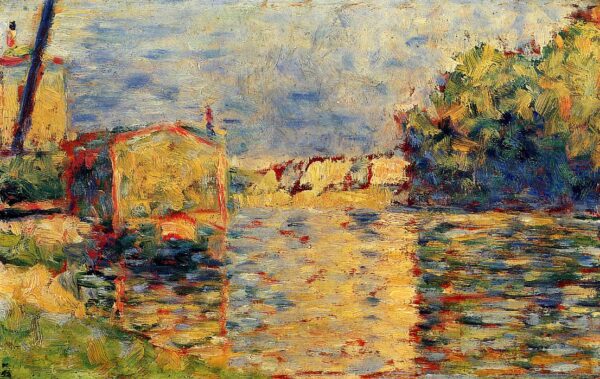
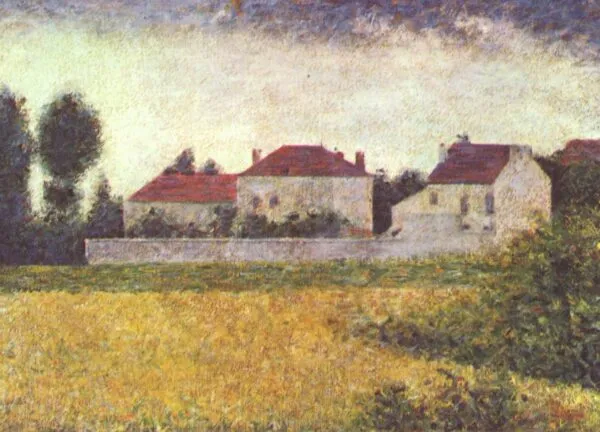
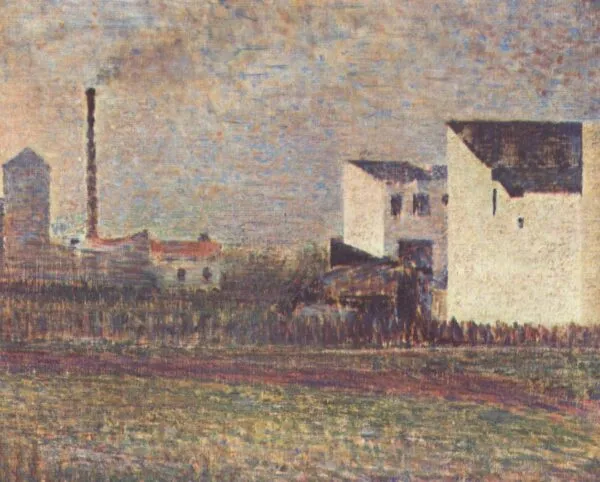
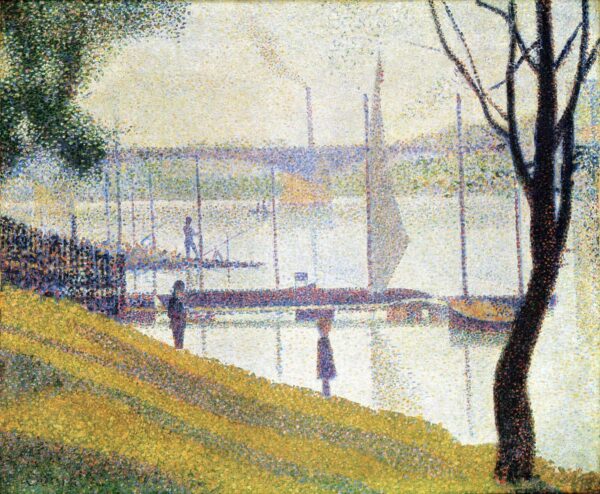
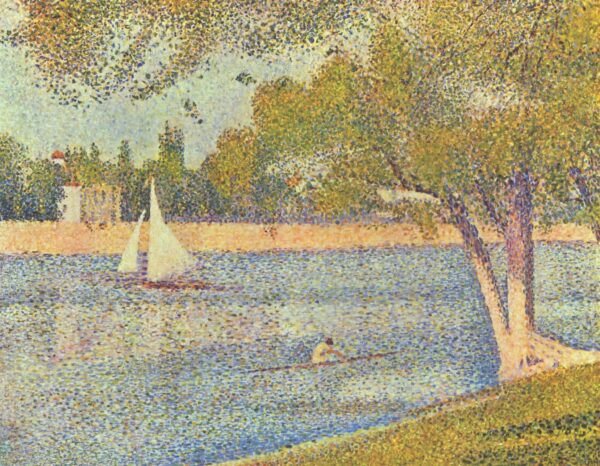
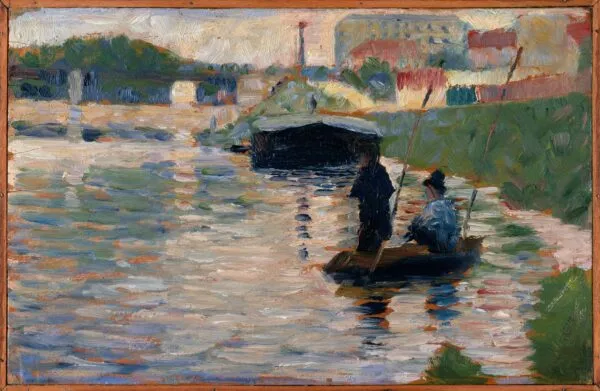
The Seine and the edge of Paris: The Seine at Courbevoie · View of the Seine · The Eiffel Tower · The Seine at La Grande Jatte · The Bridge at Courbevoie · The Suburbs (La Banlieue) · Ville-d’Avray, White Houses · A Field of Alfalfa, Saint-Denis · Banks of the Seine near Courbevoie
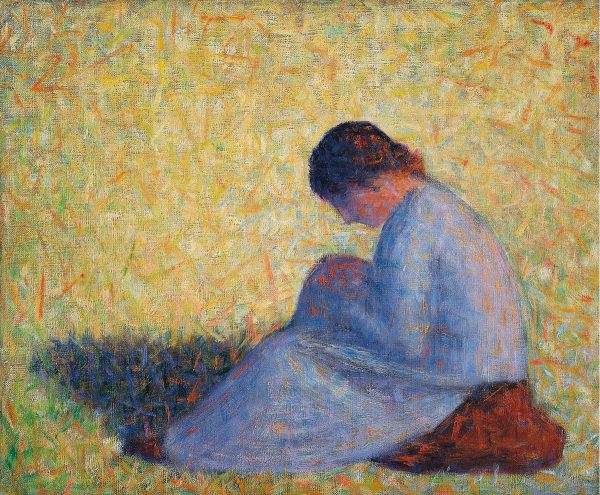
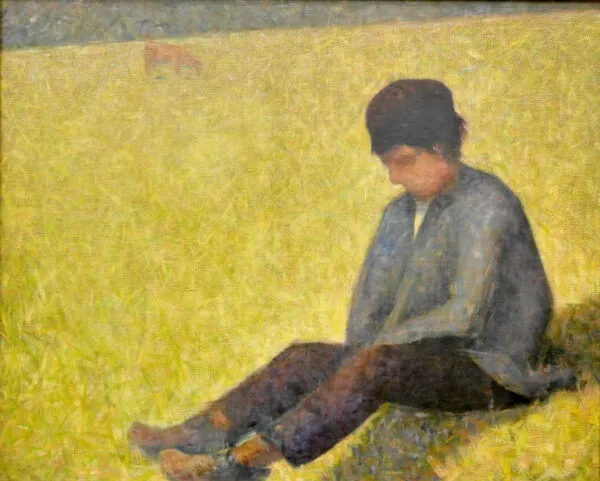
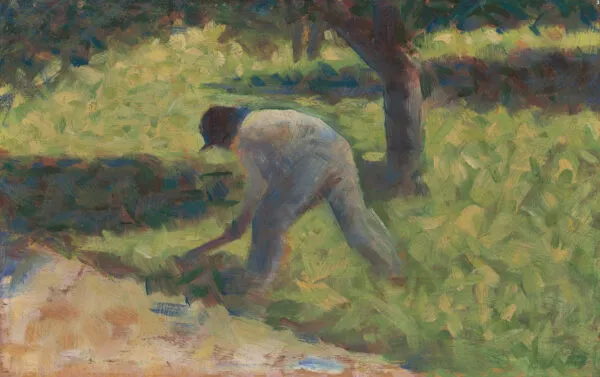
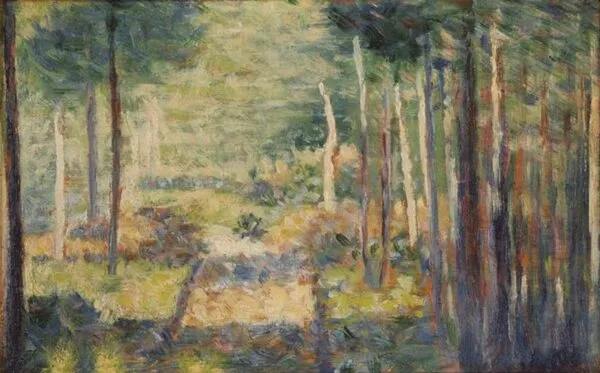
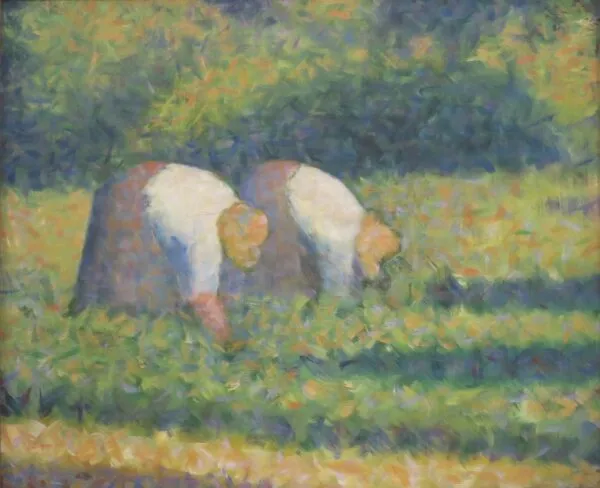
Country work and quiet figures: Peasant Woman Seated in the Grass (Paysanne assise dans l’herbe) · Figure in a Landscape at Barbizon · Path in the Forest, Barbizon · Farm Women at Work · The Gardener · The Morning Walk · The Stone Breaker · Young Woman Powdering Herself · Lady with a Monkey · Peasant with a Hoe · Boy Sitting in a Meadow
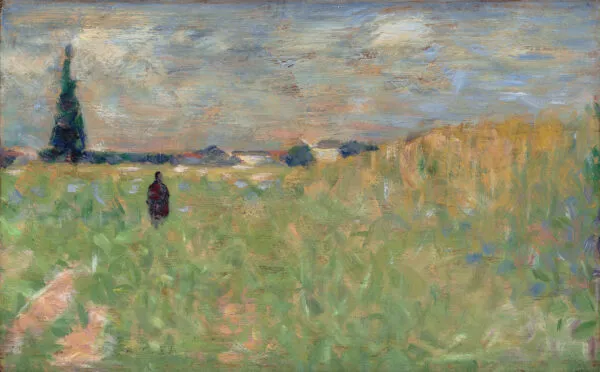
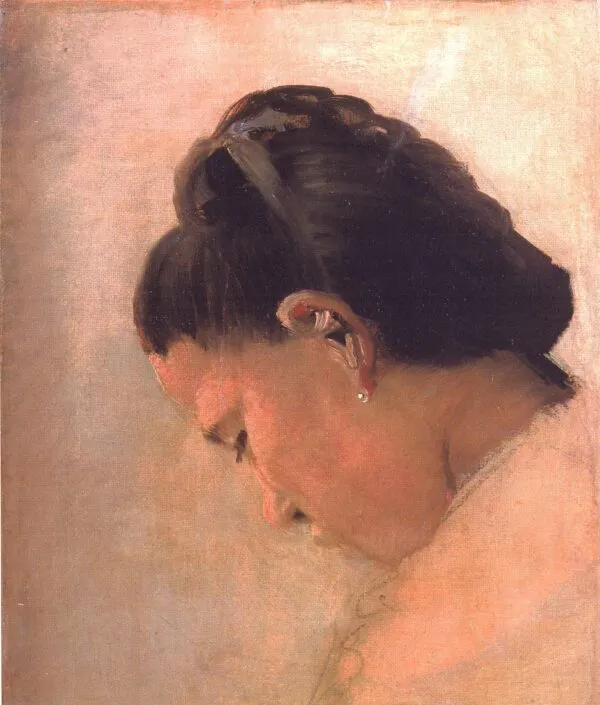
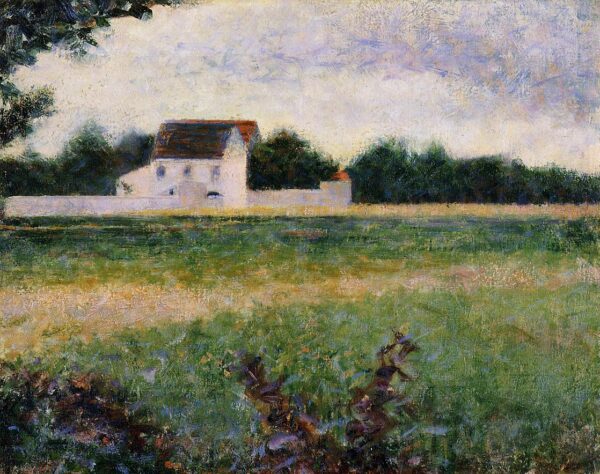
Early canvases and one bouquet: Angelica Chained to the Rock · Boys Bathing · Vase of Flowers · In the Woods at Pontaubert · Landscape in the Île-de-France · Head of a Young Girl · Forest at Barbizon in Autumn · A Summer Landscape
Who owned these canvases before the museums?
For works whose ownership chain the museum publishes, the full chain is on that work’s own page. Three names recur: Léon Appert, the painter’s brother-in-law; the critic Félix Fénéon, who defended Seurat in his lifetime; and the London gallery Reid & Lefevre, through which several of these canvases reached the collections that hold them now. Where a museum publishes no chain, we do not invent one.
Which size suits your wall?
Let your wall decide the size, not from the size of the original. Above a sofa or a bed a canvas painting should cover roughly two thirds of the width of the furniture; in a hallway or a narrow alcove an upright format sits better. Every work comes in eight sizes, and we keep the proportions of the original so the composition stays intact. If none of the eight fits, we paint a custom size painting to your own measurements — a standard option, not a special favour.
Is it really painted by hand?
Yes, with a brush and in oil on canvas, never with a printer. You can see it best in the two works we photograph in the studio: Model Facing Front (Study for Models) and Peasant Woman Seated in the Grass (Paysanne assise dans l’herbe). The photographs show the brushwork and the edge of the canvas on the stretcher. Before anything is dispatched we photograph the finished painting and send you the photograph for approval.
How does delivery work, and what do we guarantee?
Painting by hand takes time, so allow 15 to 45 days depending on the difficulty of the subject. You can order the painting in three forms: as a rolled canvas without a stretcher (in a tube), stretched on a wooden stretcher, or framed; you choose the form when you order. If what arrives does not match the photograph you approved, we correct it or paint it again. A hand-painted copy is not an industrial product and we do not treat it as one.
Frequently asked questions
Is this a print?
No. Every canvas is painted in oil by a painter. A print gives itself away: the surface is even, with no trace of a brush. On ours you can feel it under your fingers.
Can I order a work that is not listed here?
Often, yes. Tell us which work of Seurat’s you have in mind and we will say whether it can be painted and at what size.
Does the canvas arrive framed?
The stretched and framed forms come with the wooden stretcher; the rolled canvas arrives without one. A decorative frame is your choice: we can fit one, or send the canvas without one.
Why do colours on screen and on canvas differ slightly?
A screen emits colour; a canvas reflects it, so the two can never match exactly. That is why we photograph every work under neutral light before it ships.
Will you paint a study and its finished canvas together?
We will, and with Seurat it is worth doing: the pair shows how the stroke became a dot.
How do I look after the canvas at home?
Wipe it with a dry, soft cloth. Keep it out of direct sun and damp; oil lasts, but it does not like extremes.
What makes a hand-painted canvas different from a poster?
A poster of a famous painting reproduces a surface. A fine art reproduction rebuilds it: the same pigment, the same layering, the same raised edge where the brush turned.