







































Description
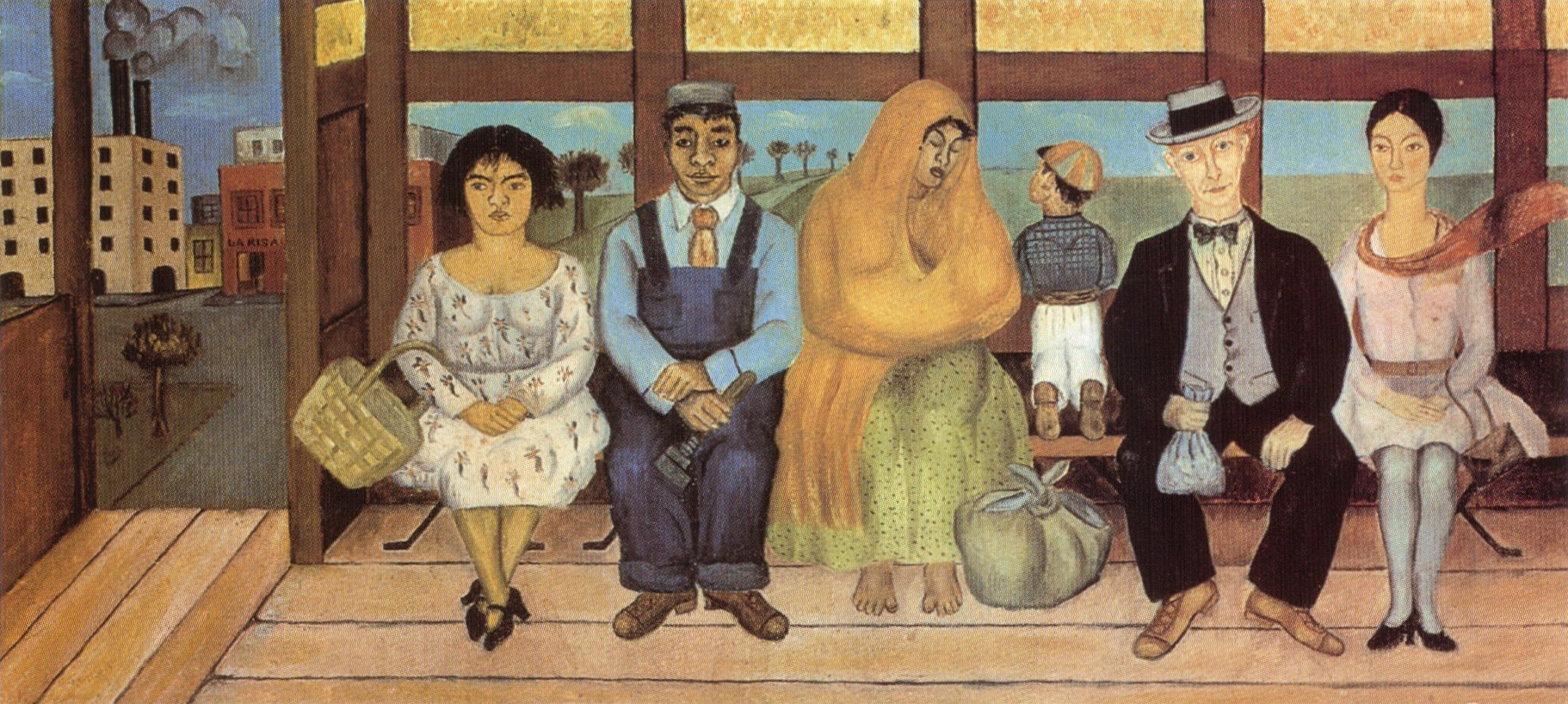
The Bus is a 1929 painting by Frida Kahlo: six passengers sit side by side on a wooden bench, among them a worker in blue overalls and a barefoot mother with a baby wrapped in her shawl. The original, oil on canvas, is only 26 cm high and 55.5 cm wide and belongs to the Museo Dolores Olmedo in Mexico City. Our painter paints it for you by hand in oil colours on canvas, in one of 4 landscape sizes from 90 x 41 to 140 x 65 cm or made to measure, each of them larger than the original. Before it ships, we send you a photograph of the finished painting.
| Title: | The Bus |
| Other titles: | El camión · Der Bus |
| Painter: | Frida Kahlo (1907–1954) |
| Year painted: | 1929 |
| Original size: | 26 cm x 55.5 cm (height x width) |
| Original technique: | Oil on canvas |
| Painting style: | Mexican modernism |
| Located at: | Museo Dolores Olmedo, Mexico City |
| Our reproduction: | Hand-painted oil on canvas, 4 sizes or made to measure |
The Bus – Frida Kahlo
What does The Bus show?
We look into an old city bus with a plank floor, wooden posts and a long bench where the passengers sit in a row. Nobody talks and nobody touches a neighbour; each of them is lost in thought.
On the far left sits a stout woman in a white dress with tiny flowers, a woven basket on her lap and black shoes on her feet. Next to her, a worker in blue overalls, a light blue shirt and an orange tie holds a tool in his hands. In the middle of the bench sits a barefoot woman wrapped in a wide orange-yellow shawl, under which she holds a baby, above a green skirt with dots; a knotted bundle lies at her feet.
To her right a boy in a striped cap kneels with his back to us and looks out of the window. Then comes a gentleman in a black jacket, with a hat, a bow tie and a waistcoat, gripping a small blue bag. At the right-hand end sits a young woman in a pale pink dress, with smooth hair and a red scarf that the wind lifts behind her shoulder.
Beyond the windows lie a road, green fields and low trees; on the left are pale houses, a red shop with lettering on its front and a factory with smoking chimneys.
How is the painting linked to Kahlo’s accident?
On 17 September 1925 Frida Kahlo and her boyfriend, Alejandro Gómez Arias, were taking the bus home from school. The driver tried to pass an oncoming electric streetcar, and the streetcar crashed into the side of the wooden bus. Several passengers were killed, and an iron handrail went through Kahlo’s pelvis. She was 18.
The accident ended her plan to become a doctor and left her in pain for the rest of her life. During her long recovery in bed she began to paint.
Four years later, in 1929, she painted The Bus, which, according to Wikipedia, alludes to that accident. The same article says the man in blue overalls is the one who removed the piece of handrail from her body, and that the passenger with the bag may be holding gold dust, which was scattered over her in the crash.
The crash itself is not shown, only passengers sitting quietly.
Why do people love this scene?
Every passenger is different: housewife, worker, mother, child, well-off gentleman and young woman share one bench and travel in one direction.
For her, 1929 was a turning point: in August she married the muralist Diego Rivera, and according to Wikipedia it was around then that she began to draw more and more on Mexican folk art.
More about her life, the accident and her work is in the Wikipedia article on the painter (in English), which also mentions this painting.
Where is the original kept?
The original is part of the collection of the Museo Dolores Olmedo in Mexico City. Kahlo painted it in oil on canvas, in a landscape format more than twice as wide as it is high: 55.5 cm across and just 26 cm tall.
Because the original is so small, every size we offer is larger than it.
The Bus or another Kahlo?
This wide, low canvas painting seems made for long walls: above a sofa, a sideboard or a dining table, or in a hallway where an upright piece would not fit.
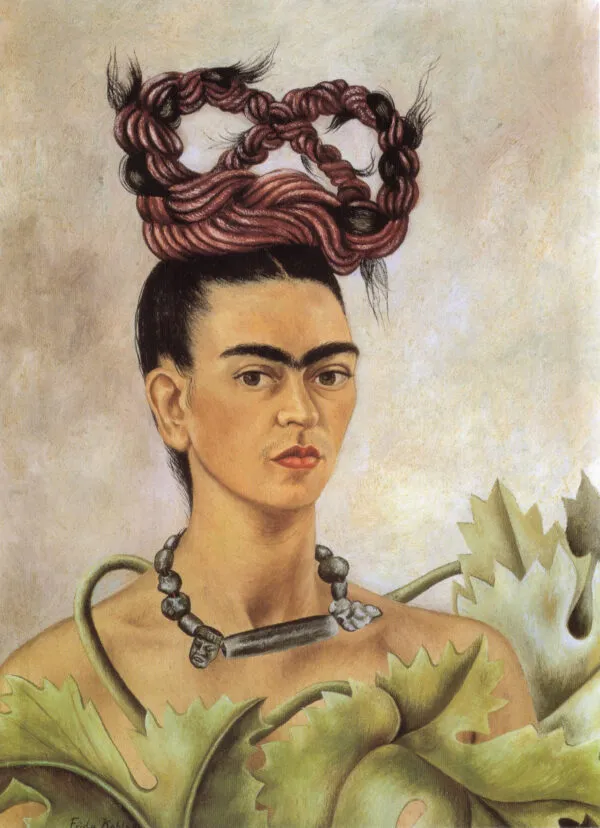
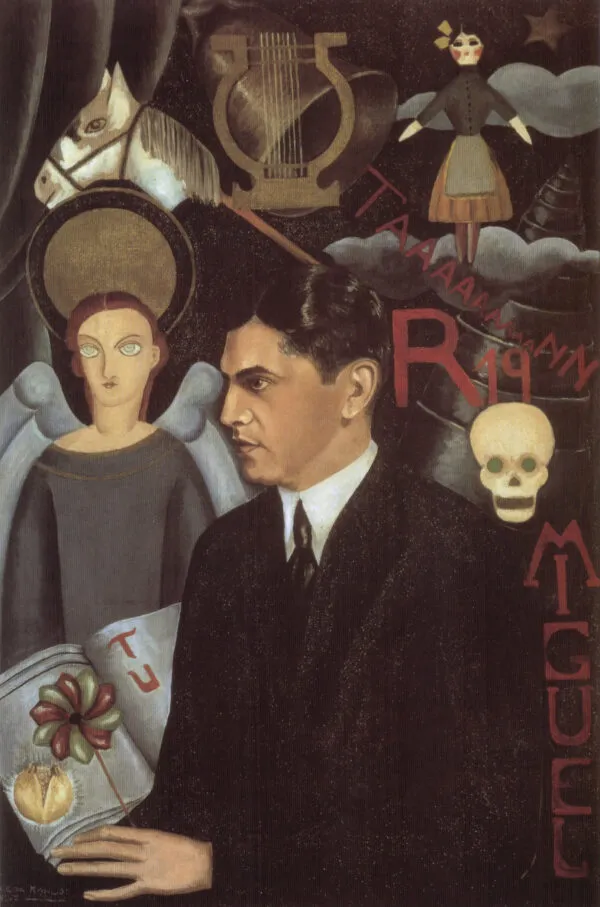
If you are curious about the young man who was on the bus with her, see Portrait of Alejandro Gómez Arias from 1928. From the same early years comes Portrait of Alicia Galant, also in the collection of the Museo Dolores Olmedo.
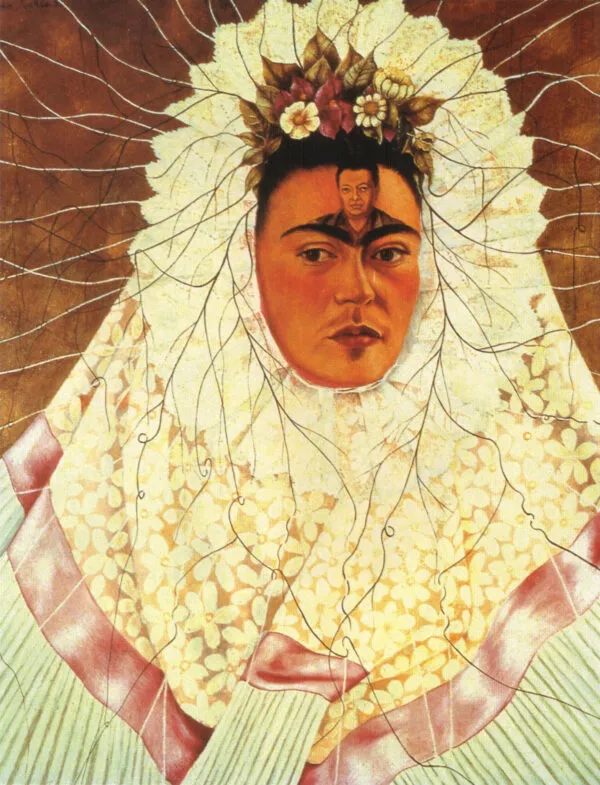
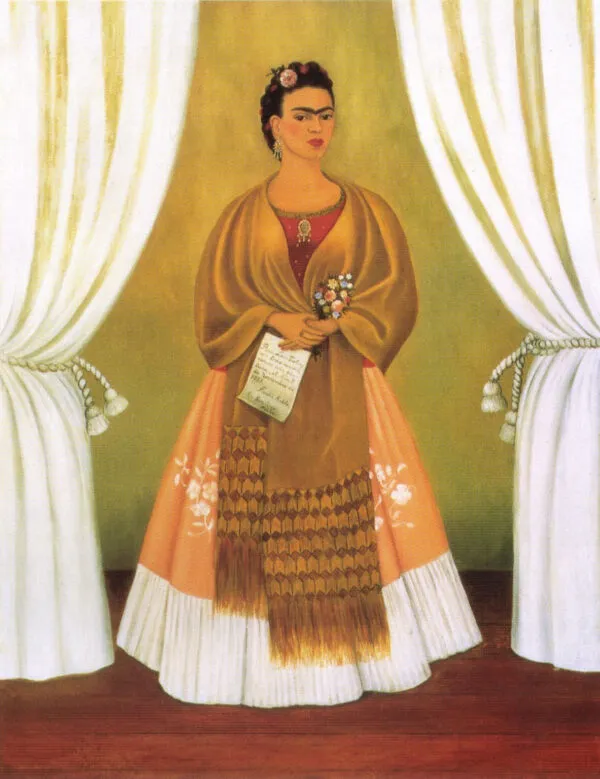
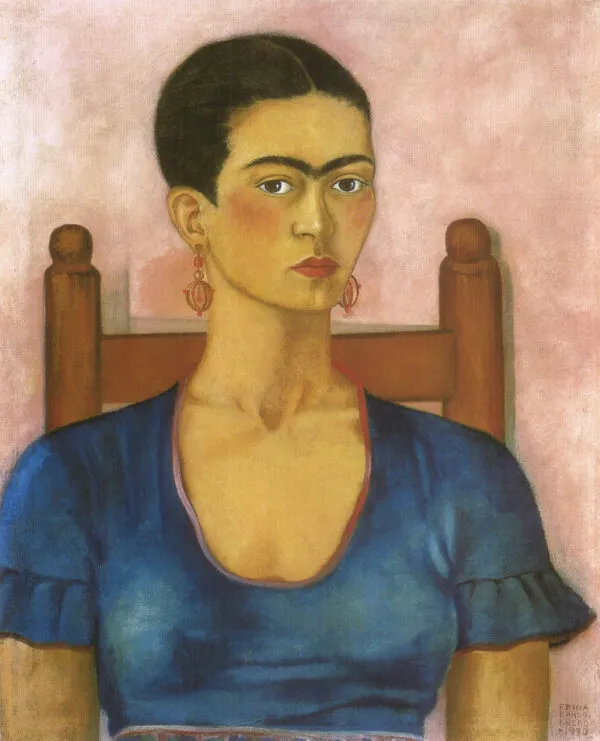
A year later came Self-Portrait (1930), in which she sits in a blue blouse against a pink wall, and the double portrait with her husband is Frieda and Diego Rivera. The Frida Kahlo page lists all the famous Frida Kahlo paintings our painters make to order.
How does our painter paint it?
Here Kahlo worked in flat, clear colours with calm outlines and few shadows, and the surface stays smooth. Our painter respects that character and builds the painting in oil on canvas, layer by layer.
First come the large areas: the sky, the yellow bands above the windows, the brown posts, the pale floor and the landscape behind the glass. Then the six figures go in and take on volume, from the golden shawl in the middle to the black jacket on the right.
The small work comes last: the flowers on the white dress, the weave of the basket, the dots on the green skirt, the stripes on the boy’s cap, the bow tie, the knot of the bundle and the smoke above the factory. The result is a Frida Kahlo reproduction with real brushstrokes, which no print can offer.
Like any oil painting reproduction, it looks warmer in morning light than under an evening lamp.
Which size suits your wall?
In short: 90 x 41 cm for a hallway or above a desk, 103 x 50 cm above a chest of drawers or a bed, 120 x 55 cm above a sofa and 140 x 65 cm for a large wall or a dining room.
We paint The Bus in 4 landscape sizes (width x height): 90 x 41, 103 x 50, 120 x 55 and 140 x 65 cm. All are larger than the original; the smallest, 90 x 41 cm, is 34.5 cm wider and 15 cm taller.
As a painting for the living room above a three-seater sofa, 120 x 55 cm works well; above a very long or corner sofa, choose 140 x 65 cm.
Can I order a different size or a frame?
Yes. The original is a little more than twice as wide as it is high, so we can paint it in a size that is not on the list without cutting off the young woman on the right or the street on the left. Send us the width and height you want and we will reply with a price and a delivery time.
It comes rolled in a tube, stretched on a stretcher bar or framed; our workshop in Slovenia does the stretching and framing.
You choose the frame in our 3D app, which is for frame choice only; a view of the painting on your own wall is a separate service.
When and how does the painting arrive?
As soon as you confirm the order, the painter starts work, and the painting is ready within 15 to 45 working days. Before dispatch you receive a photograph of the finished painting, and if you would like a correction, we make it.
Within the EU, Slovenia included, it travels without customs formalities, and our returns policy applies to every purchase.
The Bus makes a fine present for anyone who loves Mexican art, everyday scenes or the story of Frida Kahlo. To let them pick the size, give a wall art voucher instead.
Frequently asked questions
Which museum has the original?
The Museo Dolores Olmedo in Mexico City.
Who are the passengers?
A housewife, a worker, a mother with a baby, a boy, a gentleman and a young woman.
Will I get a print?
No, you get a hand-painted copy, made by the painter with a brush and oil colours on canvas to your order.
How big is the original?
It is 26 cm high and 55.5 cm wide, so every size we offer is larger.
Is a made-to-measure size possible?
Yes, we paint it in the width and height you choose and tell you the price before you order.
How long does delivery take?
Painting takes 15 to 45 working days, then we ship; inside the EU without customs.
Does The Bus suit a living room?
Yes, the wide, low format fits well above a sofa or a sideboard, for example at 120 x 55 cm.
What does the painting mean?
According to Wikipedia it alludes to the bus accident in which Frida Kahlo was badly injured at 18.
- Subject: six passengers on the wooden bench of a city bus, with open country and a factory street behind them.
- Original: 1929, oil on canvas, 26 x 55.5 cm, Museo Dolores Olmedo, Mexico City.
- Ours: oil on canvas, painted by hand to your order, in 4 landscape sizes from 90 x 41 to 140 x 65 cm or made to measure.
- Worth knowing: the painting alludes to the 1925 accident that left the painter in lifelong pain.