




“Colour and I are one. I am a painter.”
Paul Klee – hand-painted paintings in oil on canvas
At SvetSlik.si you can order 7 paintings by Paul Klee as hand-painted oil reproductions on canvas, the work of our own painters. Every painting is offered in several sizes – 51 formats across the gallery, from 30 x 40 cm to 200 x 200 cm – or in a size of your own, and prices start at 108 €. Each painting is made only after you order it, which is why delivery takes 15 to 45 working days; before dispatch we send you a photograph of the finished painting.
The words at the top of this text are Klee’s own. He wrote them in his diary in Kairouan on 16 April 1914, during a short trip to Tunisia with the painters August Macke and Louis Moilliet, when the light of North Africa finally won him over to colour. As a student he had doubted he would ever learn to paint; after Tunisia the coloured rectangle became his basic building block, and you will find it in several of the works on this page.
Paul Klee’s periods – and what you will find in our gallery
The early 1920s (1920–1922)
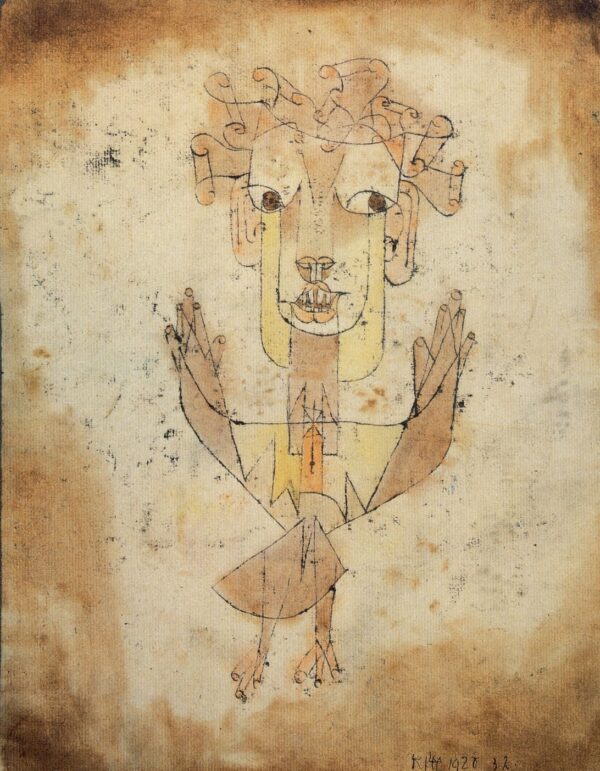
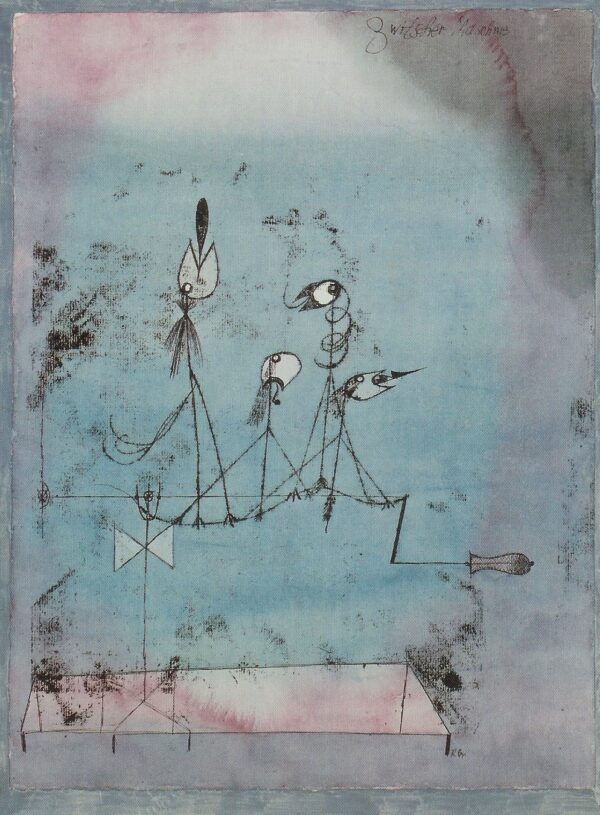
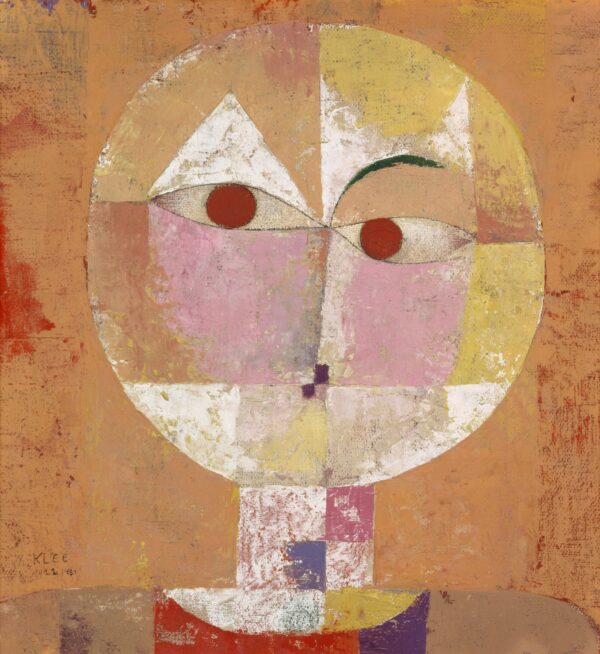
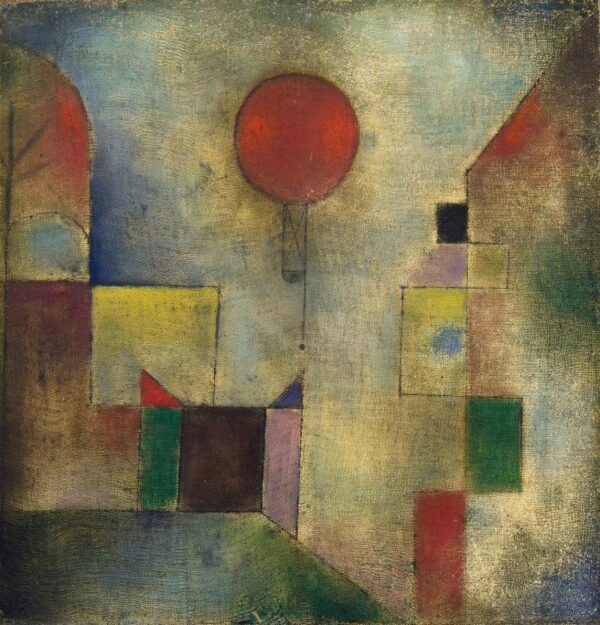
From 1920 comes Angelus Novus, a small sheet of 31.8 x 24.2 cm made with the oil transfer technique Klee invented himself: a frontal angel drawn in fine brown lines, with wide eyes, an open mouth and raised hands like wings. The philosopher Walter Benjamin bought it in 1921 and in 1940 made it his “angel of history”; today it belongs to the Israel Museum in Jerusalem. In 1921 Klee began teaching at the Bauhaus, and a year later came three of the works in our gallery. Twittering Machine shows four thin birds with open beaks on a wire linked to a hand crank, against a misty blue ground that turns pink near the bottom; the Museum of Modern Art in New York owns it. Senecio, in the Kunstmuseum Basel, divides a round human head into rectangles of orange, pink, yellow and white, with a triangle and a curve above the eyes that read as a raised eyebrow. In Red Balloon, owned by the Guggenheim Museum in New York, a round red balloon floats above little houses built of squares and rectangles, painted on gauze.
The Bauhaus years (1925–1929)
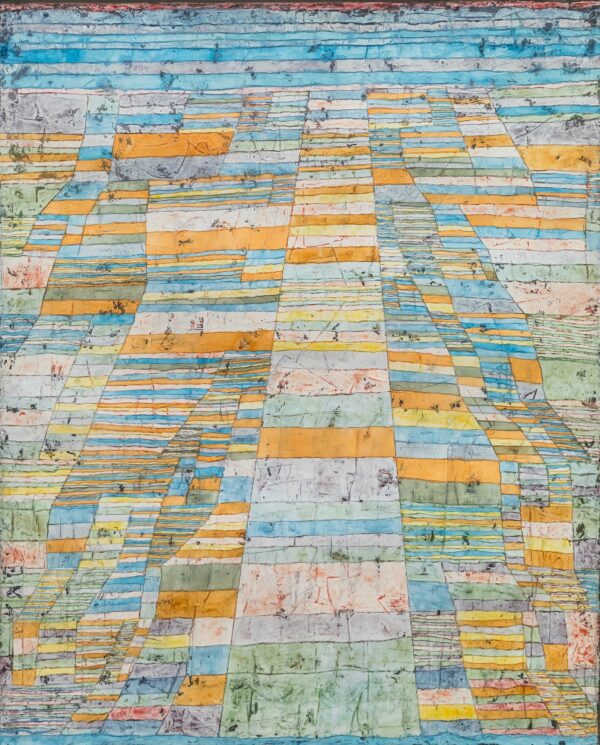
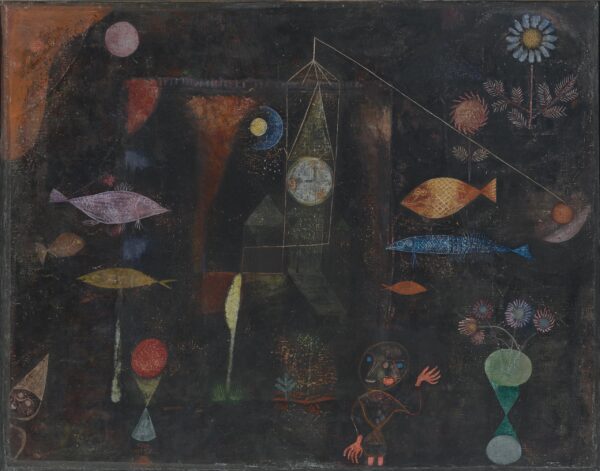
Fish Magic, from 1925, is often called surrealist. Klee laid a dark layer of black over many colours and scratched the figures out of it: glowing fish in pink, blue and orange, a clock tower with a bell, flowers in vases and moon-like circles, with a square of muslin glued in the centre like a collage. It has belonged to the Philadelphia Museum of Art since 1950. In 1928 Klee travelled to Egypt, and in January 1929, after the trip, he painted Highways and Byways: a straight main path climbs the middle in many coloured bands, side paths branch off to the left and right, some ending in nothing, and everything runs towards a blue and purple horizon. It is called a key work of Klee and hangs in the Museum Ludwig in Cologne.
Düsseldorf (1932)
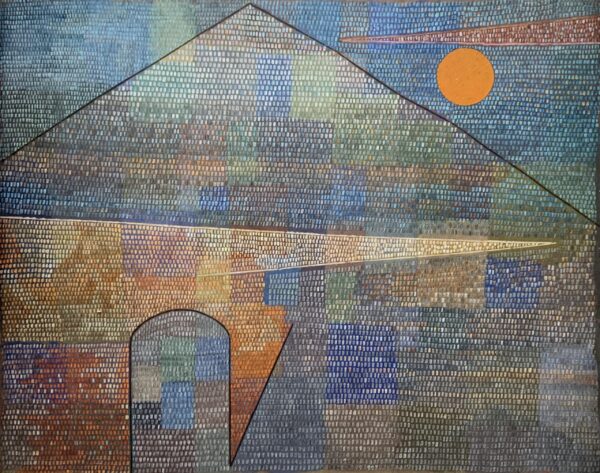
From 1931 Klee taught at the Düsseldorf Academy, and there in 1932 he painted Ad Parnassum, the masterpiece of his pointillist phase and, at 100 x 126 cm, one of his largest works. On unprimed canvas he first laid large squares of muted colour, then stamped thousands of small squares over them, white first and then other colours. A large triangle outlined in black rises from the upper left – a pyramid, a roof or the Parnassus of the title – and an orange sun glows at the upper right. It belongs to the Kunstmuseum Bern.
The most famous Paul Klee paintings at SvetSlik.si
Twittering Machine is among the best-known works at the Museum of Modern Art, has inspired several pieces of music and is often hung in children’s rooms. Angelus Novus owes its fame above all to Walter Benjamin, who took it into exile in Paris and had it hidden in the Bibliothèque nationale before he fled, and Ad Parnassum is counted as Klee’s masterpiece.
Which Paul Klee painting suits which room?
Klee mostly worked small, so on your wall his paintings can grow: many of our sizes are far larger than the originals. Ad Parnassum, wide and finely dotted, belongs above a sofa or sideboard in a living room, where its surface has room to breathe, and the same goes for Fish Magic. Highways and Byways, taller than it is wide, suits a narrow wall in a hallway or beside a door. The almost square Senecio and the square Red Balloon look right in a dining room or bedroom, and Twittering Machine is often hung in a child’s room. Angelus Novus is a sheet of just 31.8 x 24.2 cm in the original, which we paint much larger. A good rule of thumb: choose a painting about two thirds as wide as the furniture beneath it, with its centre about 150 cm from the floor.
Sizes, prices, custom size, stretcher and frame
The sizes of each painting keep the proportions of the original, and every size is priced on the product page. Across the gallery there are 51 formats, from 30 x 40 cm to 200 x 200 cm, and prices start at 108 €. Most Klee originals are small – Red Balloon measures 31.8 x 31.1 cm – while our largest sizes reach two metres, so a small sheet can become a painting for a whole living-room wall. Ad Parnassum is offered only from 95 x 75 cm, because its tiny dots need room to read well. If your wall needs a different measurement, send us the width and height: we paint to your own size. We send the painting rolled, stretched on a wooden stretcher bar or framed; you choose the frame in our 3D application, which is for choosing the frame only. For a gift, there is the wall art voucher.
How do we hand-paint a Klee?
Many of Klee’s originals are small works on paper, gauze or board, in watercolour, ink or his own oil transfer technique. Ours are hand-painted copies on canvas in oil or acrylic, built up layer by layer from a high-resolution photograph of the original and larger if you like, so they hang like any other painting. The painter first lays in the fields of colour – the rectangles of Senecio, the bands of Highways and Byways – and then adds the fine lines and small marks. In Ad Parnassum every dot is set by hand, one after another. If something in the final photograph is not right, we correct it before dispatch.
Paul Klee in brief
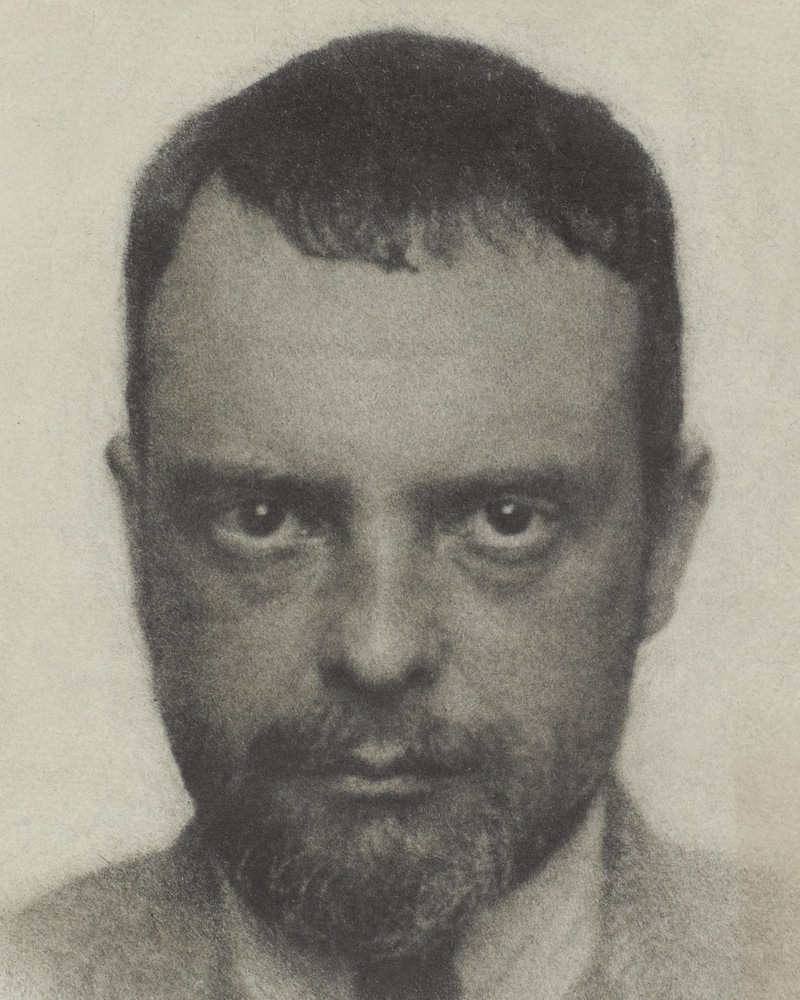
Paul Klee was born on 18 December 1879 in Münchenbuchsee near Bern, the son of a German music teacher and a Swiss singer, and died on 29 June 1940. A gifted violinist from childhood, he also played in an orchestra, and Rainer Maria Rilke wrote that his drawings seemed like transcriptions of music. He belonged to the Blaue Reiter circle around Wassily Kandinsky and Franz Marc, taught at the Bauhaus beside Kandinsky from 1921 to 1931 and then at the Düsseldorf Academy until 1933. In 1937 the Nazis showed 17 of his works in the “Degenerate Art” exhibition and seized 102 of his works from public collections. He left more than 9,000 works. Read more in the Paul Klee biography.
Frequently asked questions
Which Paul Klee paintings can I order?
The gallery holds Angelus Novus, Twittering Machine, Senecio, Red Balloon, Fish Magic, Highways and Byways and Ad Parnassum.
Who was Paul Klee?
A Swiss-born German artist (1879–1940), a member of the Blaue Reiter circle and a teacher at the Bauhaus, whose work drew on expressionism, cubism and surrealism.
Are the originals oil paintings on canvas?
Only some. Angelus Novus and Twittering Machine are small works on paper, Red Balloon is painted on gauze and Ad Parnassum in tempera. Ours are all hand-painted on canvas in oil or acrylic.
Why is Ad Parnassum offered only from 95 x 75 cm?
The painting is made of thousands of tiny dots that only come into their own on a larger surface, so we do not offer smaller sizes. The largest size is 190 x 150 cm.
Where can you see the originals?
Angelus Novus is in the Israel Museum in Jerusalem, Twittering Machine in the Museum of Modern Art and Red Balloon in the Guggenheim Museum, both in New York, Senecio in the Kunstmuseum Basel, Ad Parnassum in the Kunstmuseum Bern, Highways and Byways in the Museum Ludwig in Cologne and Fish Magic in the Philadelphia Museum of Art.
How much does a Paul Klee painting cost?
The originals are in museums. A hand-painted reproduction on canvas from SvetSlik.si starts at 108 €, depending on the painting and the size. You receive a real painting, not a print.
Which size should I choose?
Measure the furniture below the wall and pick a painting about two thirds of that width. Every size and its price is listed on each painting’s page; if none fits, we paint yours to your own measurements.
How long does delivery take, and can I order a custom size?
As every painting is painted to order, delivery takes 15 to 45 working days. A custom size is possible for any painting, and before dispatch we send you a photograph of the finished painting.