




“Plastic art affirms that equilibrium can only be established through the balance of unequal but equivalent oppositions.”
Piet Mondrian: hand-painted copies of his paintings
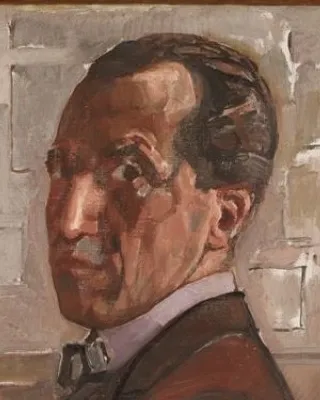
Piet Mondrian (1872–1944) was the Dutch painter who turned a tree into a grid of black lines and planes of red, yellow and blue. Here you will find 21 of his paintings, each one a hand-painted copy in oil or acrylic on canvas, in 102 sizes from 40 x 30 to 200 x 200 cm, from 108 €. The quote above comes from his essay Toward the True Vision of Reality, written in New York in 1942. It explains why his compositions are never symmetrical and still feel calm: a large white field is held in balance by a small block of red or blue.
From windmills to grids: the stages of his work
The Dutch landscapes
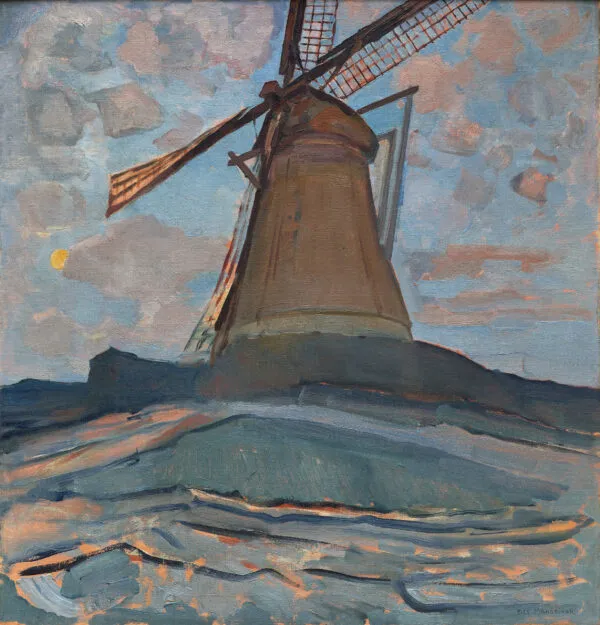
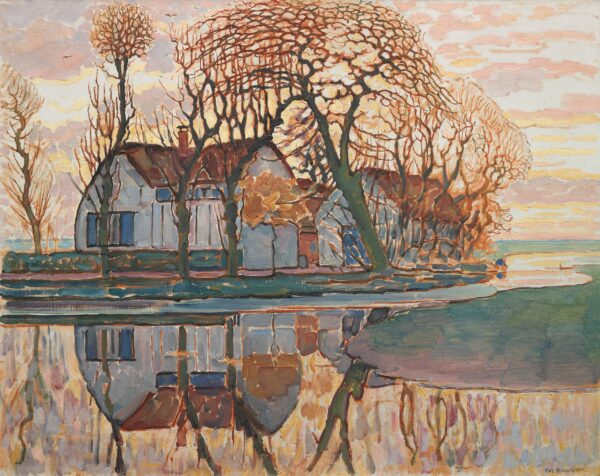
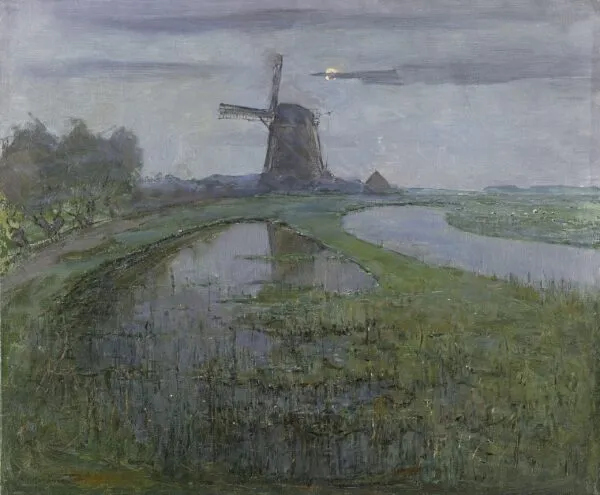
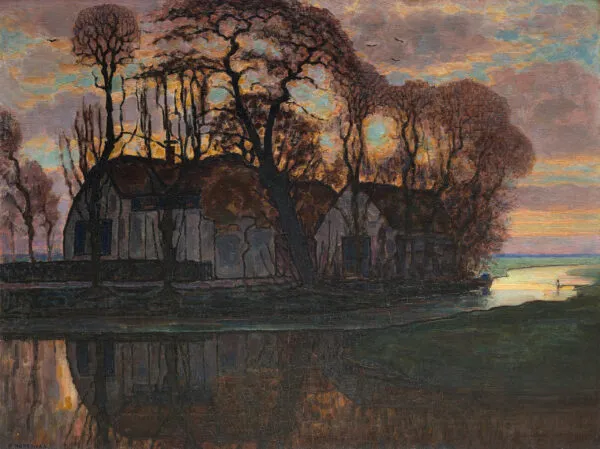
Mondrian studied at the Rijksakademie in Amsterdam and began as a landscape painter in the spirit of the Hague School. He painted farms, rivers and mills around Amsterdam, often at dusk or by moonlight, in soft greens, greys and browns: Oostzijdse Mill by Moonlight, Farm near Duivendrecht, Farm Near Duivendrecht, in the Evening and Mill at Evening.
Colour and the tree
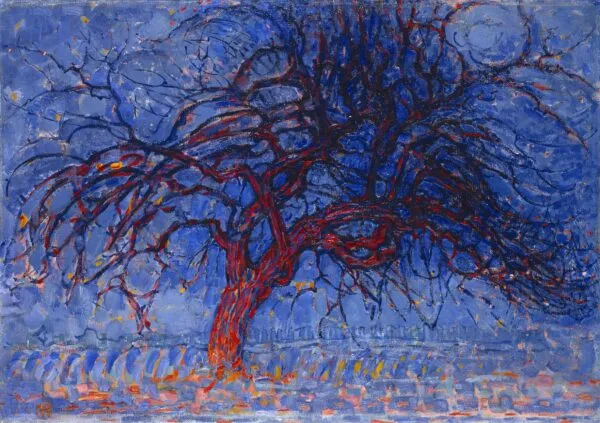
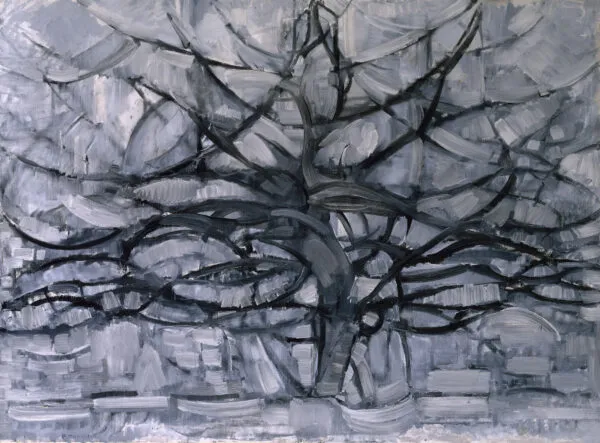
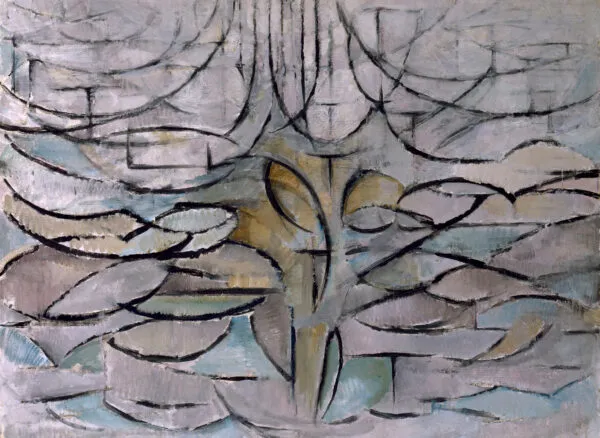
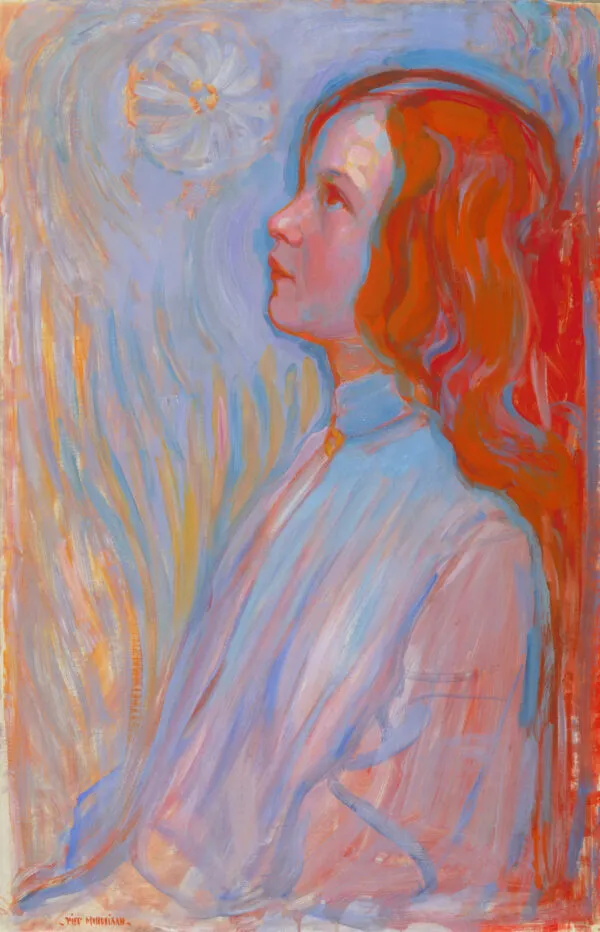
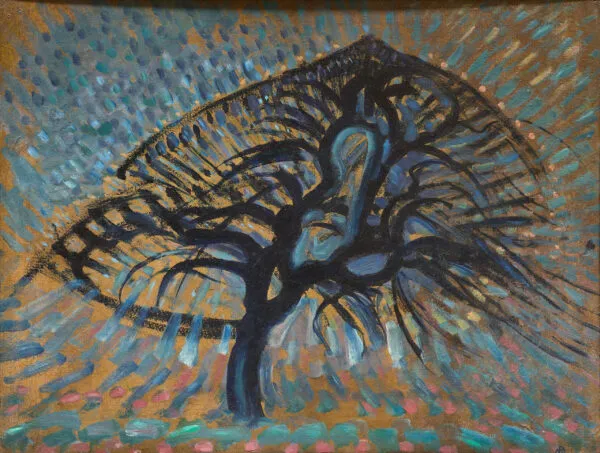
From 1908 he spent his summers in Domburg in Zeeland, and his colour became pure and bright. Devotion and Apple Tree, Pointillist Version come from these years. In The Red Tree, Gray Tree and Blossoming Apple Tree you can watch one subject, the tree, turn step by step into a rhythm of lines.
Paris, the war years and De Stijl
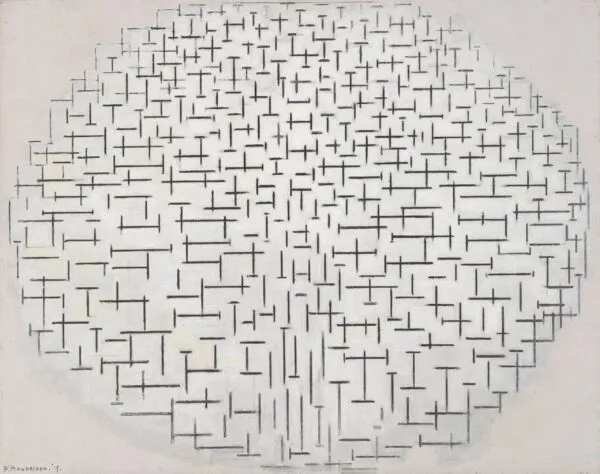
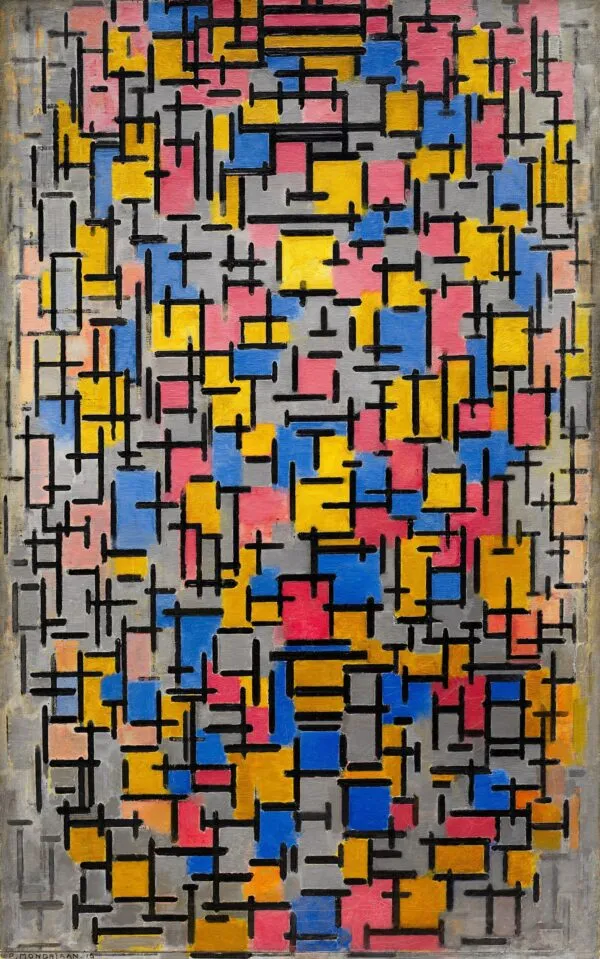
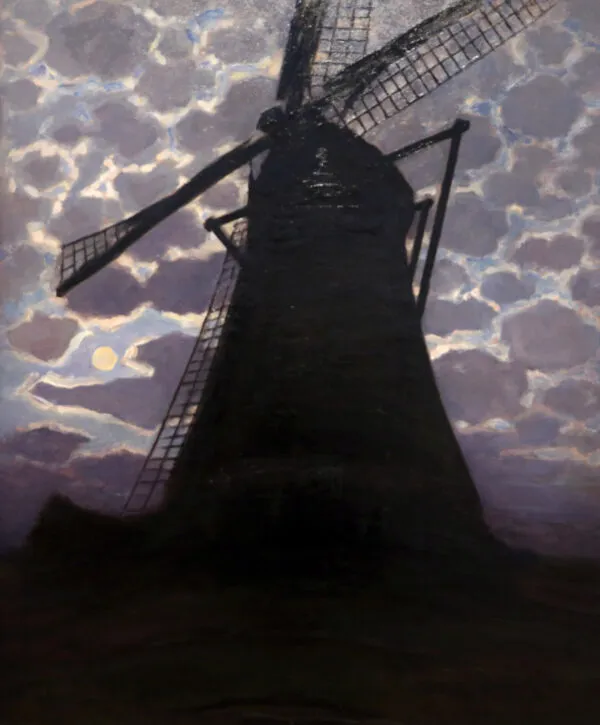
In 1912 Mondrian moved to Paris, met Cubism and dropped the second “a” from his name. During the First World War he was in the Netherlands, where he painted the sea and a pier as short black strokes in Composition 10 in Black and White. Composition 8, Composition (1916) and Windmill show the same search. In 1917 he co-founded the De Stijl movement with Theo van Doesburg.
The classic grids
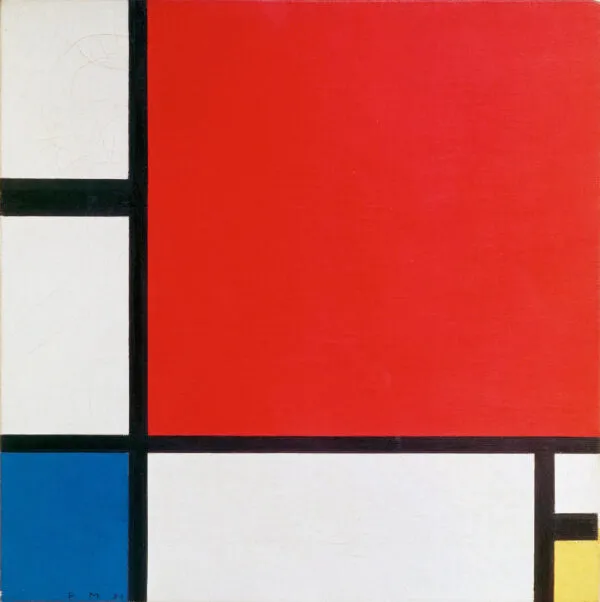
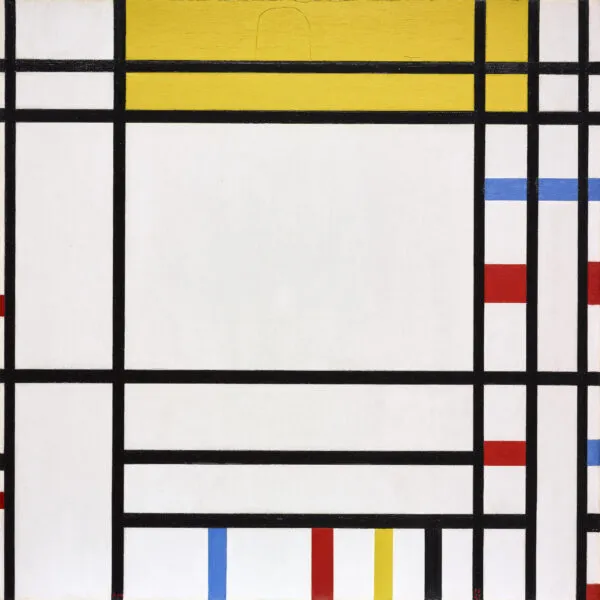
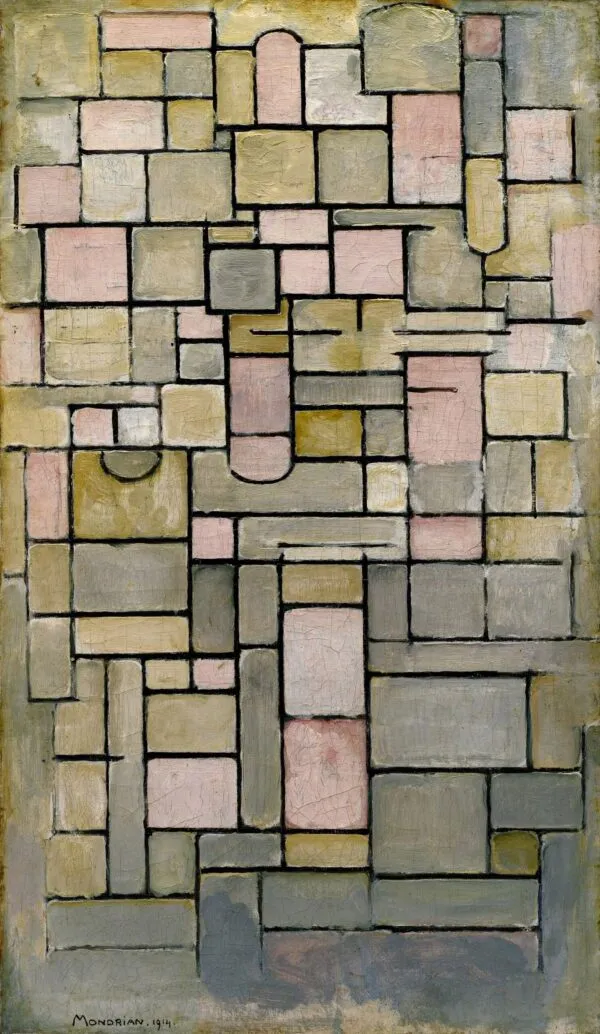
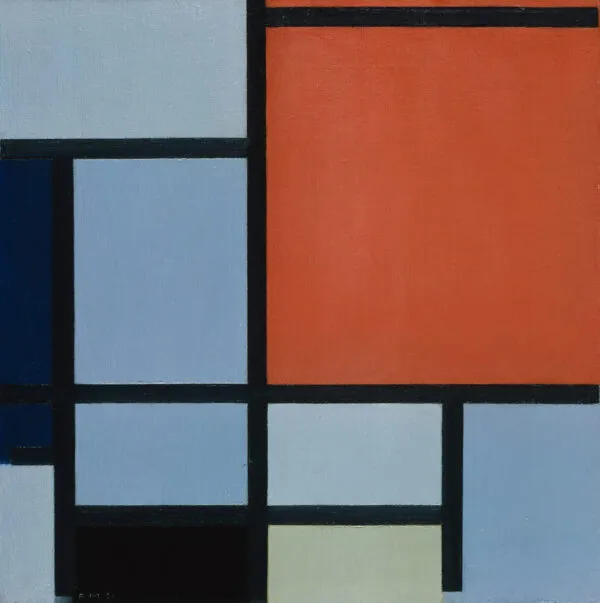
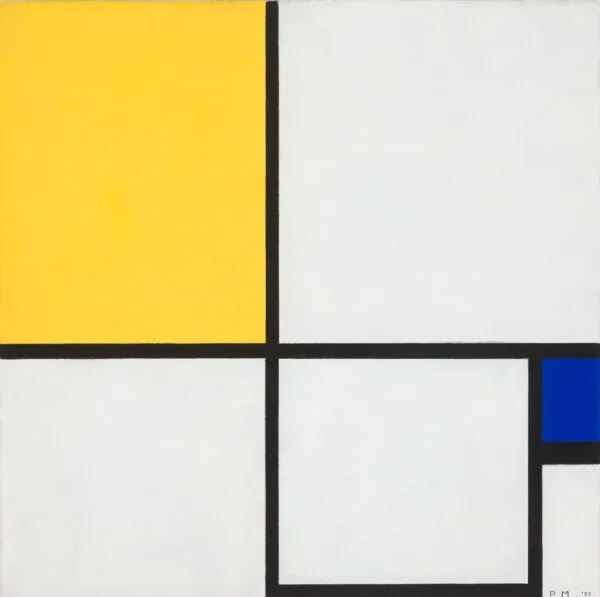
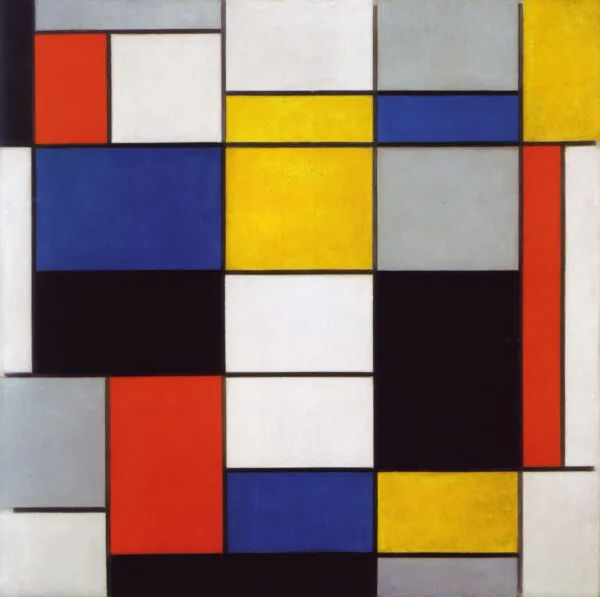
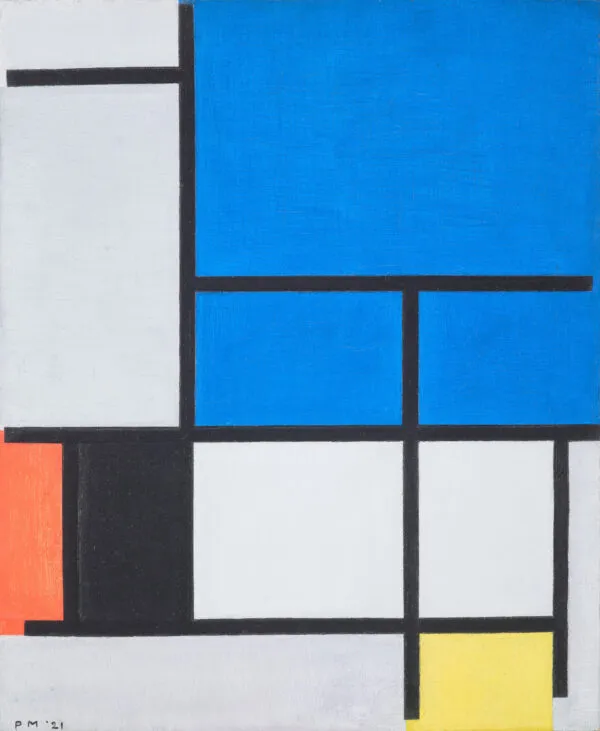
Back in Paris from 1919, he reduced painting to black lines, white and grey fields and the three primary colours. He called it Neo-Plasticism. This is the Mondrian most people know: Composition A, Composition (1921), Composition with Large Blue Plane, Composition No. II (1929) and Composition II in Red, Blue and Yellow. Place de la Concorde was begun in Paris in 1938 and finished in New York.
New York
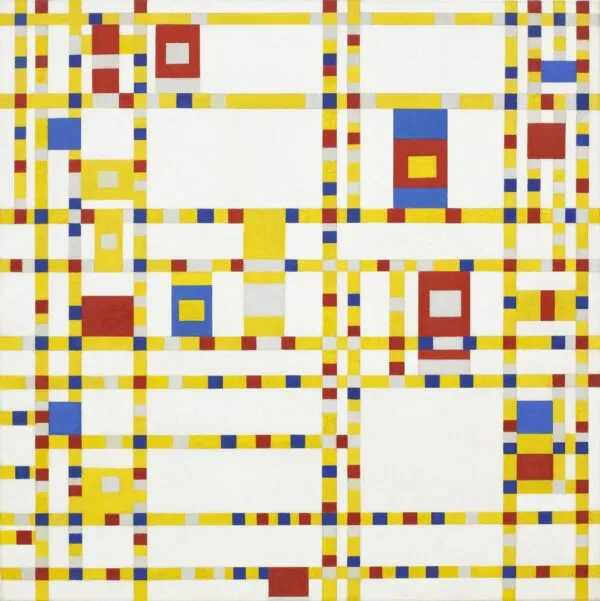
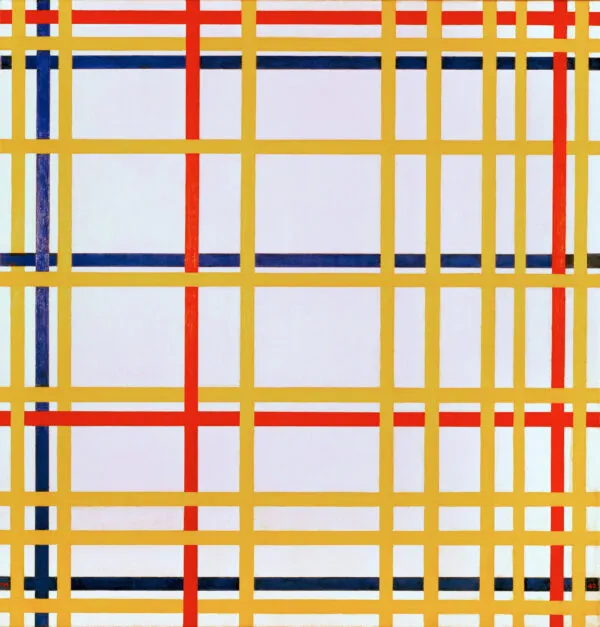
In 1940 he settled in New York, where he fell in love with jazz and the city’s rhythm. The black lines disappeared and the grid became yellow streets full of small coloured blocks: New York City and Broadway Boogie Woogie, his last completed painting.
His most famous works and where the originals hang
The best-known Mondrian is a square of white with a large red plane, a small blue one and a touch of yellow, as in Composition II in Red, Blue and Yellow (1930, Kunsthaus Zürich). Broadway Boogie Woogie hangs in the Museum of Modern Art in New York. The largest Mondrian collection in the world is at the Kunstmuseum Den Haag, home of The Red Tree, Gray Tree and Blossoming Apple Tree. Other originals are at the Centre Pompidou in Paris, the Kröller-Müller Museum, the Guggenheim in New York, the Dallas Museum of Art and the Rijksmuseum. In 1965 Yves Saint Laurent put the grid on a dress, and it has been part of design ever since.
Which Mondrian painting for which room?
The grids belong in modern interiors: a living room with white walls and simple furniture, an office, a hallway or a kitchen that needs one strong accent of colour. A square format works well above a sofa or a sideboard; as a rule, choose a width of about two thirds of the furniture below it. Two or three small compositions hung side by side make a set. Broadway Boogie Woogie and New York City bring energy to a dining area or an entrance. The trees and the evening landscapes are quieter and suit a bedroom, a reading corner or a classic interior.
Sizes, prices, custom size and frame
Every painting is offered in several sizes, 102 formats in all, from 40 x 30 to 200 x 200 cm, with prices from 108 €. If you need a different size, we will paint it to your measurements: order a custom size. We send the painting rolled, stretched on a wooden stretcher bar and ready to hang, or framed. A Mondrian also makes a good gift, and if you are unsure about the size, choose a gift voucher.
How do we paint a Mondrian?
Each copy is hand-painted in oil or acrylic on canvas by our painters, never printed. A Mondrian looks simple, but it is demanding: the lines must be straight and even, the colours mixed to the warm whites and deep reds of the originals, and the surface left with a light brushstroke, as on Mondrian’s own canvases, where the white was built up in several layers. The early landscapes and trees are painted in layers like any classic oil painting. Before dispatch we send you a photo of the finished painting for approval. Making it takes 15 to 45 working days.
Piet Mondrian in brief
- Born: 7 March 1872, Amersfoort, Netherlands
- Died: 1 February 1944, New York
- Movement: De Stijl, Neo-Plasticism
- Best-known works: Composition II in Red, Blue and Yellow, Broadway Boogie Woogie, The Red Tree, Gray Tree
- More about his life: Piet Mondrian’s biography
Frequently asked questions
Who was Piet Mondrian?
A Dutch painter (1872–1944) and a founder of abstract art. He began with landscapes and trees and ended with the grids of black lines and primary colours for which he is famous.
What does a Mondrian painting show?
His late paintings show no objects at all: only horizontal and vertical lines and planes of red, yellow, blue, white and grey. His early paintings show Dutch farms, mills, dunes and trees.
Why did Mondrian use only red, yellow and blue?
He wanted to paint with the most basic means: the three primary colours, black, white and grey, and straight lines. With them he looked for a pure balance that does not depend on any object.
What does the quote at the top of the page mean?
Mondrian wrote that balance comes from unequal but equivalent parts. In his paintings a large white field and a small red plane weigh the same, so the composition is calm without being symmetrical.
Which size of Mondrian painting should I choose?
Measure the wall or the furniture below it and choose a painting about two thirds of that width. For a sofa 200 cm wide, a painting about 130 cm wide is right; for a small wall, a set of two smaller compositions.
Are these prints?
No. Every painting is hand-painted in oil or acrylic on canvas by a painter, and you receive a photo of the finished painting for your approval before it is sent.
Can I order a Mondrian painting in a custom size?
Yes. We paint any size; write to us through the custom-size page and we will send you a price.
How long does it take to receive the painting?
We paint it in 15 to 45 working days, send you a photo for approval, and then dispatch it rolled, stretched or framed, as you chose.