



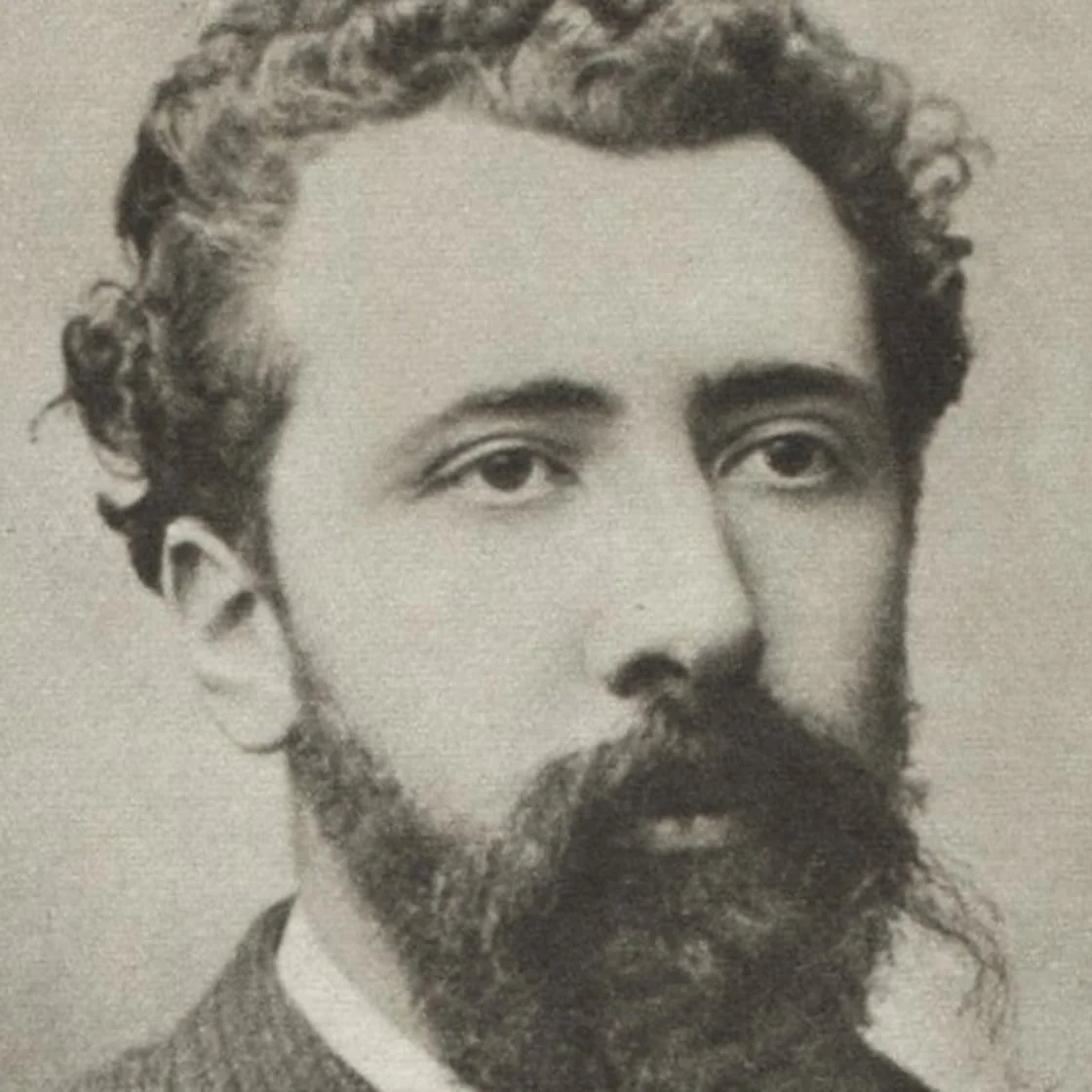
Georges Seurat was a French painter and draftsman who was born in 1859 and died in 1891. He was an important member of the post-impressionist movement and is considered one of the most important figures in the development of modern art. Seurat is best known for his invention of a painting technique called pointillism, which uses small, individual dots of color to create the illusion of form and color.
Seurat’s most famous painting “Sunday Afternoon on the Island of La Grande Jatte” was completed in 1884-86 and is considered a masterpiece of his work. The picture shows people enjoying a sunny afternoon on the Seine River near Paris. The painting is characterized by the use of pointillism, where small dots of color are used to create the illusion of form and color. The painting is an excellent example of Seurat’s ability to create a sense of movement and energy through the use of light and color. The painting is in the Art Institute of Chicago.
Seurat’s paintings are known for their strong sense of composition, color and light. He was interested in the scientific properties of colors and studied the theories of the 19th century color theorist Charles Blanc. He devoted much time to the study of the effects of color and light on the human eye, and this research is evident in his paintings. He was also interested in the effects of light on the natural world, so he often painted landscapes and seascapes.
Seurat’s works had a significant impact on the development of modern art. His use of pointillism and interest in the scientific properties of color were revolutionary for his time. His paintings can be found in major museums around the world, including the Musée d’Orsay in Paris, the Metropolitan Museum of Art in New York, and the National Gallery in London. To learn more about Georges Seurat and his paintings, you can find books, articles, and other resources about him and his work.
In addition to oil paintings, Seurat also created many drawings and sketches during his career. These works, often created with charcoal or colored pencils, reveal his process of experimentation and observation. They also show his attention to detail and skill in matching movement and emoting motifs.
Seurat’s influence on the world of art for the time his life was not fully recognized as he died relatively young, at the age of 31. However, his work and techniques were later rediscovered and celebrated by the Fauvists and Divisionists in the early 20th century. His influence on the development of modern art can also be seen in the works of other artists such as Paul Signac, Henri Matisse and Pablo Picasso.
Seurat’s paintings are today considered one of the most iconic works of the Post-Impressionist movement, and his pointillist technique continues to inspire artists. His works have had a lasting impact on the world of art, which is why they are still admired and studied by art lovers, critics and art historians alike.
If you want to see Seurat’s paintings live, you can find them in many museums around the world, and you can also find many books, articles and other resources about him and his work. Many of the artist’s works have been reproduced and can easily be found online and in art books. Whether you’re an art lover or simply looking for a new perspective on art history, Seurat’s works are worth exploring. His pointillist scenes can also be ordered as hand-painted reproductions of Seurat paintings.
Georges Seurat – 10 interesting things
- Georges Seurat was a French post-impressionist painter known for using the pointillist technique.
- He was born in 1859 in Paris and began his artistic career as an apprentice in a commercial art studio.
- Seurat is considered one of the founders of the Neo-Impressionist movement, which sought to create scientifically accurate art and use a more scientific approach to color theory.
- His most famous work “Sunday Afternoon on the Island of La Grande Jatte ” was created for two years and is considered one of the most iconic paintings of the 19th century.
- Technique, which he developed and is called pointillism, involves painting small, individual dots of color that merge into a complete image when viewed from a distance.
- Seurat was also a skilled draughtsman and was known for his studies of the human figure, which he used as the basis for many of his pointillist paintings.
- Despite his success, Seurat’s career was cut short when he died of an unknown illness at the age of 31.
- His work greatly influenced the development of 20th century art, and artists and art historians still study his approach to color theory.
- Seurat was also known for being interested in the influence of light and atmosphere on the colors of the landscape, which he explored in his paintings.
- His works are still appreciated for their innovative use of color and form, and his influence can be seen in the works of many artists who followed him.