



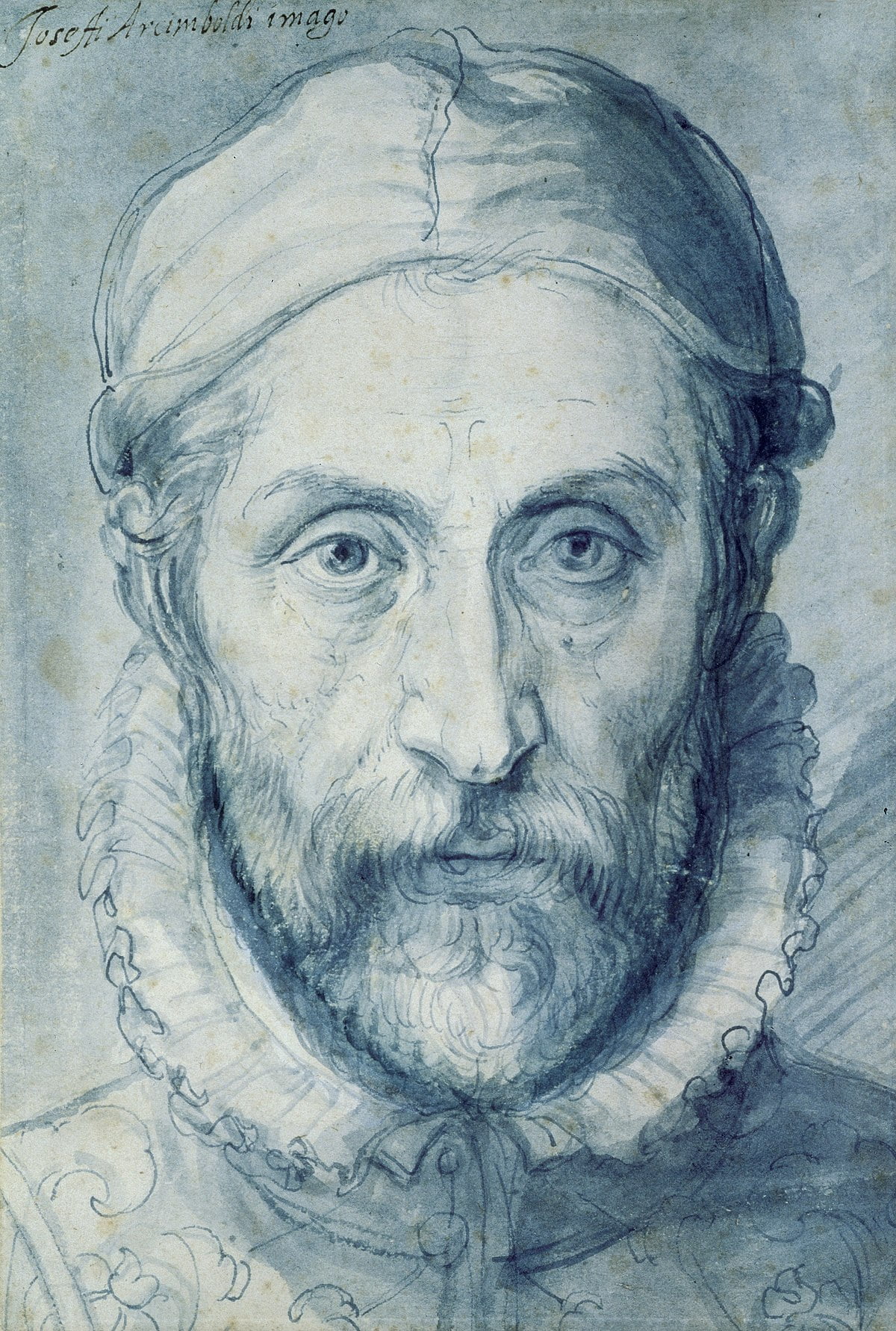
Giuseppe Arcimboldo was an Italian painter and draftsman who lived in the 16th century. He is best known for his unique style of painting in which he created portraits composed of various subjects such as fruits, vegetables, flowers, fish and books. These objects were arranged to form the shape of a human face. He was one of the most renowned painters of his time, and his works have been admired for centuries.
Arcimbold’s works are classified as portraits , fantasy paintings and paintings with the motif of dead creatures. His paintings are characterized by imaginative and fantastical elements, as well as a strong sense of composition and attention to detail. He was a master of creating illusory portraits that challenged the viewer’s perception of reality.
One of his most famous works is the series ” Four Seasons”, where each painting depicts a portrait of a person made entirely of objects associated with the seasons. In the painting “Summer”, for example, the face of the subject is composed of different types of fruits and flowers. This series is considered a masterpiece of Arcimboldo’s work and is located in the Louvre Museum in Paris.
Arcimbold’s work had a significant influence on the art world, especially the Surrealist movement of the 20th century. His unique approach to painting, combining reality and fantasy, was ahead of its time and continues to inspire artists today. His works can be seen in many museums around the world, including the Louvre Museum in Paris, the Uffizi Gallery in Florence and the National Gallery in London.
To learn more about Giuseppe Arcimboldo and his paintings, you can find books, articles, and other resources about him and his work. His paintings can also be easily found online, and many have been reproduced in art books. Whether you’re an art enthusiast or simply looking for a new perspective on art history, Arcimboldo’s work is worth exploring. His portraits composed of fruit and flowers can also be ordered as hand-painted reproductions of Arcimboldo paintings.
In addition to paintings, Arcimboldo also created many drawings and sketches during his career. These works, often created in charcoal or pencil, reveal his process of experimentation and observation. They also show his attention to detail and skill in matching the movement and emotion of subjects.
Arcimbold’s unique painting style for his time of life was not always well received, which is why some contemporary art critics criticized it. However, his work was greatly admired at the Habsburg court, so he was appointed court painter to Emperor Rudolf II. in Vienna. He spent the last years of his life in Prague, where he continued to create works for the Habsburg court.
Arcimbold’s legacy lives on in the art world, and his paintings are still admired and studied by art lovers, critics and art historians alike. His approach to painting, combining reality and fantasy, was ahead of its time and continues to inspire artists today. His works can be found in many museums around the world, as well as many books, articles and other resources about him and his work.
Giuseppe Arcimboldo – 10 interesting things
- Giuseppe Arcimboldo was born in 1527 in Milan, Italy .
- He was a painter, sculptor and architect, best known for his imaginative portrait heads , which are made entirely of items such as fruits, vegetables, flowers, fish and books.
- He worked at the court of Holy Roman Emperor Maximilian II. in Vienna and later for his son Rudolf II. in Prague.
- Rudolf II. appreciated his works very much, paid him well and gave him a large studio and living quarters in Prague Castle.
- Arcimbold’s paintings were considered entertaining and stimulating and were highly regarded among the aristocracy and intellectual elite of his time.
- His works were rediscovered in the 20th century and have been admired ever since for their striking originality and wit.
- Among his most famous works are the Four Seasons series and the portrait of Rudolph II. as Vertumnus, the Roman god of seasons and changes.
- He died in 1593 in Milan and was buried in an unmarked grave.
- Arcimbold’s influence can be seen in the works of many later artists, including Salvador Dalí and Rene Magritte.
- He was a pioneer in the art world, and his works are considered some of the most unique and interesting in the history of art.