


Description
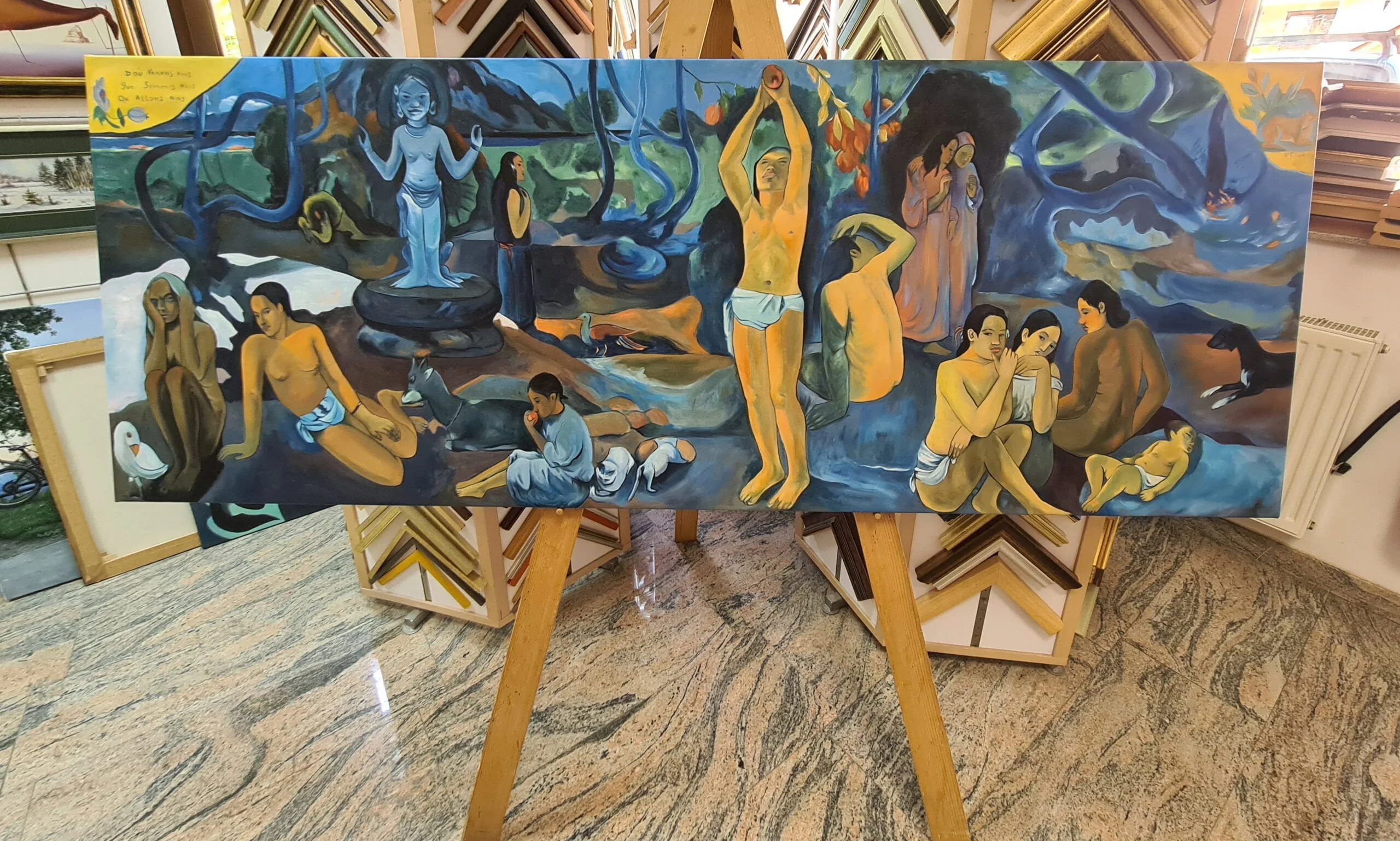
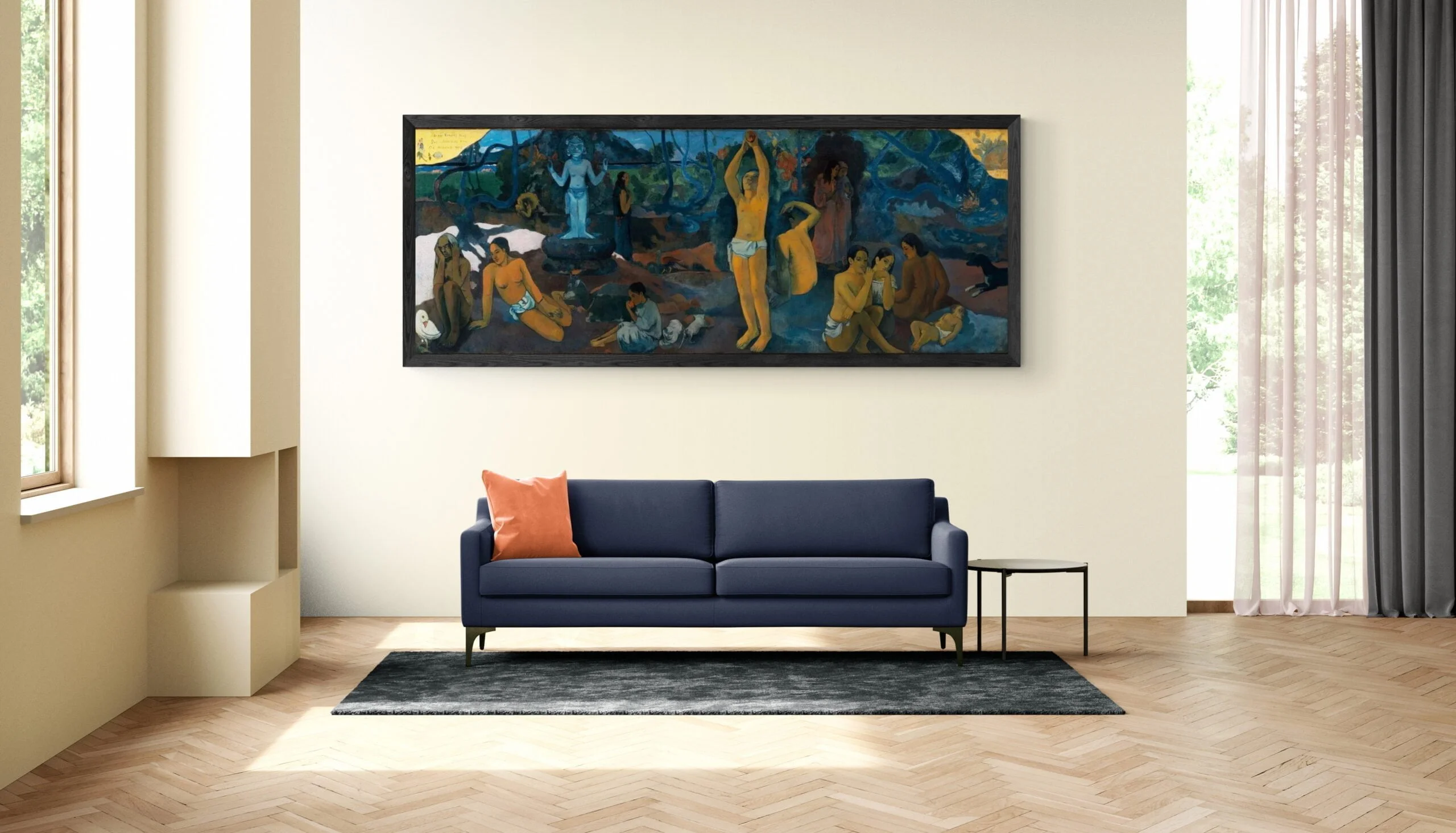
Paul Gauguin – Where Do We Come From? What Are We? Where Are We Going? – hand-painted oil painting reproduction
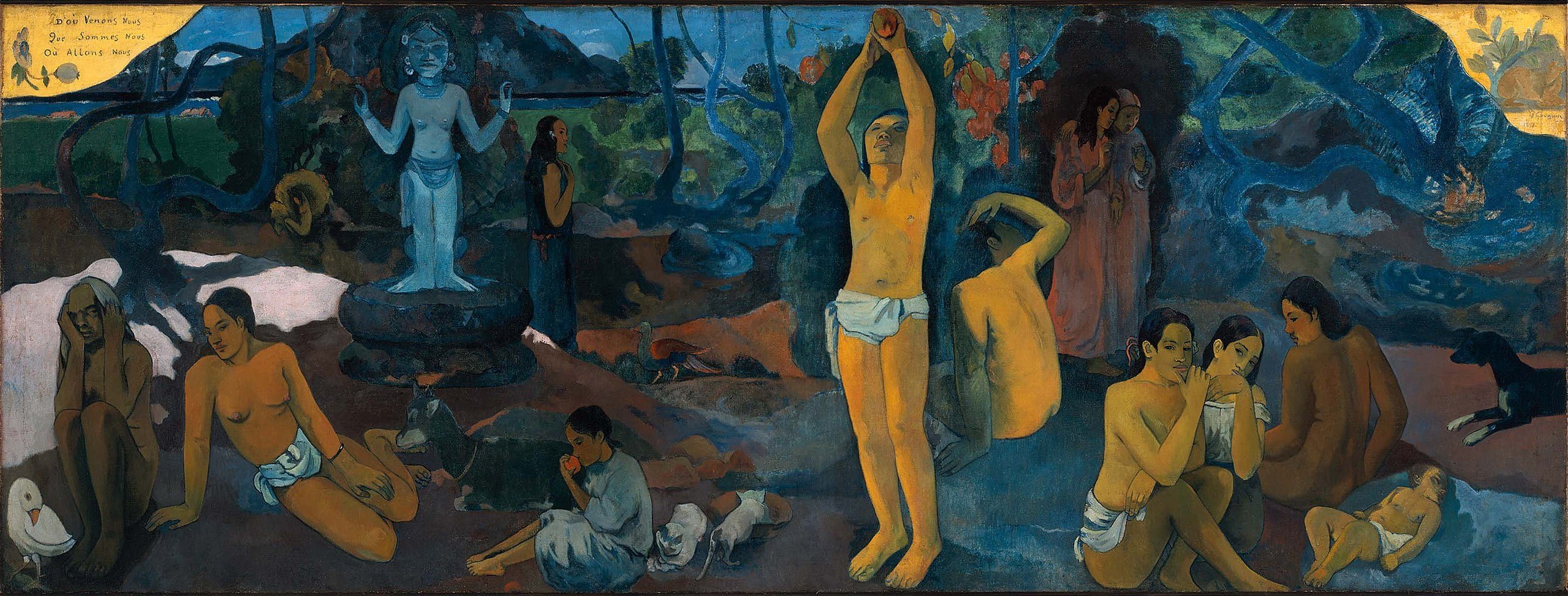
The largest canvas Gauguin ever attempted is a long, low frieze meant to be read from right to left. The museum catalogues it as D’où venons-nous? Que sommes-nous? Où allons-nous?, oil on canvas, 139.1 × 374.6 cm, painted in 1897–1898 in Tahiti, and holds it at the Museum of Fine Arts, Boston under accession number 36.270 (Tompkins Collection – Arthur Gordon Tompkins Fund). We make it as a hand-painted oil painting reproduction on canvas, painted to order and never printed.
The title is painted on the canvas, and it has no question marks
In the upper left corner Gauguin wrote the title straight onto the picture, in French and in capitals: D’OÙ VENONS NOUS / QUE SOMMES NOUS / OÙ ALLONS NOUS. There is not one question mark, and no dash either. The three lines are an inscription rather than a set of questions; the question marks were added by later writing, and with them the title under which museums list the work today. The opposite upper corner carries the painter’s signature and the year.
It reads from right to left
Gauguin built the scene as the course of a life running against our reading habit: the beginning is on the right, where an infant sleeps, the middle is adulthood and a young man reaching for fruit in a tree, and the end is the left edge, where an old woman crouches, absorbed in herself. At her feet is a white bird the painter described as an image of the futility of words. The blue idol behind her he himself called “the Beyond”.
What he said about it, and what is disputed
In December 1897 Gauguin wrote to his friend Daniel de Monfreid that he intended to end his life, and by his own account an attempt with arsenic followed the completion of this canvas. The sequence is disputed: it rests largely on the painter’s own letters, written for a reader and often bent towards a good story, so some scholars treat the link between the picture and the attempt with reserve. The distress itself is not in doubt – in 1897 Gauguin was ill, without money, and had learned of the death of his daughter Aline.
A hand-painted reproduction for your home
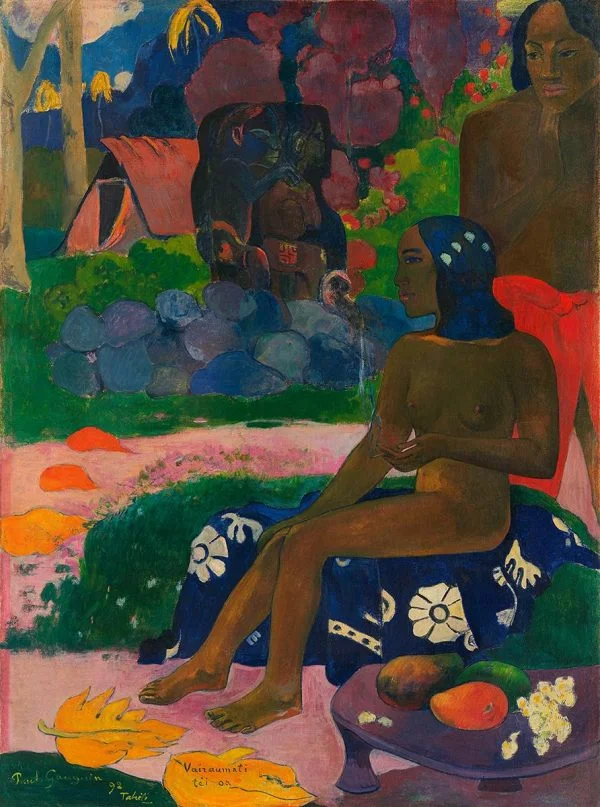
The photographs above show this very painting, made in our workshop. Because the original is close to four metres wide we paint it in eight sizes, the largest of them 375 × 139 cm – the scale of the original itself, which is rare for this subject and the only way the frieze works as it was meant to. The format is markedly elongated and therefore belongs on a long wall: a hallway, a dining room, a meeting room. If Gauguin’s Tahitian circle of those years interests you, see also Nevermore, painted in the same year 1897, and Spirit of the Dead Watching; and set the old woman on the left beside Her Name was Vairaumati, where the same mythology appears in a single figure.
- Subject: Where Do We Come From? What Are We? Where Are We Going?, Paul Gauguin, 1897–1898
- Technique: hand-painted oil painting reproduction on canvas – never printed
- Sizes: 8 formats, from 200 × 75 cm to 375 × 139 cm, so also at the scale of the original
- Interesting fact: the title is painted onto the canvas in French and carries no question marks – those were added later