Description
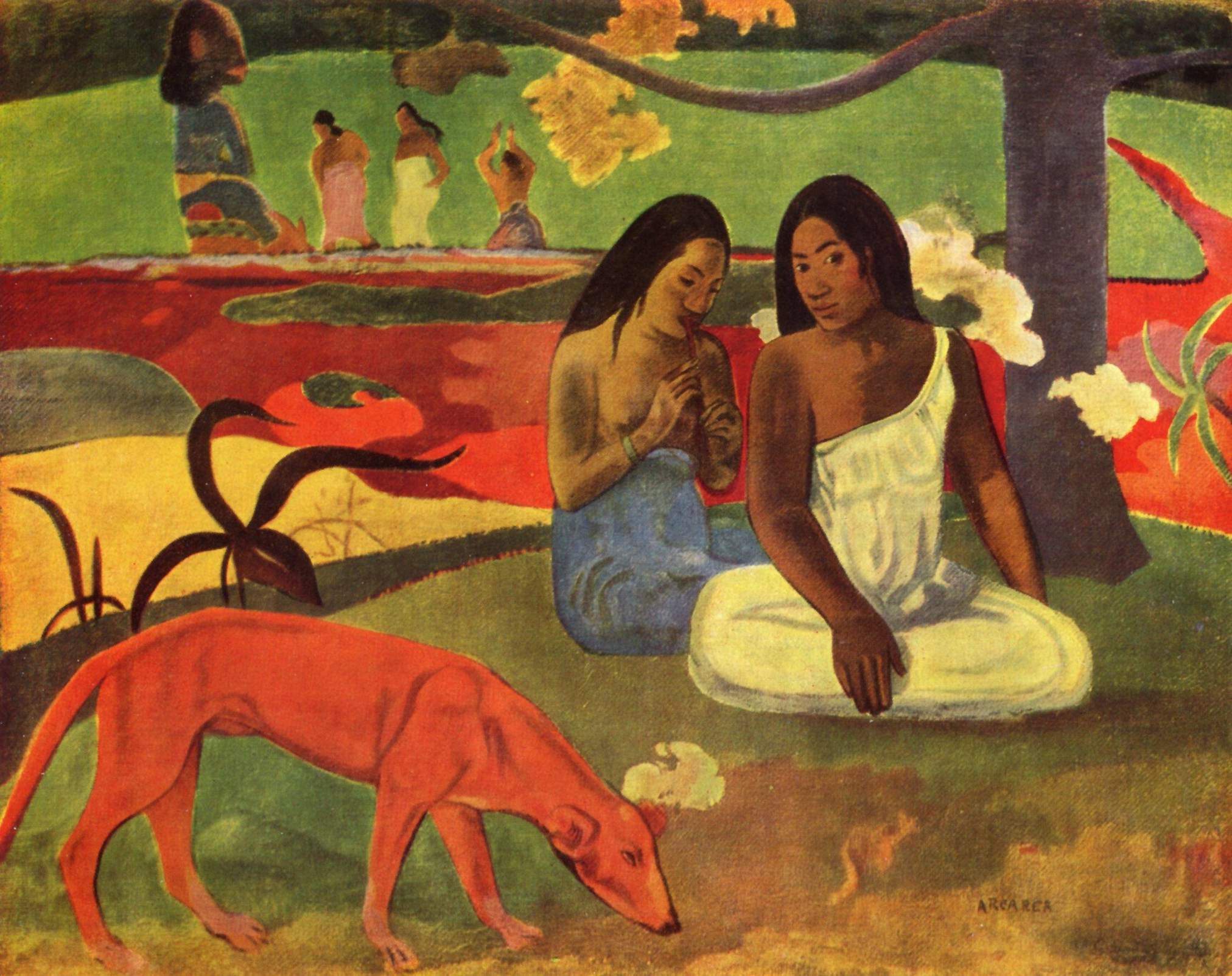
Paul Gauguin – Arearea (Joyousness) – hand-painted oil painting reproduction
Two women sit in the foreground, a trunk runs across the canvas, and a red dog lies below. The work was painted in 1892 in Tahiti, oil on canvas, 93 × 75 cm; it was bequeathed to the French state in 1961 and has been held by the Musée d’Orsay in Paris since 1986. Here the scene is made again under the brush: a hand-painted oil painting reproduction, oil on canvas, with no printing. The museum gives the measurement as height by width: 75 × 93 cm, and the work carries accession number RF 1961 6.
There is no sky
The strangest thing about this painting is what is missing: the sky. Gauguin removed it and built the space out of a succession of coloured planes – green, yellow, red – that stack on top of one another instead of receding. The trunk cutting across the field emphasises that flatness further. The painting is therefore not a window into depth but a layered surface, and that is exactly why the colours read so loudly.
The idol is real, the rite is not
In the background several women worship a statue. The image is not a transcription of what the painter saw: Gauguin took a small Maori figure and enlarged it on the canvas to the size of a great Buddha, and the ceremony around it he invented. This is not an ethnographic record and does not claim to be; it is a scene assembled from a real object and a fabricated custom. Leaving that unsaid turns the painting into a document about Tahiti, which it is not.
Paris, 1893
The work was among those Gauguin showed at his exhibition with the dealer Durand-Ruel in Paris in 1893, after returning from the first Tahitian stay. That was the moment Paris first saw these canvases together – not one at a time, but as a body of work with a colour language of its own.
A hand-painted reproduction for your home
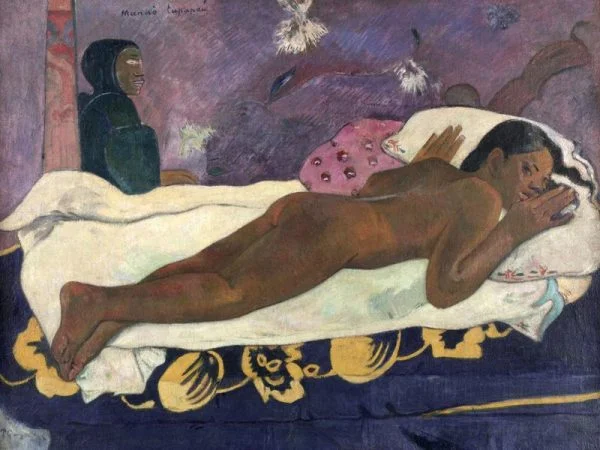
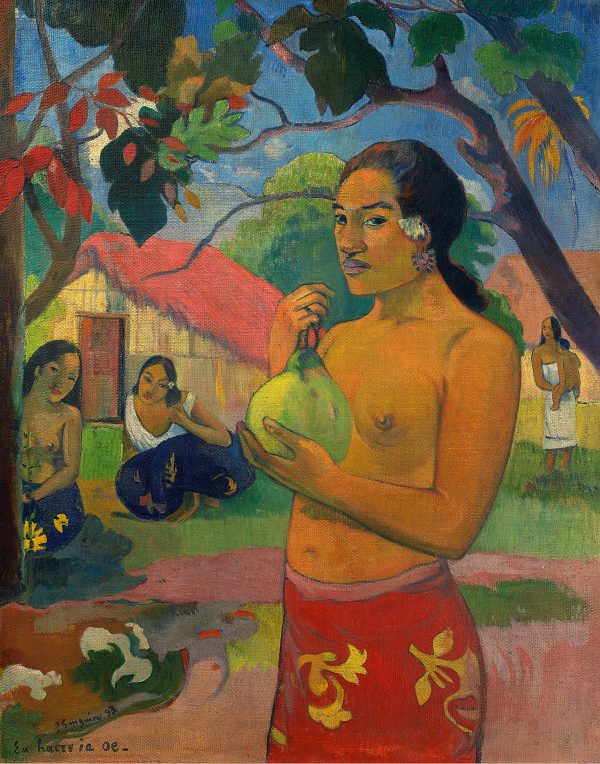
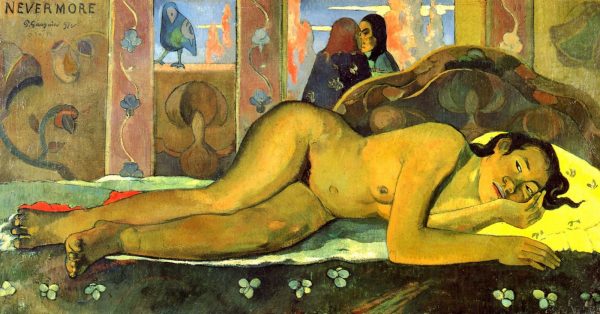
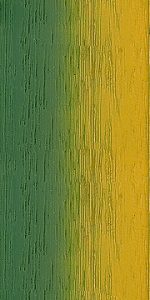
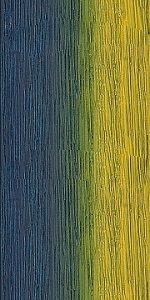
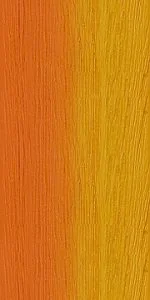
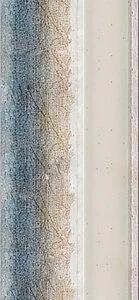
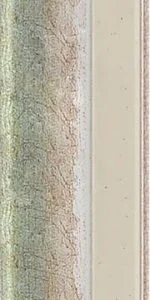
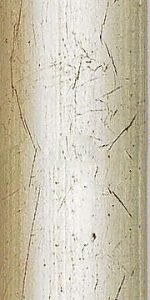
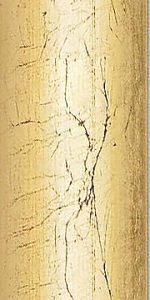
The photographs above show how these planes of colour behave when they are laid down by hand. We paint the motif in eight sizes, among them 93 × 75 cm, which is also the measurement of the original; for a wider wall 120 × 100 cm is a frequent choice. The green and the red are strong but the scene is calm, so the painting works in a living room or a dining room. From the same year and the same island comes Spirit of the Dead Watching, the night side of the same experience; Ia Orana Maria shows another invented religious scene, built from a borrowed source, and Where Do We Come From? What Are We? Where Are We Going? is a whole world made on the same principle.
- Subject: Arearea (Joyousness), Paul Gauguin, 1892
- Technique: hand-painted oil painting reproduction on canvas – never printed
- Original: 93 × 75 cm, Musée d’Orsay, Paris; bequeathed to the French state 1961, at the Orsay since 1986
- Interesting fact: the painting has no sky – the space is layered out of green, yellow and red planes