







































Description


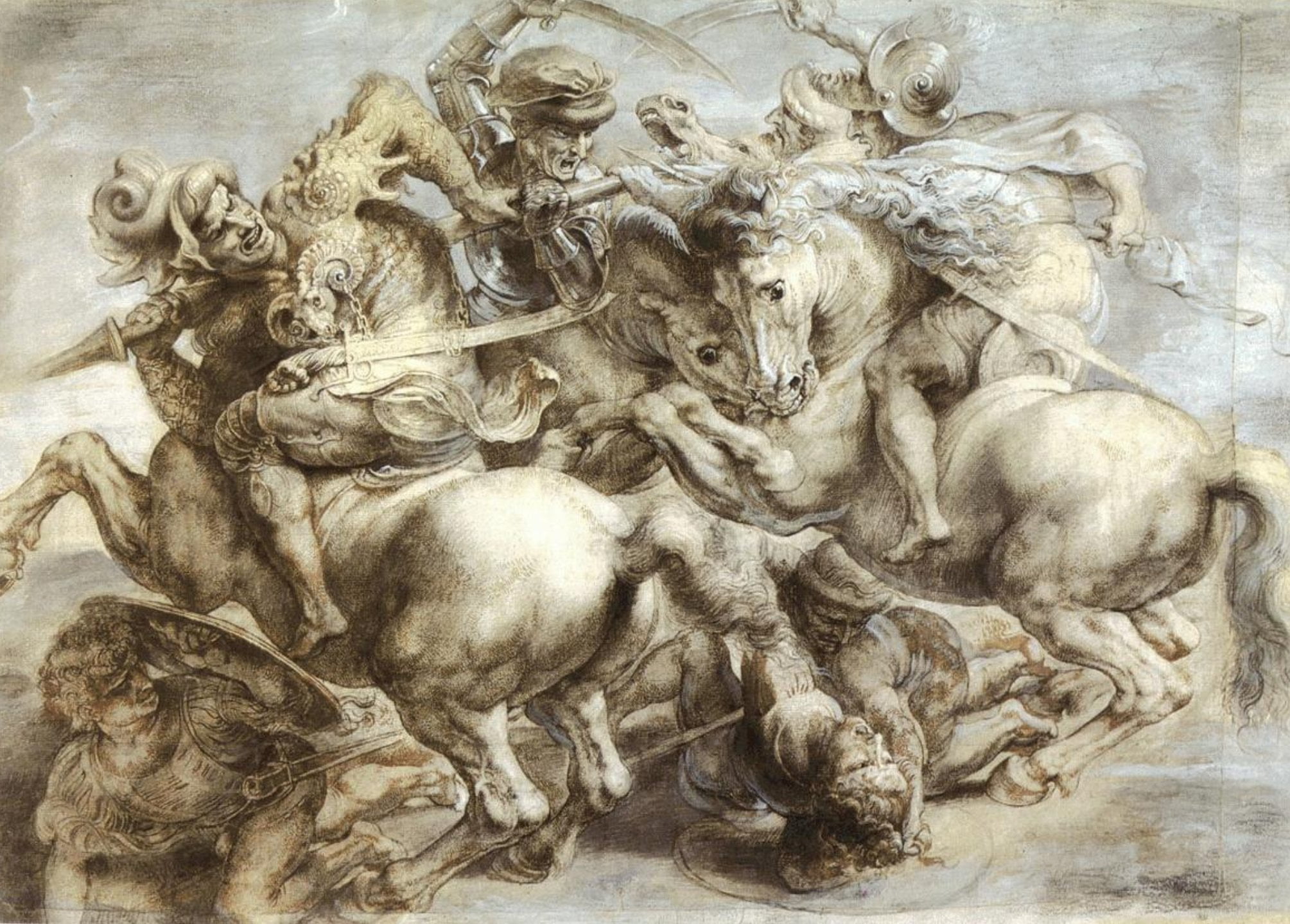
Leonardo da Vinci – The Battle of Anghiari (Detail)
This is the only Leonardo in our collection that no longer exists. In 1503 the Florentine gonfaloniere Piero Soderini commissioned him to paint an enormous mural for the Hall of the Five Hundred in the Palazzo Vecchio – the contract was signed by Niccolò Machiavelli. It was meant to be twice the size of the Last Supper. Leonardo abandoned it in 1505, and in the mid-16th century Giorgio Vasari covered the wall with frescoes of his own.
Two giants in one hall
For the opposite wall of the same hall the city commissioned Michelangelo to paint the Battle of Cascina. It was the only time Leonardo and Michelangelo worked on the same project, and the closeness of the two walls only sharpened their rivalry. Michelangelo’s painting was never finished either. The hall that might have become the greatest meeting of Renaissance painting ended up with neither work.
Why the painting is gone
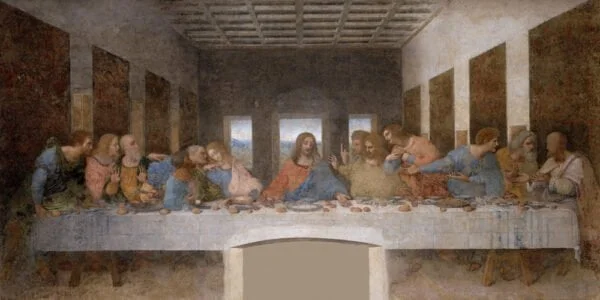
Leonardo did not paint in true fresco. He experimented with a technique using oil, and walnut oil, on the wall – something close to encaustic – and had fires lit beneath the wall to dry the colours. The hall was too vast: the heat never reached the upper part, the colours dissolved into the plaster and ran downwards. After a few months he gave up in frustration. The drawing was not at fault; the experiment was. It is the same boldness that at the Last Supper had the paint layer flaking within his own lifetime.
What you are actually looking at
The central group of four horsemen fighting over a standard is known as the Fight for the Standard. Since no original survives, we know it only through copies. Our reproduction follows Peter Paul Rubens’ drawing (c. 1604, black chalk, pen and ink with white heightening, 45.2 × 63.7 cm) in the Louvre – and we say it plainly: this is a reproduction of Rubens’ copy of a lost Leonardo, not of Leonardo’s original. The Tavola Doria, an early painted copy of the central group, also survives.
“Cerca trova” – the question that stays open
On Vasari’s fresco of the Battle of Marciano (1572), in that same hall, a small green flag carries the words Cerca trova – “he who seeks, finds”. The researcher Maurizio Seracini read it as Vasari’s hint that Leonardo’s wall had been left hidden behind his own. The 2012 investigation found only fragments of pigment and did not confirm that anything lies behind the fresco. The question remains open, and that is how we present it – as a puzzle, not a fact.
Our hand-painted reproduction
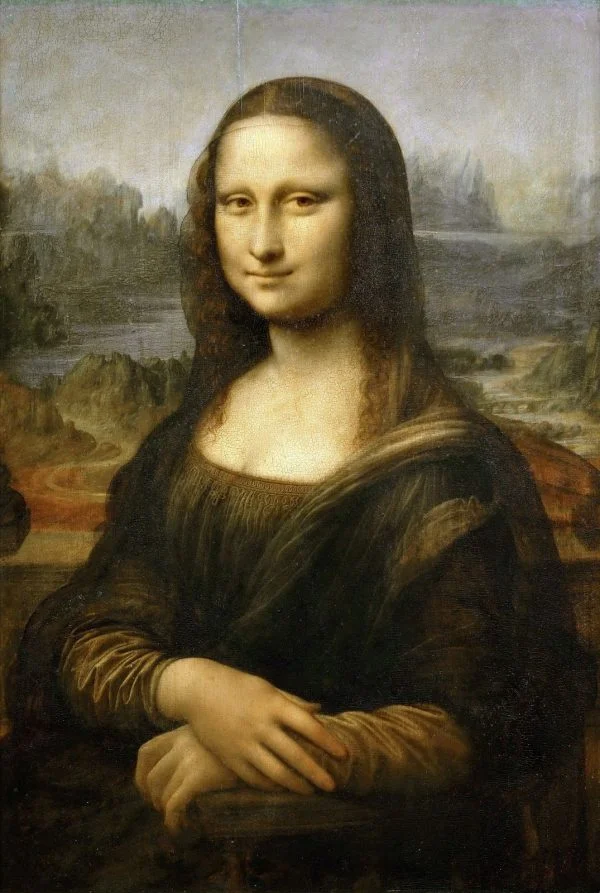
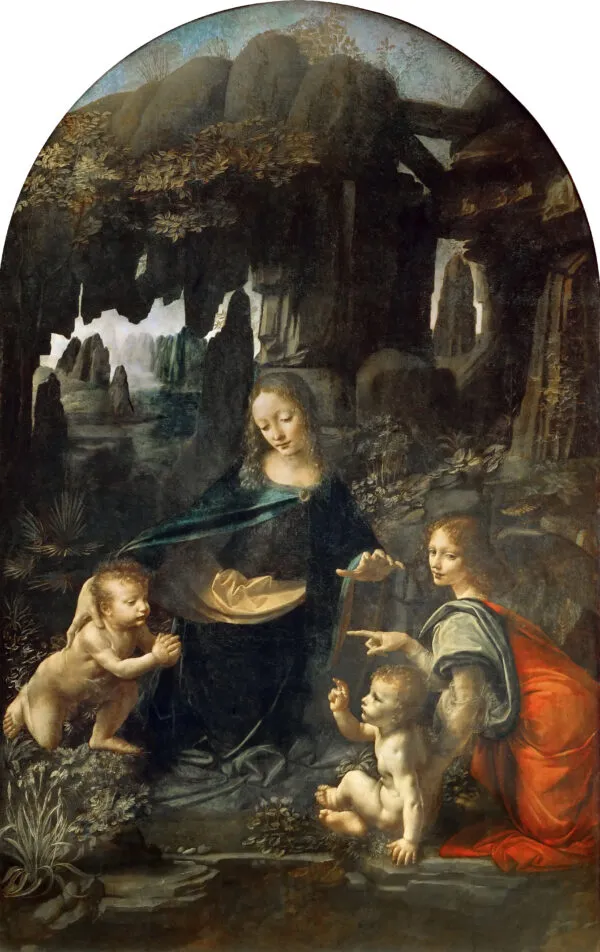
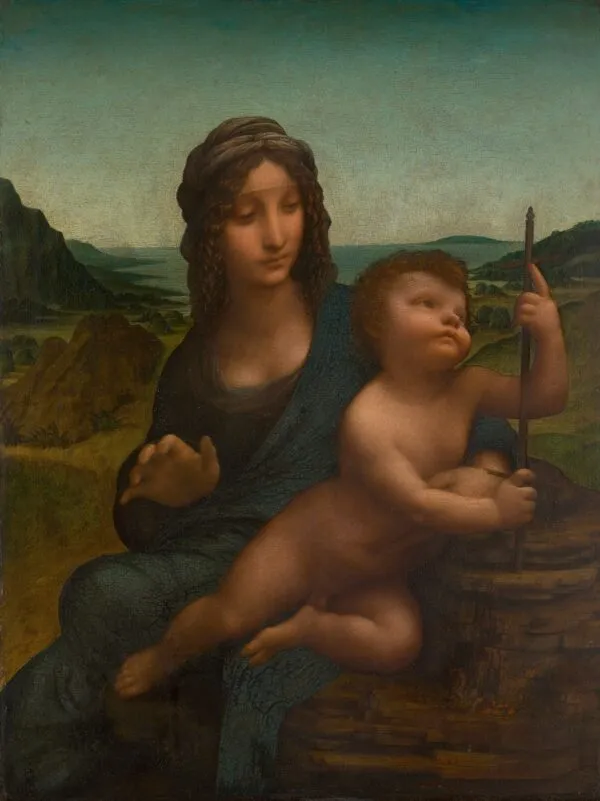
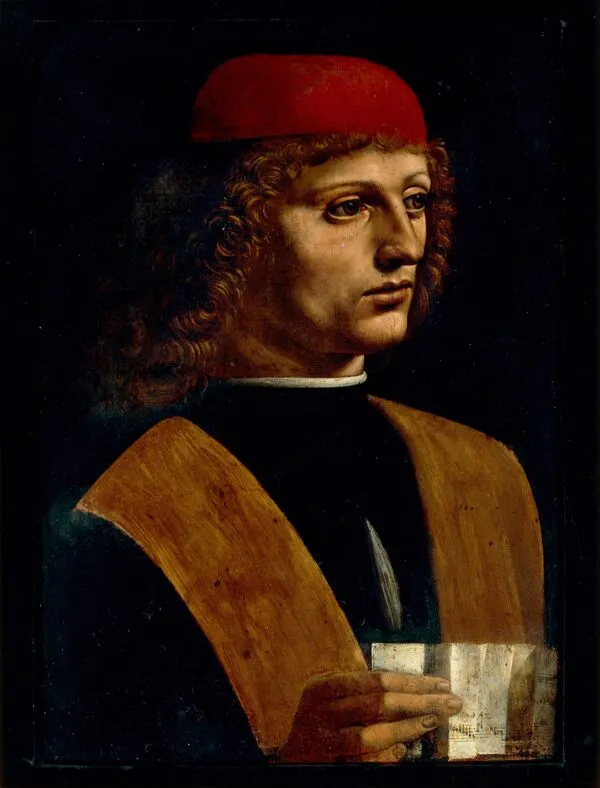
In the photographs above you can see our own hand-painted reproduction of this painting. Every hand-painted painting on canvas is made to order in our workshop and never printed. As canvas wall art or a painting on canvas it carries real weight in a study, a library or a living room. If Leonardo’s unfinished works interest you, see also The Adoration of the Magi; his most famous work remains the Mona Lisa, painted in those same Florentine years.
- Original: mural for the Palazzo Vecchio, 1503–1505 – lost, covered by Vasari’s frescoes
- Our source: Rubens’ drawing after Leonardo, 45.2 × 63.7 cm, black chalk, pen and ink
- Held at: Rubens’ drawing is in the Louvre, Paris; Leonardo’s original does not exist
- Our version: hand-painted on canvas, from 40 × 29 cm to 150 × 110 cm, from €600