





Description
Young Birches is one of Gustav Klimt’s early square landscapes, from 1900, the summer he first stayed at the Attersee: three slim white birch trunks rise through a tall meadow of green, olive and brown grass sprinkled with small red, pink and blue flowers, while a dark band of trees closes the view at the top and a white farmhouse is glimpsed on the right. The original is in a private collection. We paint it by hand in oil on canvas, in eight square sizes from 60 x 60 to 150 x 150 cm or to your own measurement, and send you a photograph of the finished work for approval before dispatch.
| Title: | Young Birches |
| Other titles: | Farmhouse with Birch Trees · Bauernhaus mit Birken · Giovani betulle |
| Painter: | Gustav Klimt (1862–1918) |
| Year painted: | 1900 |
| Original size: | 80.3 cm x 80.3 cm |
| Original technique: | Oil on canvas |
| Painting style: | Vienna Secession, landscape |
| Located at: | Private collection |
| Our reproduction: | Hand-painted oil on canvas, eight square sizes or made to measure |
Young Birches – Gustav Klimt
What does the painting show?
Three slim birch trees stand in a summer meadow, their white bark marked with dark rings and patches. Their trunks rise straight through the grass towards the dark trees at the top of the canvas. Around them the grass is tall and dense, painted in many shades of green, olive and warm brown, and scattered with small dots of red, pink and blue – wild flowers half hidden in the meadow.
At the top a dark band of trees closes the view like a wall, and on the right, between the trunks, you glimpse a white farmhouse. There is hardly any sky. Klimt keeps your eye in the meadow, among the stems and the light trunks, so the painting feels quiet and close, as if you were standing knee-deep in the grass on a warm summer afternoon.
Young Birches and Klimt’s first Attersee summer
The painting dates from 1900, the summer Klimt first stayed at the Attersee, the large lake in Upper Austria where he went on to spend many more summers. The lake and its countryside became the source of most of his landscapes: orchards, forests, gardens and views over the water.
Young Birches is one of his early square landscapes. In these first years he was still finding his way: instead of the gold of his famous portraits he worked with the soft greens, browns and greys of the countryside, and he chose a square canvas, a format he kept for most of his later landscapes. The painting is also known as Farmhouse with Birch Trees, after the white house at the top right.
Why does the meadow feel so calm?
Because nothing in it is loud. The colours are close to each other – greens, olives, browns – and the only bright accents are the white trunks and the tiny flowers. Klimt leaves out the horizon and the big sky that a traditional landscape would show, so the meadow fills almost the whole square and becomes a soft, woven surface, almost like a tapestry.
The three birches give that surface its rhythm: light vertical lines against the dark band of trees and the dense grass. The painting can bring back summer walks in the countryside, the smell of cut grass and the shade under a few trees at the edge of a field. It is a landscape you can live with every day, because it rests the eye instead of demanding attention.
Where is the original?
The original, painted in oil on canvas and 80.3 cm square, is in a private collection, so it is not on public display in a museum. It appears in the list of Klimt’s paintings on Wikipedia under both of its names, Young Birches and Farmhouse with Birch Trees.
Because the original hangs in a private home, a hand-painted version is the only way for most people to have this birch meadow on their own wall. Our version is not a print: we paint it for you, by hand, in the size you choose, and our 80 x 80 cm size is practically the size of Klimt’s canvas.
Young Birches among Klimt’s landscapes
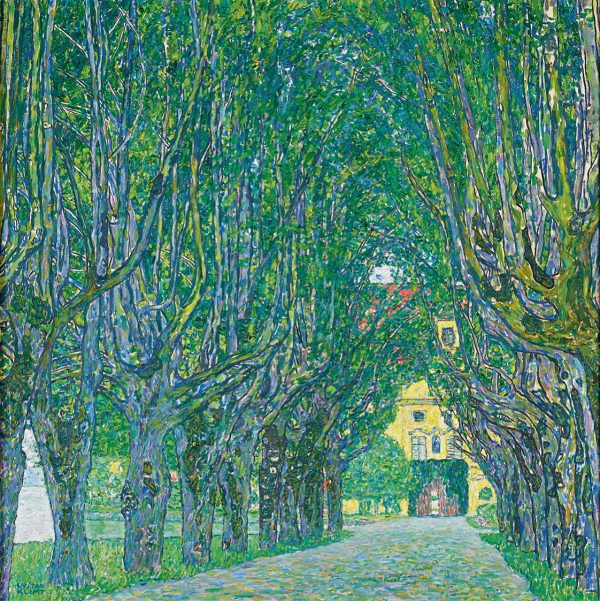
In our gallery Young Birches has several relatives from the same Austrian summers. Forest of Beech Trees shows a dense stand of slim trunks, Pine Forest II looks into a dark, quiet forest, and Poppy Field is a meadow glowing with red flowers. On Lake Attersee, from the same summer of 1900, fills the square with turquoise water instead of grass.
Choose Young Birches if you like light, airy trees and a soft meadow; if you want a darker, more enclosed forest, the beech or pine forest suits you better, and if you love water, the Attersee view. Two of them in the same size make a calm pair on one wall. More about Klimt’s life is on Wikipedia’s Klimt page.
How do we paint Young Birches by hand?
The painter first draws the main lines on the canvas: the three trunks, the edge of the dark band of trees and the position of the farmhouse. Then the large areas go on in thin layers – the dark greens and browns at the top, the many shades of the meadow, the white of the bark.
After that come the details that make the meadow breathe: hundreds of short strokes for the grass, the dark rings on the birch bark, the small red, pink and blue flowers dabbed in one by one, and the white walls of the house between the trees. A printed oil painting reproduction flattens all of those touches into one smooth surface; painted by hand, each stroke keeps its own body and catches the light. Every painting is a hand-painted copy made for your order, so no two are quite alike.
There is no gold in this landscape, and none in our version: we use oil colours only, as in the original.
Which size for which wall?
In short: 60 x 60 or 70 x 70 cm for a small wall, a hallway or a bedroom; 80 x 80 or 90 x 90 cm above a chest of drawers or a bed; 100 x 100 or 110 x 110 cm above a sofa; and 120 x 120 or 150 x 150 cm for a large wall or an open-plan room. The 80 x 80 cm size is the size of the original.
All eight sizes are square, just like Klimt’s canvas, so nothing is cropped. Because the meadow is calm and even, the painting works both small and large: at 60 x 60 cm it is a quiet window onto the countryside, and from 120 x 120 cm up the birches almost fill the room. As a painting for the living room, 100 x 100 cm above a three-seat sofa gives the trees real presence. In a bedroom or a study its soft greens help the room feel restful.
Hang it with the centre of the canvas about 150 to 160 cm above the floor; over furniture, leave 20 to 30 cm between the top of the furniture and the lower edge of the canvas. As a rule of thumb, a painting above a sofa looks best at about two thirds of the sofa’s width.
Custom size, stretcher and frame
If none of the eight sizes fits your wall, we paint it to measure; keep it square, or close to square, so the trunks are not stretched. Send us the width and height you want and we will quote the price and delivery time. Every painting we make is stretched on a wooden stretcher frame and ready to hang.
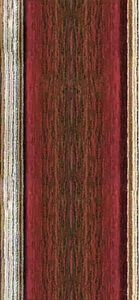
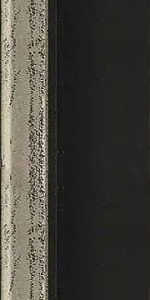
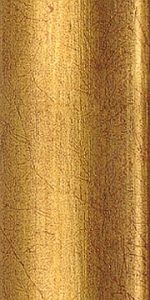
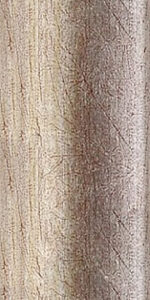
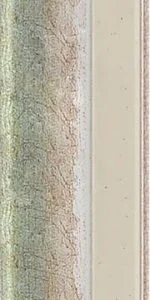
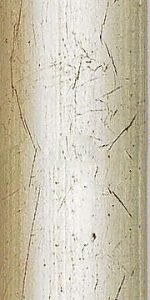
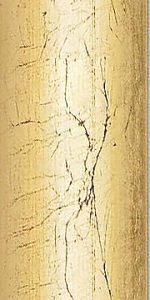
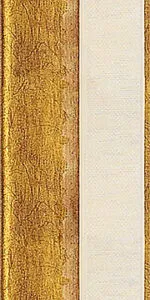
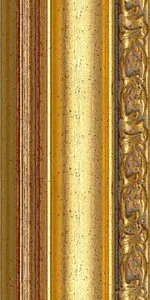
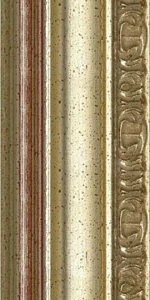
For the moulding, use our 3D application: it shows every one of our frame profiles on this subject, so you can compare gold, silver, black, white and natural wood before deciding – the application is for choosing the frame only. If you would like to see how the painting will look on your own wall, that is our separate room placement service. A natural wood frame goes well with the meadow and the bark; a thin black frame sets the white trunks more sharply against the dark trees.
Delivery and guarantee
Every painting is made to order in our studio in Slovenia, so allow 15 to 45 days depending on the size you choose. We ship it stretched and protected for transport, framed if you chose a frame, across the EU with no customs. Before dispatch you receive a photograph of the finished work to approve; if anything is not right, we correct it while the canvas is still in our workshop. Our returns policy applies to every order.
If it is a gift and you are not sure of the size, there is our gift voucher. More of Klimt’s work is in our Gustav Klimt gallery, and more about the painter in our article 10 interesting facts about Gustav Klimt.
Frequently asked questions
Where is the original Young Birches by Klimt?
The original is in a private collection, so it is not shown in a public museum and most people know it only from reproductions. It is painted in oil on canvas and measures 80.3 cm square. Our 80 x 80 cm size is practically the size of the original, and we paint it by hand to order.
When did Klimt paint Young Birches?
Klimt painted it in 1900, the summer he first stayed at the Attersee, the lake in Upper Austria where he went on to spend many more summers. It is one of his early square landscapes, painted in the soft colours of the countryside rather than in the gold of his famous portraits.
What does Klimt’s Young Birches show?
It shows three slim white birch trunks with dark markings rising through a tall summer meadow of green, olive and brown grass, dotted with small red, pink and blue flowers. A dark band of trees closes the view at the top, with a white farmhouse glimpsed on the right, and there is almost no sky.
Is Young Birches the same painting as Farmhouse with Birch Trees?
Yes, they are two names for the same painting. In German it is called Bauernhaus mit Birken, Farmhouse with Birch Trees, after the white house you see between the trees at the top right; in English it is often listed as Young Birches. Both names refer to Klimt’s square birch meadow of 1900.
Is there gold in Young Birches?
No, there is no gold in this landscape. It is painted in natural colours – greens, olives, browns, the white of the bark and small touches of red, pink and blue – and its glow comes from the many short strokes, not from metal leaf. We therefore paint our version in oil colours only, without gold paint.
Which size of Young Birches suits my wall?
For a small wall, a hallway or a bedroom, 60 x 60 or 70 x 70 cm works well. Above a chest of drawers or a bed choose 80 x 80 or 90 x 90 cm, above a sofa 100 x 100 or 110 x 110 cm, and for a large wall 120 x 120 or 150 x 150 cm. The 80 x 80 cm size equals the original.
Which room suits Young Birches?
It suits a living room, a bedroom, a study or a hallway – anywhere you want a calm touch of nature. As a canvas painting it pairs well with white, beige or sage-green walls, light wood, linen and plants. Because its colours are soft, it also works in a small room without making it feel crowded.
Which Klimt landscapes go well with Young Birches?
Forest of Beech Trees, Pine Forest II, Poppy Field and On Lake Attersee all come from Klimt’s Austrian summers and share the square format. On Lake Attersee was painted in the same summer of 1900. Hung in the same size, two of them make a calm, matching pair on one wall.
Is Young Birches a good gift?
Yes, especially for someone who loves nature, walks in the countryside or Klimt’s landscapes rather than his famous gold. The square format fits almost any wall, and the subject is calm and gentle. If you are not sure of the size, choose 80 x 80 cm, the size of the original, or give a voucher so the recipient can choose.
- Subject: three slim white birch trunks in a tall summer meadow with small flowers, a dark band of trees and a white farmhouse at the top.
- Original: 1900, oil on canvas, 80.3 x 80.3 cm, private collection.
- Our version: a Klimt reproduction painted by hand in oil on canvas, in eight square sizes or made to measure.
- Good to know: before dispatch you receive a photograph of the finished work for approval.