


























Description
The Virgin of the Rocks – Leonardo’s mysterious light among the stones
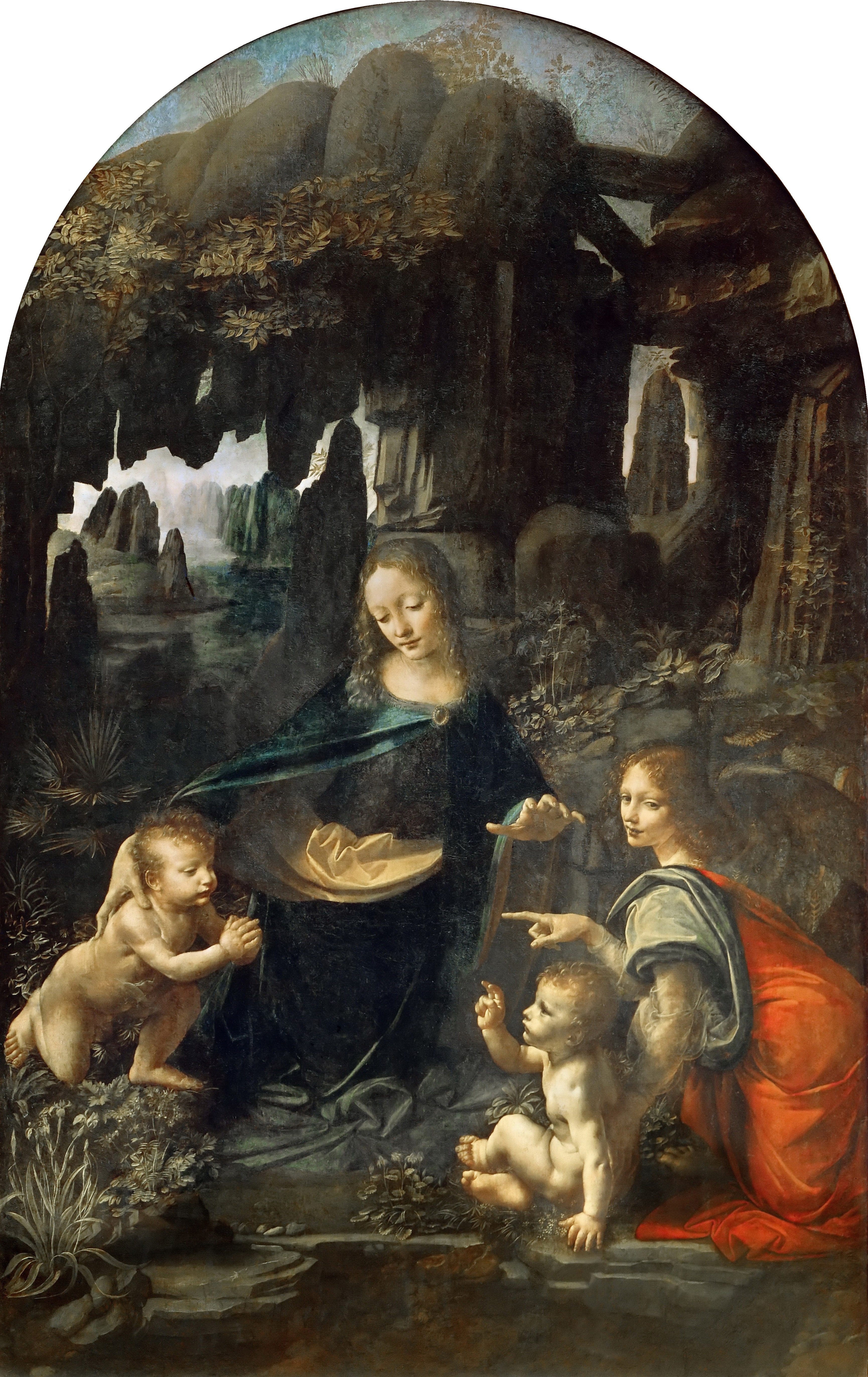
The Virgin of the Rocks is one of the most unusual altarpieces of the Renaissance: a sacred scene set neither in a church nor against a gold ground, but in a damp rocky grotto. Leonardo da Vinci painted it between 1483 and 1486, and in it he showed for the first time in full what his technique of soft transitions could do. Our hand-painted reproduction on canvas brings this scene into your home, painted in oil on canvas with close attention to Leonardo’s light.
A commission that ended in court
On 25 April 1483 the Confraternity of the Immaculate Conception signed a contract with Leonardo and the De Predis brothers for the altarpiece of a chapel in the Milanese church of San Francesco Grande. By 1485 some 800 lire had been paid; the painters replied that the central panel alone had cost that much and asked for a further 1,200. The dispute dragged on for more than two decades, and the painting was not handed over until 18 August 1508. That is precisely why two versions exist today: the earlier one in the Louvre in Paris, and the later one of 1495–1508 in the National Gallery in London, which measures 189.5 × 120 cm. Our reproduction follows the Louvre version, regarded as autograph and left unrestored.
What the painting shows
Four figures occupy the grotto: the Virgin, whose right arm encircles the infant John the Baptist; the Christ Child, who blesses him; and the angel Uriel, whose hand directs the viewer’s eye. The composition is locked into a triangle that gives the scene its calm, while behind it opens a fantastic rocky landscape of a geological accuracy painting had not known before Leonardo. The plants at the figures’ feet are rendered so precisely that botanists still identify them by species. The original is painted in oil on a walnut panel, transferred to canvas in 1806, and measures 199 × 122 cm.
Sfumato in half-light
The grotto was not a whim but a painter’s problem: how do you paint bodies reached only by reflected light? The answer is sfumato – soft, smoky transitions between light and shadow, with no hard outlines. The faces emerge from the darkness gradually, as though seen through thin mist. It is this effect that makes the painting so hard to imitate, and it is why a hand-painted painting reproduction is the only way to experience it properly at home: print cannot repeat soft transitions.
A hand-painted reproduction for your home
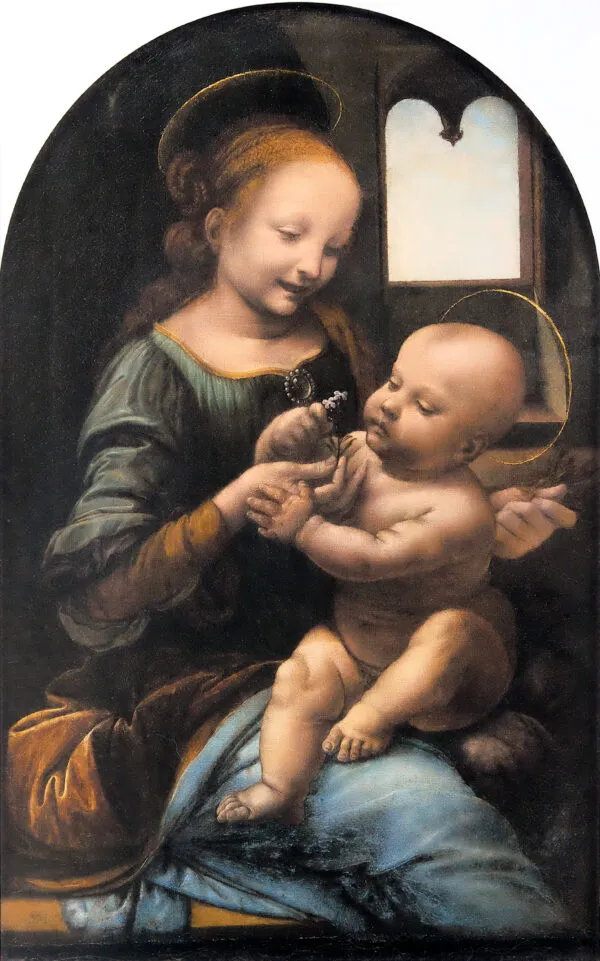
Every reproduction of the Virgin of the Rocks is entirely hand-painted in oil on canvas. It is not a print, but a real painting created for you by an experienced artist, so every copy is unique. It is available in eight sizes, stretched on a wooden frame on request and in a frame from our 3D range. The upright format works particularly well in narrow alcoves, along a staircase, or as the focal point of a quiet wall. Among our canvas wall art you will also find Leonardo’s other Madonnas: The Virgin and Child with Saint Anne, The Madonna Litta and The Benois Madonna.
- Subject: The Virgin of the Rocks, Leonardo da Vinci, 1483–1486
- Technique: hand-painted oil painting on canvas, reproduction
- Sizes: 8 dimensions, stretched on a wooden frame on request
- Fact: the payment dispute lasted 25 years, which is why two versions exist – in the Louvre and in the National Gallery, London