







































Description
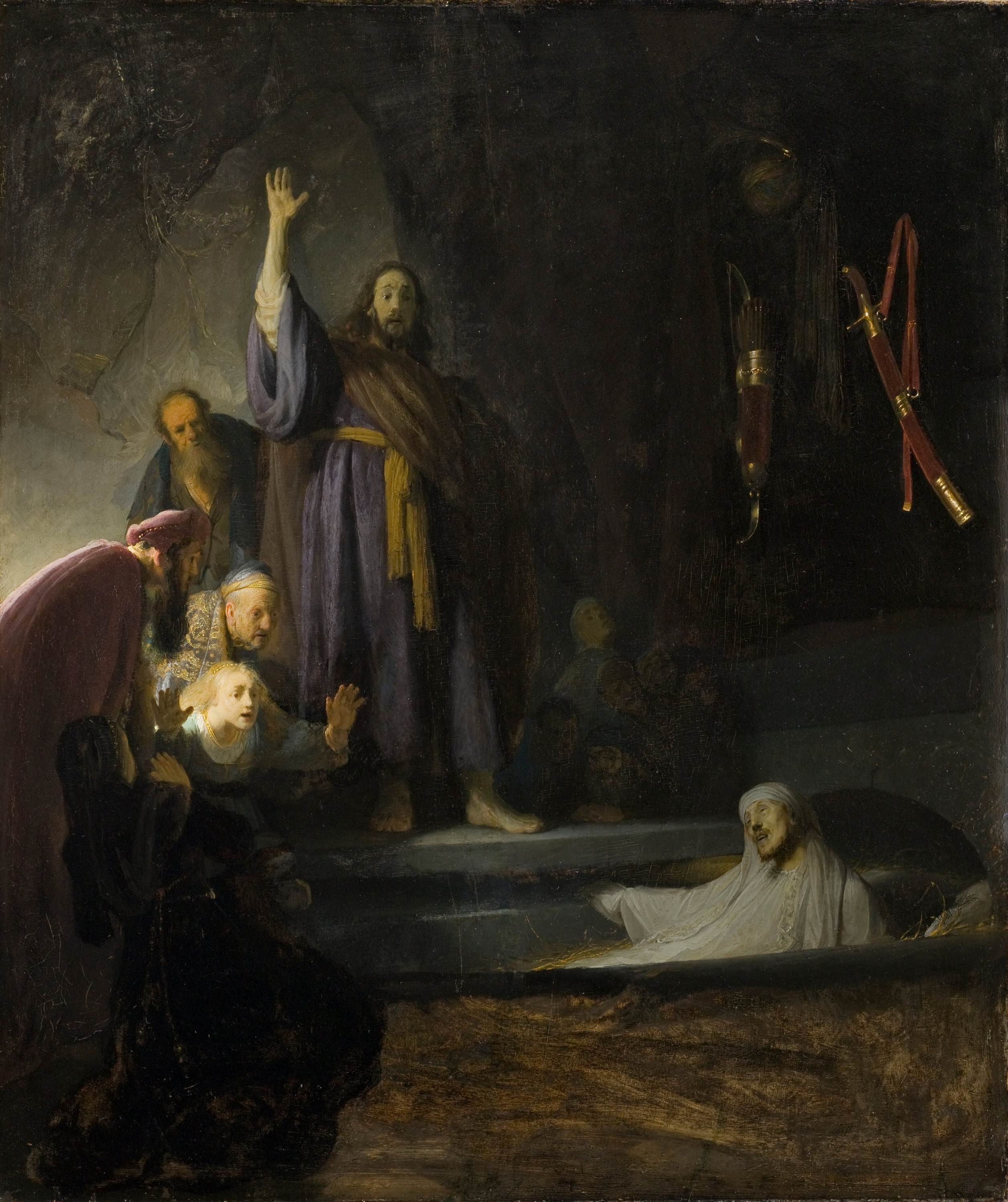
The Raising of Lazarus is Rembrandt’s painting from about 1630–1632: in a dark burial cave Christ raises his hand, the pale Lazarus slowly lifts himself from the grave, and his sisters and the other witnesses stare at the miracle, frozen with astonishment. The original is painted in oil on a wooden panel, 94.77 cm high and 81.28 cm wide, and belongs to LACMA in Los Angeles. We paint it by hand in oil on canvas in 7 portrait sizes, from 100 x 120 to 205 x 249 cm, or to your own measurement; you see the finished painting in a photograph before we send it.
| Title: | The Raising of Lazarus |
| Other titles: | Raising of Lazarus · Lazarus Rising from the Tomb |
| Painter: | Rembrandt van Rijn (1606–1669) |
| Year painted: | c. 1630–1632, Leiden |
| Original size: | 94.77 cm x 81.28 cm (height x width) |
| Original technique: | Oil on wood panel |
| Painting style: | Baroque, Dutch Golden Age |
| Located at: | Los Angeles County Museum of Art (LACMA), Los Angeles (acc. no. M.72.67.2) |
| Our reproduction: | Hand-painted oil on canvas, 7 sizes or made to measure |
The Raising of Lazarus – Rembrandt
What does The Raising of Lazarus show?
The scene takes place in a burial cave. In the middle of the cave, on a rock ledge, stands Christ, tall and calm, his hand raised; at the lower right Lazarus rises from a grave cut into the floor, still deathly pale, in a white shroud. On the left the witnesses crowd together with outstretched arms, among them Lazarus’s sisters, Mary and Martha.
On the right-hand wall of the cave hang a quiver of arrows and a sheathed sword. LACMA points out that the darkness of the cave hides neither the subtle colours of the clothes – mauve, rose and aqua – nor the glints of light on the quiver and scabbard.
What story does the painting tell?
The story from the Gospel of John, chapter 11: Lazarus of Bethany had lain in the tomb for four days when Jesus came to his grave and called him back from death. For Christians it is the last great sign before the Passion.
Rembrandt chose the moment when the miracle is only just happening. Christ’s face, the museum says, carries both apprehension and triumph, and Lazarus rises in answer to the gesture and to the faith it has awakened.
Why is it special among Rembrandt’s works?
Because it is Rembrandt’s only painting of this miracle; he drew and etched the same scene several times later, but painted it only once. He painted it young, still in Leiden, soon after his training with Pieter Lastman, whose influence shows in the arrangement of the figures.
Light is the main tool here: most of the cave sinks into darkness, and light falls only on the witnesses and on the face of Lazarus. That contrast of light and dark, chiaroscuro, became Rembrandt’s signature. The Wikipedia article on the painting covers its etchings and its owners.
Where is the original, and whose was it?
The original is in the Los Angeles County Museum of Art, accession number M.72.67.2, a gift of H. F. Ahmanson and Company in memory of Howard F. Ahmanson.
According to LACMA it was probably in Rembrandt’s own collection in Amsterdam until 1656; Wikipedia adds that it was sold at the auction that followed his bankruptcy. It hung in the anteroom of his house.
Lazarus or another Rembrandt – which to choose?
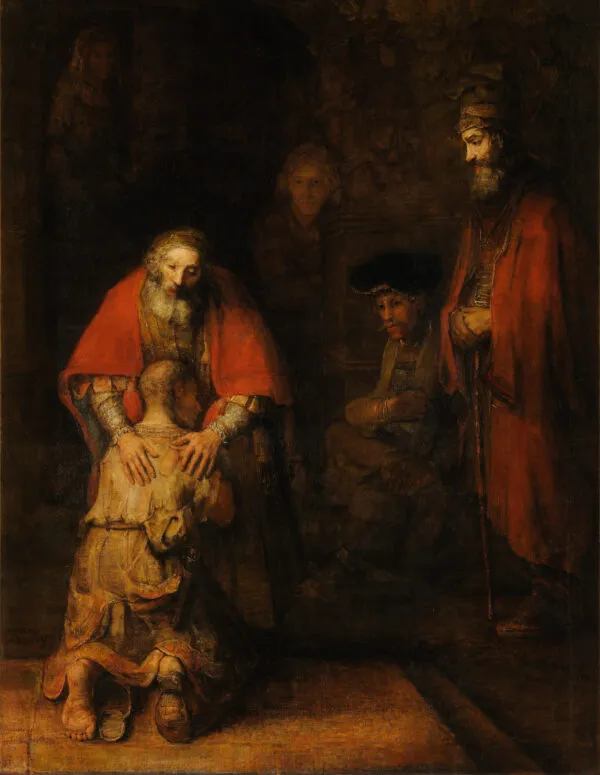
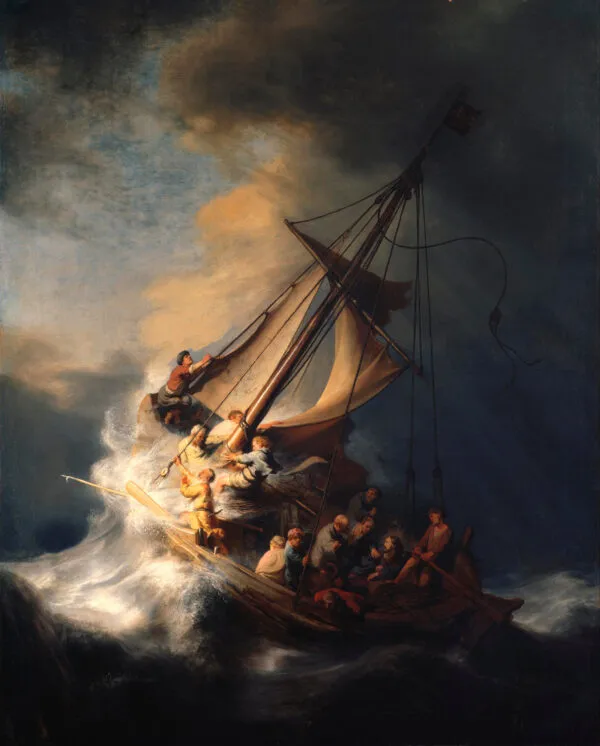
The Raising of Lazarus suits a quiet room, a well-lit hallway or a place of prayer, where its dark tones do not disturb. If you are looking for a scene of forgiveness, there is The Return of the Prodigal Son; for drama on the water, The Storm on the Sea of Galilee.
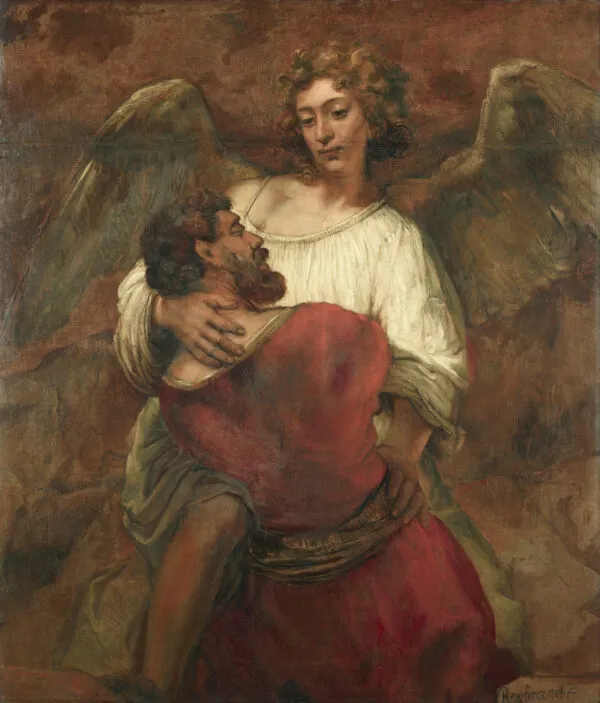
Also from Rembrandt’s early years is The Flight into Egypt, and from his late years Jacob Wrestling with the Angel. The Rembrandt page gathers the biblical scenes and the other famous Rembrandt paintings we paint.
How does our painter paint your Raising of Lazarus?
This Rembrandt reproduction is made on canvas, not on wood: our painter first lays in the dark ground of the cave with brushes in oil, then builds up the bright faces of the witnesses layer by layer.
The hardest parts are the passages from darkness into light and the pale skin of Lazarus, which has to look alive and dead at once. An oil painting reproduction like this has a depth of colour that a print does not reach.
Which size is right for your room?
In short: 100 x 120 or 112 x 135 cm for a hallway, bedroom or study, 127 x 150 or 141 x 170 cm for a living-room wall, and 160 x 190, 180 x 215 and 205 x 249 cm for staircases, high rooms and chapels.
All 7 sizes are portrait (width x height): 100 x 120, 112 x 135, 127 x 150, 141 x 170, 160 x 190, 180 x 215 and 205 x 249 cm. The original is smaller than any of them, only 81.28 cm wide; even the smallest size is about a quarter larger. As a painting for the living room above a sideboard or sofa, 127 x 150 cm works well.
Because the painting is dark, hang it where daylight falls from the side, with its centre at about 150 cm.
Can I order another size or a frame?
Yes. The original is roughly 6 : 7 in proportion; in that ratio Christ’s raised hand stays inside the picture. Enter the width and height you want and we will prepare a quote.
The painting arrives rolled, stretched on a stretcher bar or framed; our workshop in Slovenia does the stretching and framing, as for every canvas painting we send. Try frames in the 3D application, which is only for choosing the frame; viewing it on your own wall is a separate service. A black or dark brown frame deepens the darkness of the cave, while antique gold repeats the glow on the faces.
How long does delivery take, and what if something is wrong?
Your painting is painted to order, so making it takes 15 to 45 working days. We send it across the EU without customs. Before dispatch you get a photograph; whatever you would like different, we change, and our returns policy applies to every order.
For Easter, a confirmation or a godparent who does not yet know which size will suit, you can give a wall art voucher.
Frequently asked questions
Where does the original Raising of Lazarus hang?
At LACMA (Los Angeles County Museum of Art) in Los Angeles, accession number M.72.67.2.
Which story is the scene from?
From the Gospel of John, chapter 11: Jesus calls Lazarus out of the tomb after he had been dead for four days.
Who are the people to the left of the tomb?
The witnesses of the miracle; among them, according to LACMA, are Lazarus’s sisters, Mary and Martha.
The original is on wood – what is yours on?
We paint ours in oil on canvas, which can be rolled, stretched or framed; wood would be too heavy and unsuitable for the larger sizes.
Is it a print?
No. It is a hand-painted copy, painted with a brush in oil by a painter specially for your order.
How big is the original?
It is 94.77 cm high and 81.28 cm wide. Our sizes start at 100 x 120 cm and go up to 205 x 249 cm.
Which size suits a hallway?
For a narrow hallway, choose 100 x 120 or 112 x 135 cm, so that you can see the whole painting even from close up.
Did the painting belong to Rembrandt?
According to LACMA probably yes, until 1656; according to Wikipedia it hung in the anteroom of his house.
- Subject: Christ raises his hand in the dark cave and Lazarus rises from the tomb before astonished witnesses.
- Original: c. 1630–1632, oil on wood panel, 94.77 x 81.28 cm, LACMA, Los Angeles.
- Ours: painted by hand in oil on canvas, in 7 portrait sizes from 100 x 120 to 205 x 249 cm or made to measure.
- Worth knowing: it is Rembrandt’s only painting of this miracle.