



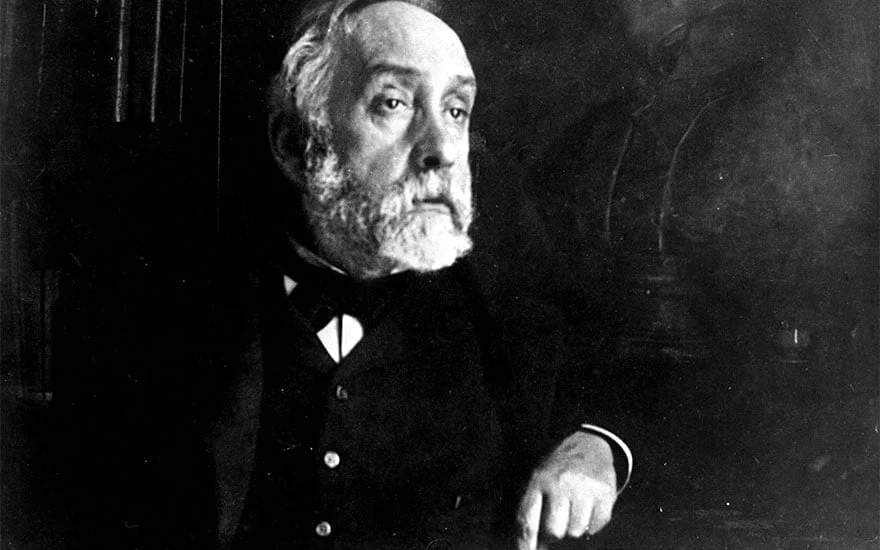
Edgar Degas was a French Impressionist painter and sculptor, born in 1834 in Paris, France. He is regarded as one of the most important figures of the Impressionist movement, known for his masterful depictions of dancers, modern life and cityscapes. His work is marked by a unique blend of realism and abstraction and by an innovative use of colour and composition.
Degas began his artistic career studying at the École des Beaux-Arts in Paris, where he was strongly influenced by the work of the Old Masters, above all the paintings of Diego Velázquez and Peter Paul Rubens. He later became a member of the Impressionist group, which was known for its focus on capturing the fleeting effects of light and colour in modern life.
One of Degas’s best-known bodies of work is his series of paintings and sculptures of dancers. These works, which he began creating in the 1870s, show dancers behind the scenes of the Paris Opera. Degas’s dancers are famous for their fluid, dynamic poses and for the way he used colour and composition to capture the movement and energy of the dancers. They are considered some of the most iconic and recognisable images of the Impressionist movement.
Degas was also known for his paintings and drawings of cityscapes and modern life, which he began creating in the 1880s. These works, which depict the bustling streets of Paris and the everyday life of its inhabitants, are characterised by vivid colours, dynamic compositions and close attention to detail. They are considered some of the most important works of the Impressionist movement and had a great influence on the development of modern art.
Degas was also a gifted sculptor and created a number of sculptures over the course of his career. Like his paintings, these sculptures are marked by close attention to detail and an ability to capture movement and energy. They are considered some of the most important sculptural works of the 19th century.
During his lifetime Degas’s work was not always well received by the critics, but it has since won wide recognition and is regarded as some of the most important art of the 19th century. His paintings and sculptures are held in many of the world’s leading museums, including the Louvre in Paris, the Metropolitan Museum of Art in New York and the National Gallery in London.
Edgar Degas was a French Impressionist painter and sculptor, born in 1834 in Paris, France. He is regarded as one of the most important figures of the Impressionist movement, which is known for its masterful depictions of dancers, modern life and cityscapes. His work is marked by a unique blend of realism and abstraction and by an innovative use of colour and composition. His series of paintings and sculptures of dancers, his urban landscapes and scenes of modern life, and his sculptures are considered some of the most iconic and recognisable works of the Impressionist movement. His influence on the art world is still felt today, as many contemporary artists continue to draw inspiration from his work. His works can be found in many of the world’s leading museums, and art lovers around the world continue to study and admire them. His unique style and technique make him a true master of Impressionism, and his influence on the art world and his lasting legacy make him one of the most important figures in the history of art. His ballerinas remain one of the most popular subjects for hand-painted reproductions of Degas paintings.
Edgar Degas – 10 interesting facts
- Edgar Degas was a French Impressionist painter and sculptor, known for his depictions of dancers and modern life.
- He was born in 1834 in Paris, France, and began his artistic path as a student at the École des Beaux-Arts.
- Degas was strongly influenced by the work of the Old Masters, especially the painters of the Italian Renaissance.
- He is best known for his depictions of dancers, which he often painted from his observations at the Paris Opera.
- Degas is regarded as one of the founders of Impressionism, a movement that focused on portraying the effects of light and movement in art.
- He was a prolific artist, producing more than 2,000 paintings, pastels, drawings and sculptures in his lifetime.
- Degas was also known for his innovative use of colour, often using vibrant hues and bold brushstrokes to create a sense of movement and energy in his work.
- Despite his association with the Impressionist movement, Degas was not always happy with the label, as he considered his art more traditional than that of his contemporaries.
- Degas was also an accomplished sculptor, creating many bronze figures of dancers and other subjects.
- In his lifetime he was a solitary figure and was often criticised in the art world, yet today his works are highly prized and regarded as some of the most iconic of the Impressionist movement.