



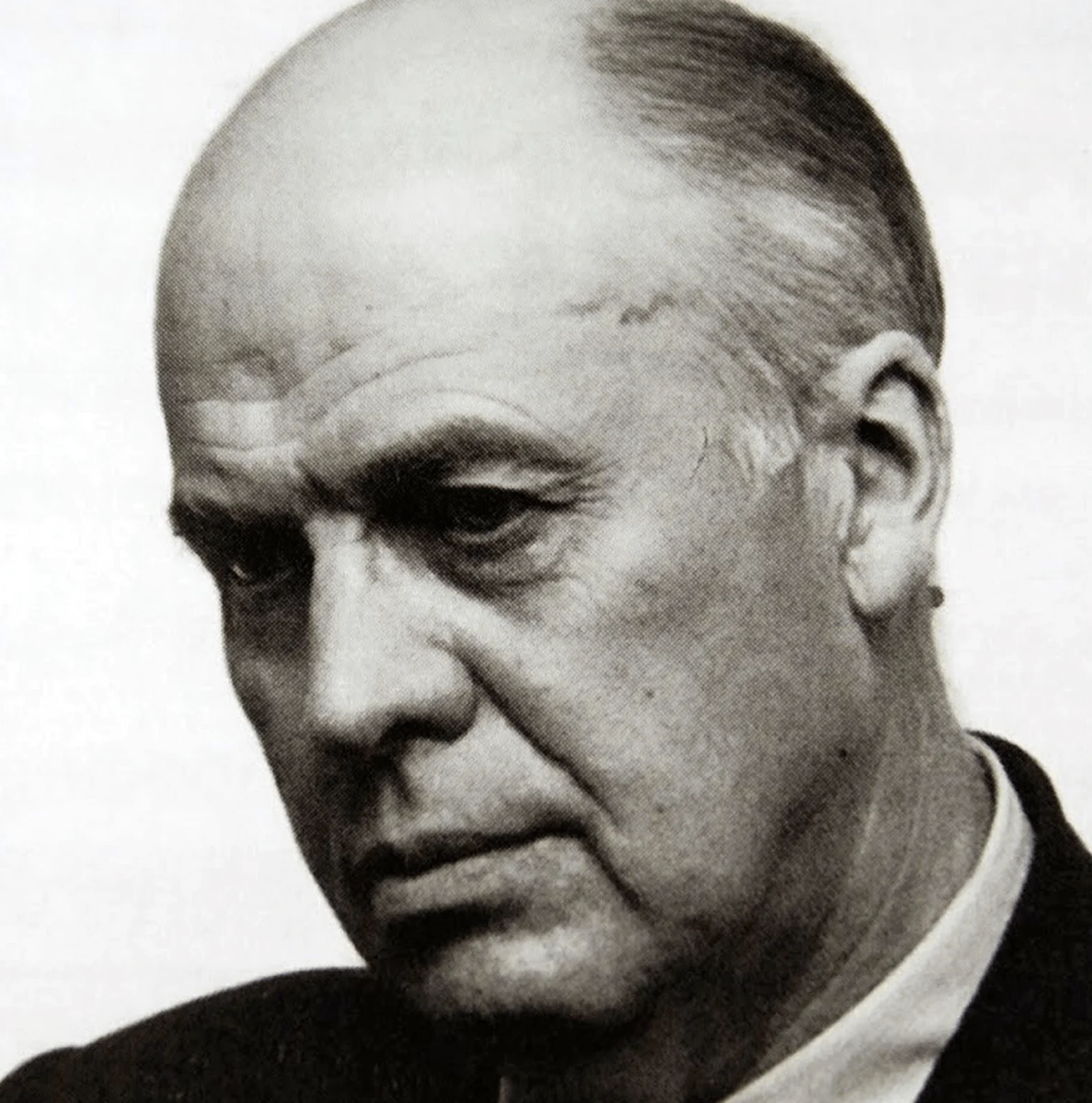
Edward Hopper was an American painter and one of the leading representatives of American realism in the 20th century. He was born in 1882 in Nyack, New York, and died in 1967 in New York City. His paintings depict scenes of everyday American life — city streets, diners, petrol stations and hotel rooms — often with a pronounced sense of quiet and solitude.
He studied painting in New York and travelled to Europe three times between 1906 and 1910, spending most of that time in Paris. European painting influenced him above all in its treatment of light, yet he joined none of the avant-garde movements of the day. Success came relatively late: for years he earned his living as an illustrator and printmaker, and wider recognition arrived only in the 1930s.
Hopper’s best-known painting is Nighthawks, from 1942. It shows three customers and a server in a late-night diner behind a large plate-glass window, with the viewer watching the scene from the street, like a passer-by. It is regarded as one of the most recognisable works of 20th-century American art and is held at the Art Institute of Chicago.
Hopper’s style is marked by clear geometric accents, calm planes of colour and, above all, light. Sunlight falling through a window onto a wall, or artificial light illuminating an interior at night, often carries the mood of the entire painting. The figures in his works rarely converse: most often they look past one another, or out of the window.
His wife, Josephine Nivison Hopper, herself a painter, played an important part in his work. She was the model for almost every female figure in his paintings, and she also kept the records of his works and handled contact with the galleries. Hopper painted slowly and deliberately: in his later years he completed only a few paintings a year, preparing each with numerous sketches.
Besides urban scenes, Hopper also painted the American landscape extensively. He often spent summers in New England, particularly on Cape Cod, where he painted lighthouses, houses along the shore and open fields. In these works too, light and the same quiet, unpeopled stillness of his city scenes remain in the foreground.
His influence reaches beyond painting. The framings he painted — a solitary figure in a lit room, a view through a window, an empty street at dawn — became part of the language of film and are often associated with the aesthetics of film noir. Directors, photographers and designers still cite his scenes today.
It is precisely this recognisable atmosphere that makes his night scenes and empty city streets among the most sought-after motifs for hand-painted reproductions of Hopper paintings.
Edward Hopper – 10 interesting facts
- Edward Hopper was born in 1882 in Nyack, New York, and died in 1967 in New York City.
- He is regarded as one of the leading representatives of American realism in the 20th century.
- Between 1906 and 1910 he visited Europe three times, spending most of that time in Paris.
- Before establishing himself as a painter, he earned his living for years as an illustrator and printmaker.
- His best-known painting is Nighthawks, from 1942, held at the Art Institute of Chicago.
- Recurring motifs in his paintings are diners, petrol stations, hotel rooms and empty city streets.
- In his works light carries the mood — sunlight through a window, or artificial light in night scenes.
- His wife Josephine Nivison Hopper, herself a painter, was the model for almost every female figure in his paintings.
- He painted slowly and in his later years completed only a few paintings a year.
- His composition and use of light influenced film, and are often associated with the aesthetics of film noir.
Leave a Reply