



Description
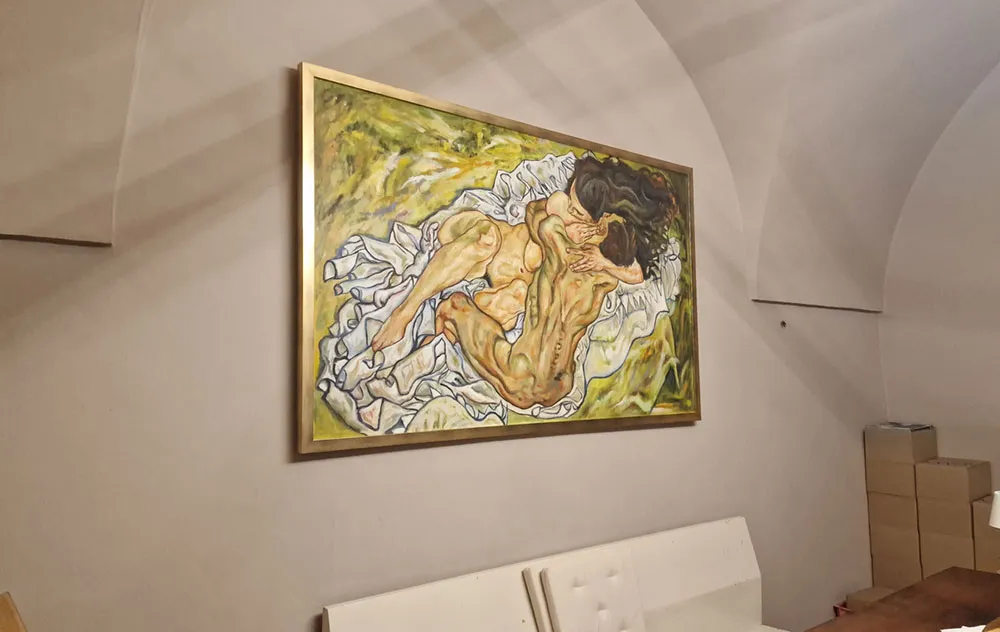
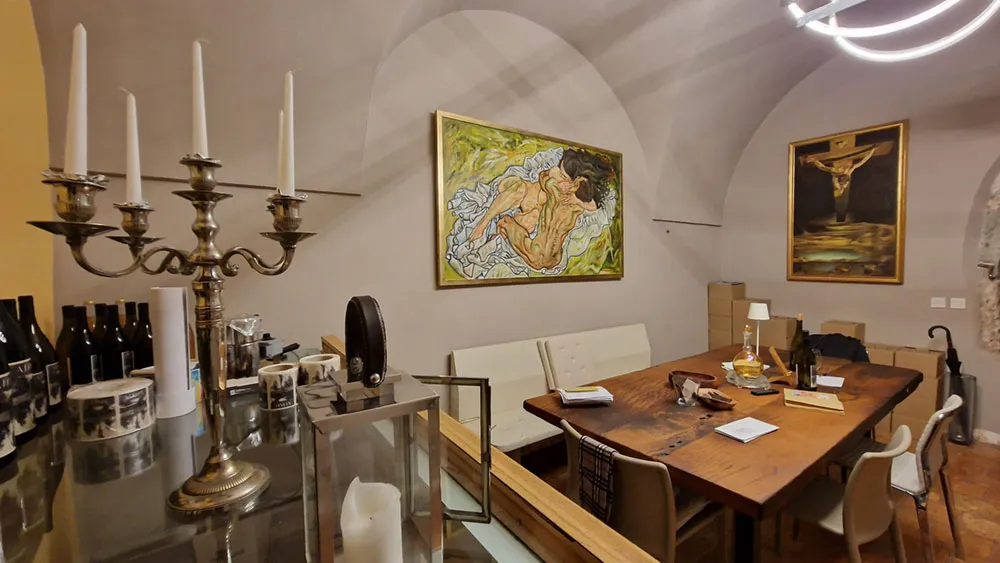
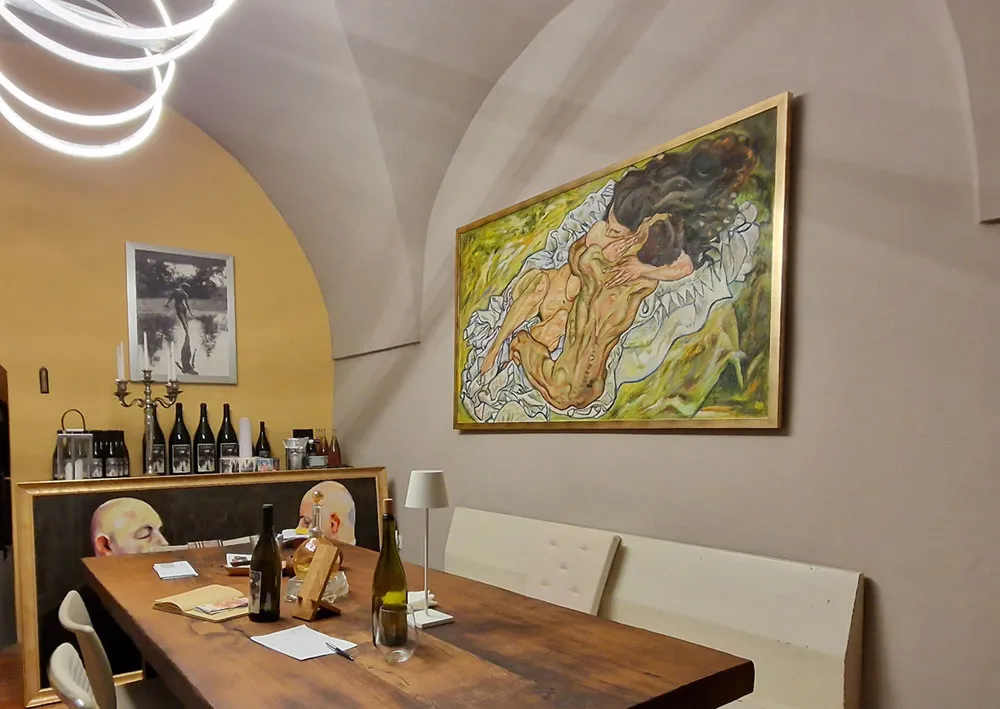
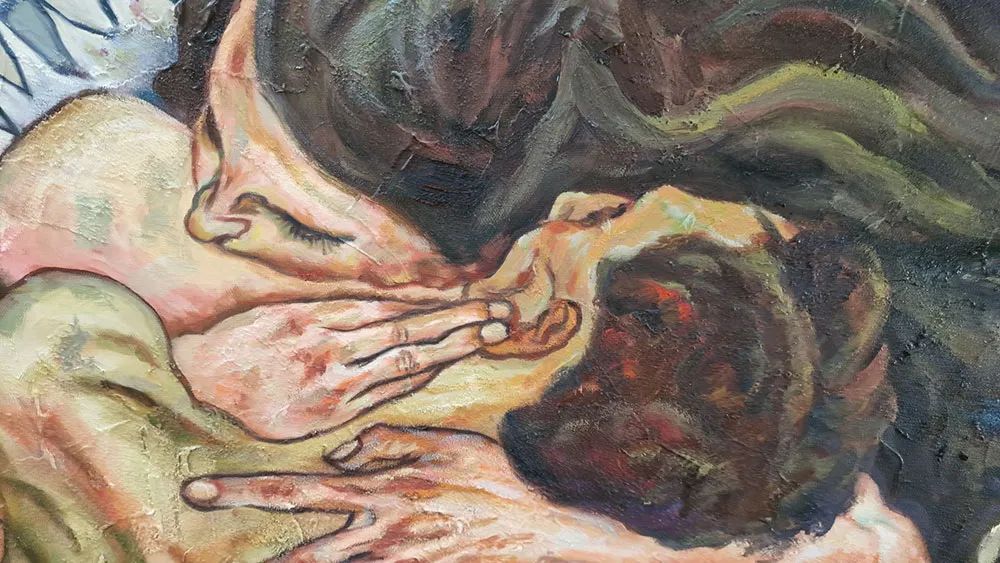
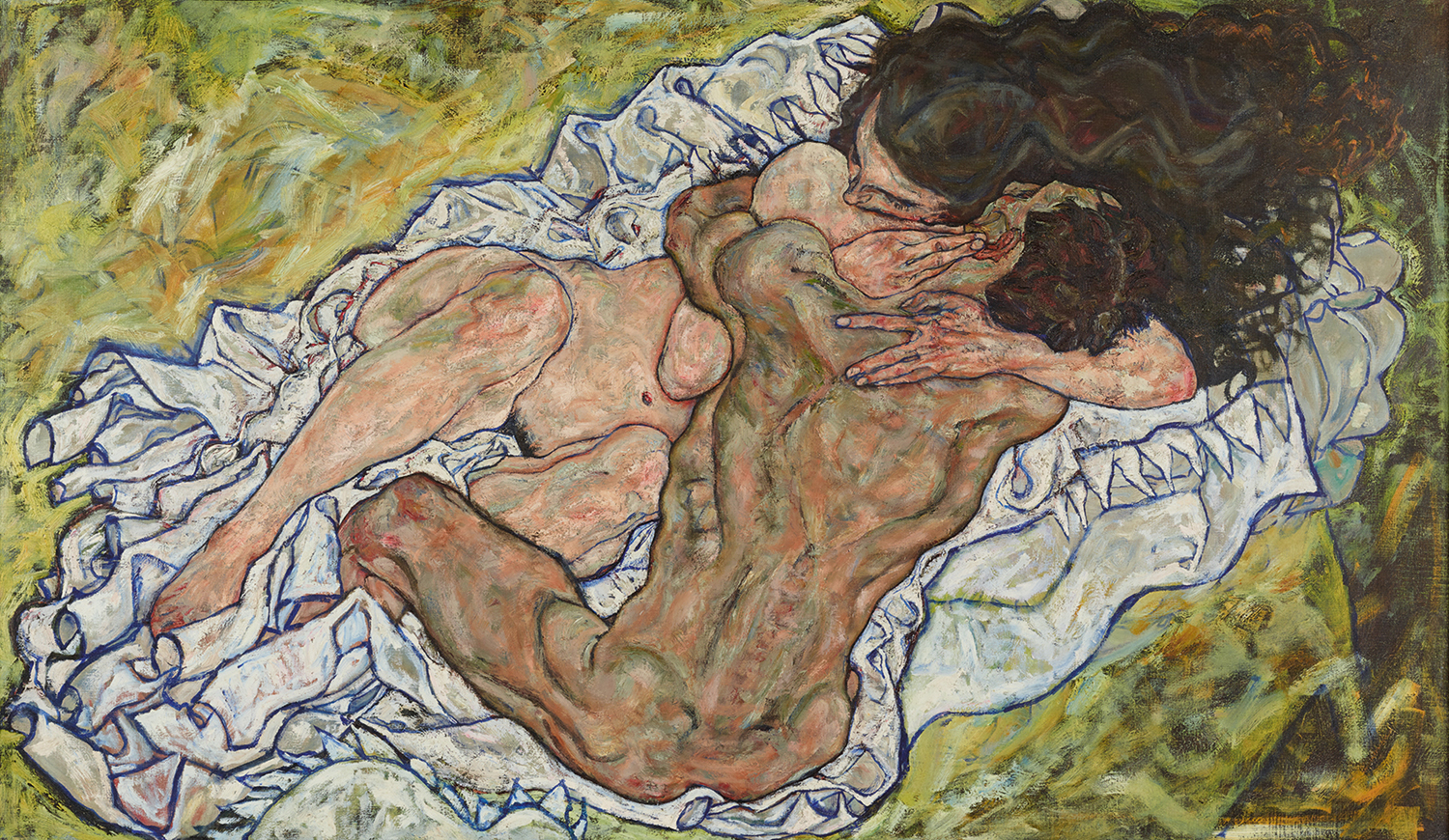
The Embrace – Lovers II (originally Die Umarmung / Liebespaar II) is a 1917 work by Egon Schiele in which two naked figures hold each other on a crumpled white sheet against a mottled yellow-green ground. The original hangs in the Upper Belvedere in Vienna under inventory number 4438. We make it as a hand-painted oil painting on canvas, in thirteen sizes or to your own measurement, and we send you a photograph of the finished work for approval before it ships.
| Title: | The Embrace – Lovers II |
| Other titles: | Die Umarmung · Liebespaar II · Objemanje · L’abbraccio |
| Painter: | Egon Schiele (1890–1918) |
| Year: | 1917, unsigned |
| Original size (width × height): | 170 cm x 100 cm |
| Original technique: | Oil on canvas |
| Style: | Expressionism |
| Location: | Belvedere, Vienna (inv. no. 4438) |
| Our reproduction: | hand-painted oil on canvas, 13 sizes from 60 x 35 cm to 210 x 120 cm, or a made-to-measure size |
The Embrace – Egon Schiele
Who is shown here?
Two figures, a woman and a man, and the museum record names neither of them. Schiele was living with his wife Edith in 1917, so the literature often assumes the pair is the artist and his wife; the Belvedere does not make that identification, so we do not assert it either. What is documented is simply this: two people, unnamed, with no verifiable story attached. That anonymity is part of the effect. A portrait would have to show the faces; here both are hidden, which pushes the viewer towards the posture of the bodies rather than towards identity.
What is on the canvas?
The pair lie on a crumpled white sheet whose folds are painted in sharp, almost papery planes and outlined in a dark contour. The woman’s dark hair is loose and her face is buried against the man’s shoulder; he is turned away from the viewer, his spine and shoulder blades drawn with a hard, deliberate line. Her hand rests on his back, the fingers long and bony — Schiele’s unmistakable hand. The upper bodies press together while the lower halves drift apart. The ground behind them is not a room but an indeterminate yellow-green field that reads almost like trampled grass. The palette is deliberately narrow: ochre, pale rose, olive, a brown that carries the hair. It is a landscape format, wider than it is tall, which lays the embrace horizontally across the whole canvas. The sheet is not merely a surface — it carries the composition, its white planes cutting the green and holding both bodies at the centre so the eye does not wander to the edge.
Why does this work matter?
The Embrace was painted a year before Schiele died and is regarded as one of his calmest works. The early Schiele was angular, raw and often deliberately provocative; here the handling is softer, the bodies fuller, the colour richer. That shift is why the work is so often cited as the summit of his late period. As an expressionist painting it is also unusual in refusing the dramatic face: neither face is really visible, and the entire emotional weight is carried by pose and touch.
What does the work mean?
The Belvedere’s own description stresses that Schiele is not aiming at a provocative display but at closeness and separation happening at once. The embrace is tight, yet the lower bodies are already parting; comfort and anxiety occupy the same canvas. That is why it reads as an image of a human relationship rather than as an erotic scene. In 1917 the painter was in the middle of a war and a year away from the epidemic that killed him — but we do not force that context onto the meaning, because the museum record does not connect them. Look for longer and you notice that neither head turns towards you: the scene does not offer itself, it closes in on itself. That is why it stays intimate even in a busy room, and why buyers so often choose it for a bedroom or for the quieter corner of a living room.
Where does it come from and where is it now?
The work is in the Upper Belvedere in Vienna under inventory number 4438. The Belvedere lists two stations in its history: the Heinrich Rieger collection in Vienna, and a purchase in 1950 from Robert Rieger of New York. Those are the two stations the museum publishes, and we give them exactly as they are recorded; we add nothing in between, because there is no source for it. The work has been on show at the Belvedere since at least 1954, including the Schiele surveys of 1968 and 1990.
Is this Klimt’s Kiss or Schiele’s Embrace?
They are two different works by two different painters, both hanging in the Belvedere and both carrying the word Liebespaar in the title. Klimt’s Kiss (Liebespaar) dates from about 1907–1909, stands upright, is gold and ornamental, and shows a couple kneeling at a flowering edge. Schiele’s Embrace is from 1917, horizontal, without gold, the bodies lying on a sheet. The confusion is understandable — the two couples share a name — but these are entirely different works, a decade apart and opposite in temperament.
Where does the motif sit among Schiele’s works?
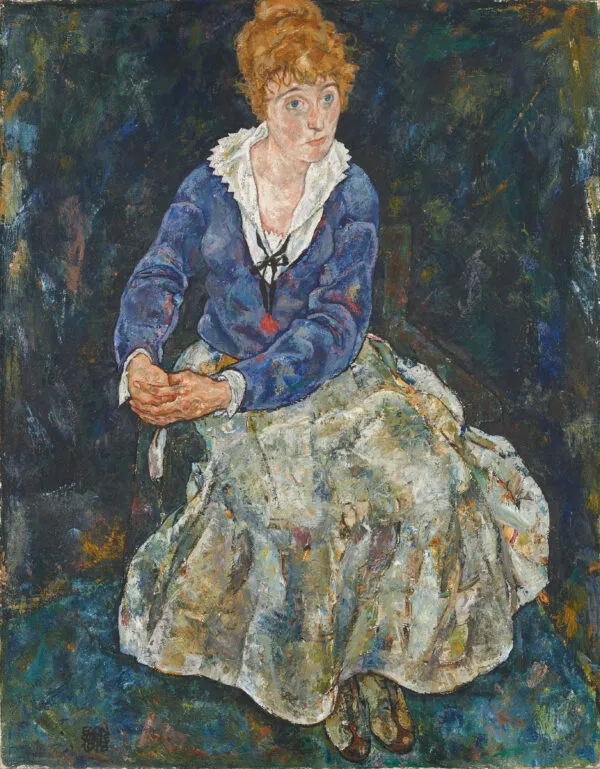
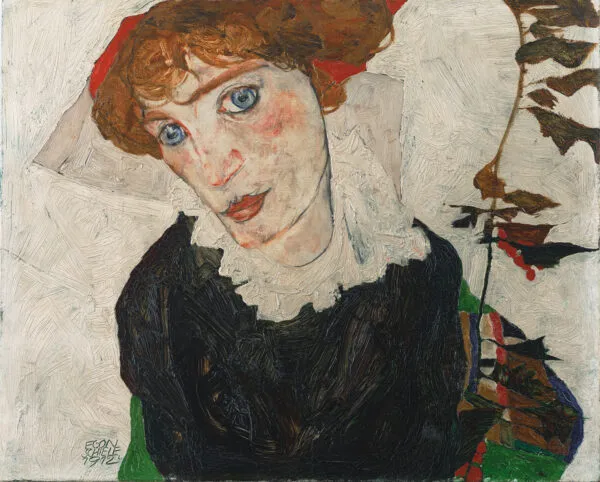
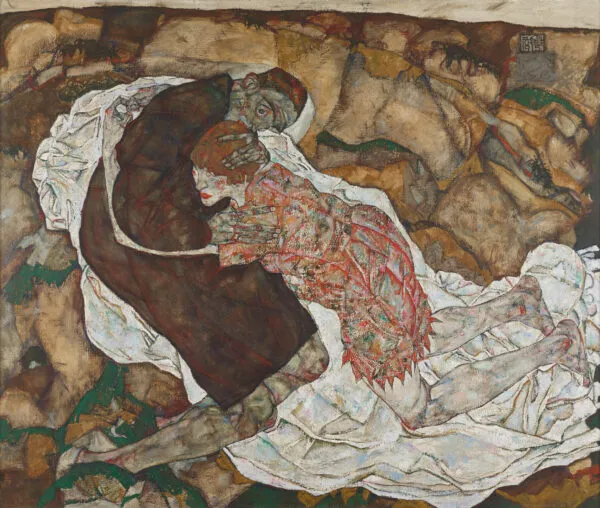
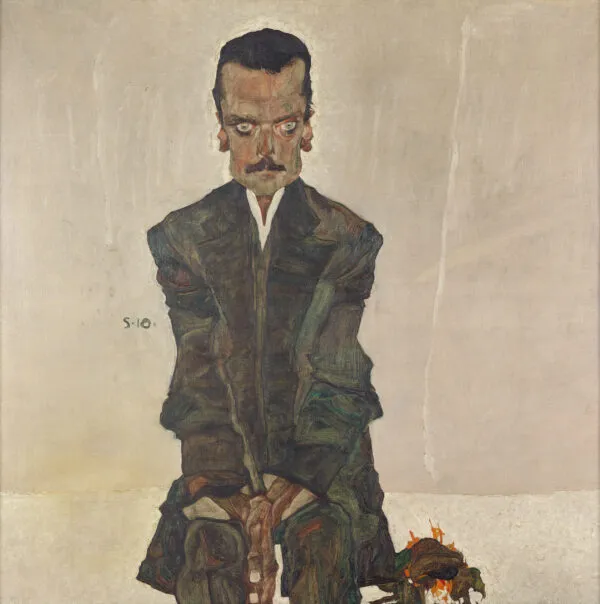
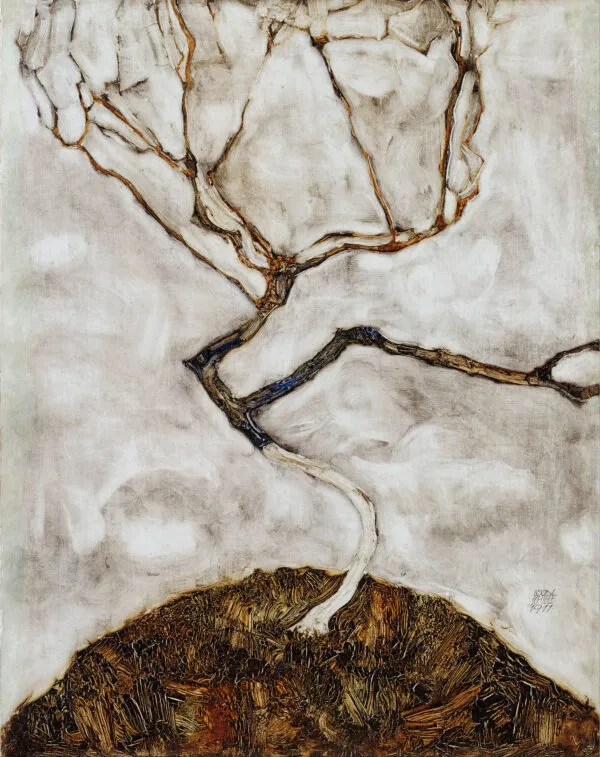
The embrace and the double figure recur across Schiele’s career, differently each time. Against this late, almost tender scene stands Cardinal and Nun (Caress) of 1912, an open riposte to Klimt and far harsher. The portrait line runs through Portrait of Wally Neuzil and Wife of the Artist Edith Schiele, the landscape line through Four Trees. The full selection is in the Egon Schiele gallery, and there is more on his life in our article about Egon Schiele. Schiele was a younger contemporary of Gustav Klimt, and the Vienna Secession was the milieu he came out of before he outgrew it; Viennese Expressionism is the movement he helped define, and Austrian art of this period is still read largely through those two names.
How is our hand-painted version made?
Every canvas is painted by an artist in oils, stroke by stroke. It is not a machine impression but a hand-painted copy made specifically for your order. In the first photograph the finished work hangs in a gilt frame on the vaulted wall of our workshop — this is how it looks once framed and ready to dispatch. The second photograph shows the same work in a real room above a long wooden table, which gives a sense of its scale in an everyday interior. The third photograph is taken at an angle and reveals the depth of the frame and the work’s proportion to the bench beneath it. The fourth photograph is a close-up of the hands and heads, where the relief of the paint and the texture of the weave beneath it are clearly visible. That is exactly what you receive: a canvas painted by hand and photographed before dispatch. The video on this page (0:50) first shows the framed painting The Embrace – Lovers II (Die Umarmung) in a dining room with a long wooden table, then a close-up of a hand with a brush working the green ground and the figures, and finally the corner of the frame and close-ups of the lovers’ faces and hands. As a canvas reproduction it arrives stretched on a wooden bar and ready to hang.
Which size suits which wall?
Short answer: above a sofa in a living room choose 150 x 90 cm or larger; for a smaller wall 90 x 55 cm is enough. Because the motif is emphatically horizontal it works best above a longer piece of furniture — a sofa, a sideboard, a bed, a dining table. In a narrow hallway or between windows it is better to stay between 60 x 35 cm and 80 x 45 cm. The 170 x 100 cm size is exactly the size of the original, the only one of our rungs that matches it one to one. The largest format, 210 x 120 cm, is meant for tall or open rooms. A canvas painting at that scale needs some bare wall around it for the embrace to register.
How do I order a made-to-measure size, stretcher bar and frame?
If none of the thirteen sizes suits your wall, we paint the work to your own measurement. The canvas comes stretched on a wooden bar; our 3D application is for choosing a frame only, not for showing the work on your own wall. The frame in the photographs is an example and is not necessarily part of the order — you choose it separately.
Delivery and guarantee
We paint to order and deliver to sixteen countries in the European Union, among them Germany, France, Italy, the Netherlands and Poland; the United Kingdom and Ireland are not currently among them. Before dispatch we send you a photograph of the finished work for approval; if you are not satisfied with the result we correct it or paint it again. Because each oil on canvas is made individually, the production time varies with the size and with the studio’s current workload.
Frequently asked questions
Where is the original kept?
In the Upper Belvedere in Vienna, under inventory number 4438.
Are the lovers identified people?
The museum record does not name them. Assumptions exist; confirmed names do not.
Is Die Umarmung the same work as The Embrace?
Yes. Die Umarmung and Liebespaar II are the original German titles of this same 1917 canvas.
Is this a print?
No. Every canvas is painted by hand in oils by an artist.
Which size should I order for a bedroom?
Above a double bed most customers choose 150 x 90 cm or 170 x 100 cm.
Can I have a size that is not on the list?
Yes, we paint the work to any measurement you specify.
How does it arrive?
Stretched on a wooden bar and protectively packed; the frame is optional.
What is the work about, in one sentence?
That closeness and separation can occupy the same body at the same moment.
Is the original for sale and what is it worth?
It is not for sale; it belongs to the public Belvedere collection and is not on the market.
How high should I hang it?
Centre the canvas about 145 to 150 cm above the floor, or 20 to 30 cm above the back of a sofa.
Does it work as a gift?
It does; if you are unsure which size to choose there is a gift voucher.
- Subject: two unnamed figures embracing on a white sheet in a yellow-green space.
- Original: 1917, oil on linen, 170 x 100 cm, unsigned, Belvedere Vienna, inv. no. 4438.
- Ours: hand-painted in oils, 13 sizes or a made-to-measure size, photograph sent before dispatch.
- Worth knowing: the 170 x 100 cm size matches the original exactly.