







































Description
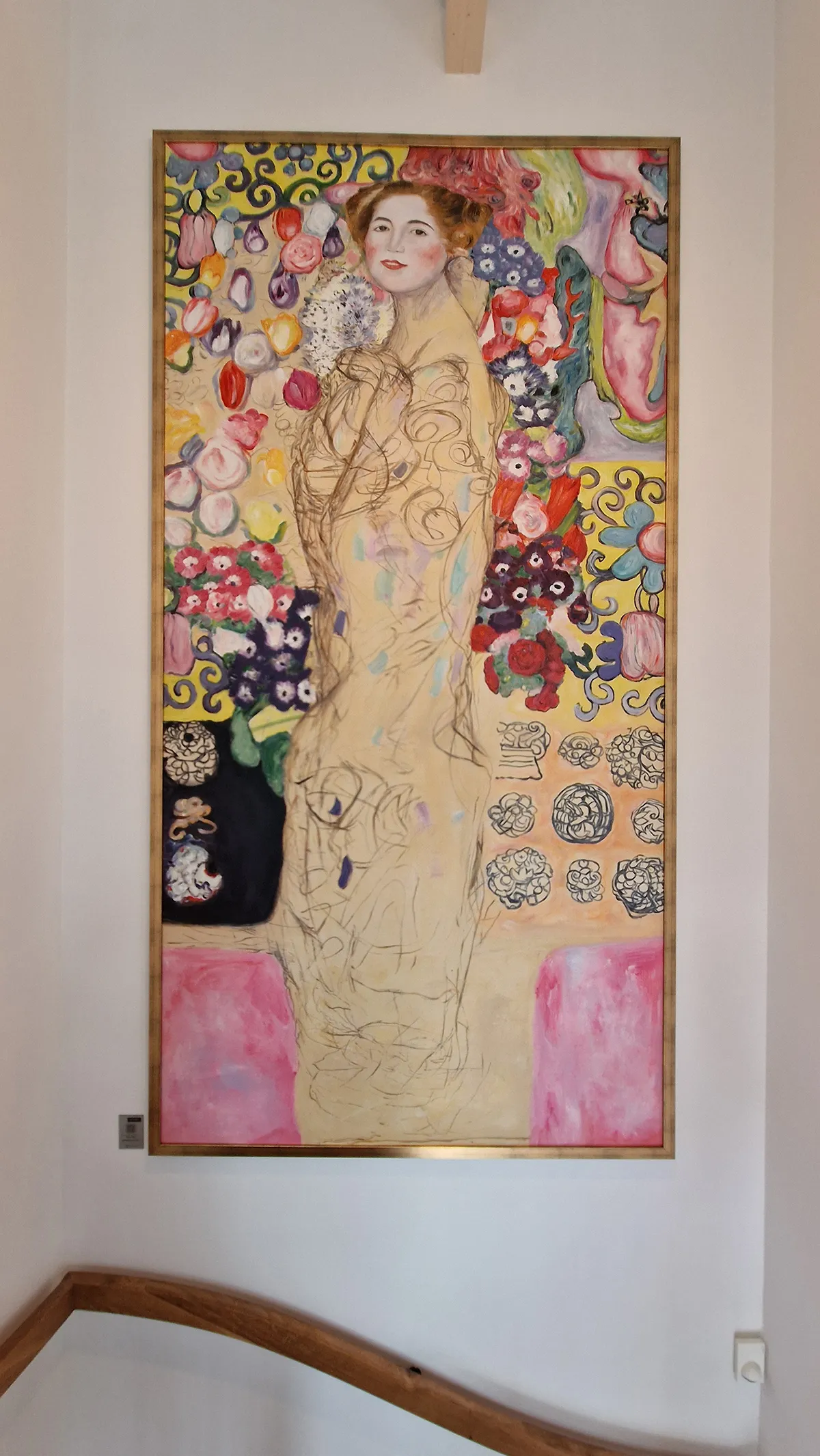
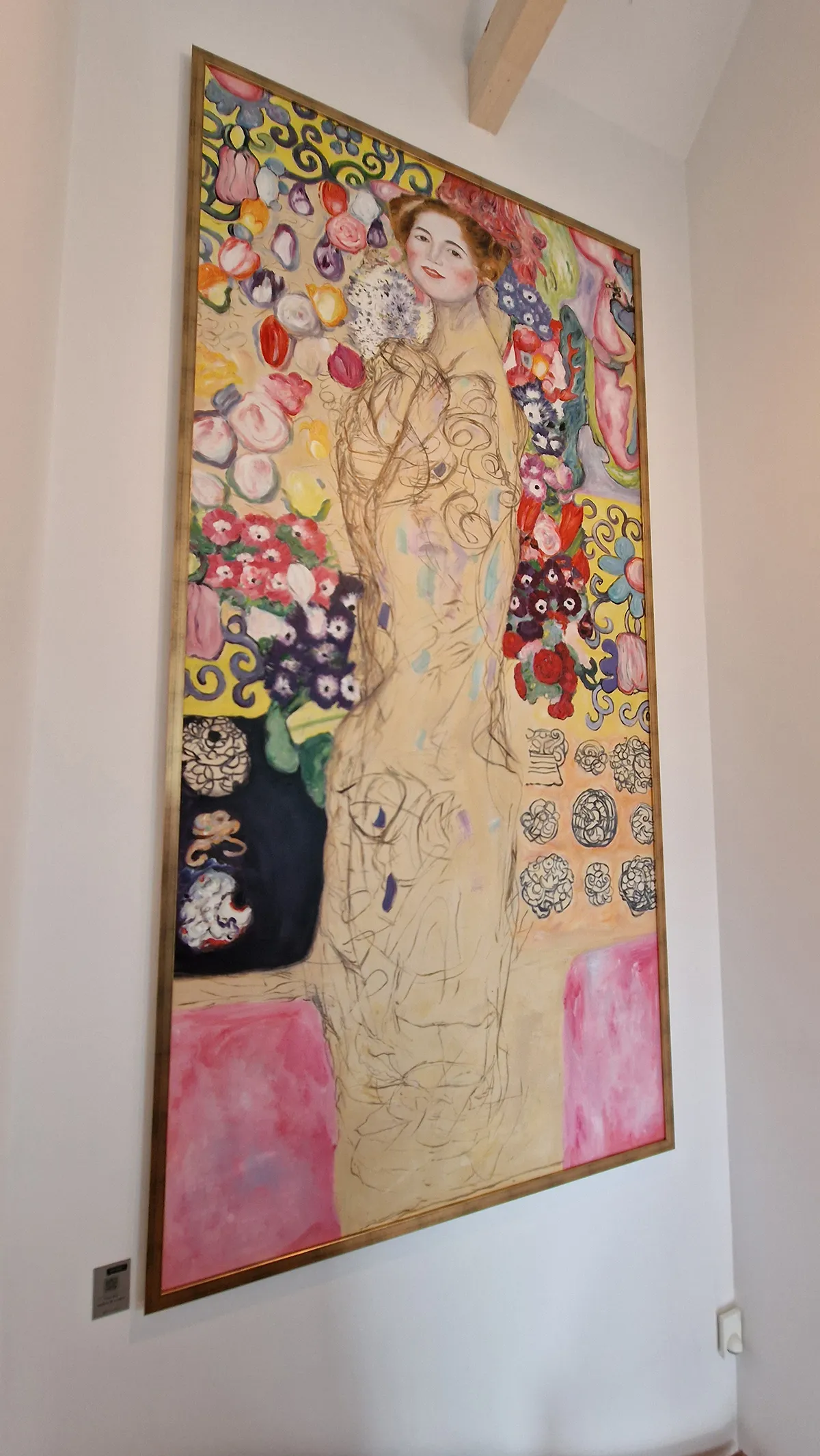
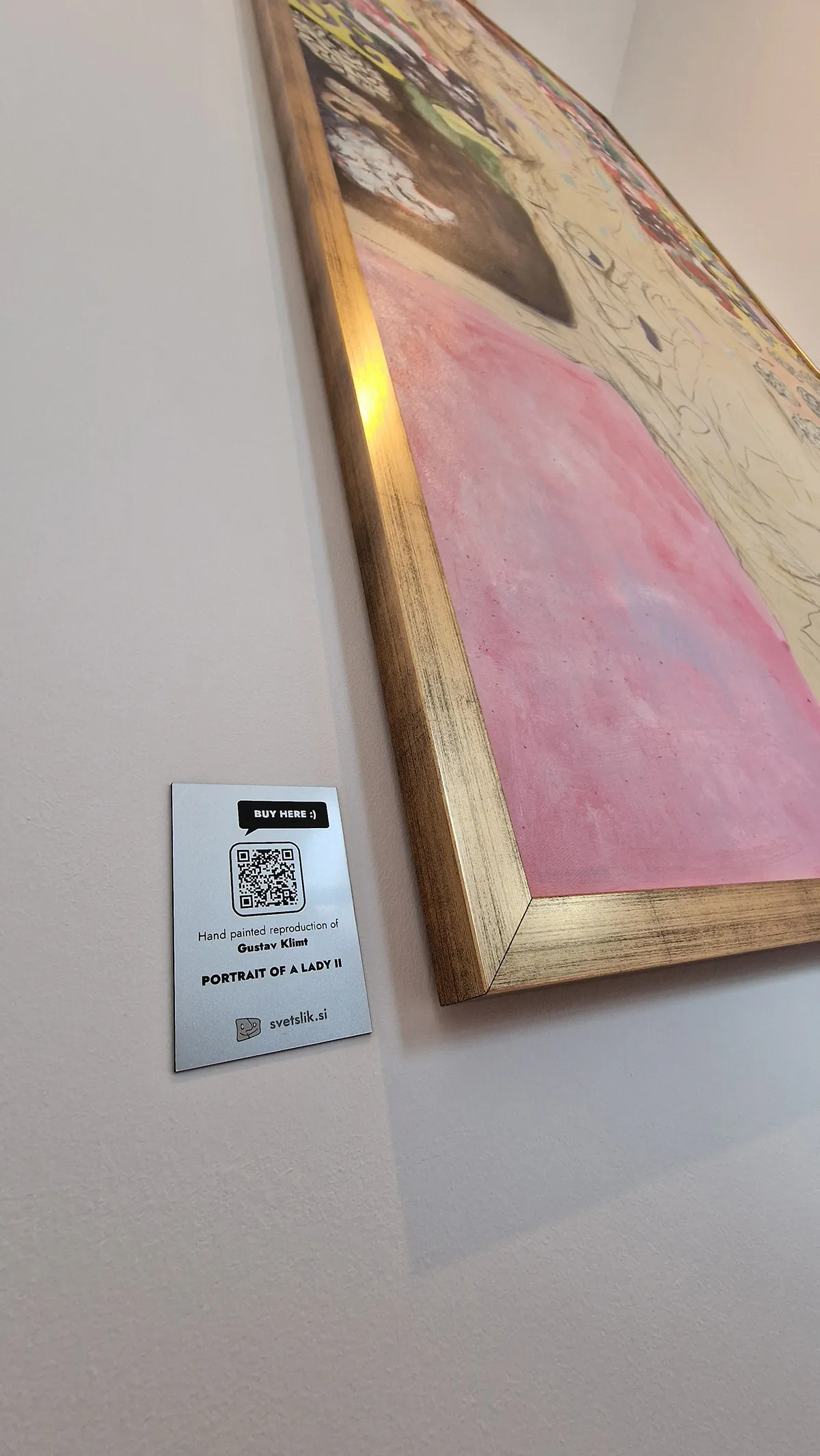
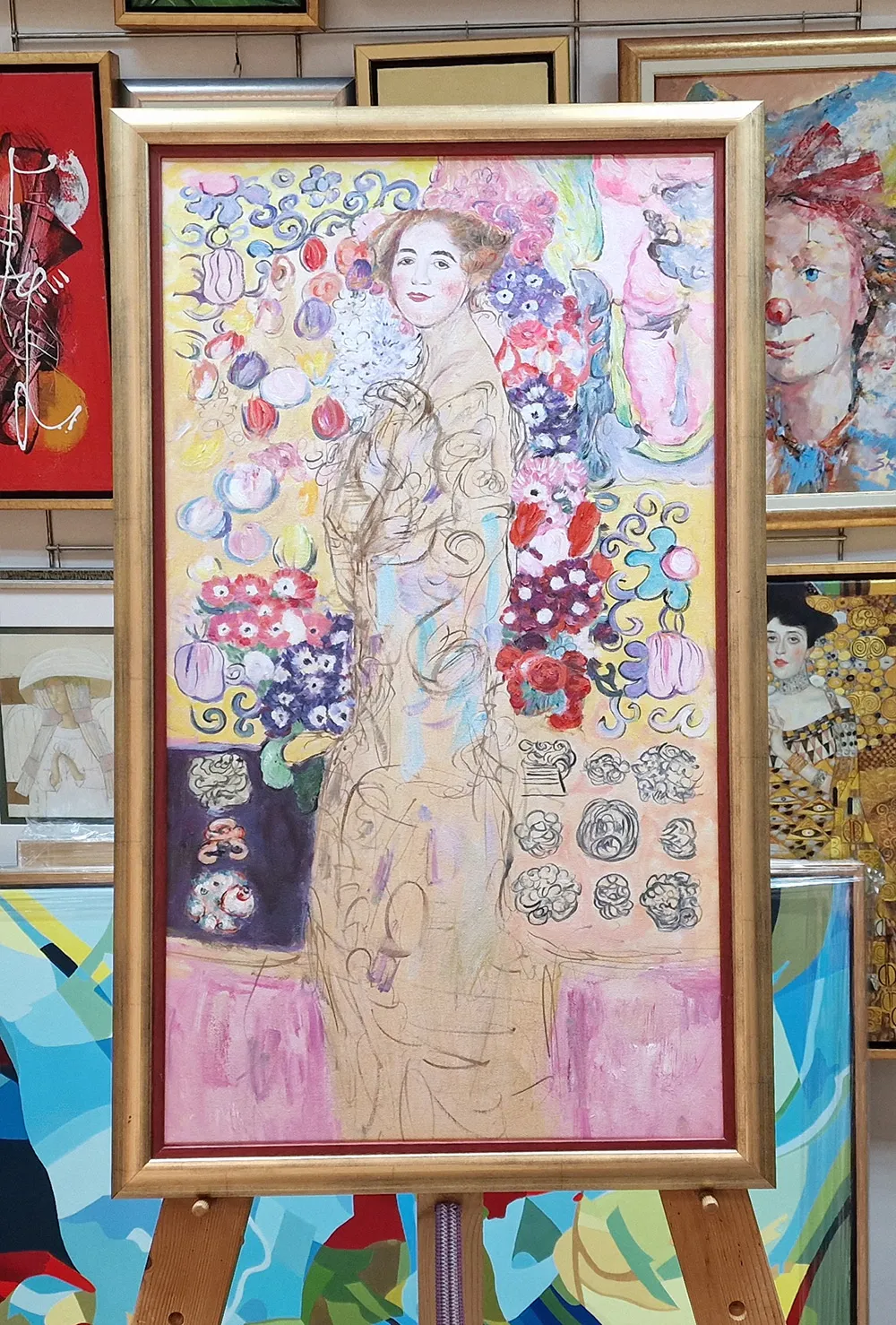
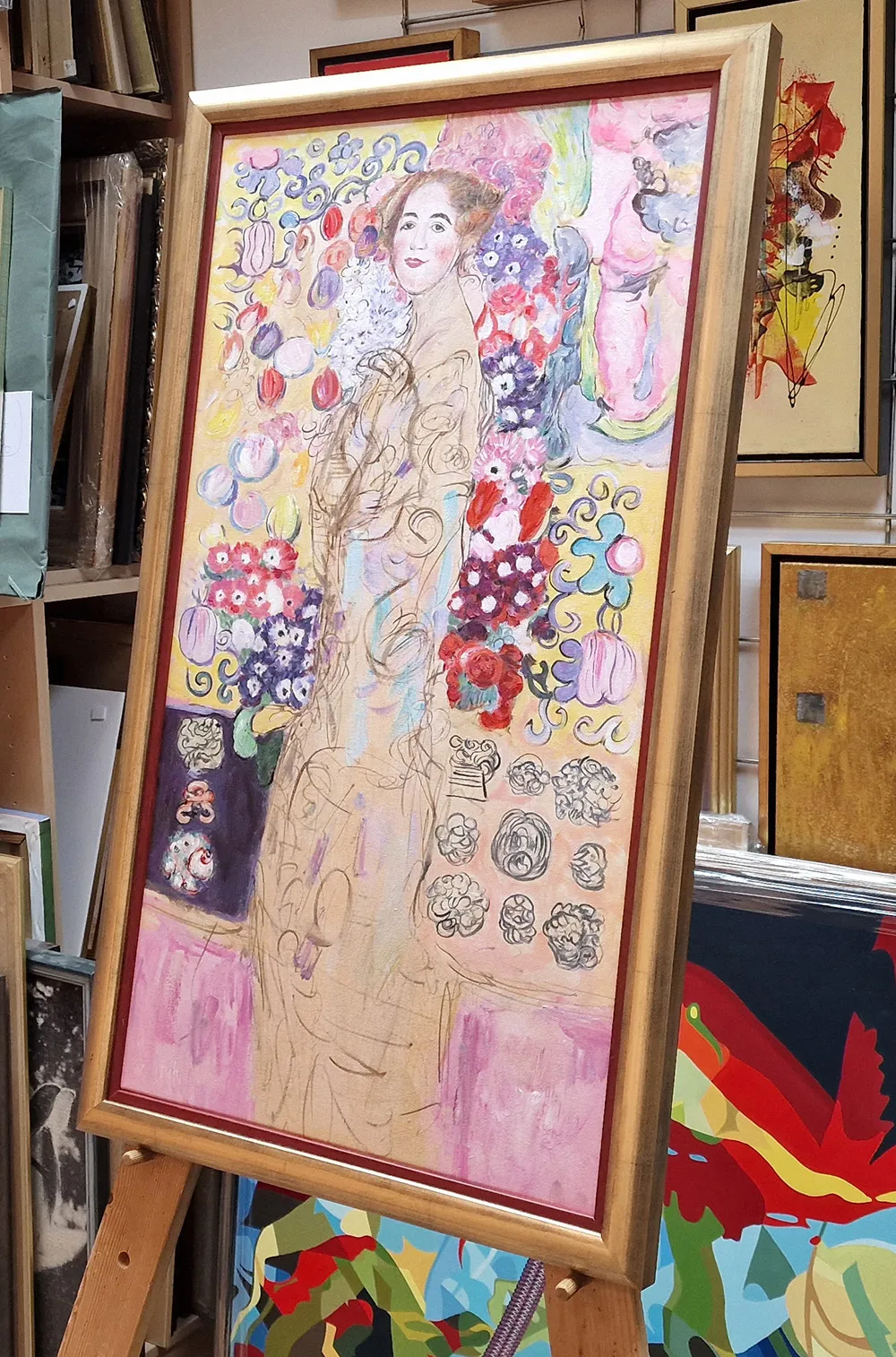
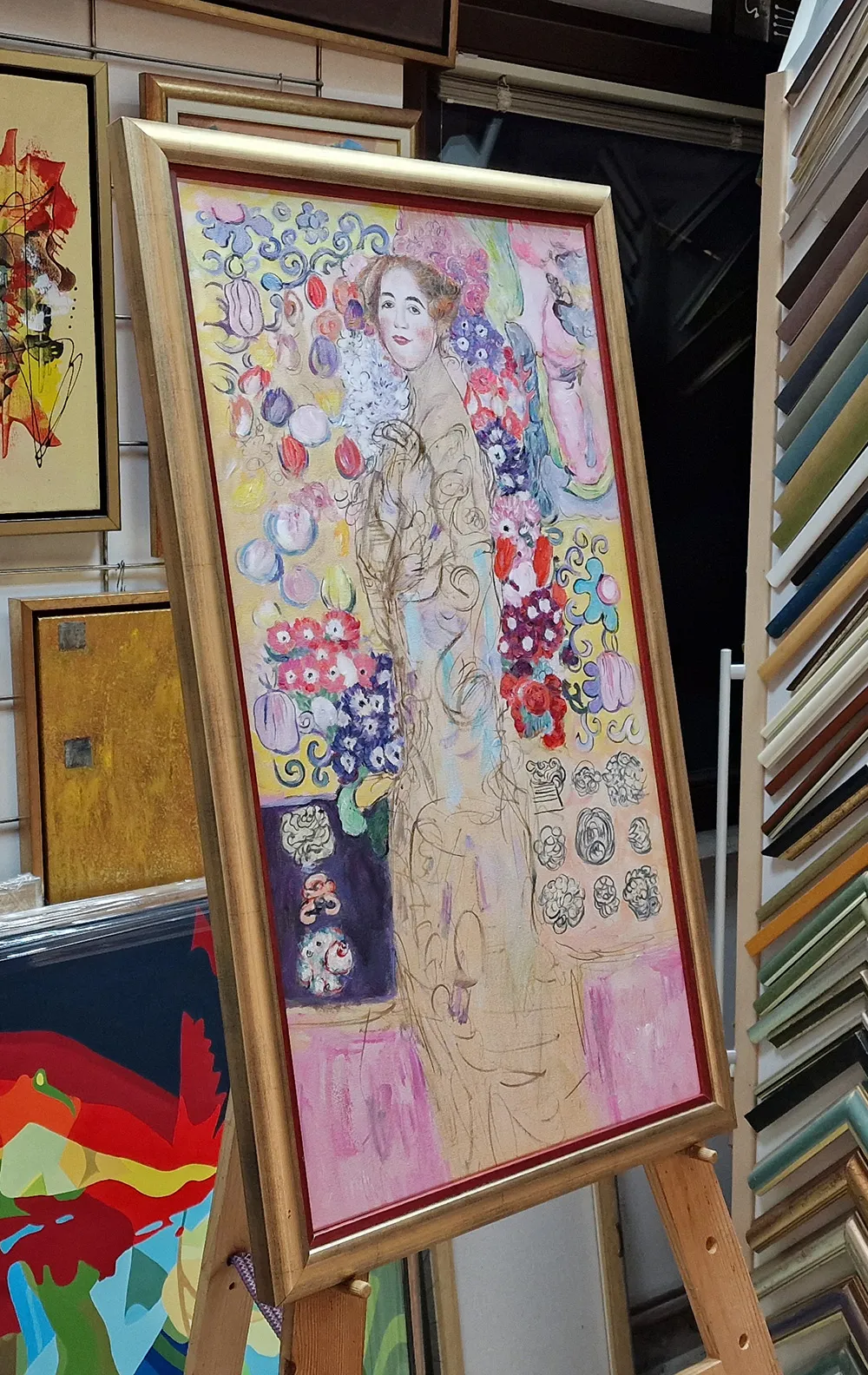
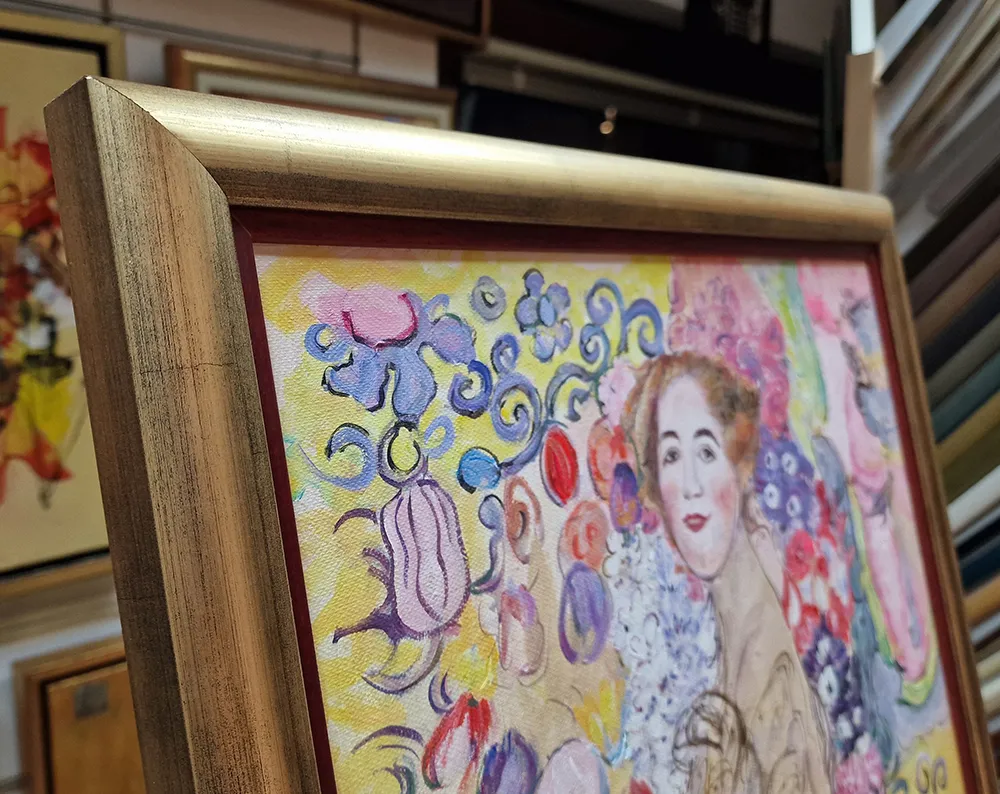
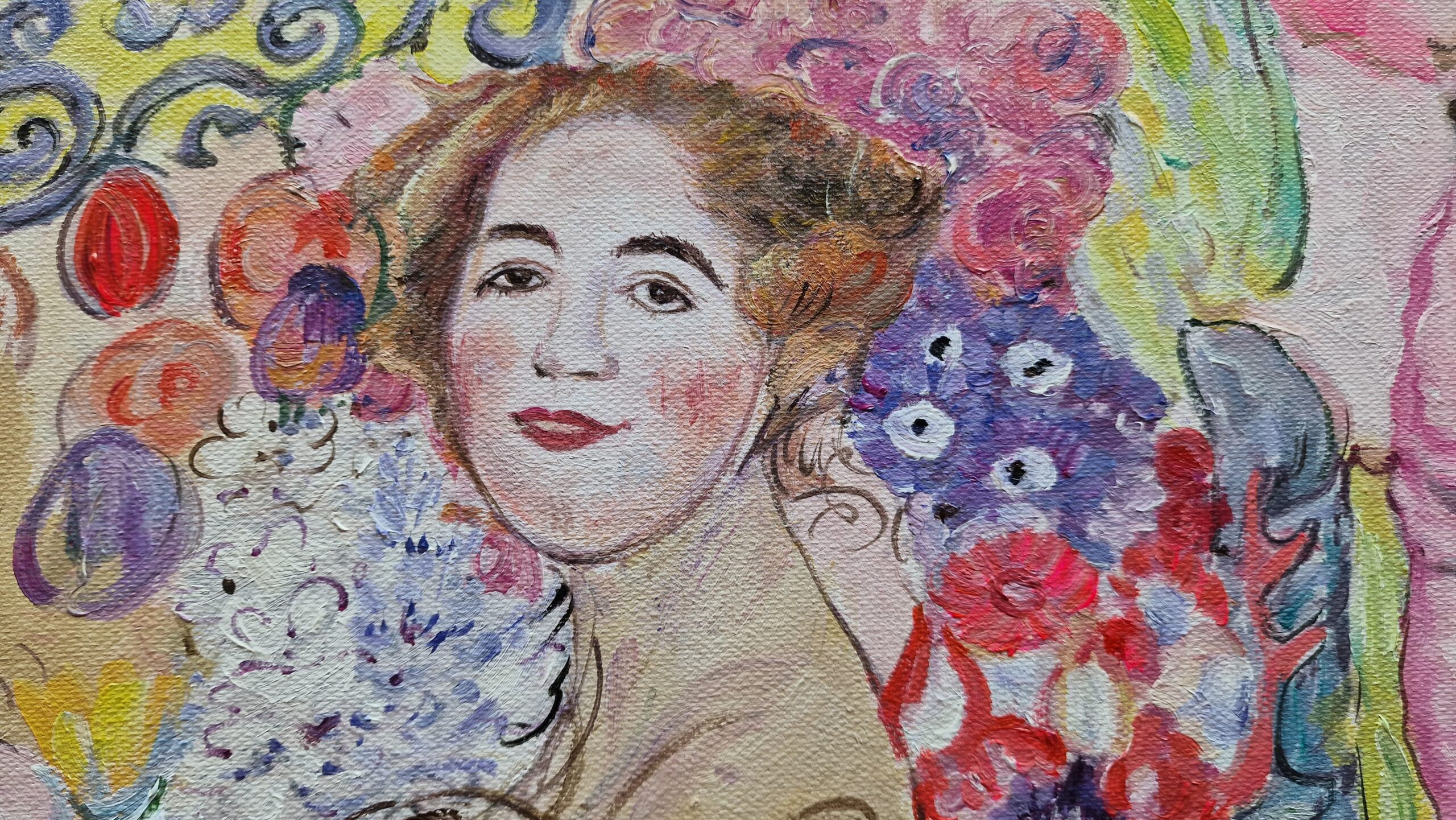
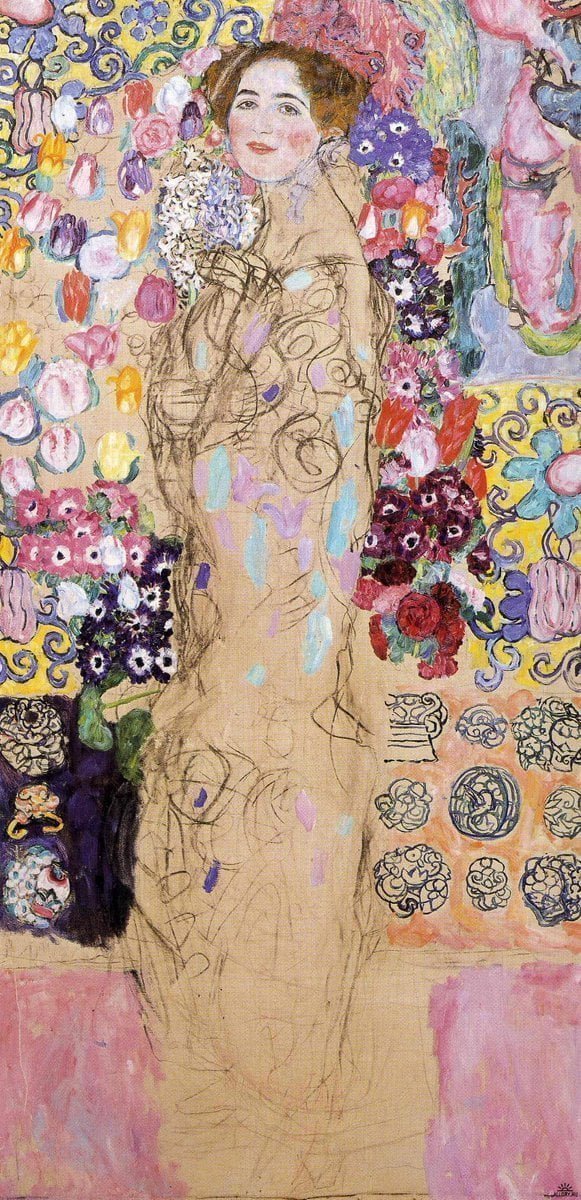
Portrait of a Lady II, also known as Portrait of Ria Munk III, is the tall, unfinished portrait of 1917–1918 in which Gustav Klimt shows a young woman in a pale dress surrounded by large flowers in pink, red, violet and blue. The original is in a private collection. We paint it by hand in oil on canvas, in eight tall sizes from 40 x 80 to 120 x 240 cm or to your own measurement.
| Title: | Portrait of a Lady II |
| Other titles: | Portrait of Ria Munk III · Ritratto di una signora II |
| Painter: | Gustav Klimt (1862–1918) |
| Year painted: | 1917–1918 |
| Original size: | 178.1 cm x 89.9 cm |
| Original technique: | Oil and charcoal on canvas (unfinished) |
| Painting style: | Vienna Secession |
| Located at: | Private collection |
| Our reproduction: | Hand-painted oil on canvas, eight tall sizes or made to measure |
Portrait of a Lady II – Gustav Klimt
What does the painting show?
A young woman with brown hair stands at full length, wrapped in a pale, loosely draped dress covered with large flowers in pink, red, violet, blue and white. The flowers do not stop at the edge of the dress: they continue around her into the background, so that figure and garden almost become one surface of colour.
The lower part of the canvas is only sketched. Thin ochre outlines show where the dress and the ground were meant to go, and a pink area fills the bottom. That is part of its appeal: above, a finished face; below, Klimt’s working lines.
Who was Ria Munk, and why is the painting unfinished?
Ria (Maria) Munk died in 1911, at the age of 24, by her own hand after an unhappy love affair. Klimt painted her on her deathbed in 1912, and her family later commissioned him to paint a posthumous portrait of her.
This canvas, painted in 1917 and 1918, belongs to that commission. Klimt died in 1918 before he could finish it, which is why the lower part is still a drawing. For a buyer it is a portrait with a gentle, personal story, painted so that a family could remember a daughter.
What does the portrait mean?
It is a tender, quiet portrait: a young woman framed by flowers, made for a family who wanted to keep her memory. Klimt uses no gold here; the warmth comes from pink, red and violet, and the light from the pale dress.
Because the lower part is unfinished, the painting also shows Klimt at work. The upper part is in full colour, while below the figure the canvas still shows his lines. On a wall it reads as a garden of colour from across the room and as a portrait from close up.
Where is the painting today?
The original, oil and charcoal on canvas, is 178.1 cm high and 89.9 cm wide. It used to belong to the Lentos art museum in Linz, Austria. In 2009 the museum returned it to the rightful heirs of the Munk family, and one year later it was sold through Christie’s. Today it is in a private collection.
The story of the Munk family and of this portrait is told on the Klimt Foundation’s page about the Munks, and Klimt’s other works are listed in the list of paintings by Gustav Klimt. Our version is not a print: it is painted for you, by hand, in the size you choose.
Portrait of a Lady II among Klimt’s late portraits
It is believed that The Dancer also began as a posthumous portrait of Ria Munk, so the two paintings belong closely together. Lady in White, the Portrait of Johanna Staude and Lady with a Fan come from the same last years, when Klimt painted women among bright colour and flowers.
Which to choose? Take Portrait of a Lady II if you love soft pinks, flowers and the charm of a canvas left unfinished; take The Dancer if you prefer stronger reds and oranges. Both are tall and narrow, so they also hang well side by side.
How do we paint Portrait of a Lady II by hand?
The painter first draws the figure and the outlines of the flowers, so that the pose, the face and the large blossoms sit as in the original. Then the colour goes on: the pale dress, the pink, red, violet and blue flowers, and finally the face and hair, modelled slowly until they look calm and alive.
The original is oil and charcoal on canvas and partly unfinished; ours is painted entirely in oil. We paint it as the original looks today, with the ochre outlines of the lower part, or we complete the lower part on request. A printed oil painting reproduction cannot show the texture of these layers; by hand, every stroke keeps its relief. Every painting is a hand-painted copy made for your order.
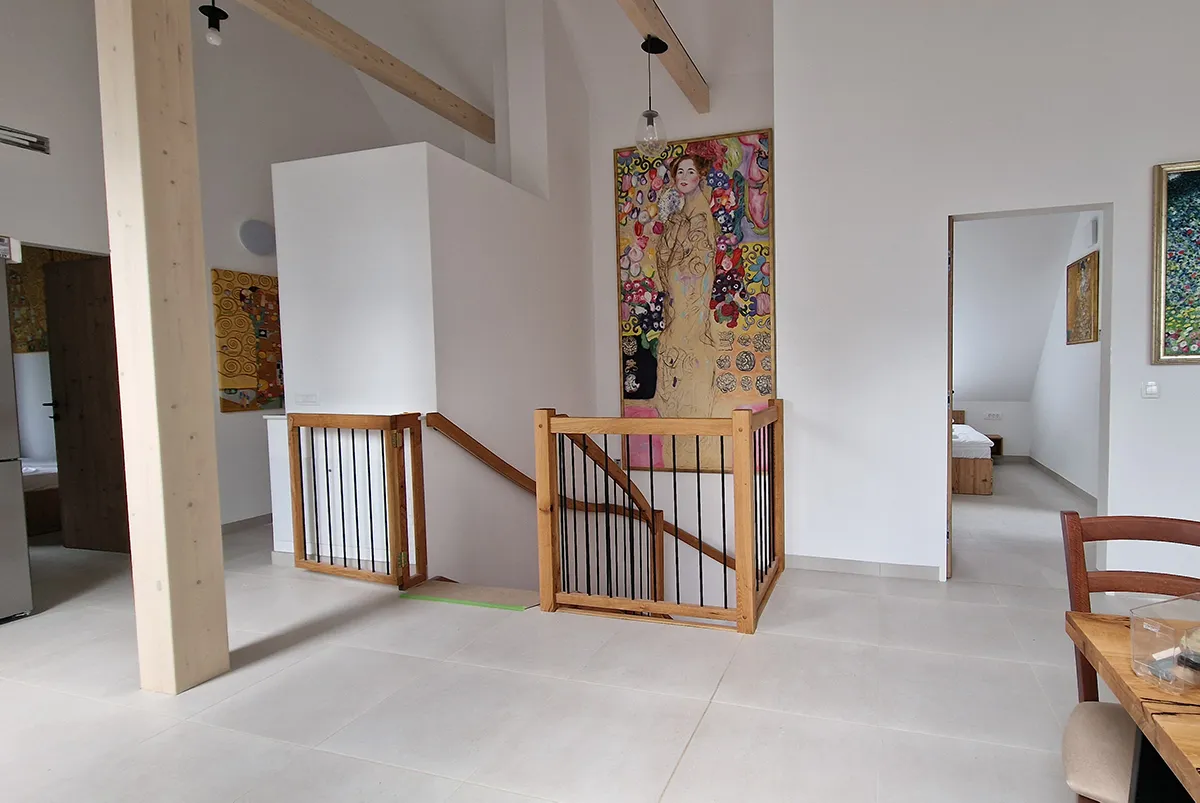
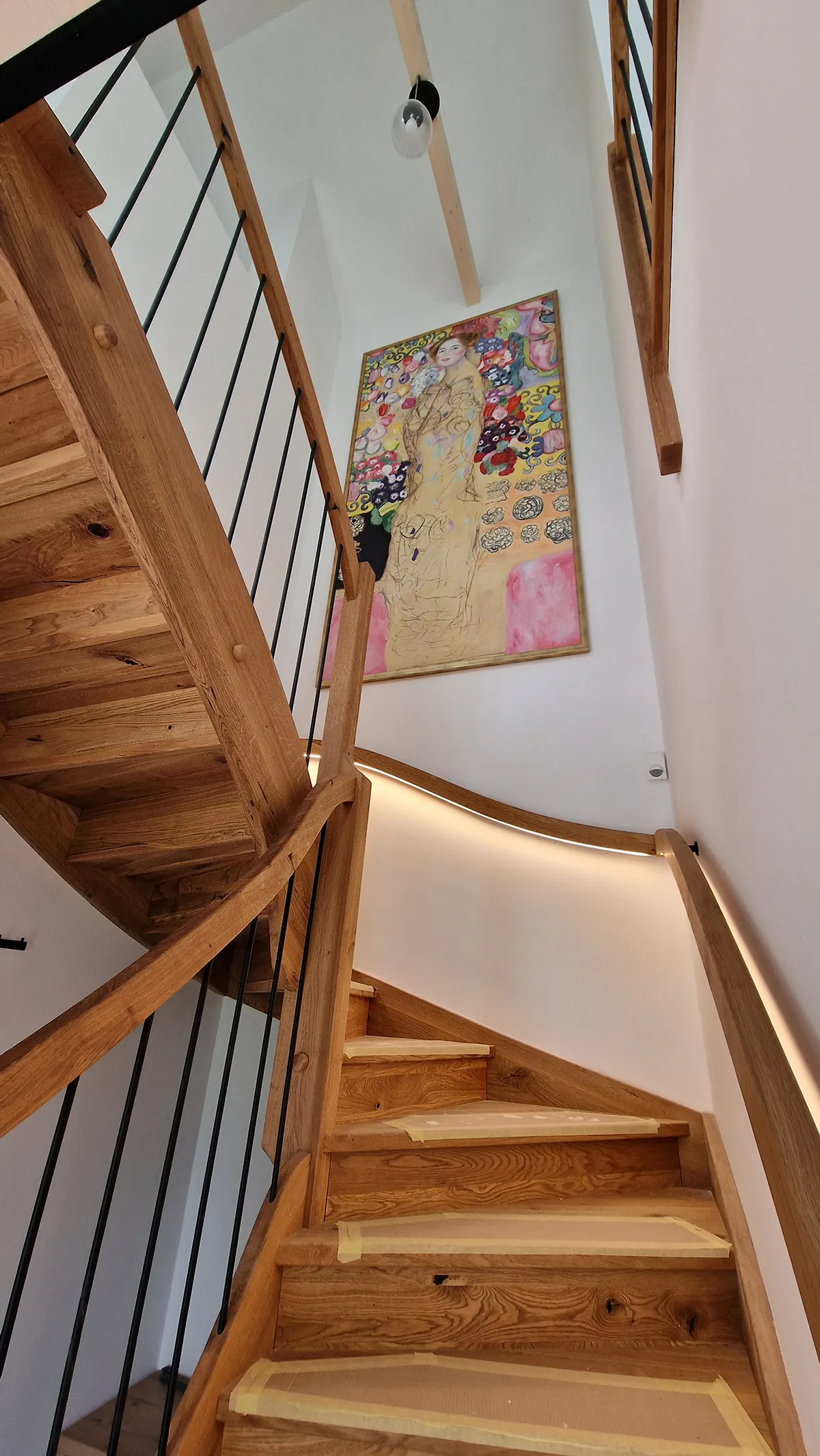
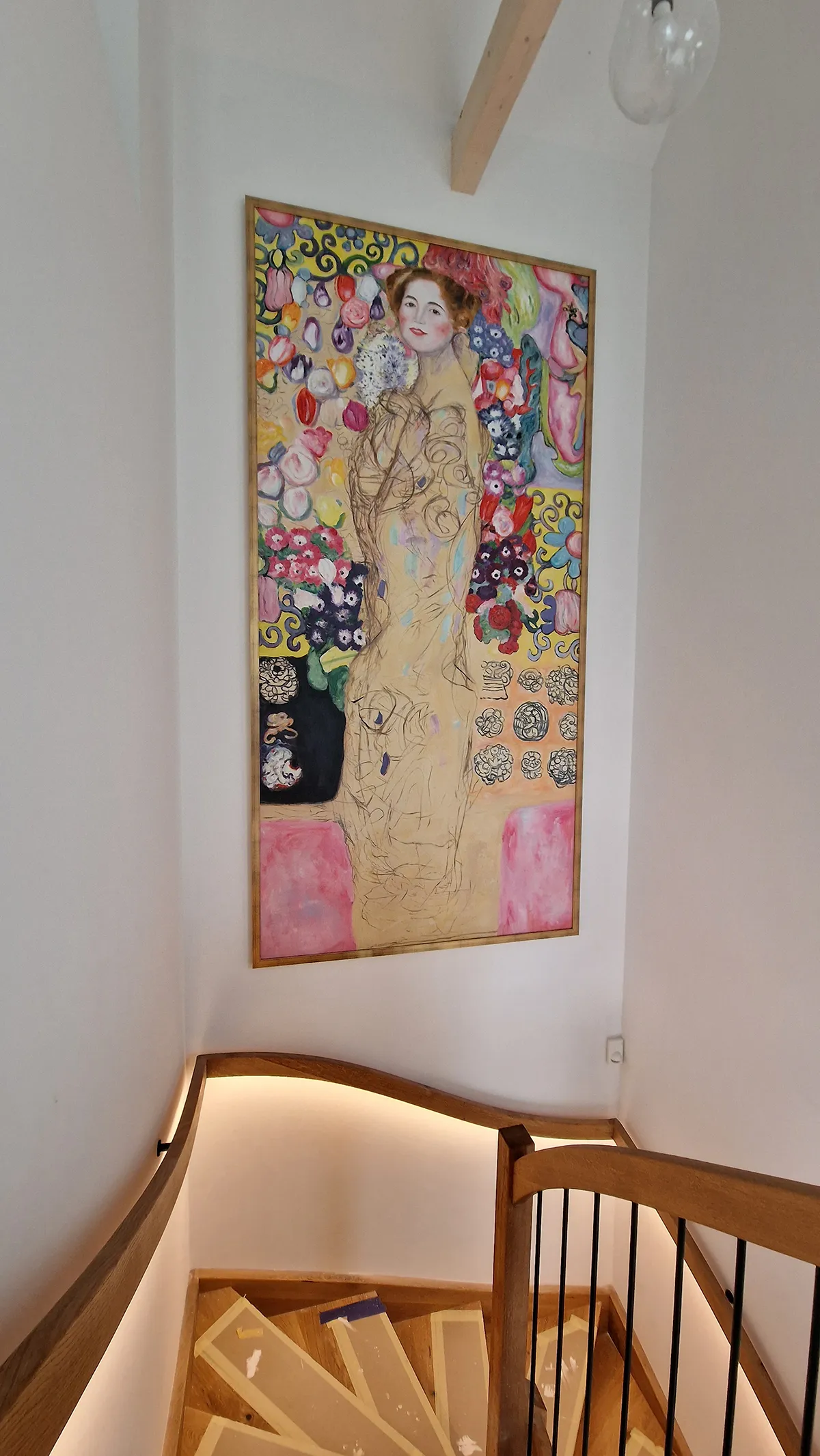
The photographs show our own copy in a gold frame. In the first photograph it hangs on a white wall above a staircase in a bright open hallway, seen from across the room. The second photograph was taken from the wooden stairs below, the third from the landing, looking up. The fourth photograph shows it from the front, the fifth at an angle, and the sixth the corner of the frame with a small QR code sign beside it.
In the seventh photograph the same painting stands on an easel in our studio among other paintings; the eighth shows it at an angle, the ninth from the side among frame mouldings. The tenth photograph is a close view of the frame corner and the woman’s face among the flowers, the eleventh a close-up of her face with round pink, red, blue and white flowers. The videos at the top of the page show our version too.
Which size for which wall?
Short answer: 40 x 80 or 50 x 100 cm for a hallway or beside a bed, 60 x 120 or 70 x 140 cm beside a sofa or in a niche, 80 x 160 or 90 x 180 cm for a high wall or a staircase, as in the first photograph, and 100 x 200 or 120 x 240 cm for a very high wall.
All eight sizes are tall: 40 x 80, 50 x 100, 60 x 120, 70 x 140, 80 x 160, 90 x 180, 100 x 200 and 120 x 240 cm, each twice as high as it is wide, like the original. The size 90 x 180 cm is about the size of the original. As a painting for the living room it works best beside the sofa or between two windows.
Hang it with the centre of the canvas about 150 to 160 cm above the floor; above furniture, leave 20 to 30 cm between the top of the piece and the lower edge of the canvas.
Custom size, stretcher and frame
If none of the eight sizes fits your wall, we paint it to measure. Send us the width and height you want and we will quote a price and a lead time. Every painting we make is stretched over a wooden stretcher and ready to hang.
For the moulding, use our 3D application: it shows every one of our frame profiles on this subject, so you can compare gold, silver, black, white and natural wood before deciding – the application is for choosing the frame only. If you would like to see how the painting will look on your own wall, that is our separate room placement service. A gold frame like the one in the photographs brings out the warm pinks; a white frame keeps the portrait light.
Delivery and guarantee
Every painting is made to order in our studio in Slovenia, so allow 15 to 45 days depending on the size you choose. We ship it stretched and protected for transport, framed if you chose a frame, across the EU with no customs. Before dispatch you receive a photograph of the finished work to approve; if anything is not right, we correct it while the canvas is still in our workshop. Our returns policy applies to every order.
If it is a present and you do not know the right size, there is a wall art voucher. Every other Klimt work we paint is in the Gustav Klimt gallery, and there is more on the painter in our article ten interesting facts about Gustav Klimt.
Frequently asked questions
Where is the original Portrait of a Lady II?
The original is in a private collection. It used to belong to the Lentos art museum in Linz, which returned it to the heirs of the Munk family in 2009; one year later it was sold through Christie’s. It is an oil and charcoal on canvas, 178.1 cm high and 89.9 cm wide. Our version, painted by hand, can hang on your own wall.
Who is the woman in Portrait of a Lady II?
She is Ria Munk, a young Viennese woman who died in 1911 at the age of 24; that is why the painting is also called Portrait of Ria Munk III. Her family commissioned Klimt to paint a posthumous portrait of her. Today most people know her through this tall portrait, surrounded by large pink, red and violet flowers.
Why is Portrait of a Lady II unfinished?
Because Klimt died in 1918 while he was still working on it. The upper part, with the face, the hair and most of the flowers, is painted in full colour, but the lower part is only sketched in ochre lines, with a pink area at the bottom. That unfinished part lets you see how Klimt built up a portrait.
Do you paint Portrait of a Lady II as unfinished or finished?
We paint it as the original looks today, with the sketched lower part and its ochre outlines, because that is how the painting is known today. If you prefer, we complete the lower part on request, so the dress and the flowers continue to the bottom edge. Tell us your choice when you order, and you approve a photograph before dispatch.
Which size of Portrait of a Lady II suits my wall?
For a hallway or beside a bed, choose 40 x 80 or 50 x 100 cm. Beside a sofa or in a niche, 60 x 120 or 70 x 140 cm works well, for a high wall or a staircase 80 x 160 or 90 x 180 cm, and for a very high wall 100 x 200 or 120 x 240 cm. The size 90 x 180 cm is about the size of the original.
Which room suits Portrait of a Lady II?
It suits a living room, a bedroom, a hallway or a staircase, anywhere you want soft colour and a calm figure. As a canvas painting it looks especially good on white, cream or pale grey walls and next to light wood. Because it is tall and narrow, it fits well beside a sofa, between two windows or above stairs.
What frame suits Portrait of a Lady II?
A gold frame suits it well, like the one in the photographs, because it picks up the warm pinks and reds of the flowers. A white frame keeps the portrait light and fresh, and natural wood makes it calmer. You can compare every profile in our 3D application, and without a frame the canvas arrives stretched and ready to hang.
Is Portrait of a Lady II a good gift?
Yes, for anyone who loves Klimt, flowers or soft, romantic colour. The portrait is gentle and decorative, and the unfinished lower part is a talking point for guests. If you are unsure of the size, 60 x 120 cm is a safe choice for most walls, or give a voucher so the recipient can choose the size and the subject.
How is Portrait of a Lady II related to The Dancer?
Both are linked to Ria Munk. Portrait of a Lady II is the posthumous portrait Klimt was painting when he died, and it is believed that The Dancer also began as a portrait of her. Both are tall, narrow late works full of flowers, so they hang well side by side, with The Dancer warmer in reds and oranges.
- Subject: a young woman in a pale dress among large pink, red, violet and blue flowers, the lower part left unfinished.
- Original: 1917–1918, oil and charcoal on canvas, 178.1 x 89.9 cm, private collection.
- Ours: a Klimt reproduction painted by hand in oil on canvas, in eight tall sizes or made to measure.
- Worth knowing: you receive a photograph of the finished work for approval before dispatch.