







































Description
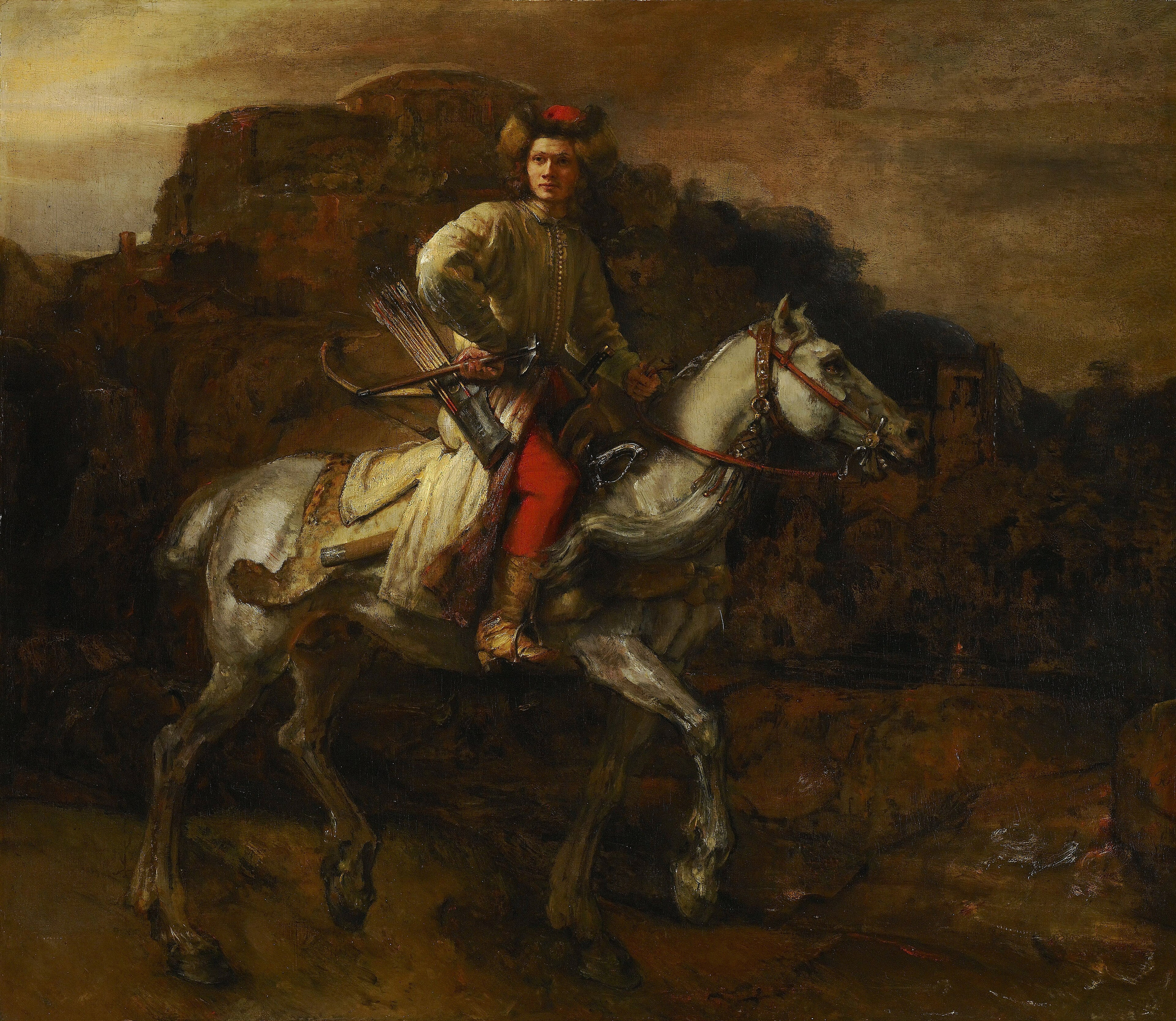
The Polish Rider is Rembrandt’s painting from the 1650s, most often dated to about 1655: a young rider in Eastern European dress, with bow, quiver and sabre, rides a white horse through a dark, bare landscape and turns to look at us. The original, oil on canvas, is 116.8 cm high and 134.9 cm wide and belongs to the Frick Collection in New York. We paint it by hand in oil on canvas in 8 landscape sizes, from 50 x 45 to 190 x 160 cm, or to your own measurement, and show you the finished painting in a photograph before we send it.
| Title: | The Polish Rider |
| Other titles: | Polish Rider · Lisowczyk |
| Painter: | Rembrandt van Rijn (1606–1669) |
| Year painted: | c. 1655, Amsterdam |
| Original size: | 116.8 cm x 134.9 cm (height x width) |
| Original technique: | Oil on canvas |
| Painting style: | Baroque, Dutch Golden Age |
| Located at: | The Frick Collection, New York (acc. no. 1910.1.98) |
| Our reproduction: | Hand-painted oil on canvas, 8 sizes or made to measure |
The Polish Rider – Rembrandt
What does The Polish Rider show?
A young man sits upright on a lean white horse, dressed in a close-fitting red and pale costume with a tall fur cap. A sabre hangs at his belt, a quiver of arrows by his thigh, a war hammer in his hand and his bow at his side.
Behind him stretches a bare, mountainous landscape with a mysterious building on the hill, dark water and a fire in the distance. According to Wikipedia parts of the background are very sketchily painted or unfinished, which gives the painting a slight air of mystery.
Who is the rider?
Nobody knows. Its eighteenth-century owners saw in him a member of the Polish-Lithuanian noble family Ogiński, while King Stanislaus Augustus of Poland recognised him in 1793 as a Lisowczyk, a soldier of the irregular Polish cavalry.
Others have suggested Rembrandt’s son Titus, the biblical David, the Prodigal Son or simply a foreign soldier. So every viewer can choose their own story.
Did Rembrandt really paint it?
Most experts say yes. In 1984 Josua Bruyn of the Rembrandt Research Project suggested that his pupil Willem Drost might have painted it, but that view stayed in the minority and is now generally rejected.
The Frick Collection never changed its attribution, and the label reads “Rembrandt”. A 1998 study concluded that a second hand was also involved; Rembrandt may have started it and left it unfinished. The Wikipedia article sums up the whole debate.
Where is the original, and how did it reach New York?
In the Frick Collection in New York, accession number 1910.1.98. In 1791 it belonged to Michał Kazimierz Ogiński, then to King Stanislaus Augustus and after him to several Polish noble families.
The last Polish owner, Count Zdzisław Tarnowski of Dzików, sold it in 1910 to Henry Frick, who left it to his collection.
The Polish Rider or another Rembrandt?
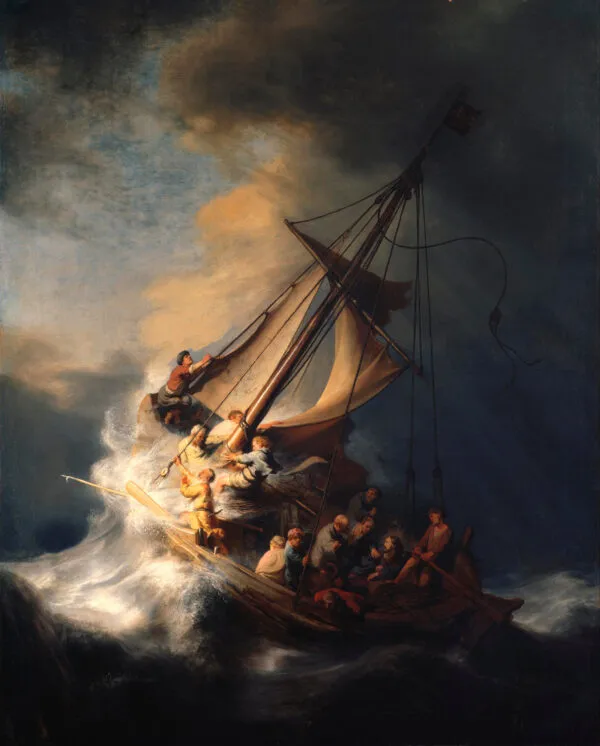
The Polish Rider suits a study, a library or the wall above a fireplace, where you look at it for longer and notice something new each time. Another enigmatic male gaze belongs to Aristotle with a Bust of Homer, and for adventure and many figures there is The Night Watch.
If you prefer a face close up, look at the Self-Portrait with Two Circles or the gentle Flora. The Rembrandt page shows all the famous Rembrandt paintings we offer, from portraits to stories.
How does our painter paint your Polish Rider?
This Rembrandt reproduction starts with the face: the rider’s gaze holds the painting together, so the painter gives it the greatest care in oil on canvas. Then come the horse and the costume with its red and gold accents.
The landscape is painted as loosely as in the original, because a carefully finished background would take away the painting’s mystery. An oil painting reproduction like this keeps the difference between the smooth face and the rough strokes of the background, which a paper print flattens.
Which size for which wall?
In short: 50 x 45 or 59 x 50 cm for a bookshelf or a narrow wall, 79 x 66 or 90 x 75 cm above a desk or chest of drawers, 110 x 99 and 130 x 110 cm above a sofa or fireplace, and 150 x 124 and 190 x 160 cm for large walls and hallways.
All 8 sizes are landscape (width x height): 50 x 45, 59 x 50, 79 x 66, 90 x 75, 110 x 99, 130 x 110, 150 x 124 and 190 x 160 cm. The original measures 134.9 x 116.8 cm, so 130 x 110 cm is almost the size of the original, and 150 x 124 and 190 x 160 cm are larger. As a painting for the living room above a 1.8 m sofa, 110 x 99 cm is right.
Keep the rider’s face at roughly eye level and the centre of the painting about 150 cm from the floor.
Can I choose another size or a frame?
Of course. The original is roughly 7 : 6 in proportion, almost square; in that ratio the horse and the landscape behind it stay in. Write to us with your width and height and we will send you a price and a date.
You receive it rolled, stretched on a stretcher bar or framed; every canvas painting is stretched and framed by our workshop in Slovenia. Try the frame in the 3D application, which is only for choosing the frame; viewing it on your own wall is a different service. An antique gold frame brings out the reds and golds of the costume, dark wood the dusk of the landscape.
How long does it take, and what if something is wrong?
We start painting when you order; within 15 to 45 working days it is ready to ship. The parcel goes to any EU country without customs. Before dispatch you receive a photograph; anything you want changed, we correct, and our returns policy applies to every order.
For someone who loves horses, history or their Polish roots and would rather choose the size themselves, there is the wall art voucher.
Frequently asked questions
Where is the original Polish Rider?
In the Frick Collection in New York, accession number 1910.1.98.
Who is shown?
It is not known. Suggestions include a member of the Ogiński family, a Lisowczyk, Rembrandt’s son Titus and biblical figures.
Is the painting really by Rembrandt?
The Frick Collection lists it as Rembrandt and most experts agree; a 1998 study also sees a second hand in it.
Why is the background unfinished?
According to Wikipedia Rembrandt may have started the painting and left it unfinished, so parts of the landscape are only sketched.
Is your painting a print?
No, it is a hand-painted copy in oil on canvas; the painter paints the face, the horse and the landscape with a brush.
How big is the original?
It is 116.8 cm high and 134.9 cm wide. Our sizes run from 50 x 45 to 190 x 160 cm.
Which size suits a fireplace wall?
Above a 1.5 m wide fireplace, choose 110 x 99 or 130 x 110 cm.
How did the painting come to America?
Count Zdzisław Tarnowski sold it in 1910 to Henry Frick in New York.
- Subject: a young rider with bow and sabre rides a white horse through a dark, mysterious landscape.
- Original: c. 1655, oil on canvas, 116.8 x 134.9 cm, The Frick Collection, New York.
- Ours: painted by hand in oil on canvas, in 8 landscape sizes from 50 x 45 to 190 x 160 cm or made to measure.
- Worth knowing: who the rider is remains unknown to this day.