





Description

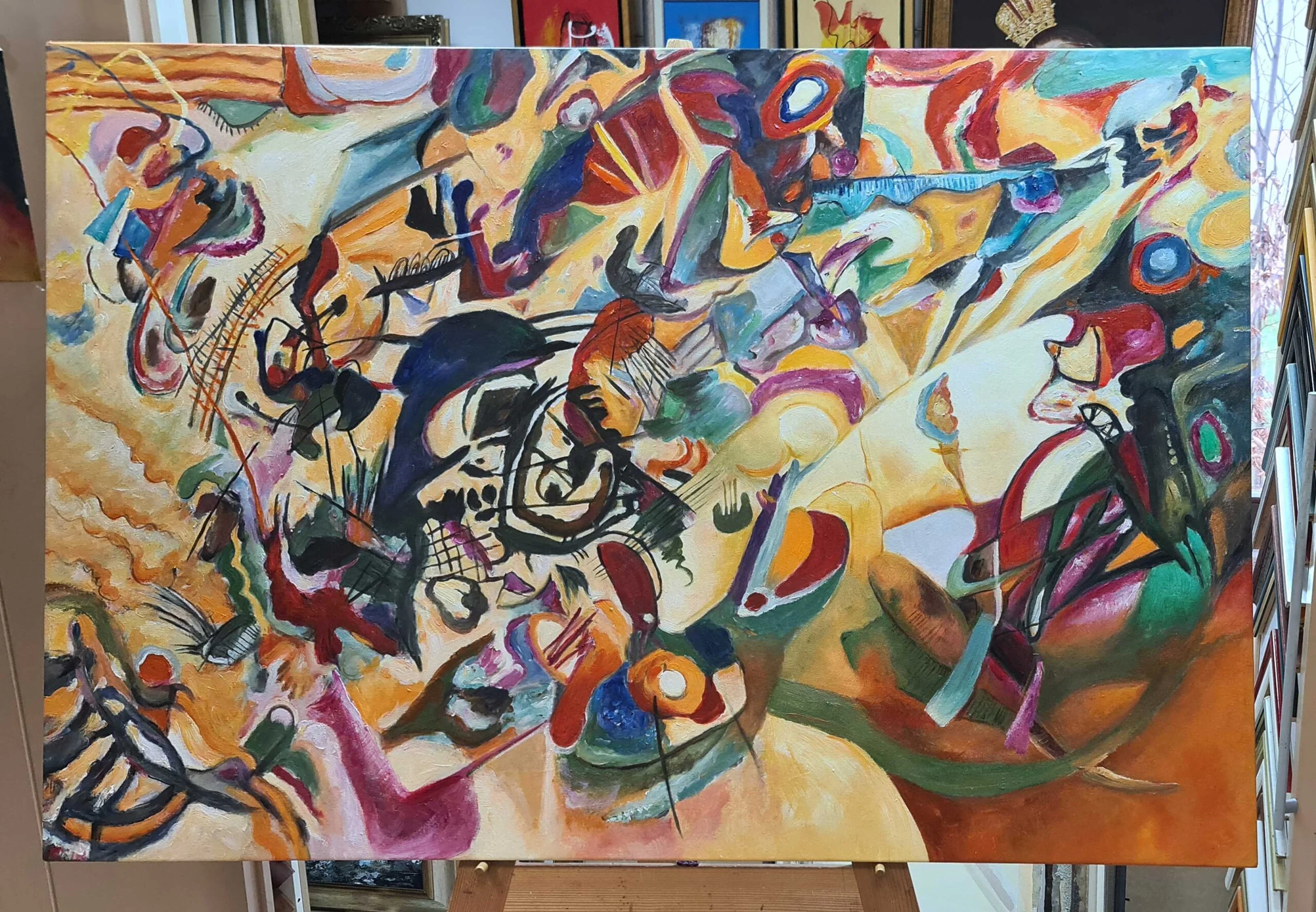
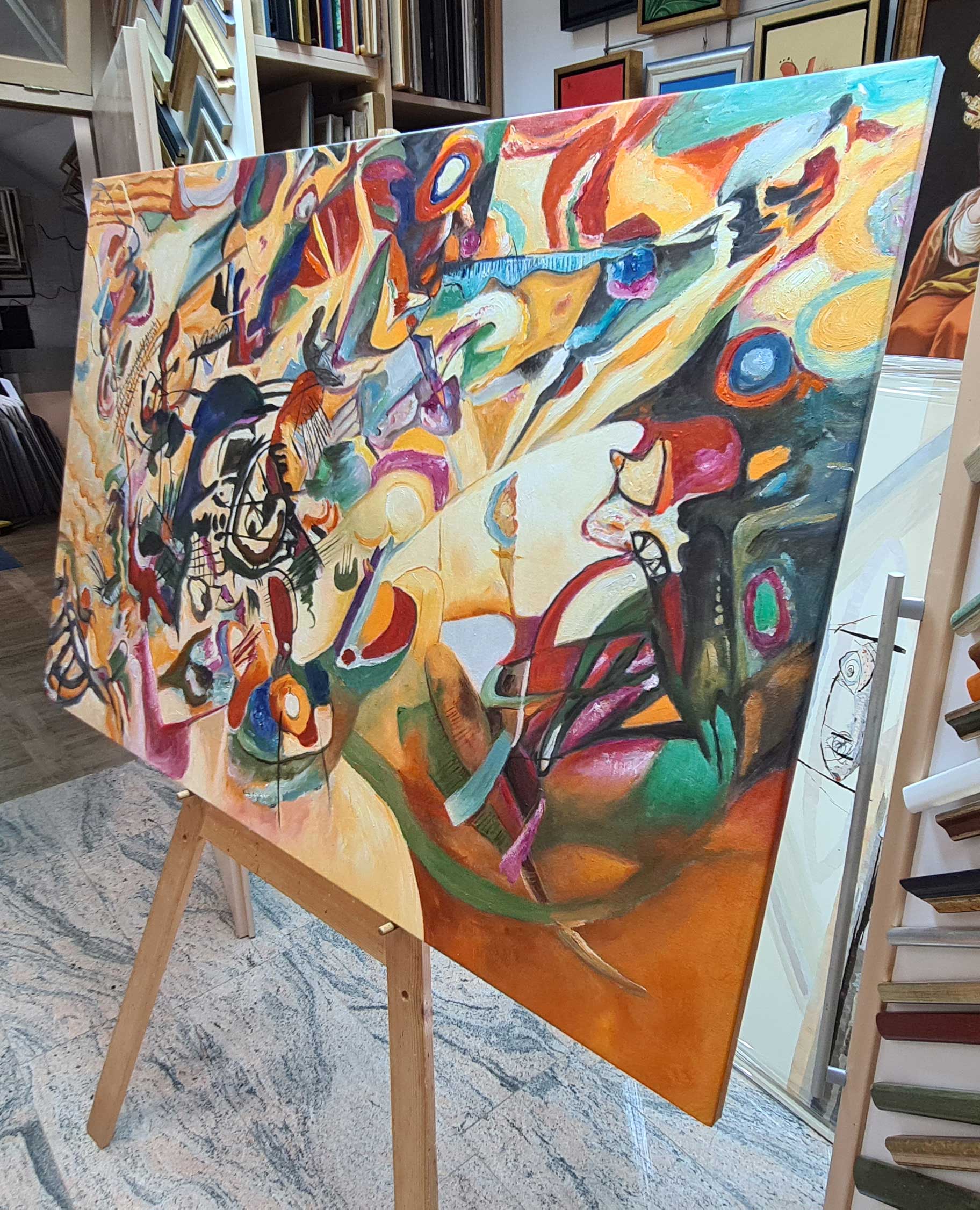
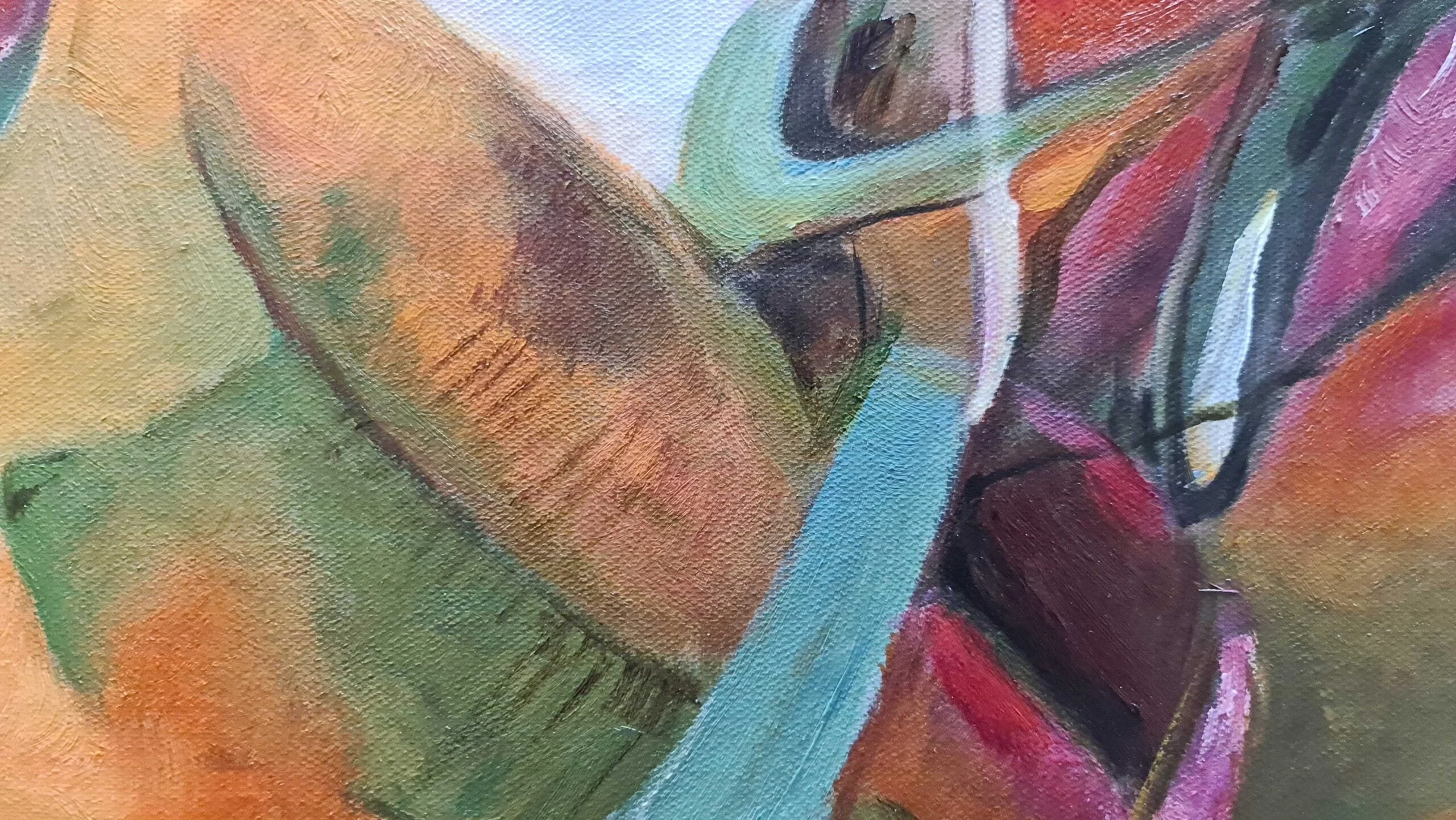
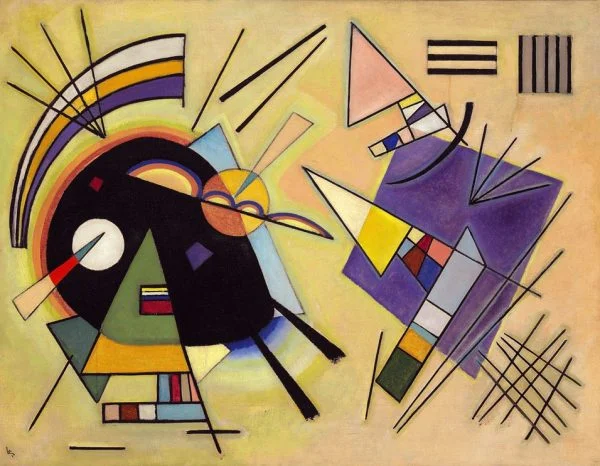
Composition VII is an abstract painting by Wassily Kandinsky from 1913, a large 300 x 200 cm canvas preceded by more than thirty sketches and studies. The original is in the State Tretyakov Gallery in Moscow, inventory number 13230. We make it as a hand-painted reproduction in oil on canvas, in ten sizes or to your measurements, and before dispatch you receive a photograph of the finished painting to approve.
| Title: | Composition VII |
| Other titles: | Komposition VII · Kompozicija VII · Композиция VII |
| Painter: | Wassily Kandinsky (1866–1944) |
| Year of creation: | 1913 |
| Original size: | 300 cm x 200 cm |
| Original technique: | Oil on canvas |
| Painting style: | Abstract art |
| Located: | State Tretyakov Gallery, Moscow (inv. 13230) |
| Our reproduction: | hand-painted oil on canvas, 10 sizes from 70 x 40 cm to 300 x 200 cm, custom size on request |
Composition VII – Wassily Kandinsky
Is there anything recognisable in it?
At first sight, no: there is no landscape and no figure, only patches of colour, lines and shapes overlapping across the whole canvas. The Tretyakov Gallery’s own description nevertheless points to barely discernible echoes of Kandinsky’s earlier, still figurative paintings on the theme of the Apocalypse – something that recalls angels blowing trumpets, a rider, and the fiery chariot of the prophet Elijah. The museum calls them traces rather than depictions: signs of matter being transformed before the viewer. At this time, the museum writes, Kandinsky was deliberately moving away from imitating nature and, step by step, from the recognisable object.
What is on the canvas?
The canvas is landscape and very wide, in a 3 : 2 ratio. Left of centre is the darkest part of the painting: a dense vortex of black and deep blue strokes with a few concentric black lines, around which everything else seems to turn. The upper band is crowded with small patches of magenta, cobalt blue, yellow and red, and rings whose pale centre is ringed first with blue and then with red. In the upper left a row of parallel dark lines runs across the canvas like a ladder or a grid. From the centre a large pale, creamy white area opens towards the lower right corner; it gives the painting a direction, so the eye slides from the dark core downwards and to the right, where the colours warm into orange and brown. Along the right edge sits a darker green and black cluster. No form has a strict outline, so everything seems to move at once.
Why is this painting important?
The Tretyakov Gallery counts it among Kandinsky’s central works of the first half of the 1910s and among the works in which he reached creative maturity. According to the museum there are more than thirty sketches and studies for it, from pencil drawings to painted canvases over a metre wide, most of them from the autumn of 1913. Because the composition had been worked out in such detail, the large canvas itself was painted within a few days, between 25 and 28 November 1913. For Kandinsky the word “composition” meant the highest and most complex form a work of art could take, and the large format is part of that: the museum notes that the size of the work almost “immerses” the viewer in the canvas, turning an onlooker into a participant. A canvas painting three metres wide is not meant to be seen from across the room.
What does the painting mean?
When nothing on the canvas is recognisable, meaning has to rest on sources rather than on imagination. The museum reads the work as a transformation of matter taking place before our eyes, and connects it with a group of earlier works on the Apocalypse. Kandinsky wrote, as the museum quotes him, that every form he ever used came to him “by itself” – either complete before his eyes or taking shape during the work. He described painting as a thunderous collision of different worlds out of which a new world, the work, is born, ending as a symphony, “the music of the spheres”. Read through his own words, Composition VII is closer to a symphony than to a painting that tells a story.
Why is it called Composition VII?
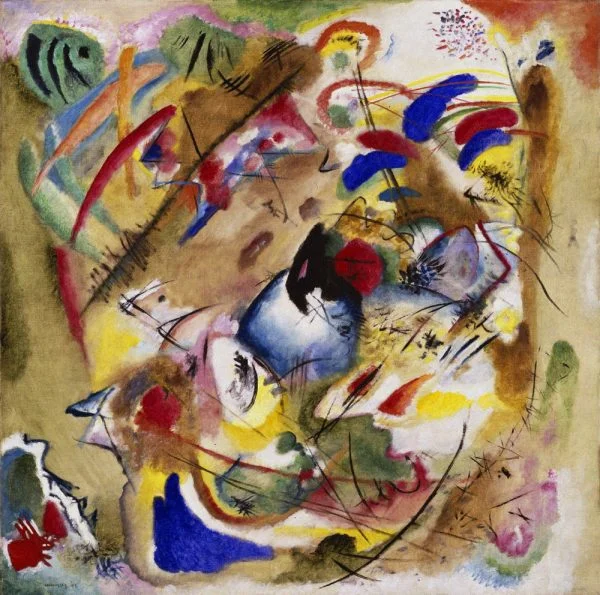
Kandinsky divided his paintings of these years into three kinds and described them in Concerning the Spiritual in Art. An Impression is a direct impression of outward nature, expressed in purely artistic form. An Improvisation is a largely unconscious, spontaneous expression of inner character. A Composition is the expression of a slowly formed inner feeling, which comes to utterance only after long maturing. The number VII marks the seventh work in that series. Immediately before it came Composition VI; in 2016 the Tretyakov Gallery gave the two a joint exhibition and catalogue under the title Counterpoint. One of the large studies, an oil of 140 x 100 cm, is now in Munich’s Lenbachhaus. The other Compositions in our range include Composition IV and Composition X.
How is our hand-painted reproduction made?
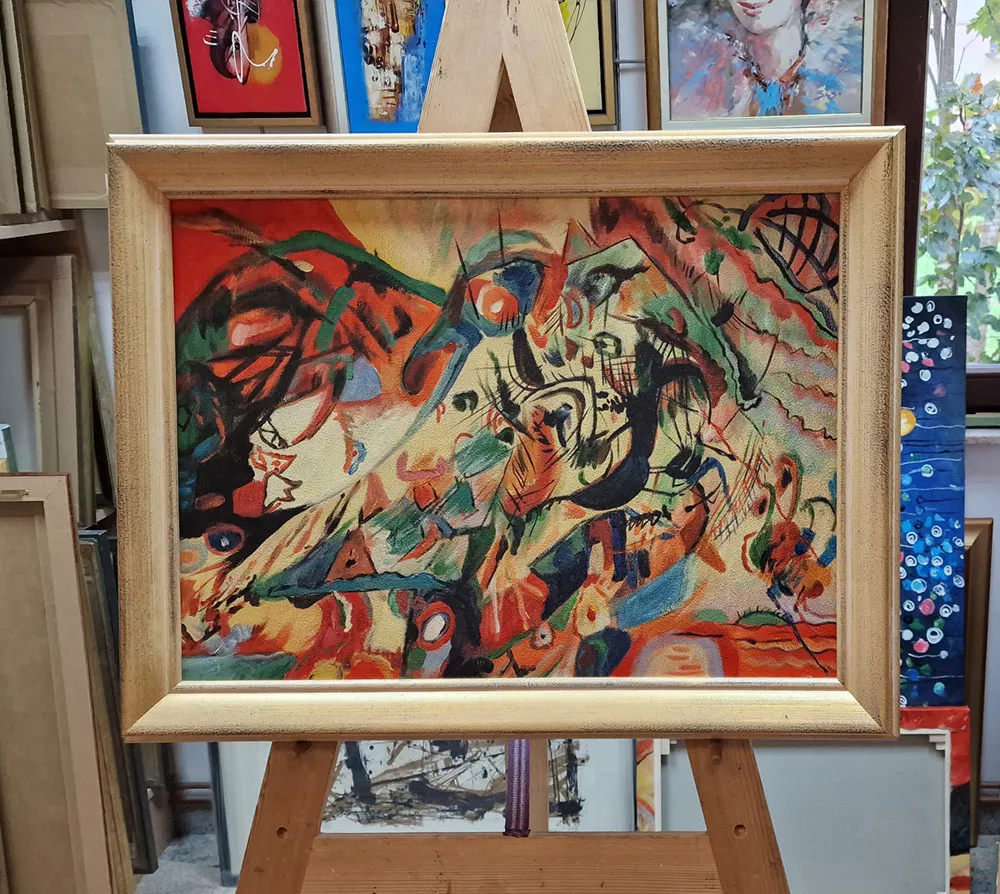
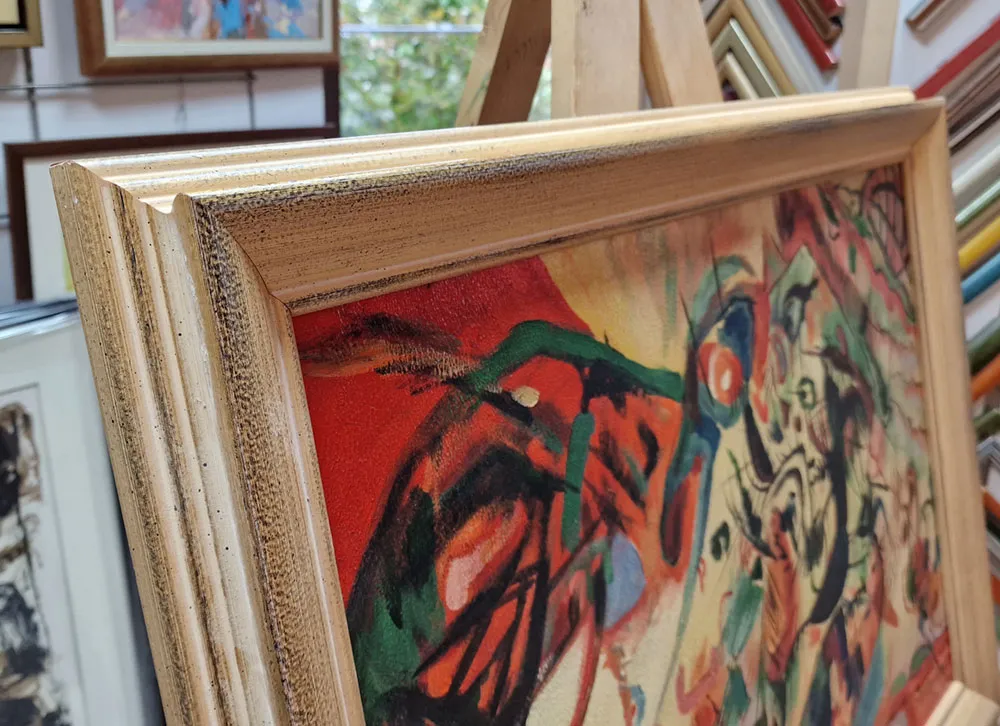
This is a painting made with a brush and oil paint, not with a printer. The painter works from a high-resolution museum image and builds the surface in layers, so that the dark core, the magenta and the creamy white area keep the same proportions to one another as in the original. In abstract work that matters most: with no object for the eye to recognise, the painting is held together only by the balance of its colours, so we leave nothing to chance – which is what separates a Kandinsky reproduction painted by hand from a poster. In the fourth photograph our finished Composition VII stands unframed on the easel in our studio, exactly as it will leave for the customer. The fifth photograph shows the same canvas from the side, where you can see that the paint lies in strokes rather than printed dots. The sixth photograph is a close-up of the lower right, where the brush marks in green, orange and pink are clearly visible. Because it is done by hand, every hand-painted copy is unique.
The video on this page (0:24) first shows a close-up of a brush adding fine strokes to the almost finished canvas of Composition VII, then the whole painting, unframed, on a wooden easel, filmed from several angles.
Which size for which wall?
If you are unsure: 120 x 80 cm. The original measures 300 x 200 cm in a 3 : 2 landscape format, and our 300 x 200 cm size matches it one to one – for really large walls, stairwells and high rooms. 120 x 80 cm is the natural painting for the living room, above a sofa, and 150 x 100 cm suits a wider wall or a dining room. The smaller 70 x 50, 80 x 50 and 90 x 60 cm sizes sit well above a chest of drawers, a desk or a bed; 210 x 140, 240 x 160 and 270 x 180 cm are for open-plan spaces and offices. The 70 x 40 cm size is longer and lower than the proportions of the original, so we recommend it only for narrow walls.
Custom size, stretcher and frame
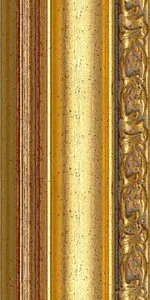
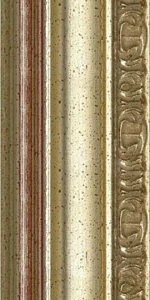
If none of the ten sizes fits your wall, we paint the work to your measurements and keep the 3 : 2 ratio; that is our made-to-measure painting. Every copy is delivered stretched on a wooden stretcher and ready to hang. For the frame, use our 3D app, which shows every one of our frame profiles on this motif – the app is only for choosing the frame. If you want to see how the oil painting reproduction will look on your own wall, that is our separate room-visualisation service.
Delivery and guarantee
Every copy is made to order in our studio in Slovenia, so allow 15 to 45 days depending on the size you choose. We ship it stretched and protected for transport, framed if you chose a frame, across Slovenia and the EU with no customs. Before dispatch you receive a photograph of the finished work to approve, and every order is covered by our returns policy. You will find the whole range in our Wassily Kandinsky gallery, and our article on Wassily Kandinsky tells the story of his life.
Frequently asked questions
Where is the original?
In the State Tretyakov Gallery in Moscow, under inventory number 13230; it came there in 1929 from the State Museum of New Western Art.
What does the painting show?
Nothing figurative: patches of colour, lines and shapes around a dark vortex left of centre. The museum sees in them only faint echoes of Apocalypse motifs.
Is Komposition VII the same work?
Yes. Composition VII, Komposition VII and Композиция VII are all titles of the same 1913 canvas.
Is this a print?
No. It is painted by hand in oil on canvas; you can see and feel the brushstrokes.
Which size should I choose?
For a living room, 120 x 80 cm; 300 x 200 cm matches the original, and the size guide above covers other walls.
Can I have a size that is not listed?
Yes, we paint to measure and keep the proportions of the original.
How is it delivered?
Stretched on a stretcher, and framed if you chose a frame, within 15 to 45 days of your approving the photograph of the finished work.
What is the painting about, in one sentence?
Transformation: a dark core from which colour spills out into light – in Kandinsky’s words, something between a collision of worlds and a symphony.
Is the original for sale, and what is it worth?
No. It belongs to the public collection of the Tretyakov Gallery and is not for sale; a hand-painted canvas is the only way to have it at home.
How high should I hang it?
The centre of the painting at eye level, about 145–150 cm from the floor; above a sofa, 15–25 cm above the backrest.
Does it work as a gift?
Yes, for someone who loves modern art or music it is a well-judged choice. If you would rather let them choose, there is a gift voucher.
- Subject: an abstract composition around a dark vortex, with echoes of Apocalypse motifs – November 1913
- Original: 300 x 200 cm, oil on canvas, State Tretyakov Gallery, Moscow (inv. 13230)
- Ours: hand-painted oil on canvas, ten sizes from 70 x 40 to 300 x 200 cm, stretched and framed on request
- Worth knowing: the large canvas was painted between 25 and 28 November 1913, but only after more than thirty studies