







































Description
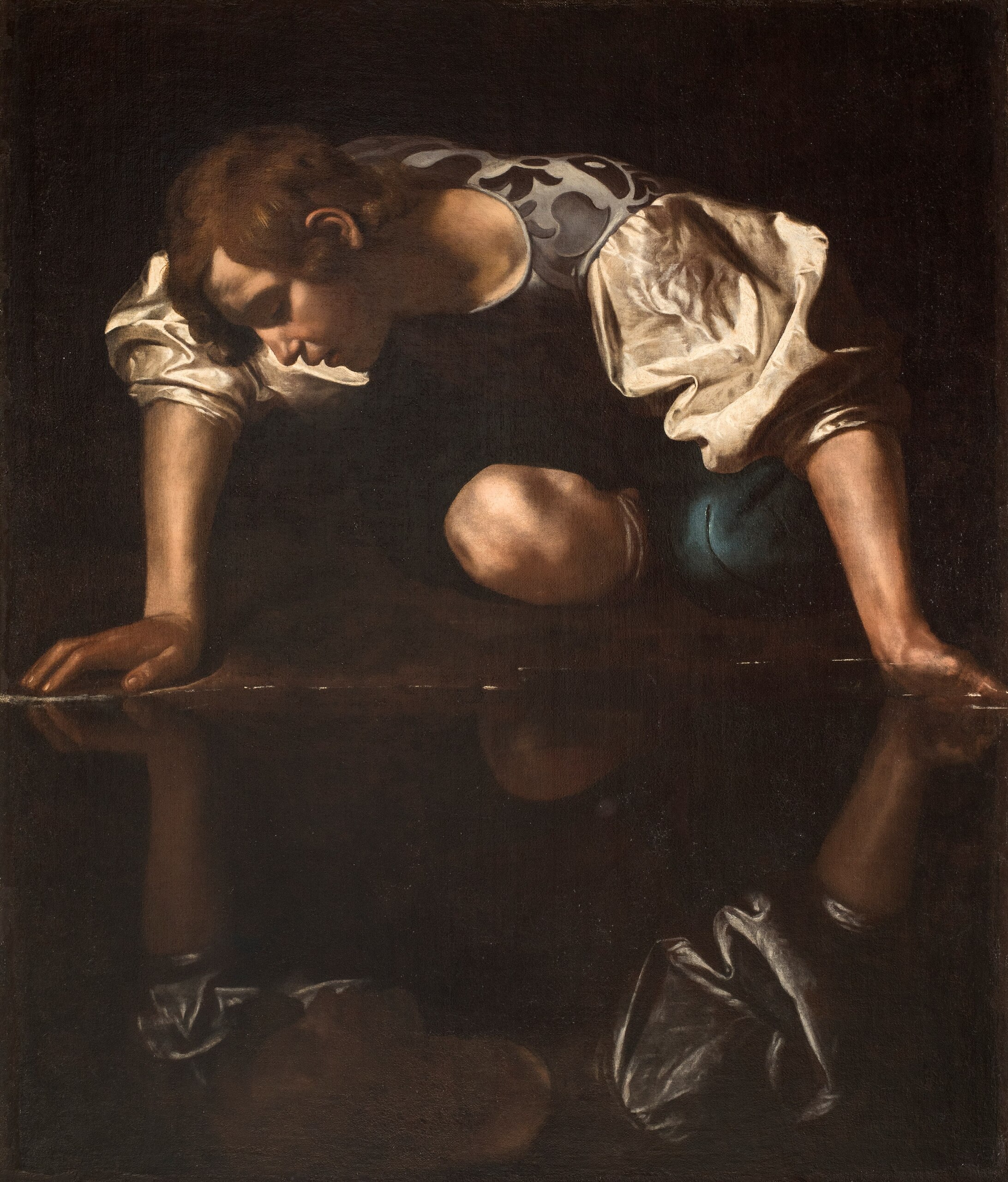
Narcissus is Caravaggio’s painting from around 1597–1599: a young man in an elegant white-and-silver brocade doublet kneels at the water’s edge, leans over it on both hands and gazes at his own reflection. Around him there is only darkness, and he and his reflection close into a ring. The original, oil on canvas, is 110 cm high and 92 cm wide and hangs in the Galleria Nazionale d’Arte Antica in Palazzo Barberini, Rome. Our painters make it by hand in oil on canvas in 8 portrait sizes, from 40 x 49 to 160 x 190 cm, or to your own measurement, and you receive a photograph of the finished painting before dispatch.
| Title: | Narcissus |
| Other titles: | Narciso · Narziss |
| Painter: | Michelangelo Merisi da Caravaggio (1571–1610) |
| Year painted: | c. 1597–1599 |
| Original size: | 110 cm x 92 cm (height x width) |
| Original technique: | Oil on canvas |
| Painting style: | Baroque, tenebrism |
| Located at: | Galleria Nazionale d’Arte Antica, Palazzo Barberini, Rome |
| Our reproduction: | Hand-painted oil on canvas, 8 sizes or made to measure |
Narcissus – Caravaggio
What does Caravaggio’s Narcissus show?
There is a single young man on the canvas. He kneels beside a pool, bent over the surface, propping himself on both hands at the water’s edge. He wears a rich white-and-silver brocade doublet with puffed white sleeves, which catch almost all the light in the picture.
His bent knee is the brightest point, right in the centre of the composition. From there the eye travels up to his face and down to the reflection, which is darker in the lower half and slightly distorted. Figure and reflection together form a closed ring, and everything around them sinks into darkness.
What is the story of Narcissus?
The Roman poet Ovid tells it in the third book of his Metamorphoses. Narcissus was a youth of remarkable beauty who fell in love with his own reflection in a pool. He could not tear himself away and slowly wasted away beside the water.
Caravaggio does not paint the end of the story but the moment the young man first looks at himself. That is why the scene is not sad at first sight: it shows stillness, absorption and a gaze that cannot let go.
The critic Tommaso Stigliani read the myth as the unhappy end of those who love their own things too much. The story was also familiar in the circle of Caravaggio’s collectors, Cardinal Francesco Maria del Monte and the banker Vincenzo Giustiniani.
Why is this painting so well known?
Because it says a great deal with very little. No landscape, no nymphs, no other figures: just a young man, water and darkness. With the hard contrast of light and shadow known as tenebrism, Caravaggio made one of the most concentrated versions of the myth.
Narcissus also has a special place in the history of art. The Renaissance theorist Leon Battista Alberti called him the inventor of painting, since the painter, too, embraces the surface of the pool through art. Looking at this canvas, you are looking at a painting about painting itself. More on the myth and the painting is in the Wikipedia article (in English).
Where is the original, and who attributed it to Caravaggio?
The original hangs in Rome, in the Galleria Nazionale d’Arte Antica in Palazzo Barberini. The canvas is 110 cm high and 92 cm wide, a little taller than it is wide.
The authorship was not always clear. The art historian Roberto Longhi attributed the painting to Caravaggio in 1916, and since then it has been regarded as his work from around 1597–1599.
Narcissus or another Caravaggio?
Narcissus suits anyone who loves mythology, quiet scenes and deep, dark tones. It works in a bedroom, a hallway, a library or a sitting room, because there is no violence in it, only a thoughtful figure by the water.
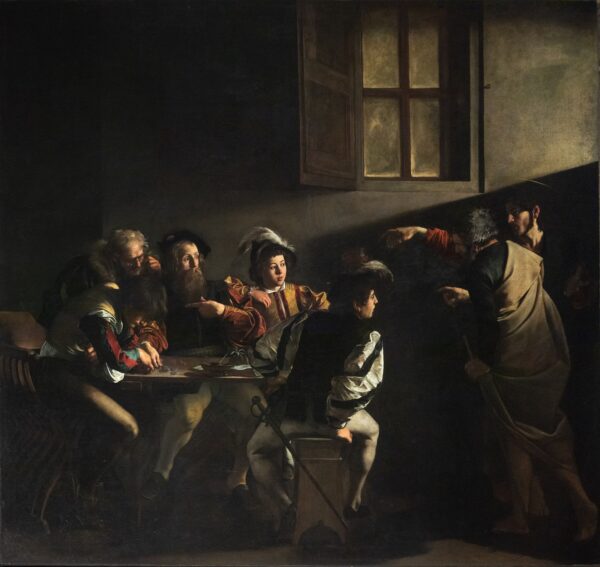
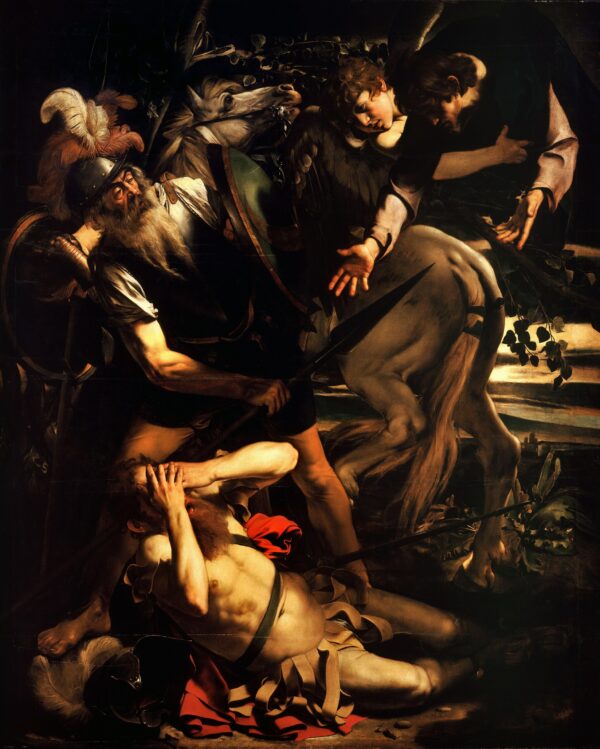
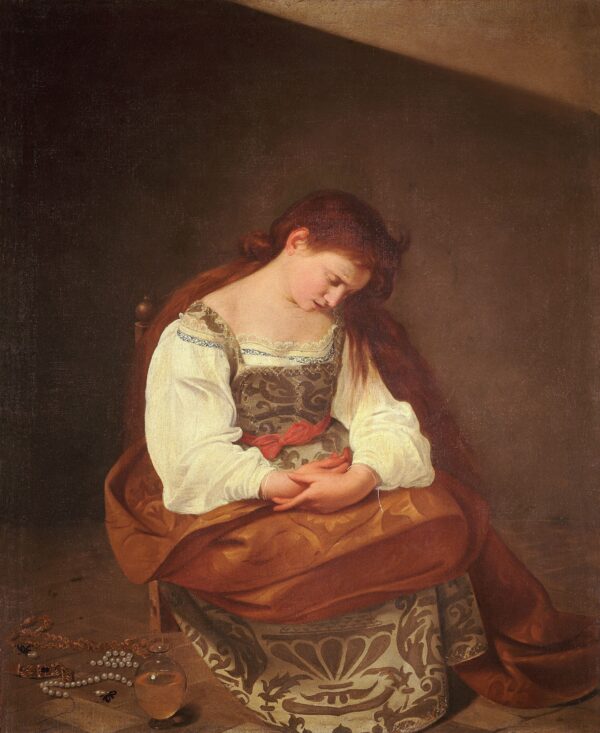
If you want a scene with several people and a shaft of light, look at The Calling of Saint Matthew. A similarly quiet, inward mood belongs to Penitent Magdalene, while a dramatic turning point is the subject of The Conversion of Saint Paul. All the famous Caravaggio paintings we paint are on the Caravaggio page.
How does our painter paint your Narcissus?
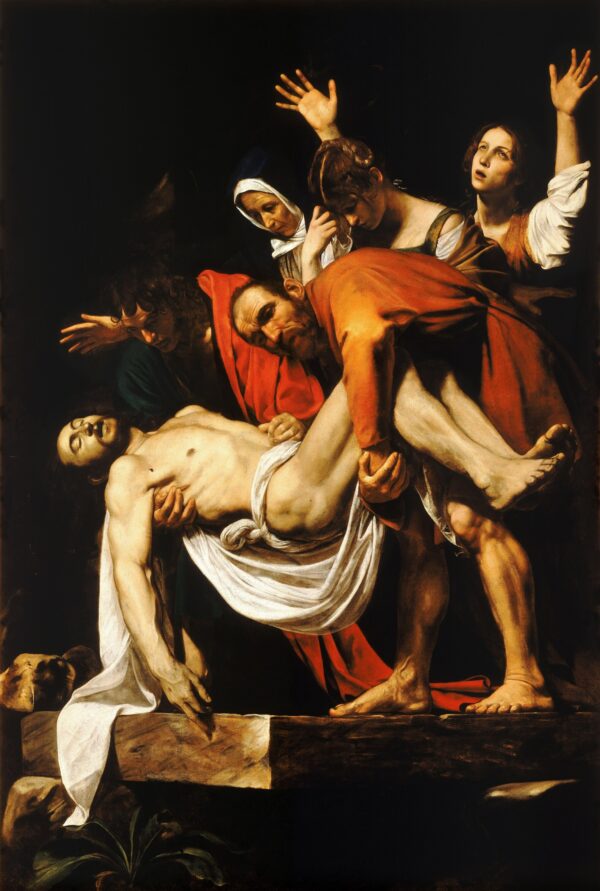
This Caravaggio reproduction looks simple but takes a lot of patience. In oil on canvas the painter first builds up the dark background in several layers, so that it has depth and does not read as a flat black surface. A similarly deep black ground, out of which the figures emerge, also appears in The Entombment of Christ.
Then he models the young man: the bright knee, the straight arms, the face in half-shadow and the sheen of the brocade. Last comes the water, where the reflection has to be darker and slightly shifted, yet still recognisable.
The result is an oil painting reproduction with visible brushstrokes and layers of paint, which is exactly what a paper print cannot give you.
Which size for which wall?
In short: 40 x 49 or 46 x 55 cm for a shelf or above a bedside table, 60 x 75 or 68 x 85 cm above a chest of drawers or a bed, 90 x 103 and 112 x 135 cm above a sofa, and 127 x 150 and 160 x 190 cm for tall, empty walls.
There are 8 portrait sizes (width x height): 40 x 49, 46 x 55, 60 x 75, 68 x 85, 90 x 103, 112 x 135, 127 x 150 and 160 x 190 cm. The closest to the original is 90 x 103 cm, which is 2 cm narrower and 7 cm shorter. As a painting for the living room above a sofa, 112 x 135 cm works well.
The upright format fills a wall between two windows, on a staircase or beside a door. Because the background is dark, hang it on a lighter wall and light it from the side or from above.
Are other sizes and frames possible?
Yes. The original is roughly 5 : 6 in proportion, so the whole young man and his whole reflection stay on the canvas. Send us your measurement and we will tell you the price and how long it takes.
We ship Narcissus rolled, stretched on a stretcher bar or framed. Our workshop in Slovenia does the stretching and framing. You choose the frame in our 3D application, which is only for choosing the frame; seeing the painting on your own wall is a separate service. A narrow dark frame or one in patinated silver suits the dark ground and the silver brocade.
When and how will the painting arrive?
Every canvas painting we sell is made to order, so we start on Narcissus when your order comes in. Within 15 to 45 working days it is ready to ship. Before dispatch we send you a photograph of the finished painting, and if you would like anything different, we change it.
Within Slovenia and the EU it travels without customs, and our returns policy applies to every order. If it is a gift and you do not know the right size, the best choice is the wall art voucher, so the recipient can choose.
Frequently asked questions
Where can I see the original?
In Rome, in the Galleria Nazionale d’Arte Antica in Palazzo Barberini.
Who is the young man by the water?
Narcissus from Ovid’s Metamorphoses, who falls in love with his own reflection in a pool.
What does the story mean?
It is about a love of self that traps and consumes; Stigliani saw in it a warning not to love one’s own things too much.
Is this a print?
No. Your Narcissus is a hand-painted copy, built up layer by layer in oil on canvas.
How big is the original painting?
It is 110 cm high and 92 cm wide. We paint it in sizes between 40 x 49 and 160 x 190 cm.
Is Narcissus right for a bedroom or as a gift?
Yes. The scene is calm and free of violence, so it suits a bedroom or living room, and it makes a fine gift for a lover of mythology.
Can Narcissus be painted in a size that is not listed?
Yes, we paint it to measure in the proportions you want and tell you the price first.
How long do I wait for the painting?
15 to 45 working days, and before dispatch you get a photograph of the finished painting.
- Subject: the young Narcissus kneels by the water, gazing at his own reflection.
- Original: c. 1597–1599, oil on canvas, 110 x 92 cm, Galleria Nazionale d’Arte Antica (Palazzo Barberini), Rome.
- Ours: painted by hand in oil on canvas, 8 portrait sizes between 40 x 49 and 160 x 190 cm or made to measure.
- Worth knowing: Roberto Longhi attributed the painting to Caravaggio in 1916.