







































Description
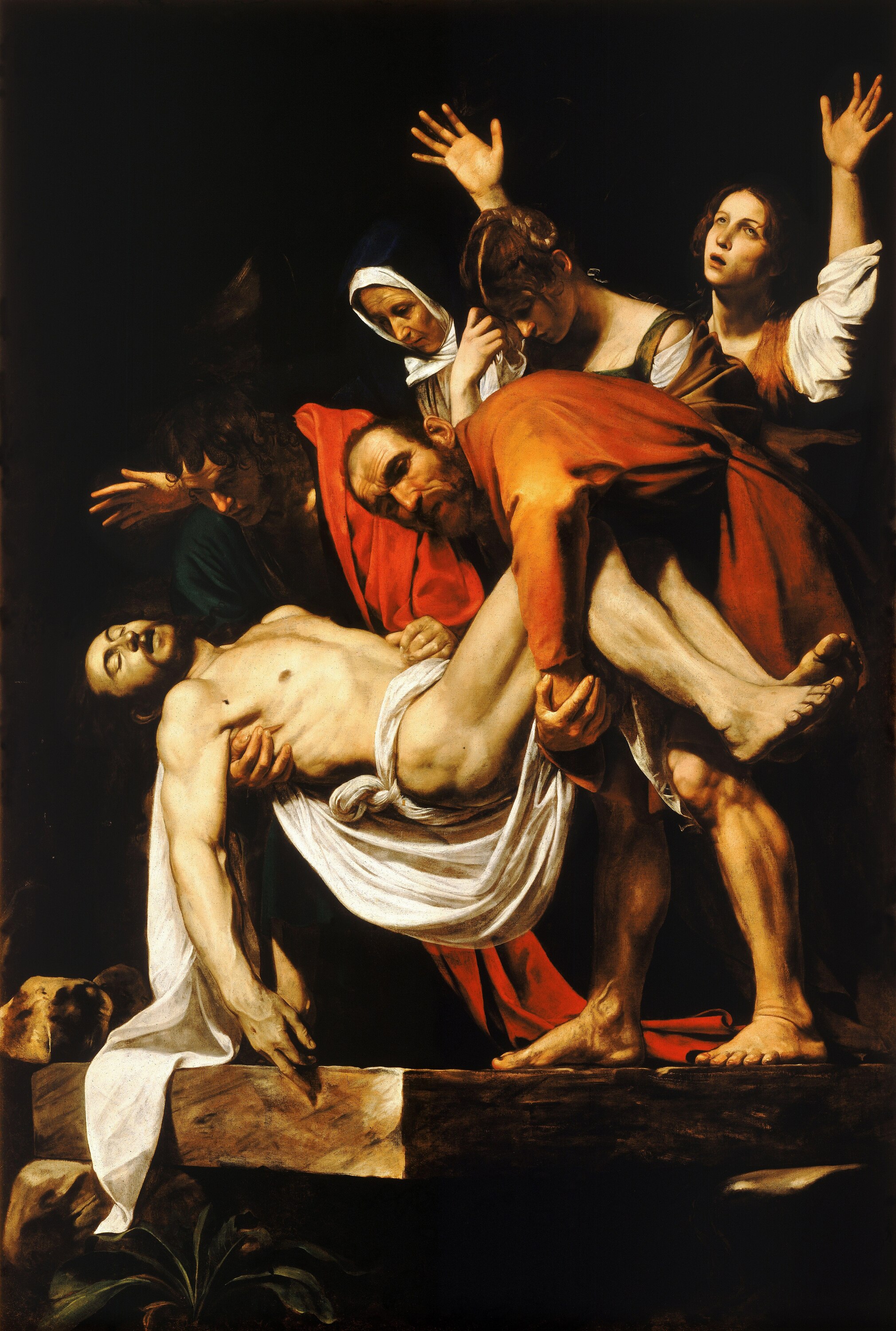
The Entombment of Christ is the great altarpiece Caravaggio painted in 1603–1604: the young John and the bearded Nicodemus lower the dead Christ onto a bare stone slab, while behind them his mother, Mary Magdalene and Mary of Clopas mourn, the last throwing her arms up to heaven. The original, oil on canvas, is 300 cm high and 203 cm wide and hangs in the Pinacoteca Vaticana of the Vatican Museums. Our painters make it for you in oil on canvas in six portrait sizes, from 90 x 130 to 160 x 230 cm, or in a size you set yourself, and before we ship it you see it in a photograph.
| Title: | The Entombment of Christ |
| Other titles: | Deposizione dalla croce · Die Grablegung Christi |
| Painter: | Michelangelo Merisi da Caravaggio (1571–1610) |
| Year painted: | 1603–1604, Rome |
| Original size: | 300 cm x 203 cm (height x width) |
| Original technique: | Oil on canvas |
| Painting style: | Baroque, tenebrism |
| Located at: | Pinacoteca Vaticana, Vatican Museums, Vatican City (inv. 40386) |
| Our reproduction: | Hand-painted oil on canvas, 6 sizes or made to measure |
The Entombment of Christ – Caravaggio
What can you see in The Entombment of Christ?
The figures pour down like a waterfall along a diagonal, from the upper right corner to the dead body below. Two men carry Christ. The young John the Evangelist, in a red cloak, holds him under the shoulders; the bearded Nicodemus, bare-legged and in an orange-brown tunic, grips him round the knees.
Nicodemus stands with his feet right on the edge of the stone slab. Its corner juts forward, towards the viewer, as if the stone reached out of the canvas into the room in front of it.
Behind the men stands the Virgin Mary, painted as an old woman in a veil much like a nun’s, her arms spread wide. In the centre Mary Magdalene wipes her tears with a white handkerchief, her face in shadow. Highest of all, Mary of Clopas flings her arms towards heaven.
Christ’s right arm and the white shroud hang down and touch the stone. A mullein grows at the lower left, and the background is completely black, so all the light falls on bodies, faces and cloth.
Which moment does the scene tell?
The scene follows the Gospels: after the death on the cross, those closest to Christ take down his body and carry it to burial. Caravaggio shows neither the cross nor a landscape. He picks the instant when the bearers lower the body onto the stone, before it is wrapped and laid in the tomb.
The Italian title, Deposizione, means a laying down. In the painting you see this literally: the weight of the dead man drags both bearers downwards, and the arm and the cloth already hang over the edge.
The three women grieve each in her own way. The mother opens her arms in silence, Magdalene weeps quietly, and Mary of Clopas calls on heaven with her raised hands.
Why is the painting so admired?
Christ’s body is not thin and frail, as it is often shown, but the strong body of a labourer whose weight you can almost feel. According to Wikipedia, Caravaggio quotes two famous Renaissance works in it: Michelangelo’s Pietà and Raphael’s Borghese Deposition.
The painting was much admired and was copied by great painters of later centuries: Rubens, Fragonard, Géricault and Cézanne.
The dark surround, the hard light on the bodies and the natural, almost tangible figures are typical of Caravaggio’s tenebrism. If you want to read more about how it was made and composed, the Wikipedia article (in English) has the details.
Where is the original, and how did it reach the Vatican?
The original belongs to the Pinacoteca Vaticana of the Vatican Museums, catalogue number 40386. It was not made for a museum: Caravaggio painted it as the altarpiece of the Pietà chapel of Pietro Vittrice in the Roman church of Santa Maria in Vallicella, also called the Chiesa Nuova.
It was paid for by Pietro’s nephew and heir, Girolamo Vittrice. A document of 1 September 1604 describes it as new, which fits the Vatican Museums’ dating.
In 1797 the painting was taken to Paris for the Musée Napoléon. It later returned to Rome and in 1816 was installed in the Vatican. A copy now hangs in the chapel of the Chiesa Nuova.
The Entombment of Christ or another Caravaggio?
This canvas painting suits people for whom biblical stories or the Baroque mean a great deal: a tall wall at home, a stairwell, a library or a quiet corner for reading and prayer. The scene is sad but not cruel, so it can also hang in the rooms you live in every day.
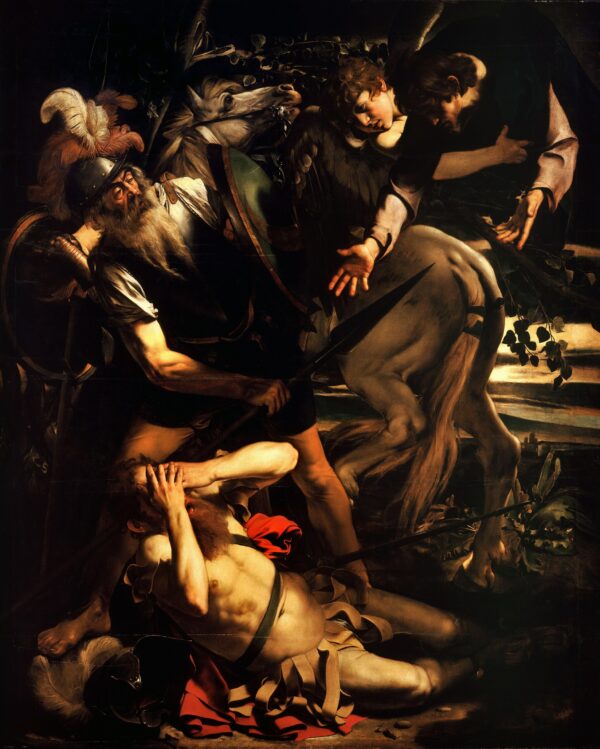
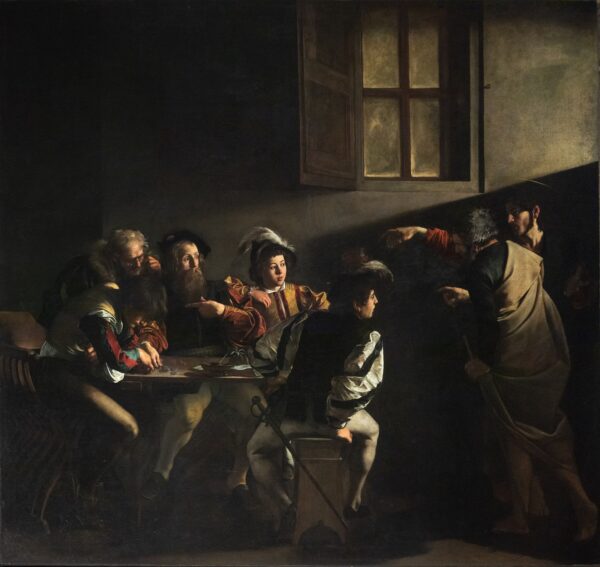
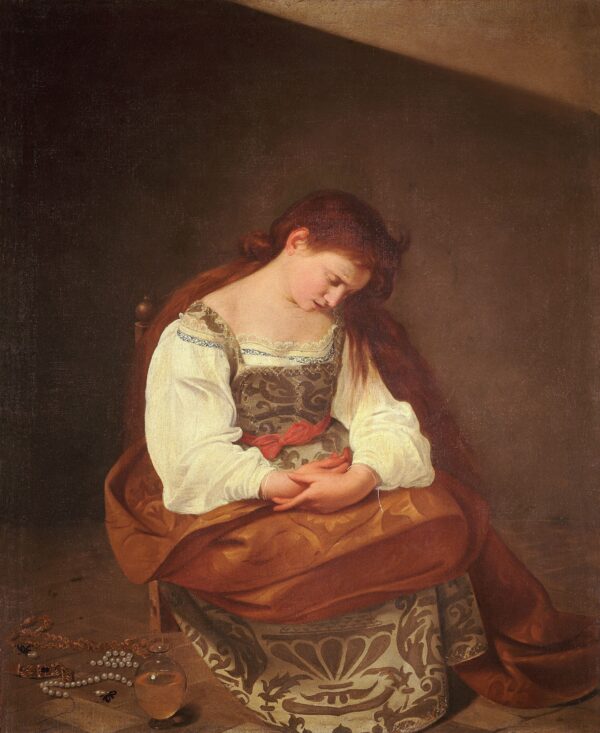
If you are drawn to Caravaggio’s light falling on a group of people in darkness, look at The Calling of Saint Matthew. An equally intense moment in portrait format comes with The Conversion of Saint Paul, and quiet, private grief with Penitent Magdalene.
More famous Caravaggio paintings that we paint by hand are collected on the Caravaggio page.
How does our painter make it?
This Caravaggio reproduction is painted to order, layer by layer. The painter first lays a dark ground on the canvas and draws in the diagonal of the figures, so that the weight of the body and the direction of the gazes are right before any detail begins.
Next the painter models Christ’s body: the warm but pale skin, the muscles of the arms and legs, the shadow under the ribs. John’s red cloak, Nicodemus’s orange-brown tunic and the Virgin’s veil follow.
Last come the white cloth over the edge, the light on the corner of the stone and the fine leaves of the mullein. An oil painting reproduction like this has a depth and a glow of colour on the wall that no print on paper or canvas reaches.
Which size for which wall?
In short: as this is a tall portrait painting, 90 x 130 or 98 x 152 cm fits an ordinary home, 113 x 165 and 127 x 185 cm suit higher walls, and 140 x 210 and 160 x 230 cm belong in stairwells, galleries and rooms with very high ceilings.
There are 6 portrait sizes (width x height): 90 x 130, 98 x 152, 113 x 165, 127 x 185, 140 x 210 and 160 x 230 cm. The original is three metres high; even our largest size is smaller, as 160 x 230 cm is 43 cm narrower and 70 cm shorter.
As a painting for the living room, above a sofa or a sideboard, 98 x 152 cm works best; with a ceiling up to 2.6 m, leave at least 20 cm clear above the frame.
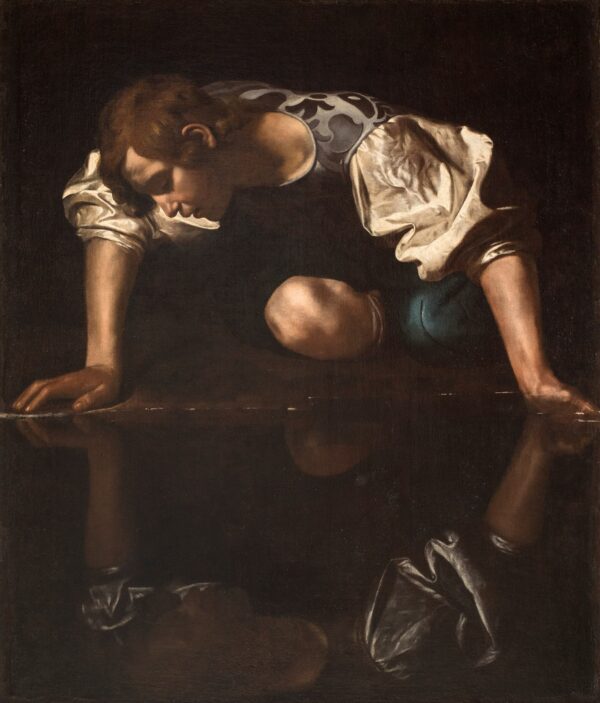
If your wall is lower or narrower, a smaller Caravaggio may suit it better, such as Narcissus.
Can I order another size and a frame?
Of course. The original is roughly 2 : 3 in proportion; keep that ratio and every figure stays on the canvas, from Nicodemus’s feet to the raised hands of Mary of Clopas. Send us the size you want and we will tell you the price and how long it takes.
You can have it rolled, stretched on a stretcher bar or ready framed. Our workshop in Slovenia does the stretching and framing, and prepares every painting with the same care.
You choose the frame in our 3D app, which is for choosing the frame only; seeing the painting in a photo of your own wall is a separate service. Dark wood or a muted, antique gold goes well with the black background and the red cloak.
How and when does the painting arrive?
We start painting your Entombment as soon as your order arrives, and within 15 to 45 working days it is ready to ship. Within the EU, Slovenia included, it travels without customs. Before dispatch you receive a photograph of the finished painting; if you would like anything changed, we correct it. Our returns policy covers this order too.
If you want to give it as a gift and let the recipient choose the size or the subject, the wall art voucher is the answer.
Frequently asked questions
Where can I see the original?
In the Pinacoteca Vaticana of the Vatican Museums, under catalogue number 40386.
Who carries the body of Christ?
The young John the Evangelist in a red cloak holds him under the shoulders, the bearded Nicodemus under the knees.
Is it a print or a real painting?
Not a print. Each one is a hand-painted copy, brushed in oil onto the canvas by our painter.
How large is the original?
It is 300 cm high and 203 cm wide, larger than any of our sizes, which go up to 160 x 230 cm.
Does the Entombment suit a bedroom, or make a good gift?
The scene is serious and sad but not cruel; it suits a study, a living area or a believer’s bedroom, and makes a gift for someone to whom Christian art means a lot.
Which painters copied it?
Among others Rubens, Fragonard, Géricault and Cézanne, who admired the painting greatly.
Why is there a copy in the Chiesa Nuova today?
The original went to Paris in 1797 and, after its return, to the Vatican in 1816, so a copy hangs in the chapel.
How long do making and delivery take?
The painting is ready to ship within 15 to 45 working days, and you see a photograph of it first.
- Subject: John and Nicodemus lower the dead Christ onto the stone as three women mourn behind them.
- Original: 1603–1604, oil on canvas, 300 x 203 cm, Pinacoteca Vaticana, Vatican City.
- Ours: oil on canvas, painted by hand in six portrait sizes (90 x 130 to 160 x 230 cm) or made to measure.
- Worth knowing: the painting went to Paris in 1797 and has been in the Vatican since 1816.