


Description
The Card Players (Courtauld) – two men silent over their cards
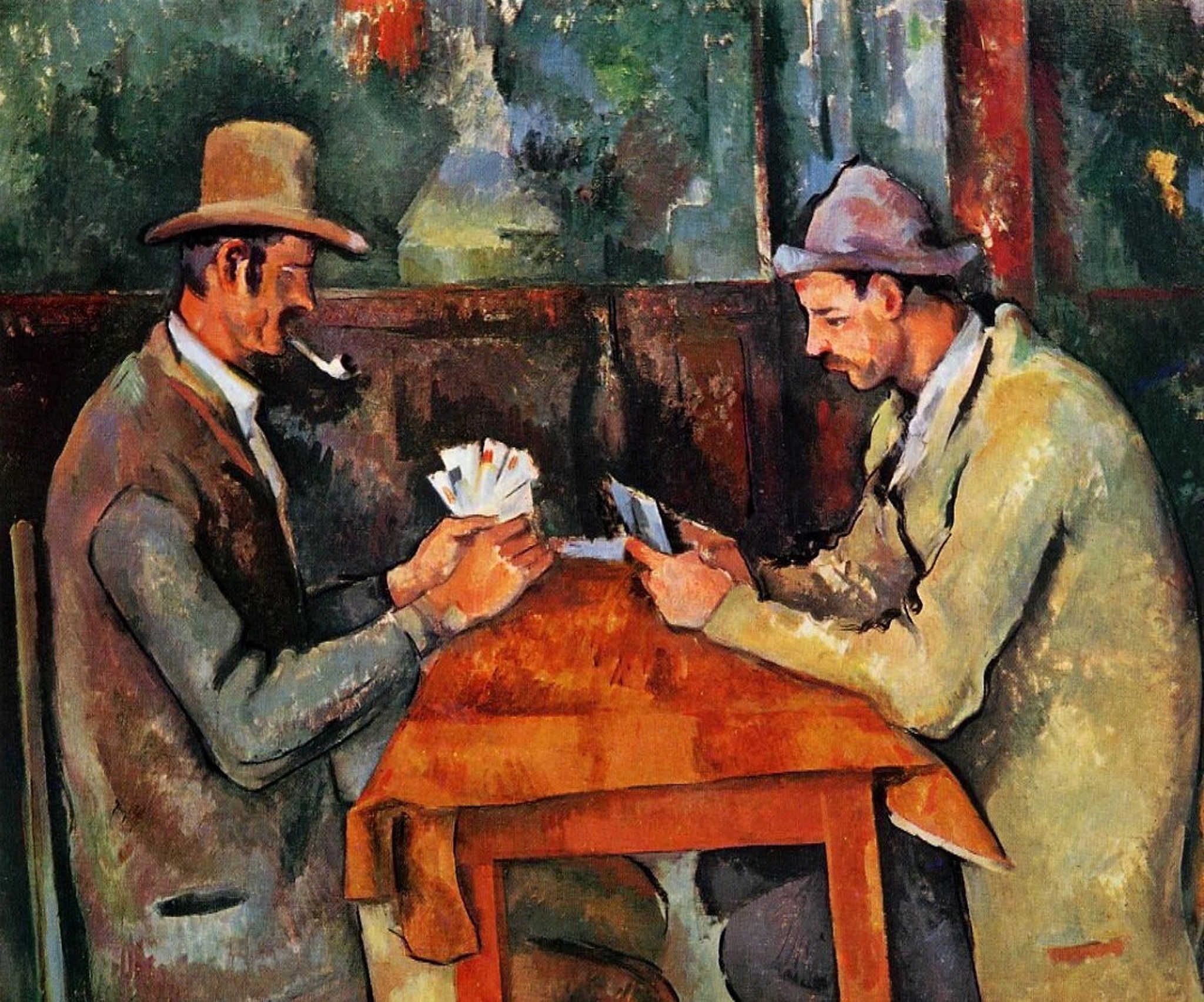
This is the most concentrated version of Cézanne’s most famous series: two peasants sit facing each other, with nothing between them but the table and the silence. The canvas is held by the Courtauld Gallery in London. Our hand-painted reproduction on canvas brings this severe, settled scene into your room, painted in oil on canvas with a warm red table holding the whole composition together.
How this version differs from the others
Cézanne painted The Card Players five times. The first two canvases are full: five figures at the Barnes Foundation, four at the Metropolitan Museum in New York. Then he emptied the scene down to two players – and the London canvas belongs to those three late works. Among the three two-player versions, the London one is the only one with no wine bottle on the table: the Paris canvas in the Musée d’Orsay and the private version both have one, set exactly midway between the men. That makes the London version the barest of all – nothing divides the scene, nothing draws the eye away.
Who the men at the table are
The models were not professionals; Cézanne painted farm labourers from around Aix-en-Provence, some of whom worked on the family estate at Jas de Bouffan. The man on the left in the pale hat smokes a pipe; the one on the right in a bluish cap leans over his cards. Neither shows emotion, neither is winning. Art historians often cite as a possible prompt the card players of the Le Nain brothers from the 17th century, which Cézanne could have seen in the museum in Aix – a reading offered by the literature, not a statement by the painter.
What you see on the canvas
The composition rests on a red-orange table that works as the axis of the scene; dark wooden panelling runs behind it, and a lighter wall above. Cézanne builds both figures from broad, visible planes of colour – the clothes are not drawn but assembled. The original is painted in oil on canvas, measures 60 × 73 cm and was made between 1892 and 1895. It is held by the Courtauld Gallery in London.
A record price that belongs to another canvas
The Card Players series is known for one of the highest prices in the history of the art market: in 2011 the Qatari royal family bought the private two-player version. The price was never officially confirmed; estimates range between 250 and 320 million dollars. That is another canvas from the series, not the London one: this was bought in March 1929 by the British industrialist Samuel Courtauld and taken into the collection he gave in 1932 to the institute founded under his name (inv. no. P.1932.SC.57). It has not been for sale since.
The collector who saved the canvas for the public
Samuel Courtauld was not an art historian but the owner of a synthetic-fibre works. Through the 1920s he systematically bought French modern painting with his own money, at a time when British museums still did not take it seriously, and in 1932 he gave the collection to the institute of art history that bears his name. It is because of this that one of the five versions of The Card Players is publicly accessible in London today rather than in private hands – unlike the one that disappeared into a Qatari collection in 2011.
Two figures, a great deal of silence
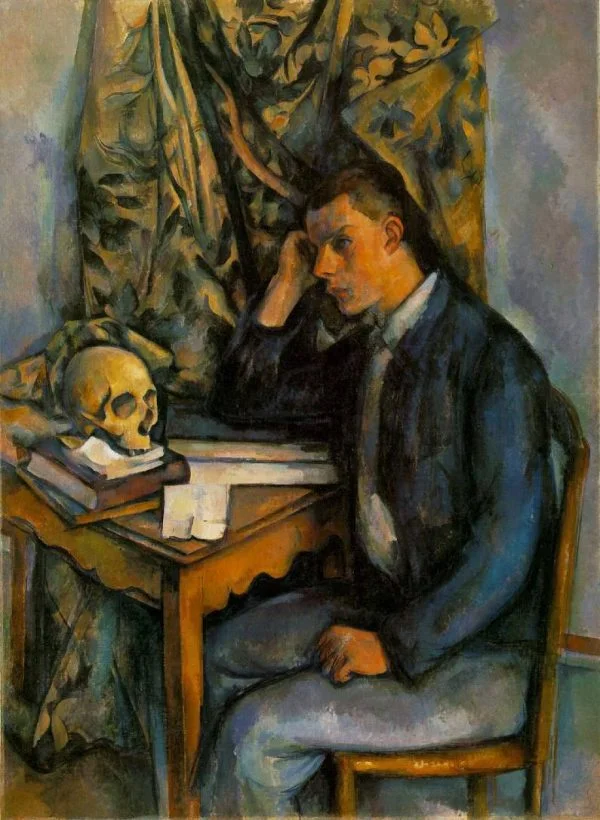
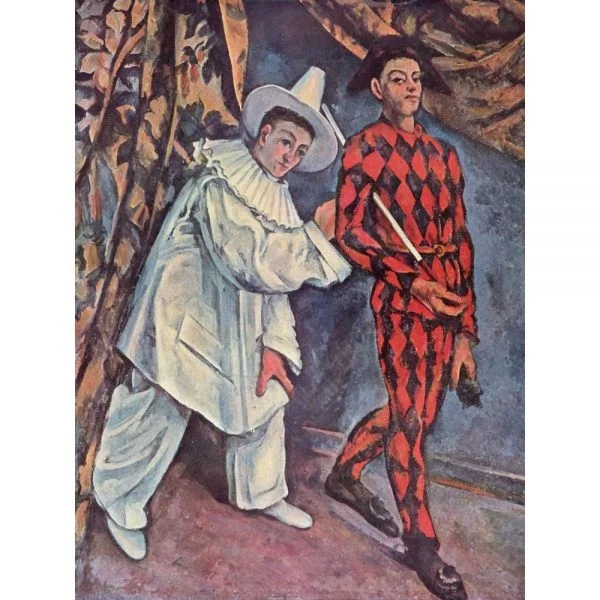
The red table holds the whole composition, and that colour is the reason we paint this by hand instead of printing it. There are ten sizes to choose from, and for unusual proportions we paint to your measurements. The subject settles well in a dining room or a home library. You choose the frame with the help of our app’s realistic 3D preview. Among our reproductions of famous paintings you will find Cézanne’s other figure subjects: The Card Players (Metropolitan), Boy with Skull and Mardi Gras (Fastnacht).
- Subject: The Card Players, Paul Cézanne, 1892–1895, Courtauld Gallery, London
- Technique: hand-painted painting, oil on canvas, reproduction
- Sizes: 10 formats, stretched on a wooden stretcher frame on request, or made to your measurements
- Fact: of the three two-player versions, the London canvas is the only one with no bottle on the table