







































Description
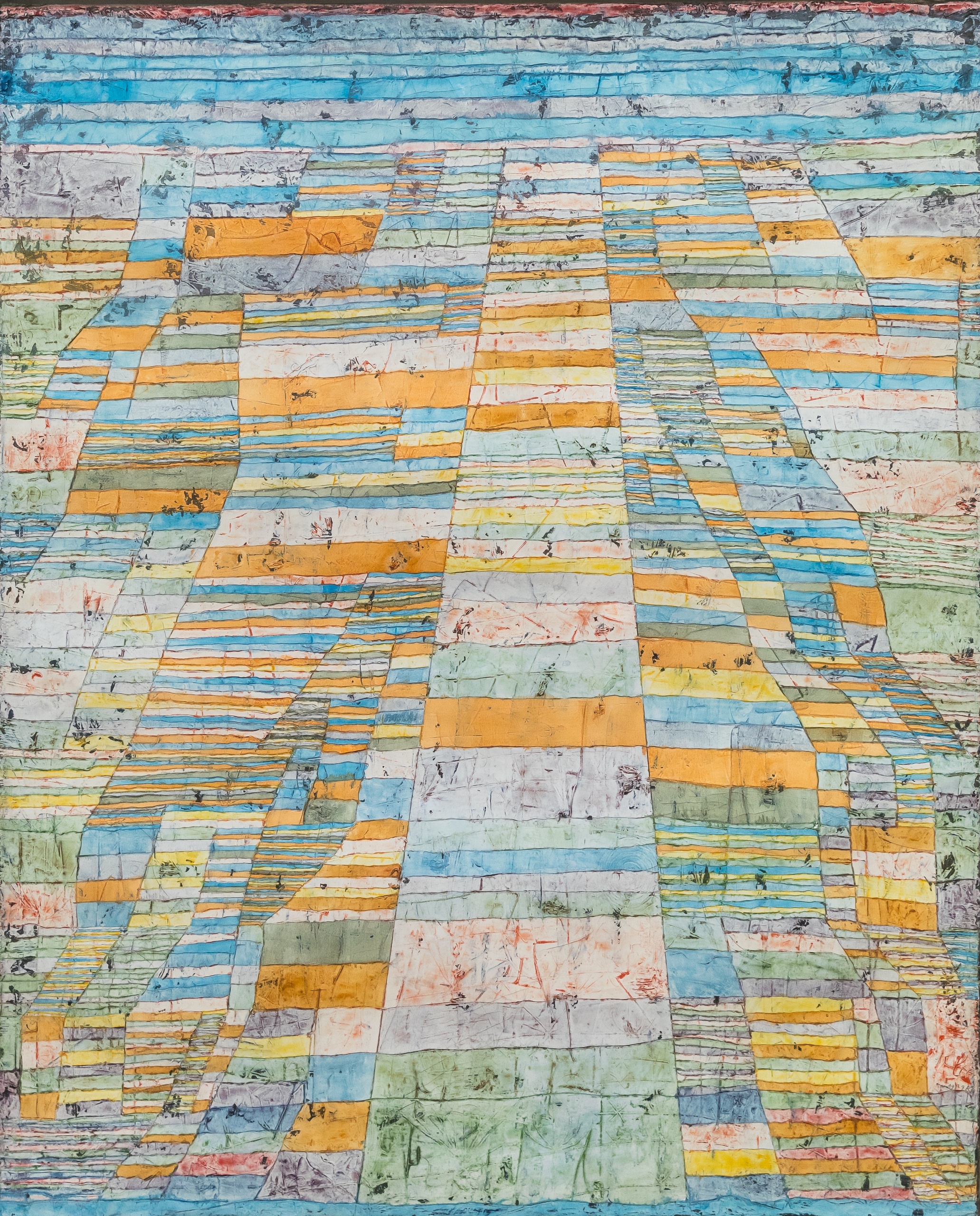
Highways and Byways is a painting Paul Klee made in January 1929, shortly after his second trip to Egypt: a straight main path, split into dozens of coloured bands, climbs the middle of the canvas towards a blue horizon, while irregular side paths wander off left and right, some of them ending in nothing. The original, oil on a plaster-primed canvas, measures 83.5 x 67.5 cm and hangs in the Museum Ludwig in Cologne. We paint it for you by hand in oil or acrylic on canvas, in 8 portrait sizes from 33 x 42 to 164 x 200 cm or made to measure, and before it leaves we send you a photograph of the finished work.
| Title: | Highways and Byways |
| Other titles: | Hauptweg und Nebenwege · Highway and Byways |
| Painter: | Paul Klee (1879–1940) |
| Year painted: | 1929 |
| Original size: | 83.5 cm x 67.5 cm (height x width) |
| Original technique: | Oil on canvas |
| Painting style: | Modernism |
| Located at: | Museum Ludwig, Cologne, Germany |
| Our reproduction: | Hand-painted in oil or acrylic on canvas, 8 sizes or made to measure |
Highways and Byways – Paul Klee
What does Highways and Byways show?
At first glance you see a tall field made of nothing but horizontal stripes and small rectangles. The colours are light and soft: pale blue, orange, ochre, yellow, a faded green and pink, here and there a greyish violet.
From the bottom edge a broad band rises through the centre: the main path. Its edges are almost straight and draw slightly together towards the top, so it reads like a road receding to the horizon.
On either side run narrower byways. They are restless: they break, veer off and sometimes stop dead in the middle of the field. Up close you notice small dark specks and fine scratched lines that give the surface a rough, almost earthy look.
What do the main path and the byways mean?
The title matches the structure exactly: one path straight and orderly, the others crooked and uncertain. Klee left no explanation; English Wikipedia quotes the readings below.
In them the main path is also a strip of fields divided 45 times across, up to the high zone of streaky blue and purple, and it looks less like a road than like the sky-bearing staircase of a step pyramid. The work dates from January 1929, soon after Klee had visited Egypt for the second time.
The byways are less certain. Some end in nothing, others lead to the same blue-grey horizon that seems to give the main path its clear destination too.
Why is Highways and Byways so well known?
Klee made many layer and stripe paintings, but this one is regarded as a key work of the group. The technique is part of the reason: oil on a plaster-primed canvas on a stretcher was something he had used only a few times before 1929, and not often afterwards.
Horst Keller, director of the Wallraf-Richartz Museum, called it an “indescribable magic picture”.
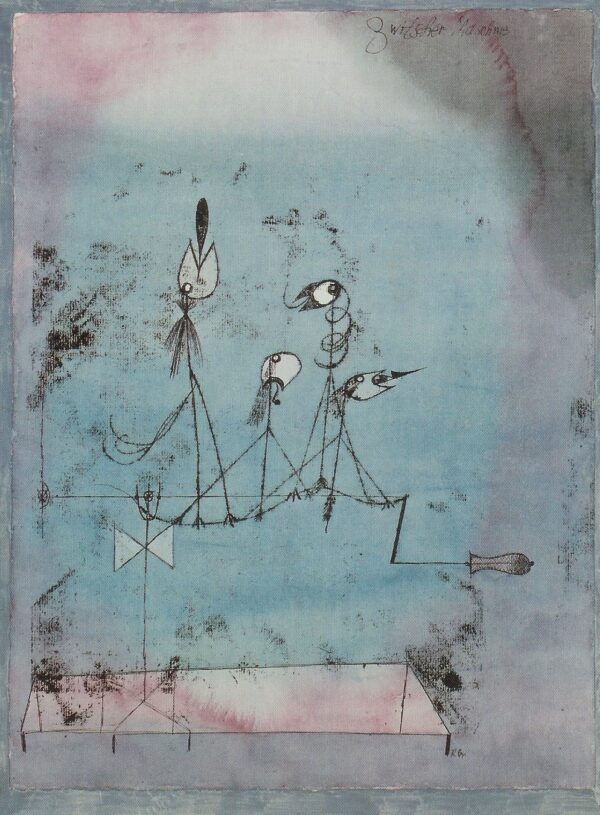
The painting has inspired musicians, too. The Swiss composer Christian Henking based his 1992 guitar solo Sillis on it, and in 1998 Michael Denhoff wrote an almost three-hour piano quintet that borrows its title. Klee’s Twittering Machine has also inspired several compositions. The English Wikipedia article on the painting covers its technique and its afterlife in more detail.
Where is the original, and how did it get there?
The original hangs in the Museum Ludwig in Cologne. It was first shown in the same city, at the Wallraf-Richartz Museum, on loan from the collector Werner Vowinckel.
Klee painted it in January 1929, while he was still teaching at the Bauhaus (1921 to 1931). The canvas measures 83.5 x 67.5 cm (height x width), fairly large for Klee, since many of his works are small pieces on paper.
Most of the lines were scratched into the fresh plaster ground. He drew the two edges of the main path with a sharp stylus and a ruler, and almost all the others freehand with a coarser tool, which left ridges and furrows in the priming here and there.
Highways and Byways or another Klee?
Highways and Byways is a canvas painting for people who like order and colour at the same time.
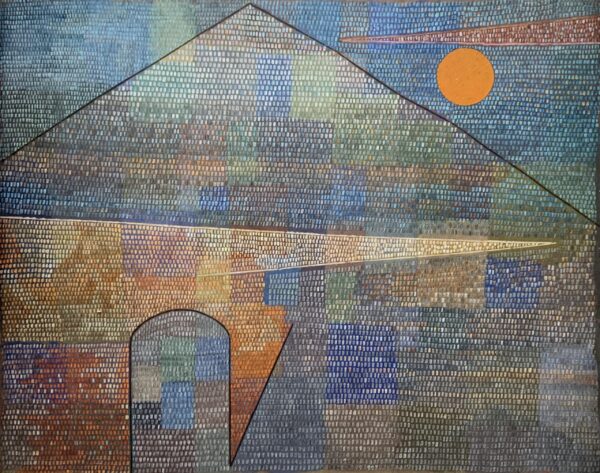
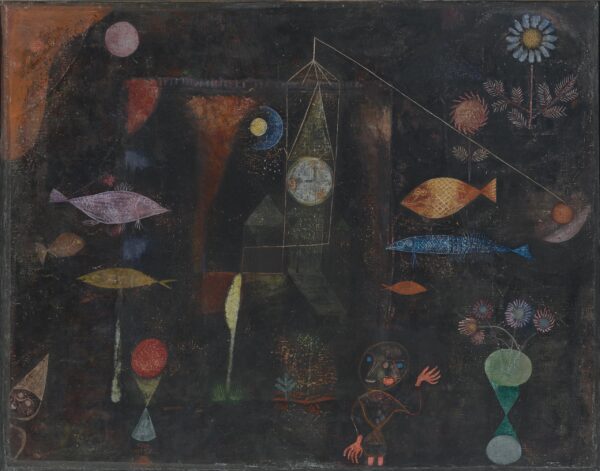
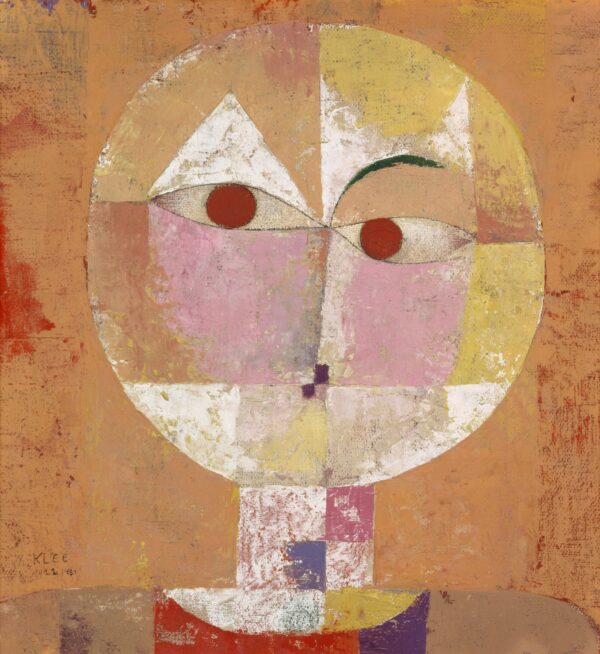
If Egypt and pyramids appeal to you, look at Ad Parnassum from 1932, where a large triangle rules over a field of thousands of dots. Similar scratching, but on a dark ground, appears in Fish Magic. For a smaller wall and a more playful mood, Senecio, a round face built of coloured squares, is the better fit.
All the famous Paul Klee paintings our painters make to order are gathered on our Paul Klee page.
How do we hand-paint Highways and Byways?
Unlike many of Klee’s works on paper, this original is an oil painting on canvas. Ours is an oil painting reproduction made on canvas in oil or acrylic, layer by layer, in the size you choose.
The painter first draws the straight edges of the main path and divides the field into stripes, so that the band narrows towards the top just as it does in Klee’s work. Then he lays in the colours from light to warm: pale blue, pink and faded green, then the orange and yellow rectangles. He paints the byways freehand, because they have to stay restless.
He imitates the rough plaster with thicker paint and fine lines drawn with the tip or the handle of the brush. The result is a painting with a real surface you can feel, not printed paper.
Which size suits which wall?
In short: 33 x 42 or 43 x 53 cm for a shelf, a desk or a narrow wall beside a door, 55 x 66 or 64 x 76 cm above a chest of drawers or a bedside table, 80 x 96 or 99 x 125 cm above a sofa or a bed, and 129 x 160 or 164 x 200 cm for a tall wall in a living area, a stairwell or an office.
We paint it in 8 portrait sizes (width x height): 33 x 42, 43 x 53, 55 x 66, 64 x 76, 80 x 96, 99 x 125, 129 x 160 and 164 x 200 cm. All keep the upright format of the original, so the main path stays in the centre and the horizon at the top. The original measures 67.5 x 83.5 cm (width x height); our four larger sizes enlarge it, and the biggest is more than twice as tall.
As a painting for the living room it works best on a tall wall above low furniture or beside a window, where daylight brings out the stripes.
Can I order a custom size or a frame?
Yes. If you need a different width or height, we arrange the stripes so that the main path stays central and the horizon whole. The proportions shift a little, but the composition stays recognisable. Send us your preferred measurements and we will reply with a price and a timescale.
Your painting comes rolled, stretched on a stretcher bar or framed. Stretching and framing are done by our workshop in Slovenia, which every painting we sell passes through before it leaves. You choose the moulding in our 3D app, which is for frame choice only; seeing the painting on your own wall is a separate service.
A slim frame in natural oak or a white wooden frame suits the light pastel tones.
When will my painting arrive?
Work begins once your order is confirmed, and within 15 to 45 working days the painting is ready for dispatch. Before packing it, we send you a photograph of the finished painting; if you would like a correction, we make it.
Orders within Slovenia and the rest of the EU pay no customs duties, and every order is covered by our returns policy.
A bright painting about paths makes a good gift for a graduation, a new job or a move. If you do not know the recipient’s wall, give a wall art voucher and let them choose.
Frequently asked questions
Where can I see the original?
In the Museum Ludwig in Cologne; before that it hung on loan at the Wallraf-Richartz Museum in the same city.
What exactly does the painting depict?
A straight path divided into coloured stripes crosses a field towards a blue horizon, with narrower byways winding beside it.
Is it a print?
No. What you receive is a hand-painted copy on canvas, in oil or acrylic, with no printed base.
How big is the original?
83.5 x 67.5 cm (height x width); our sizes run from much smaller to more than twice as large.
Can you paint a size that is missing from your list?
Yes. Give us the measurements of your wall and we will send an offer with a price and a delivery date.
How long does it take?
Between 15 and 45 working days, and you see a photo of the finished work before it ships.
Does it suit a child’s room, an office or a gift?
Yes. The light colours do not tire the eye, and the theme of the path suits a new beginning.
What did Klee mean by it?
He never wrote it down. Descriptions speak of a field divided 45 times and of the steps of a pyramid rising to the sky.
- Subject: a straight main path of coloured stripes leads to a blue horizon, with byways winding on either side.
- Original: oil on plaster-primed canvas, 1929, 83.5 x 67.5 cm, Museum Ludwig, Cologne.
- Ours: a Paul Klee reproduction in oil or acrylic on canvas, painted by hand in 8 portrait sizes (33 x 42 to 164 x 200 cm) or made to measure.
- Worth knowing: Klee scratched most of the lines into the plaster ground; Horst Keller called it an “indescribable magic picture”.