







































Description
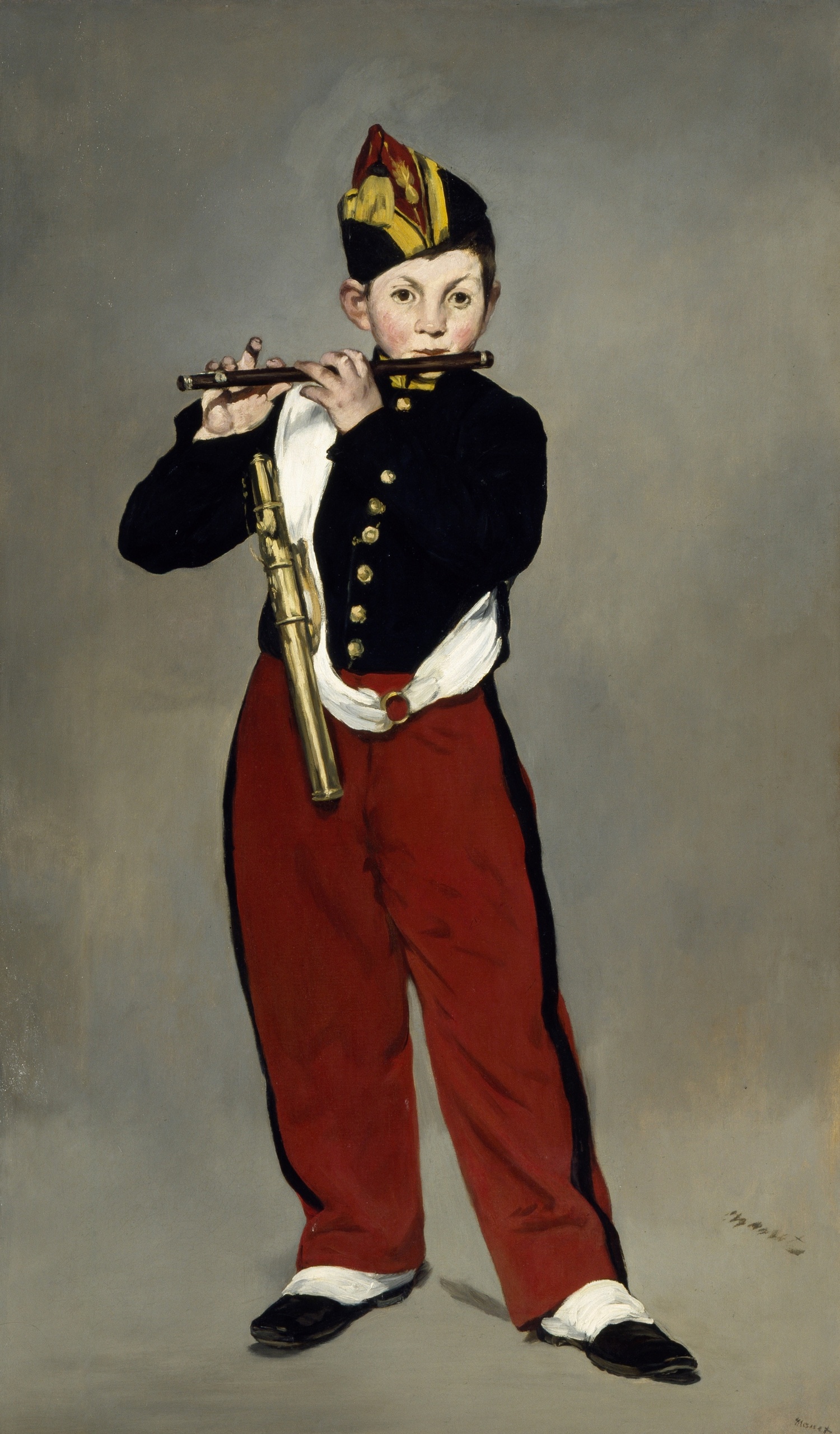
The Fifer is a painting by Édouard Manet from 1866: a boy in a military band uniform, with a black jacket, gold buttons and red trousers, stands against a bare grey background and plays the fife. The original is oil on canvas, 160 x 97 cm, and it hangs in the Musée d’Orsay in Paris. We paint it for you by hand in oil on canvas, in 8 portrait sizes from 29 x 46 to 120 x 190 cm, or made to measure. You receive a photograph of the finished painting before it ships.
| Title: | The Fifer |
| Other titles: | Le Fifre (French title) · Young Flautist |
| Painter: | Édouard Manet (1832–1883) |
| Year painted: | 1866 |
| Original size: | 160 cm x 97 cm (height x width) |
| Original technique: | Oil on canvas |
| Painting style: | Realism and Impressionism |
| Located at: | Musée d’Orsay, Paris, France |
| Our reproduction: | Hand-painted in oil on canvas, 8 sizes or made to measure |
The Fifer – Édouard Manet
What does The Fifer show?
A single boy fills the canvas, seen from head to toe. He wears the uniform of a military band: a black jacket with a row of gold buttons and a yellow collar, wide red trousers with a black side stripe, and black shoes with white spats. On his head sits a black cap with a red crown and gold trim.
He holds the fife level at his lips, the fingers of both hands on the holes, and looks straight at us with flushed cheeks and a serious face. A broad white strap crosses his chest and closes at the hip with a round buckle, and a brass fife case hangs at his side.
There is hardly any setting. The grey surface separates neither floor nor wall, and only a faint shadow shows beside his shoes. Manet’s signature stands at the lower right of the grey ground.
Who is the boy, and why is the background grey?
In 1865 Manet travelled to Spain and saw the work of Diego Velázquez at the Prado in Madrid, which came to him as a revelation. Back in Paris in 1866, he began this canvas.
The sitter was an unnamed young musician from the band of Napoleon III’s Imperial Guard, sent to Manet by Commander Lejosne. Some see the features of Léon Leenhoff and Victorine Meurent in the boy’s face and figure as well, and they may also have posed.
Manet painted an ordinary boy the way Velázquez painted court portraits, but turned the formula round: a military bandsman, not a nobleman, stands before an almost uniform, flattened background. With no space around him, we cannot judge his true size, and so not his importance either.
Why is The Fifer so well known?
The jury of the Paris Salon rejected it in 1866. Émile Zola, one of Manet’s earliest champions, was outraged and wrote a series of articles in the newspaper L’Événement praising the painter’s realist style and modern subjects.
In May 1867, following Gustave Courbet’s example, Manet paid for his own exhibition in a pavilion at the edge of the Exposition universelle. The Fifer hung there too, and the popular press mocked its unusual brushwork and puzzling space.
The art historian Peter H. Feist saw in it the decorative effect of one large figure with strong contours set before a flat background. Manet, born in Paris in 1832, was among the first painters of modern life and a bridge between Realism and Impressionism. The Wikipedia article on The Fifer, written in English, tells its story in more detail.
Where is the original, and who owned it?
The original, oil on canvas 160 cm high and 97 cm wide, belongs to the Musée d’Orsay in Paris, under inventory number RF 1992.
Durand-Ruel bought it in 1872; from 1873 to 1893 it belonged to Manet’s friend, the composer and baritone Jean-Baptiste Faure, and then Durand-Ruel acquired it again. In 1884, a year after the painter’s death, it appeared in a large exhibition of his work.
Its last private owner was Count Isaac de Camondo; the French state accepted it in lieu of taxes on his estate, and it entered the national collections in 1911. It hung in the Louvre from 1914 to 1947, then at the Jeu de Paume, and has been at the Musée d’Orsay since 1986. In 2017 and 2018 it was on loan to the Louvre Abu Dhabi.
The Fifer or another Manet?
This canvas painting suits music lovers, a child’s room, a hallway or a tall wall where an upright figure can stand out.
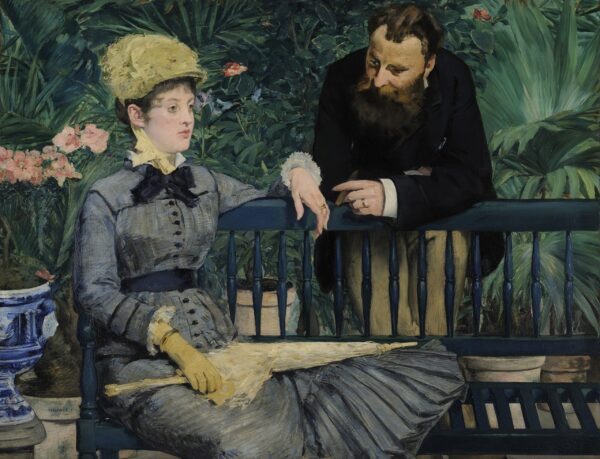
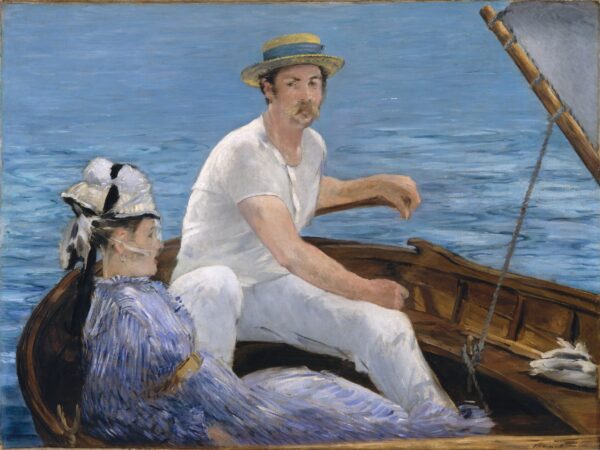
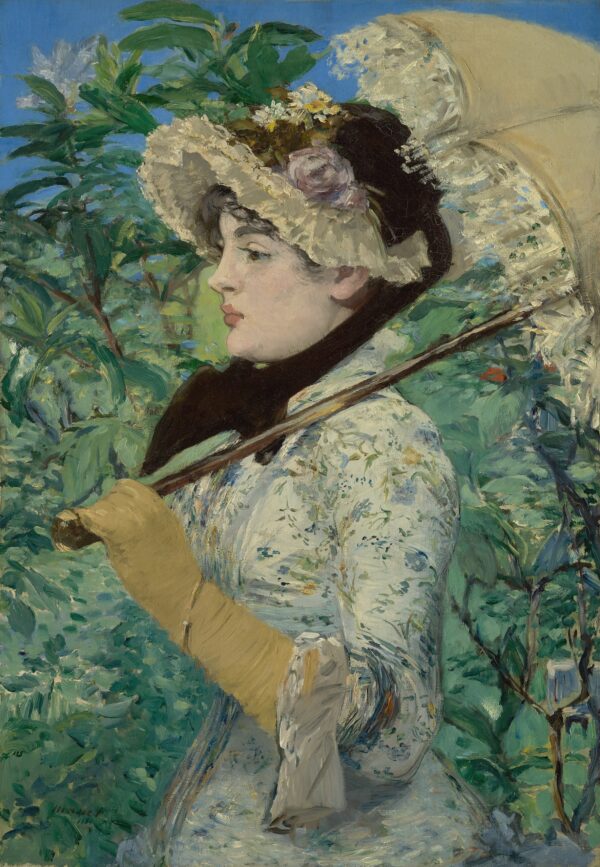
If Manet’s strong figures appeal to you, look at The Old Musician, an old violinist among a group in the open air, or The Dead Toreador, another subject from the Spanish world. For a lighter, summery Manet, see Boating and Spring (Jeanne).
All our famous Manet paintings, each painted to order, are gathered on the Édouard Manet page.
How do we hand-paint The Fifer?
Manet’s original is an oil on canvas 160 cm tall. Ours is an oil painting reproduction made on new canvas: the painter works it in oil on canvas, in the size you choose, laying the colour on layer by layer.
He first draws the outline of the boy so that the figure stands firm and upright, then the grey background, which must stay calm and nearly even. Next come the flat areas of the black jacket, the red trousers and the cap.
Manet laid his paint on thickly from a reduced palette, which is why the black, red and white look so sharp. At the end our painter adds, in dense strokes, the white strap, the spats, the gold buttons and the gleam of the brass case.
Which size suits your wall?
In short: 29 x 46 or 40 x 63 cm for a narrow wall by a door or a shelf, 48 x 80 and 55 x 90 cm for a hallway or bedroom, 62 x 106 and 81 x 130 cm for a lounge or family room, and 100 x 170 or 120 x 190 cm for a tall wall or a stairwell.
We paint it in 8 portrait sizes (width x height): 29 x 46, 40 x 63, 48 x 80, 55 x 90, 62 x 106, 81 x 130, 100 x 170 and 120 x 190 cm. The original measures 97 x 160 cm (width x height), so all six sizes up to 81 x 130 cm are smaller than it, 100 x 170 cm is only slightly larger, and 120 x 190 cm clearly exceeds it.
As a painting for the living room it works best at 81 x 130 cm between two windows or beside a cupboard, where the red trousers and gold buttons carry across the room.
Can I have another size, or a frame?
Yes. If your wall needs other proportions, we keep the boy whole and adjust only the grey background around him. Send us the size you need, and we will answer with a price and a delivery date.
We ship it rolled, stretched on a stretcher bar or framed; our workshop in Slovenia handles the stretching and framing. You pick the moulding in our 3D app, which only helps you choose the frame; seeing the Fifer on your own wall is a separate service.
A slim black moulding picks up the dark jacket, a gold one the buttons and the brass case.
When will The Fifer arrive?
The painter begins once you confirm the order, and the painting is ready to ship within 15 to 45 working days. Before packing we send you a photograph of the finished painting and make any changes you ask for.
Within Slovenia and the rest of the EU there are no customs duties, and our returns policy covers every order.
The little bandsman in red trousers makes a fine gift for a musician, a music teacher or anyone who loves Paris. Not sure which wall it will hang on? A wall art voucher leaves the size to the person who receives it.
Frequently asked questions
Where can I see the original?
At the Musée d’Orsay in Paris, under inventory number RF 1992.
Who is the boy in the painting?
An unnamed young musician from the band of Napoleon III’s Imperial Guard, playing the fife.
Is this a print?
No. It is a hand-painted copy, with every stroke set down in oil on canvas by our painter.
How big is the original?
160 cm high and 97 cm wide; our 100 x 170 cm size is slightly larger, and 120 x 190 cm much larger.
Can I order The Fifer in a size not listed?
Yes. Send us the width and height you want, and we will prepare an offer with a price and a delivery time.
How long does it take?
Between 15 and 45 working days, and you get a photograph of the painting before it ships.
Is it right for a child’s room or as a gift?
Yes. The boy in red trousers brightens a child’s room, and as a present it pleases anyone who plays in a band or an orchestra.
What does the grey background mean?
Following Velázquez, Manet left out the space, so we cannot judge the boy’s true size or his importance.
- Subject: a boy in a military band uniform plays the fife against a bare grey background.
- Original: oil on canvas, 1866, 160 x 97 cm, Musée d’Orsay, Paris.
- Our version: an Édouard Manet reproduction hand-painted in oil on canvas, 8 sizes from 29 x 46 to 120 x 190 cm, or made to measure.
- Worth knowing: rejected by the Salon in 1866 and publicly defended by Émile Zola.