







































Description
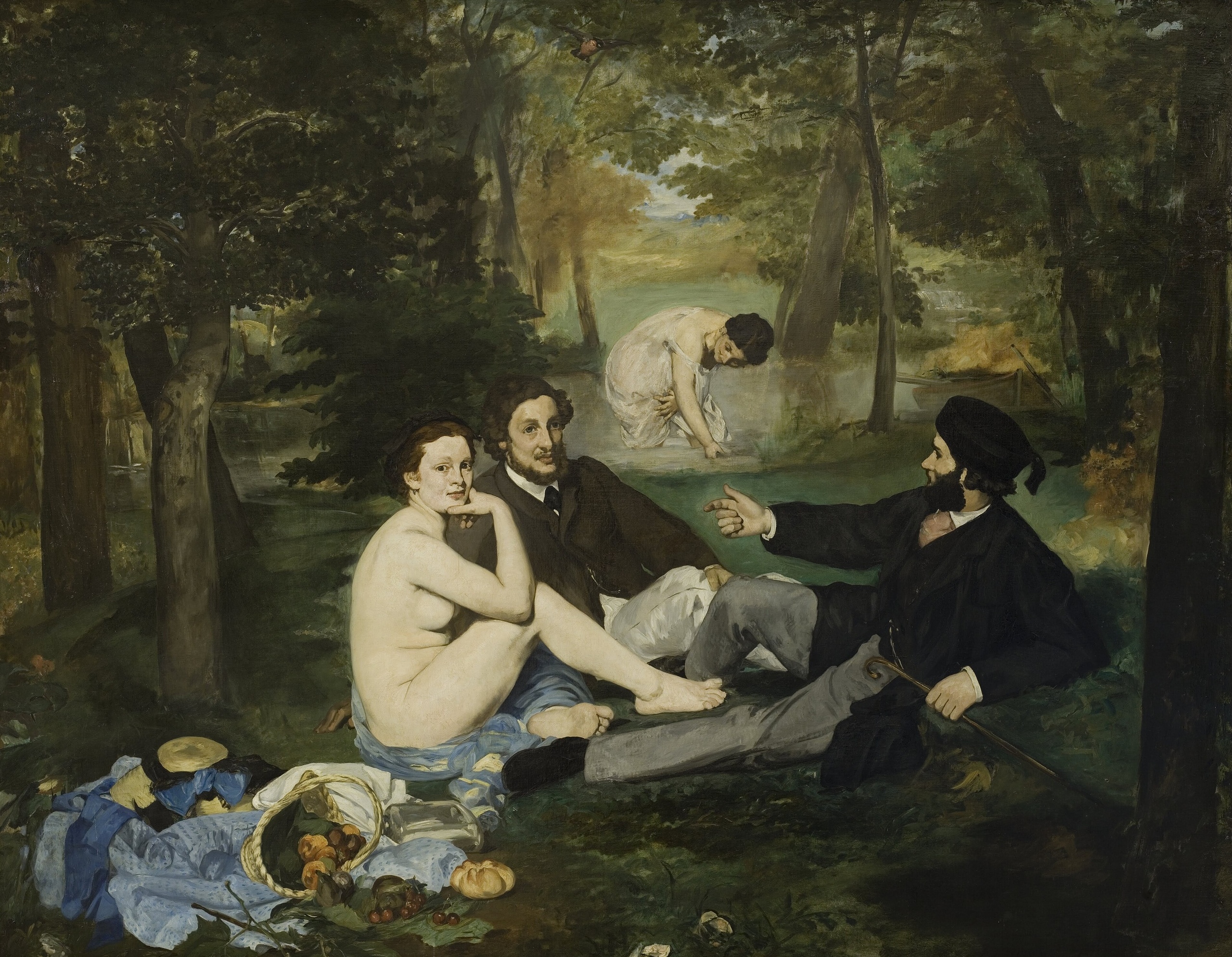
Le Déjeuner sur l’herbe, known in English as Luncheon on the Grass, is an 1863 painting by Édouard Manet: in a shady clearing two clothed men sit on the grass with a nude woman who looks calmly at us, while behind them a second woman bends over a stream. The original, 208 x 264.5 cm, is in the Musée d’Orsay in Paris. Our painter hand-paints it in oil on canvas in 8 landscape sizes from 40 x 30 to 200 x 159 cm or made to measure, and we send you a photograph of the finished work before dispatch.
| Title: | Le Déjeuner sur l’herbe |
| Other titles: | Luncheon on the Grass (English title) · Le Bain (first title) |
| Painter: | Édouard Manet (1832–1883) |
| Year painted: | 1863 |
| Original size: | 208 cm x 264.5 cm (height x width) |
| Original technique: | Oil on canvas |
| Painting style: | Realism and Impressionism |
| Located at: | Musée d’Orsay, Paris, France |
| Our reproduction: | Hand-painted in oil on canvas, 8 sizes or made to measure |
Le Déjeuner sur l’herbe – Édouard Manet
What does Le Déjeuner sur l’herbe show?
Three people sit on the grass in a clearing among tall trees: a nude woman resting her chin on her hand, and two men in dark clothes, turned out like young Parisian dandies. Her body is brightly lit, almost white against the dark greenery, and her gaze goes straight to the viewer.
The bearded man on the right lies on his side with a walking stick, raising his other hand as if making a point. He wears a flat cap with a tassel, the kind then worn only indoors.
At the lower left lie her blue dress, a straw hat with a blue ribbon and an overturned basket from which fruit, cherries among it, has tumbled beside a round loaf. The corner is arranged like a still life of its own.
Behind them, a second woman in a white shift bends towards a stream; she is too large for her distance and painted more loosely than the figures in front. A small boat lies by the bank, and high in the trees a tiny bird is in flight.
Who are the people in the painting, and what does the scene mean?
Manet first called the work Le Bain, The Bath. In 1867 he renamed it, taking the title Claude Monet had given to his own version of the subject.
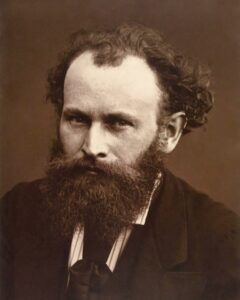
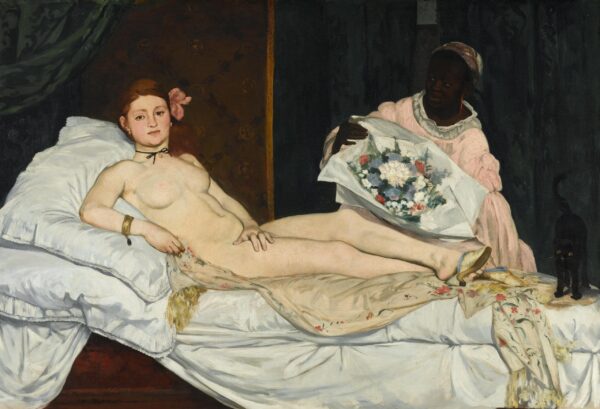
The nude is thought to be Victorine Meurent, his favourite model, who later sat for Olympia. The man on the right combines features of Manet’s brothers Eugène and Gustave; the other is his brother-in-law, the Dutch sculptor Ferdinand Leenhoff. Nancy Locke called the scene Manet’s family portrait.
There is no single reading: it cannot be settled whether the woman challenges the viewer, accepts them or looks past them. Émile Zola argued that for Manet the subject was only a pretext to paint light on skin and landscape.
Why is this painting so famous?
The Paris Salon jury rejected it in 1863. Manet showed it with two other paintings at the Salon des Refusés, where it was among the most discussed works and caused an uproar. It made his name, yet it did not sell.
A nude woman picnicking at ease with two clothed men offended the public. Manet also gave an everyday scene a vast canvas normally kept for history, religion and myth, and he left his brushstrokes plainly visible. Zola replied that the Louvre held more than fifty works mixing clothed and nude figures.
The arrangement of the three main figures comes from Marcantonio Raimondi’s engraving The Judgement of Paris (c. 1515), after Raphael. Scholars also point to the Pastoral Concert in the Louvre, given to Giorgione or possibly Titian.
Manet, born in Paris in 1832, trained under Thomas Couture. This work and Olympia are seen as the start of modern art and rank among the famous Manet paintings. Monet, Cézanne and Picasso painted their own versions; Picasso alone made 27 paintings and 140 drawings after it between 1949 and 1962.
Sources and reviews are gathered in the English Wikipedia article on this painting, written in English.
Where is the original, and how big is it?
The original belongs to the Musée d’Orsay in Paris, inventory number RF 1668. At 208 x 264.5 cm (height x width) it is more than two and a half metres wide. A smaller, earlier version is in the Courtauld Gallery in London.
The canvas stayed with Manet until 1878, when the opera singer and collector Jean-Baptiste Faure bought it.
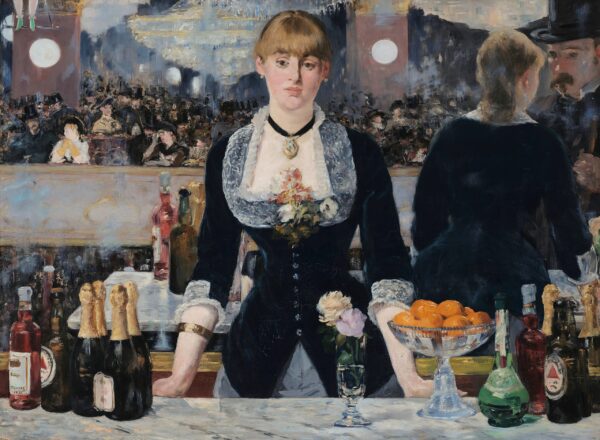
Manet was one of the first 19th-century artists to paint modern life. How he later painted Paris after dark shows in A Bar at the Folies-Bergère.
Le Déjeuner sur l’herbe or another Manet?
Le Déjeuner sur l’herbe is a canvas painting for anyone who wants a broad green landscape with figures and a story worth telling. It sits calmly on a wide wall above a sofa or in a dining room.
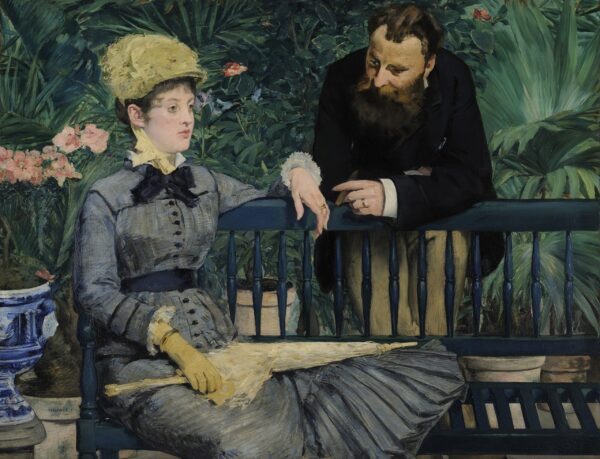
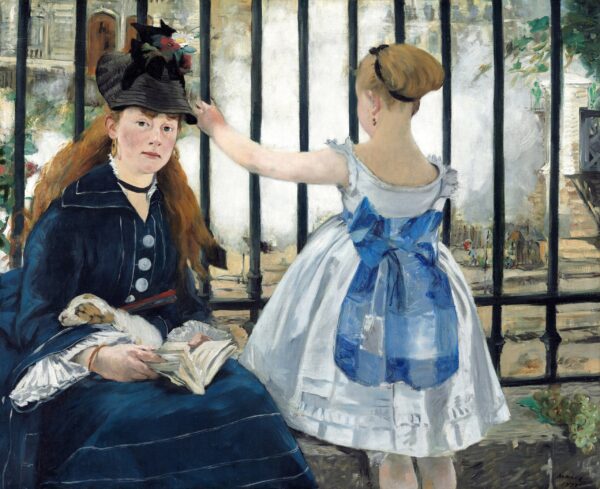
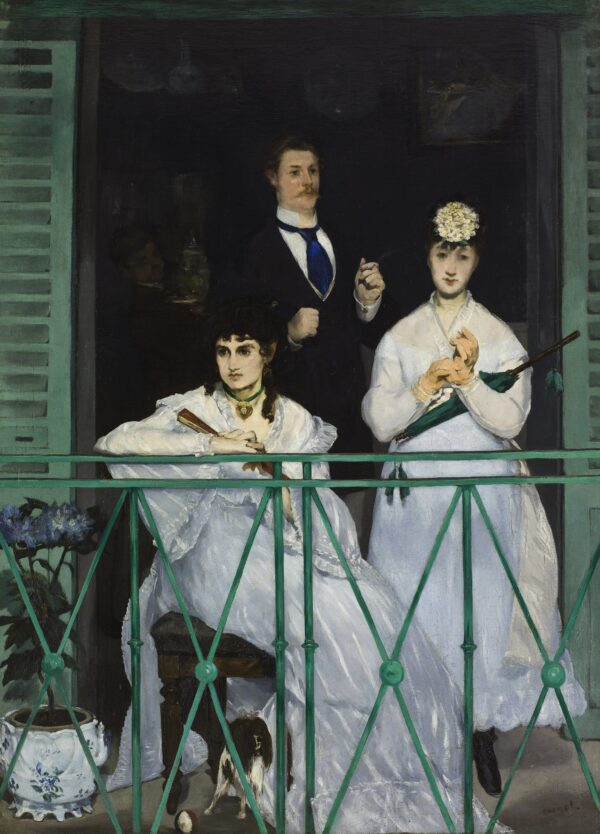
If you prefer polite company without a nude, see The Balcony. A quieter couple among plants is In the Conservatory, and for a moment of city life, choose The Railway.
Every work by this painter that we paint to order is on our Édouard Manet page.
How do we hand-paint Le Déjeuner sur l’herbe?
Manet’s original is a large oil on canvas. Ours is an oil painting reproduction made by hand: the painter works in oil on canvas in the size you choose and builds it up layer by layer, so on your wall it reads as a painted work, not a print.
He first places the three figures, since the woman’s gaze has to meet the viewer. Then come the dark greens of trees and grass and the men’s clothes, and last the pale skin, the bather’s white shift and the still life in the corner. He keeps the loose strokes of the background, so the wood feels deep.
Which size fits which wall?
In short: 40 x 30 or 50 x 38 cm for a shelf or hallway, 65 x 49 and 80 x 63 cm above a chest of drawers or desk, 100 x 79 cm above a sofa, and 125 x 99, 160 x 123 or 200 x 159 cm for a wide wall where the clearing should open up the room.
The clearing comes in 8 landscape sizes (width x height): 40 x 30, 50 x 38, 65 x 49, 80 x 63, 100 x 79, 125 x 99, 160 x 123 and 200 x 159 cm. The original measures 264.5 x 208 cm (width x height), so all our sizes are smaller; the largest, 200 x 159 cm, reaches about three quarters of its width.
As a painting for the living room it works best at 125 x 99 or 160 x 123 cm above the sofa, where the green opens like a window onto the woods.
Can I have a different size or a frame?
Yes. For other proportions we keep the three people and the bather whole and widen or narrow only the woods at the edges. Send us the size that suits you and we will reply with a price and a production time.
Your Déjeuner travels rolled, on a stretcher bar or ready framed. Our workshop in Slovenia does the stretching and framing and packs each painting with care. The 3D app is where you choose the moulding, nothing more; seeing the painting on your own wall is a separate service.
The dark greens suit a classic gilt frame or a dark wooden one.
When will the painting reach you?
After you confirm, the painter picks up his brushes, and the picnic scene is ready to ship within 15 to 45 working days. Before packing we send you a photograph of the finished canvas, and if you want a change, we make it.
Parcels within Slovenia and to other EU countries pay no customs duties, and every order is covered by our returns policy.
It makes a fine present for an art lover who knows the story of the Salon des Refusés. If you are unsure about their wall, give a wall art voucher.
Frequently asked questions
Where does the original hang?
In the Musée d’Orsay in Paris, inventory number RF 1668.
What is in the picture?
A nude woman and two clothed men picnicking in a woodland clearing, with a bather in the stream behind.
Is it a print?
No. It is a hand-painted copy: our painter lays every stroke onto the canvas in oil.
How large is the original?
It measures 208 x 264.5 cm (height x width); our largest size is 200 x 159 cm.
Can I order the clearing in a size that is not listed?
Of course. Send the width and height you need and we will quote a price and a date.
How long will I wait?
From 15 to 45 working days, with a photograph of the completed work before dispatch.
Is it right for a living room, or as a gift?
Yes. All that green is calming, and it will please anyone interested in the history of modern art.
Why does the nude woman look straight at us?
Her gaze is part of the puzzle: it is unclear whether she challenges the viewer, accepts them or looks past them.
- Subject: a nude woman and two clothed men in a woodland clearing, a still life of fruit and bread in front, a bather behind.
- Original: oil on canvas, 1863, 208 x 264.5 cm, Musée d’Orsay, Paris.
- Ours: an Édouard Manet reproduction painted by hand in oil on canvas, 8 sizes from 40 x 30 to 200 x 159 cm, or made to measure.
- Worth knowing: its first title was Le Bain (The Bath); in 1863 it hung at the Salon des Refusés.