







































Description
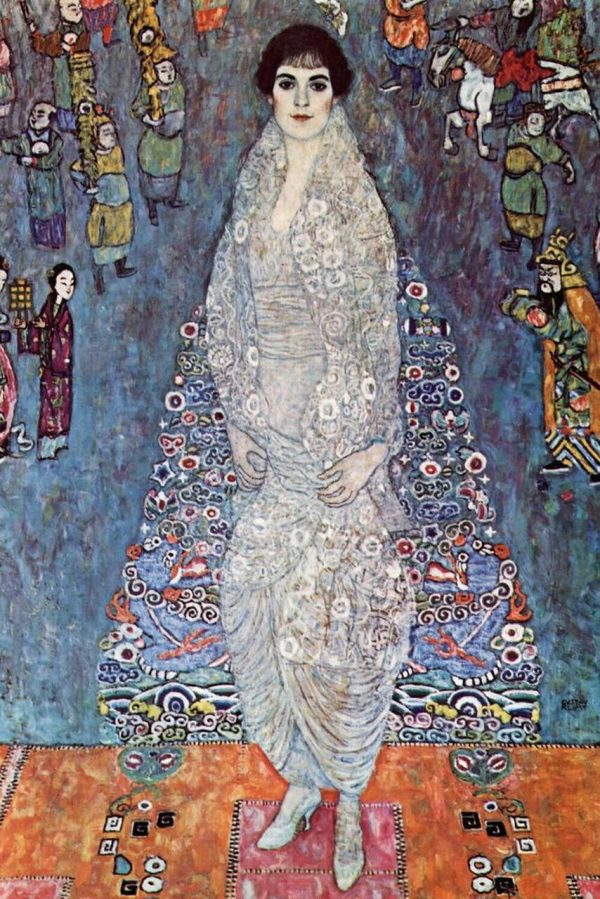
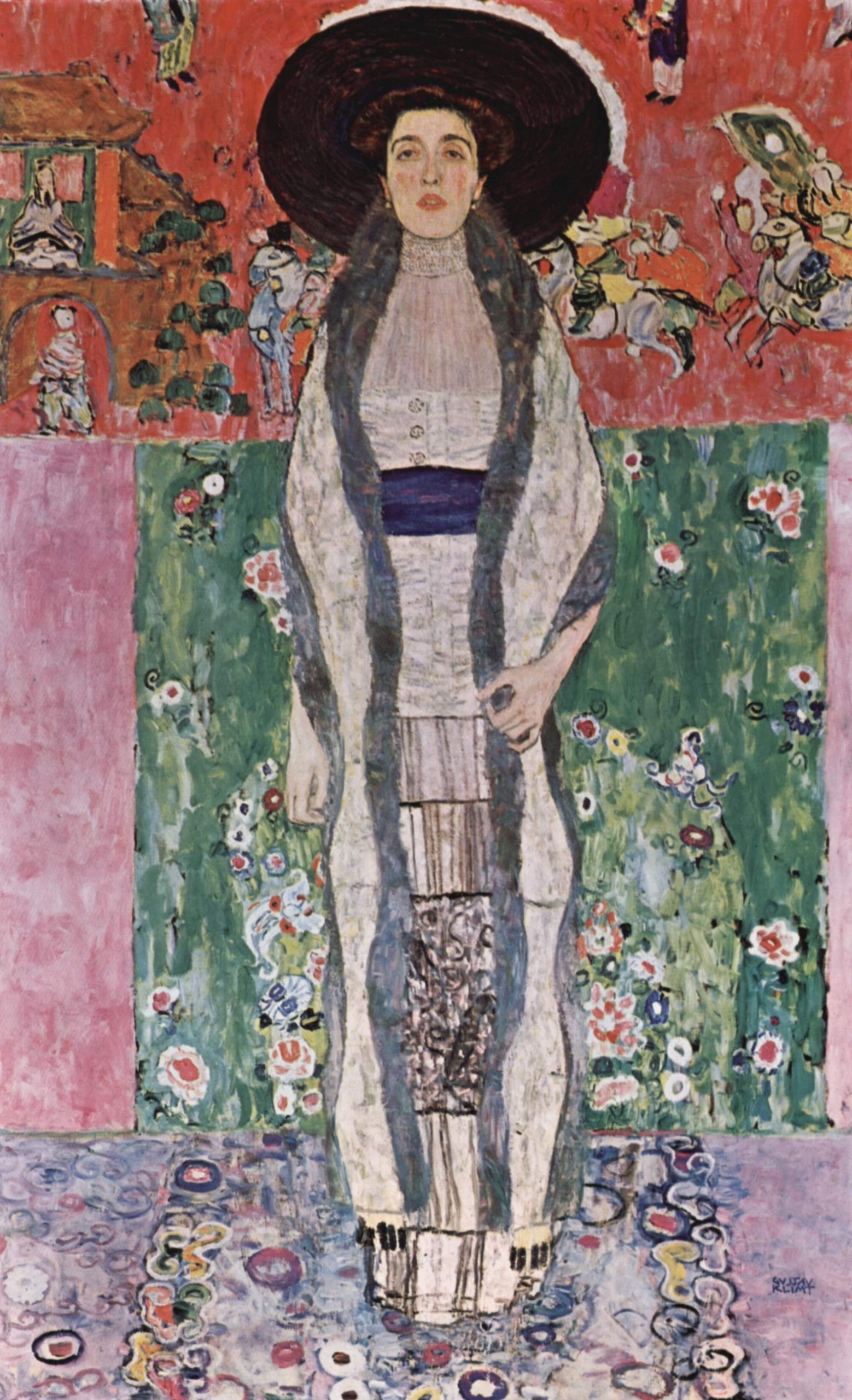
Portrait of Adele Bloch-Bauer II is Klimt’s painting of 1912: Adele standing full-length in a white dress and a wide black hat, before blocks of red, green and violet. It is the second full-length portrait he painted of her, and this time without gold. We paint it by hand in oil on canvas, in seven sizes or made to measure, and send you a photograph of the finished work for approval before dispatch.
| Title: | Portrait of Adele Bloch-Bauer II |
| Other titles: | Adele Bloch-Bauer II · Bildnis Adele Bloch-Bauer II · Ritratto di Adele Bloch-Bauer II |
| Painter: | Gustav Klimt (1862–1918) |
| Year painted: | 1912 |
| Original size: | 190 cm x 120 cm |
| Original technique: | Oil on canvas |
| Painting style: | Vienna Secession, late period |
| Located at: | Private collection |
| Our reproduction: | Hand-painted oil on canvas, seven sizes or made to measure |
Portrait of Adele Bloch-Bauer II – Gustav Klimt
What is shown?
Adele Bloch-Bauer stands full-length and looks straight at us. She wears a wide black hat and a long white dress, with a violet shawl falling over her shoulders and around her waist. The figure is slim and upright, the arms by her sides, the face calm and almost serious.
Around her the background is built from large blocks of colour. At the top runs a red-orange band with small riders and figures in an East Asian style, behind her is a green panel with flowers, and below a pink-violet floor with patterns. There are no golden spirals and no metallic shine: the colours and the way they meet carry all the force.
Why is there no gold in this portrait?
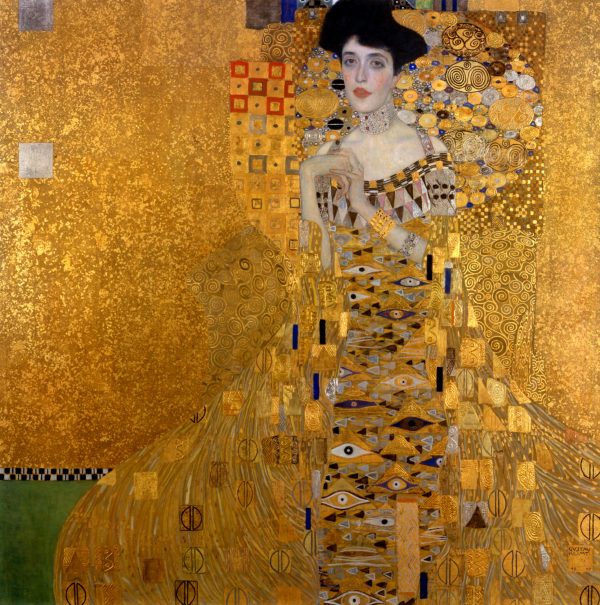
When Klimt painted Adele a second time in 1912, he had already left gold behind. His Golden Period, in which the first portrait of her was made, was over, and in place of metal came pure, vivid colours and patterns that recall textiles and East Asian art.
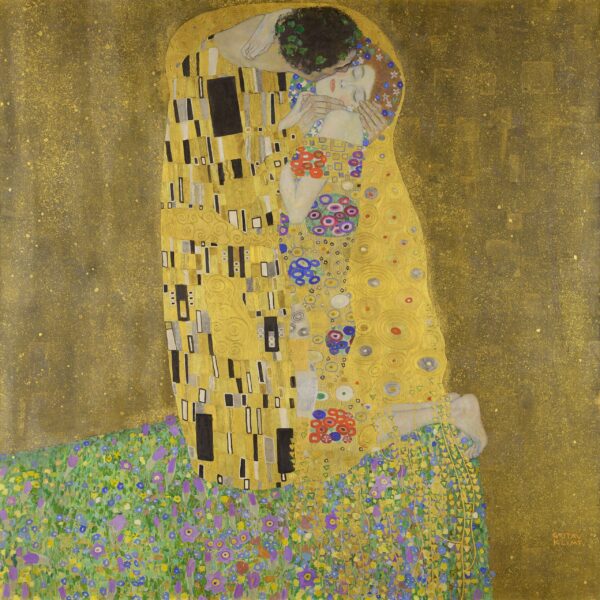
That is why the two paintings differ so much. The first portrait is almost entirely gold and Adele sits in it; the second is full of colour and she stands. Seen side by side, they show how quickly Klimt’s way of painting changed within five years.
Who was Adele Bloch-Bauer?
Adele Bloch-Bauer (1881–1925) was a Viennese socialite, a patron and close friend of Gustav Klimt. He painted her full-length twice: in 1907 in the golden portrait and in 1912 in this colourful one. The fact that he painted her twice already says how close they were.
The painting tells no story; it shows a person and her world. Adele stands at the centre, calm and self-assured, and the world of colour around her is as rich as the salons she moved in. There is more about the painter on Wikipedia.
What happened to the painting up to today?
This painting has travelled a long way. During the Second World War it was seized by the Nazis and was afterwards held by the Austrian Gallery Belvedere. In 2006 an Austrian arbitration panel ordered that it be returned to Maria Altmann, Adele’s niece, together with other Klimt paintings from the family collection.
In November 2006 it sold at Christie’s for about 88 million US dollars to Oprah Winfrey; at the time that was the fourth-highest price paid for a work of art at auction. From autumn 2014 to August 2016 it was on loan to MoMA in New York, and in the summer of 2016 Winfrey sold it to an unidentified buyer in China for 150 million dollars. Today it is in a private collection; the details are on its Wikipedia page.
Adele Bloch-Bauer I or II – which should you choose?
You can order both portraits from us. Portrait of Adele Bloch-Bauer I of 1907 is golden and square, with Adele seated among spirals and eye shapes. Portrait of Adele Bloch-Bauer II of 1912 is upright, colourful and without gold, with Adele standing before blocks of colour.
If you want Klimt’s Golden Period, choose the first; if colour speaks to you more and you have a tall, narrow wall, choose the second. Klimt’s later ladies in colour that we also paint include Lady with a Feather Hat and Portrait of Sonja Knips, and from the golden years Judith I.
How is our hand-painted version made?
The painter first draws Adele’s figure, the hat and the division of the background into blocks of colour with a fine line. Then come the face and hands, painted softly in several layers, and only after that the white dress, the violet shawl and the large areas of the background, laid on in full, vivid colour.
The small details come last: the riders and figures in the red band, the flowers on the green panel and the patterns of the floor. As there is no gold in this painting, everything rests on the colour and on the precision of these small patterns, which the painter draws with a fine brush.
Every painting is a hand-painted copy made for your order, so no two are ever quite the same. A printed oil painting reproduction cannot show the relief of the brushstrokes and the depth of colour that you can see and feel on the canvas.
Which size for which wall?
Short answer: 80 x 130 cm for most walls, 50 x 80 cm for a narrower wall or a hallway, and 100 x 160 or 120 x 190 cm for a large room, the latter matching the size of the original. The sizes are 30 x 50, 40 x 60, 50 x 80, 60 x 100, 80 x 130, 100 x 160 and 120 x 190 cm.
All sizes are upright like the original, so the painting fills a narrow, tall wall between two windows or beside a door well. With its vivid colours it needs a light, calm background. A painting for the living room should take up about two thirds of the width of the furniture below it, and with a tall format the top edge should stay well below the ceiling.
Hang it with the centre of the canvas about 150 cm above the floor, and 20 to 30 cm above a chest of drawers. The largest size is almost two metres tall, so measure it out on the wall before you order.
Custom size, stretcher and frame
If you need a size that is not among those above, we paint it to measure, for example 70 x 110 or 90 x 145 cm. Send us the width and height you want and we will quote a price and a lead time. Every painting we make is stretched over a wooden stretcher and ready to hang.
For the moulding, use our 3D application: it shows every one of our frame profiles on this subject, so you can compare gold, silver, black, white and natural wood before deciding – the application is for choosing the frame only. If you would like to see how the painting will look on your own wall, that is our separate room placement service. A plain white or a dark wooden frame suits the blocks of colour.
Delivery and guarantee
Every painting is made to order in our studio in Slovenia, so allow 15 to 45 days depending on the size you choose. We ship it stretched and protected for transport, framed if you chose a frame, across the EU with no customs. Before dispatch you receive a photograph of the finished work to approve, and our returns policy applies to every order.
Every other Klimt work we paint is in the Gustav Klimt gallery, and there is more about the painter in our ten facts about Klimt. If the painting is a gift and you are unsure of the size, there is a wall art voucher: the recipient chooses the size and the subject.
Frequently asked questions
Where is Adele Bloch-Bauer II today?
Adele Bloch-Bauer II is in a private collection today and is not on permanent view in any museum. In the summer of 2016 Oprah Winfrey sold it to an unidentified buyer in China. Before that it was on loan to MoMA in New York from autumn 2014 to August 2016, and for decades it had been held by the Austrian Gallery Belvedere in Vienna.
Did Oprah Winfrey really own Adele Bloch-Bauer II?
Yes. In November 2006 Oprah Winfrey bought it at Christie’s for about 88 million dollars, after the painting had been returned to the heir Maria Altmann. She owned it for ten years, during part of which it hung at MoMA, and in the summer of 2016 she sold it to a buyer in China for 150 million dollars.
How much did Adele Bloch-Bauer II sell for?
Twice for a remarkable sum. In 2006 it sold at Christie’s for about 88 million US dollars, then the fourth-highest price for a work of art at auction. In 2016 it changed hands for 150 million dollars. Our hand-painted version costs a tiny fraction of that and is made to fit your own wall.
What is the difference between Adele Bloch-Bauer I and Adele Bloch-Bauer II?
Adele Bloch-Bauer I of 1907 is golden and square, with Adele seated among golden spirals and eye shapes. Adele Bloch-Bauer II of 1912 is upright, colourful and without gold, with Adele standing in a black hat. The first is for lovers of Klimt’s gold, the second for those who feel closer to colour.
Why is there no gold in Adele Bloch-Bauer II?
Because by 1912 Klimt had given gold up. His Golden Period had ended a few years earlier, and instead of metal he now painted with pure, vivid colours and patterns that recall textiles and East Asian art. That is why the second portrait of Adele is colourful and the first almost entirely gold.
When was Adele Bloch-Bauer II painted, and how big is it?
Klimt painted it in 1912. The original is oil on canvas and measures 190 x 120 cm, so it is upright and almost two metres tall. Our largest size, 120 x 190 cm, matches the original, and for smaller walls there are lower sizes from 30 x 50 cm upwards.
Can I see Adele Bloch-Bauer II in a museum?
Not at present, because it is in a private collection. It was last on public view at MoMA in New York, where it was on loan from autumn 2014 to August 2016. If you want to have it in front of you every day, we will paint it for you by hand, in oil on canvas, in the size you choose.
In which sizes can I order Adele Bloch-Bauer II?
There are seven upright sizes: 30 x 50, 40 x 60, 50 x 80, 60 x 100, 80 x 130, 100 x 160 and 120 x 190 cm. All follow the upright proportion of the original. If you need another size, we paint it to measure and quote the price and the lead time in advance.
Which room suits Adele Bloch-Bauer II?
It works best on a tall, narrow wall in a living room, bedroom or hallway, where her upright figure can show. As it is full of colour, it needs a calm, light wall without other paintings close by. Such a canvas painting can become the focal point of a room without making it darker.
- Subject: Adele Bloch-Bauer full-length in a black hat, before red, green and violet blocks of colour.
- Original: 1912, 190 x 120 cm, private collection.
- Ours: a Klimt reproduction painted by hand in oil on canvas, in seven upright sizes or made to measure.
- Worth knowing: you receive a photograph of the finished work for approval before dispatch.