







































Description
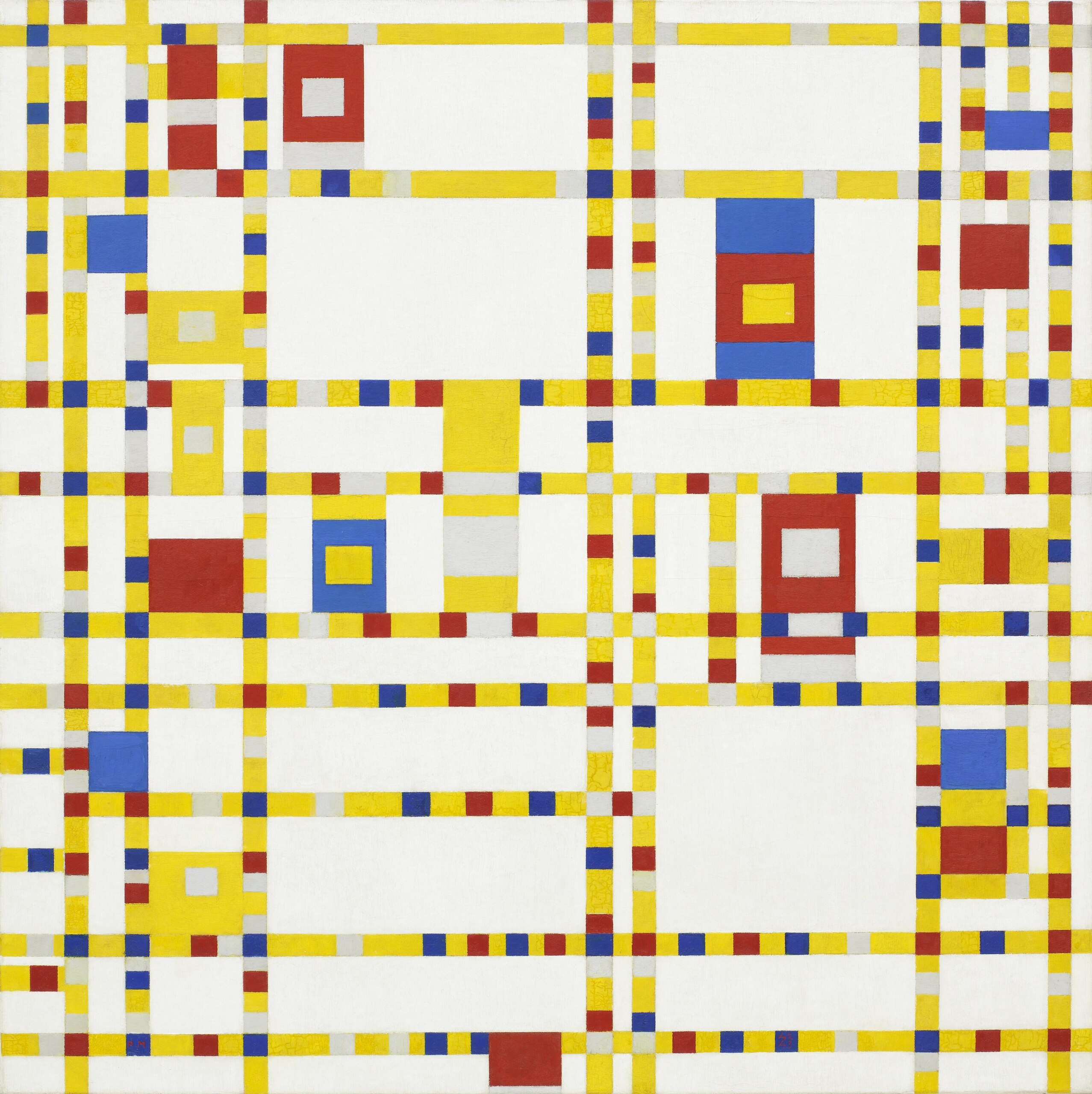
Broadway Boogie Woogie is a square painting by Piet Mondrian from 1942–1943, made in New York: yellow lines cross a white ground, broken into tiny squares of red, blue and light grey, and larger red, blue and yellow blocks sit between them. The original, oil on canvas, measures 127 x 127 cm and belongs to the collection of the Museum of Modern Art (MoMA) in New York. Our painter paints it for you by hand in oil on canvas, in one of 8 sizes from 35 x 35 to 196 x 188 cm or made to measure, and we send you a photograph of the finished painting before dispatch.
| Title: | Broadway Boogie Woogie |
| Other titles: | Broadway Boogie-Woogie · Broadway-Boogie-Woogie |
| Painter: | Piet Mondrian (1872–1944) |
| Year painted: | 1942–1943, New York |
| Original size: | 127 cm x 127 cm (height x width) |
| Original technique: | Oil on canvas |
| Painting style: | Neoplasticism (De Stijl), abstract painting |
| Located at: | The Museum of Modern Art (MoMA), New York (acc. no. 73.1943) |
| Our reproduction: | Hand-painted oil on canvas, 8 sizes or made to measure |
Broadway Boogie Woogie – Piet Mondrian
What does Broadway Boogie Woogie show?
From across the room a strict grid, up close a city on the move. Horizontal and vertical yellow lines run across the white canvas, yet none of them keeps one colour from end to end: small squares of red, blue and light grey break into each one at an uneven beat.
Larger blocks of red, blue and yellow fill some of the fields between the lines. The black lines that had long been Mondrian’s signature are gone altogether. There are far more small squares than in his earlier work, so the canvas flickers like street traffic or like lights switching on and off.
Where does the title come from?
Mondrian reached New York in 1940, after long years in Paris and two in London, where he had moved in 1938. Two things in the new city delighted him: the right-angled street grid of Manhattan and boogie-woogie, a blues piano style developed by African-American musicians.
The title joins the two: Broadway as the name of the New York street, boogie-woogie as the name of the music. The yellow lines recall streets meeting at right angles, the squares on them cars and signals, and the short beats of colour follow one another fast and bouncing, like the notes of the music he loved.
Why is the painting so famous?
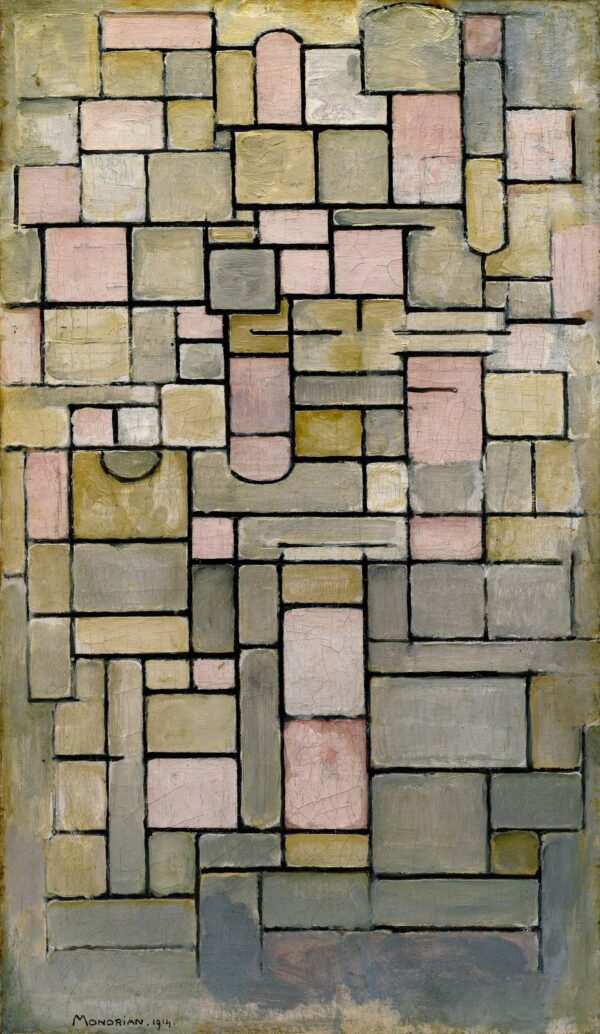
Because it shows a painter who had spent two decades building a strict balance of black lines and pure fields of colour opening up once more at seventy. Neoplasticism, his style within the De Stijl movement, allowed only horizontal and vertical lines, the three primary colours, and black, white and grey.
Broadway Boogie Woogie keeps to those rules but drops the black and fills the grid with movement. Among the famous Mondrian paintings it is the liveliest of the grids: instead of calm balance it offers a rhythm you notice the moment you walk into the room. The story of the painting and its title is told in the Wikipedia article (in English).
Where is the original, and how did it reach the museum?
The original belongs to the collection of the Museum of Modern Art (MoMA) in New York, accession number 73.1943. The painting has stayed in the city it portrays.
After an exhibition in 1943 the Brazilian sculptor Maria Martins bought it at the Valentine Gallery in New York for 800 dollars. She later gave it to the Museum of Modern Art.
Broadway Boogie Woogie or another Mondrian?
This canvas painting belongs in a modern, minimalist or Scandinavian interior: on a white wall, in an office or in an entrance hall where colour should have something to say. Its square format hangs well centred above a sofa or a bed.
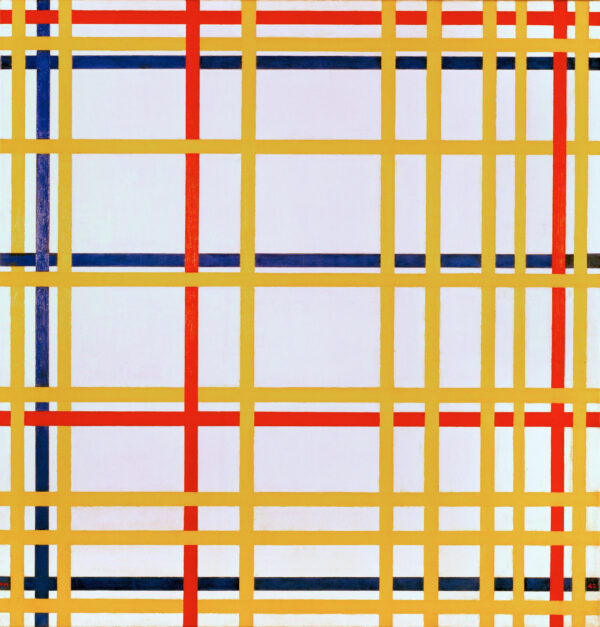
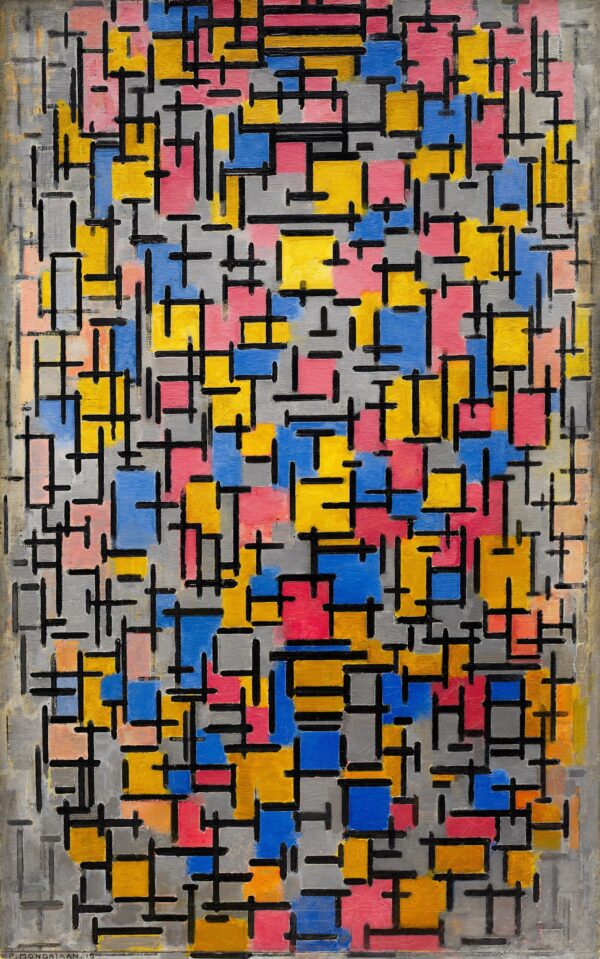
Its closest relative is New York City from 1942, where yellow, red and blue lines also cross without any black. If you prefer the classic black grid, choose Composition II in Red, Blue and Yellow or Place de la Concorde, begun in Paris and finished in New York.
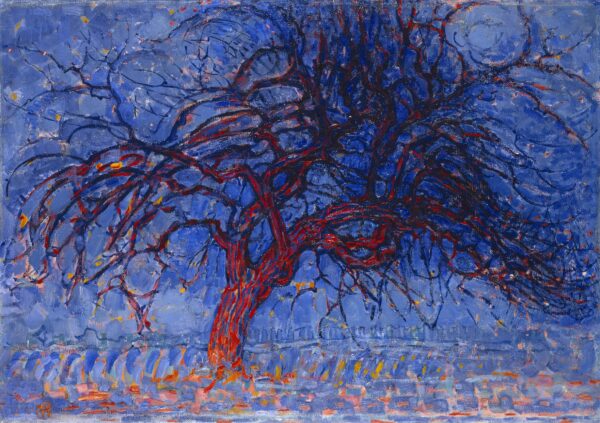
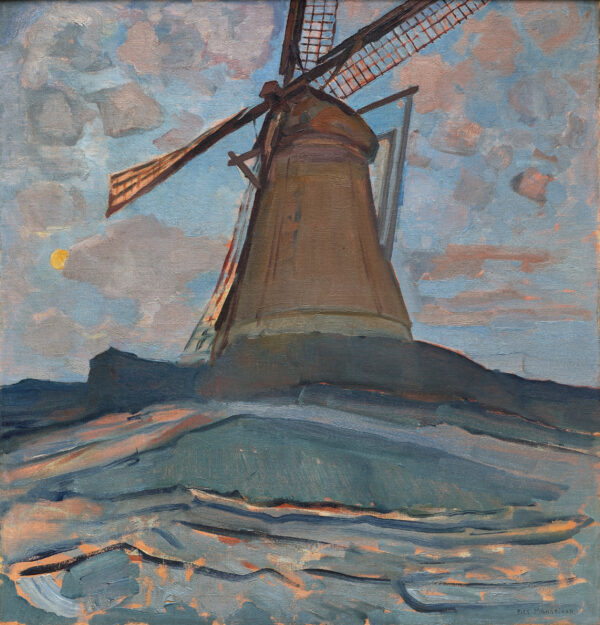
For a calmer bedroom an early work suits better: The Red Tree, where his road to the grid began. Every Mondrian reproduction we paint to order is gathered on the Piet Mondrian page.
How does our painter paint your Broadway Boogie Woogie?
The grid looks easy, but its effect depends on exact proportions, crisp edges and even colour. So before picking up a brush the painter transfers the precise spacing of the lines and the position of every square from the original onto the canvas.
He masks the edges of each field with tape so that they stay straight and clean, then lays the colour in several thin, even coats until the surface is smooth with nothing showing through. Yellow, red, blue and grey have to be tuned precisely to one another, because they carry the rhythm.
The result is an oil painting reproduction that reads on the wall as a painting, not a poster: oil paint has a soft sheen and a depth of colour that a print does not reach.
Which size for which wall?
In short: 35 x 35 or 45 x 45 cm for a shelf or a narrow wall, 60 x 57 or 70 x 70 cm above a chest of drawers or a desk, 90 x 88 and 110 x 115 cm above a sofa or a bed, 150 x 144 and 196 x 188 cm for a large white wall.
There are 8 nearly square sizes (width x height): 35 x 35, 45 x 45, 60 x 57, 70 x 70, 90 x 88, 110 x 115, 150 x 144 and 196 x 188 cm. Closest to the 127 x 127 cm original is 110 x 115 cm, which is 17 cm narrower and 12 cm lower.
As a painting for the living room above a sofa about two metres wide, 110 x 115 or 150 x 144 cm works well. The tiny squares show best in the larger sizes, so with this work it pays to go bigger.
Can I choose another size or a frame?
Yes. Because the original is square, it transfers best to a square size of your choice, and we recalculate the spacing of the lines for it. Send us the width and height and we will reply with a price and a delivery date.
We ship it rolled, stretched on a stretcher bar or framed, and our workshop in Slovenia does the stretching and framing. You choose the frame in our 3D application, which is only for choosing frames; seeing the painting on your own wall is a separate service.
A slim white or light wooden frame suits Mondrian’s grid without competing with the colours; you can also hang the painting simply stretched on its bar.
When will the painting arrive?
We start painting once your order comes in, and within 15 to 45 working days the painting is ready to ship. Before that we send you a photograph of the finished painting; anything you would like changed, we change.
Your Broadway Boogie Woogie crosses no customs border on its way to Slovenia or any other EU country, and our returns policy covers the order.
Broadway Boogie Woogie makes a good gift for someone who loves jazz, New York or modern design. If you would rather let them choose the size, give them a wall art voucher.
Frequently asked questions
Which museum owns the original?
The Museum of Modern Art (MoMA) in New York, accession number 73.1943.
Why are there no black lines in the painting?
In New York Mondrian gave up black lines and built the grid from yellow lines with red, blue and grey squares.
Is this a printed poster?
No. It is a hand-painted copy in oil on canvas, with taped edges and several thin coats of colour.
How big is the original?
It measures 127 x 127 cm. Our closest size is 110 x 115 cm, and all our sizes run from 35 x 35 to 196 x 188 cm.
Does it suit a bedroom?
Yes, but it is very lively. Mondrian’s trees are calmer there; for a lounge, hallway or office this one is ideal.
What is boogie-woogie?
A blues piano style developed by African-American musicians, which Mondrian came to love in New York.
Who bought the painting first?
The Brazilian sculptor Maria Martins, in 1943, for 800 dollars at the Valentine Gallery; she later gave it to MoMA.
Is it a good gift?
Yes, especially for lovers of music, architecture and New York. With a voucher the recipient picks the size.
- Subject: a yellow street grid broken into red, blue and grey squares, with larger blocks of colour on a white ground.
- Original: 1942–1943, oil on canvas, 127 x 127 cm, MoMA, New York.
- Ours: painted by hand in oil on canvas, in 8 sizes from 35 x 35 to 196 x 188 cm or made to measure.
- Worth knowing: Maria Martins bought it in 1943 for 800 dollars.