







































Description
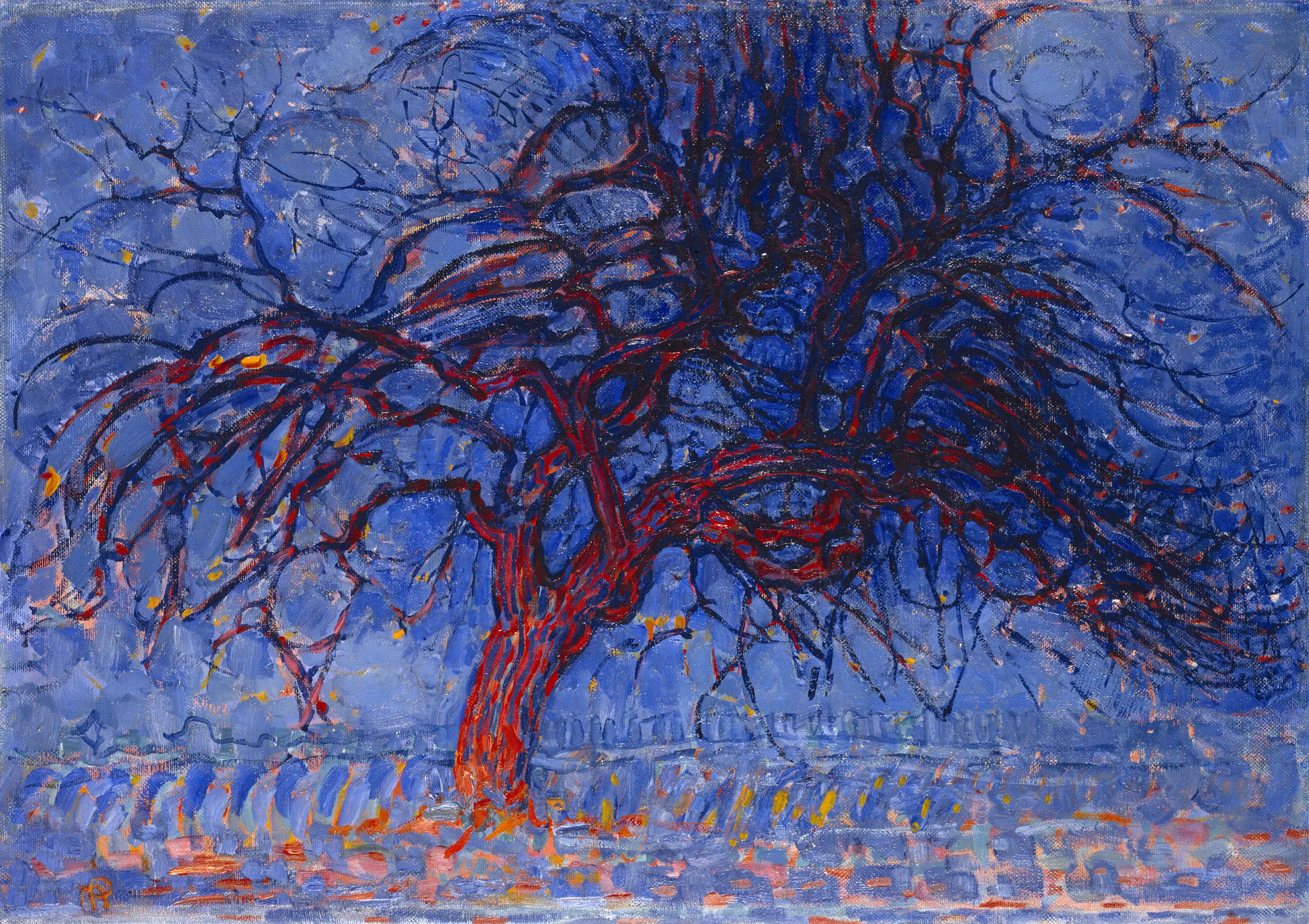
The Red Tree is an early painting by Piet Mondrian from 1908–1910: a bare apple tree with a red trunk spreads its dark red and blue branches across the whole canvas, set against a blue evening background, while short strokes of colour stand for the ground below. The original, oil on canvas, measures 70 cm high by 99 cm wide and is in the collection of the Kunstmuseum Den Haag in The Hague. We paint it by hand in oil on canvas in 8 landscape sizes, from 45 x 31 to 180 x 130 cm, or to your own measurements, and show you the finished work in a photograph before dispatch.
| Title: | The Red Tree |
| Other titles: | Evening; Red Tree · Avond (De rode boom) |
| Painter: | Piet Mondrian (1872–1944) |
| Year painted: | 1908–1910 |
| Original size: | 70 cm x 99 cm (height x width) |
| Original technique: | Oil on canvas |
| Painting style: | Expressionism, early modernism |
| Located at: | Kunstmuseum Den Haag, The Hague (inv. 0332041) |
| Our reproduction: | Hand-painted oil on canvas, 8 sizes or made to measure |
The Red Tree – Piet Mondrian
What does The Red Tree show?
In the middle of the canvas stands an apple tree without a single leaf. The trunk is red, and the branches reach out left and right in dark red and blue curves until they touch the edges. So the tree does not stand in a landscape; it fills it.
Behind the branches lies the blue of evening, not a flat ground but alive with brush marks. Below, where you would expect grass, there are only short, dense dabs of colour. The colours do not follow nature: red and blue rule the canvas, and there is almost no green.
The longer you look, the more the branches weave into the blue and form a rhythm of lines. That rhythm later became the main subject of Mondrian’s work.
How did a tree turn into a grid?
The Red Tree is the first painting in Mondrian’s series of trees. Over the following years he simplified the same motif step by step, until the branches had become horizontal and vertical lines.
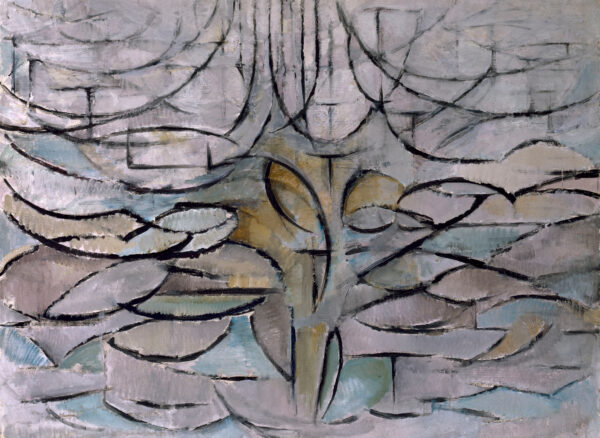
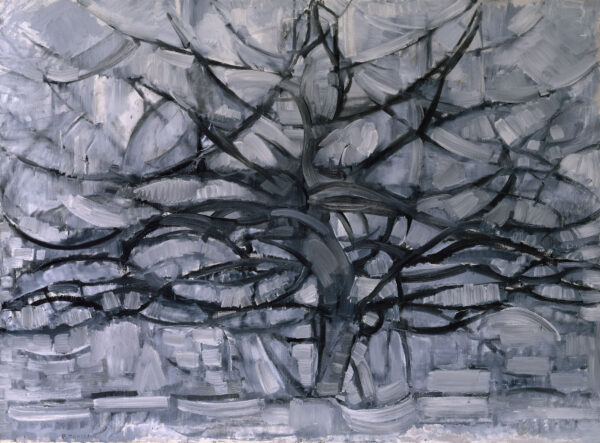
The next step is Gray Tree of 1911, where colour drops away and only grey, black and white arcs remain. A year later the tree almost dissolves into a pattern of curved lines, as Blossoming Apple Tree shows.
Anyone who knows the later grids with red, blue and yellow fields can see their beginning here: the same painter and the same search for balance, still in the shape of a tree.
Why is this painting so well known?
Because it records the moment when Mondrian decided that colour would no longer copy nature. In 1905 a retrospective of Vincent van Gogh had made a strong impression on him, with its pure colours and gestural brushstrokes. That influence is plain to see in the red trunk and the blue sky.
The painting is a bridge between two worlds: it is still a tree that anyone recognises, yet it already holds an order that leads to abstraction. The Wikipedia article traces the whole tree series in more detail.
Where is the original?
The original belongs to the Kunstmuseum Den Haag in The Hague, inventory number 0332041. The museum dates it to 1908–1910.
The same collection holds the two trees that followed: the grey one of 1911 and the blossoming apple tree of 1912. A visit to The Hague therefore shows in one place how a tree turned, within a few years, into a web of lines.
The Red Tree or another Mondrian?
This is a painting for people who love colour and nature but are not looking for realism. Because the subject is calm, it sits well in a bedroom, a reading corner or a family room, next to wood, linen and warm fabrics.
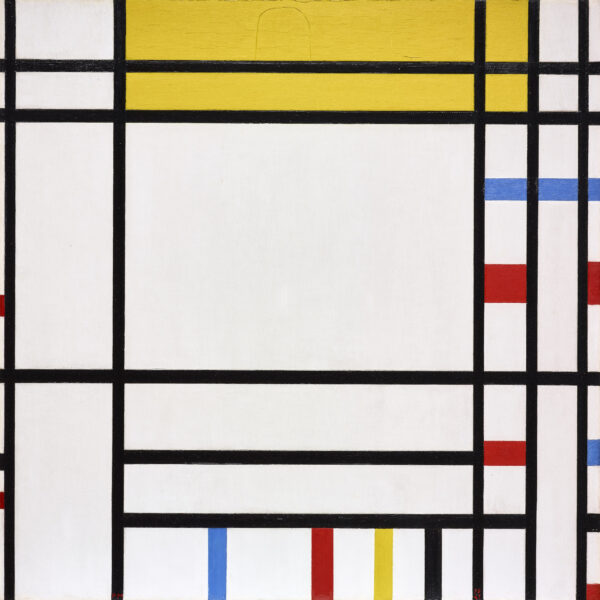
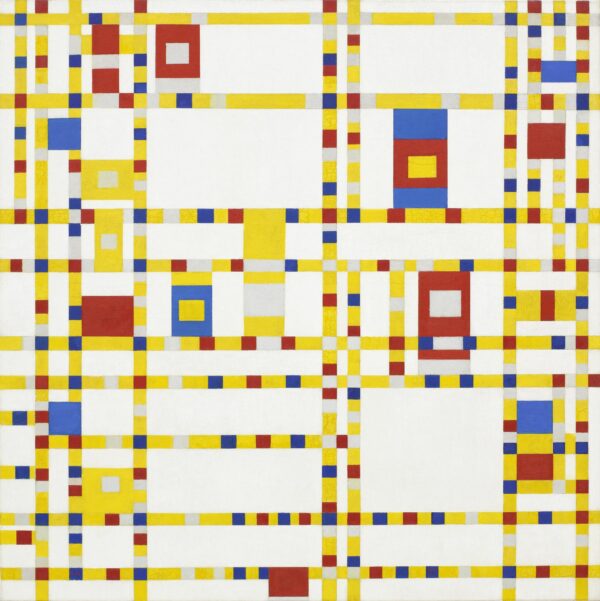
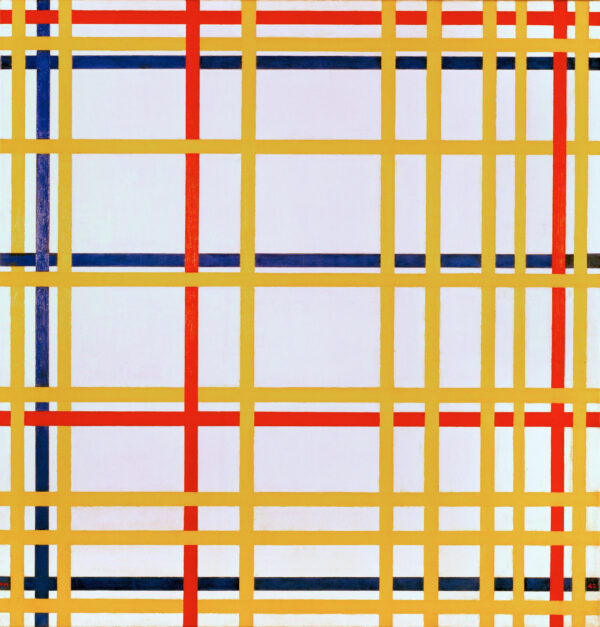
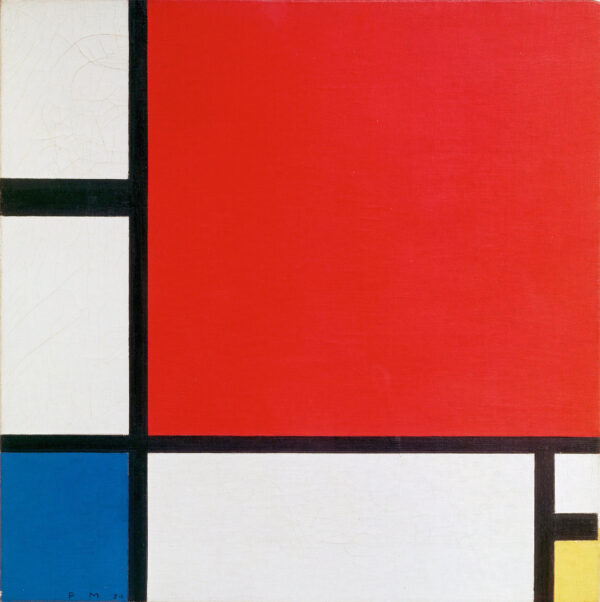
If clean planes and black lines appeal to you more, choose Composition II in Red, Blue and Yellow, which belongs in a modern, minimalist room. For more movement and colour there is Broadway Boogie Woogie, a tribute to New York and its music.
The Piet Mondrian page gathers all the famous Mondrian paintings we paint to order, from the trees to the grids.
How does our painter paint your Red Tree?
We start each Red Tree only after your order, in oil on canvas, layer by layer. First the painter transfers the outline of the trunk and the main branches in the proportions of the original, so that the tree fills the landscape format in the same way.
Then come the blue ground and the red trunk. What matters here is that the strokes stay visible and alive: the short dabs on the ground, the restless blue of the sky and the flickering branches must not be smoothed into a flat surface.
The result is a Mondrian reproduction with a real texture of paint that you notice when the light in the room changes. A printed poster lacks this relief; an oil painting reproduction has it by nature.
Which size for which wall?
In short: 45 x 31 or 56 x 40 cm for a shelf or a narrow wall, 63 x 45 or 80 x 54 cm above a chest of drawers or a bed, 100 x 70 and 125 x 90 cm above a sofa, and 140 x 103 and 180 x 130 cm for a large wall.
There are 8 landscape sizes (width x height): 45 x 31, 56 x 40, 63 x 45, 80 x 54, 100 x 70, 125 x 90, 140 x 103 and 180 x 130 cm. The closest to the original is 100 x 70 cm: the same height and only 1 cm wider.
Because the tree spreads its branches wide, the landscape format sits nicely above long furniture. As a painting for the living room above a sofa about two metres wide, 125 x 90 or 140 x 103 cm works well; above a double bed, 100 x 70 cm.
Can I choose another size or a frame?
Yes. The original is roughly 10 : 7 in proportion, so we can carry it over to a landscape size that is not on the list, and the branches still reach the edges. Give us the width and height for your tree and you will get a price and a delivery date back.
We ship this canvas painting rolled, stretched on a stretcher bar or framed, and our workshop in Slovenia does the stretching and framing. The frame is picked in our 3D application, a tool made for frame choice alone; a view of the tree on your own wall is a different service.
Blue and red go well with plain dark wood or a slim frame in natural oak; a gold frame brings the painting closer to a classic gallery.
When will my Red Tree arrive?
We paint The Red Tree to order, and within 15 to 45 working days it is ready to ship. Before it leaves, we send you a photograph of your finished tree, and anything you want adjusted is corrected first.
Your Red Tree crosses no customs border on its way to Slovenia or another EU country, and our returns policy covers the order as usual.
As a gift it is a safe choice for someone who likes nature and colour. If you would rather leave the size to the person receiving it, give them the wall art voucher.
Frequently asked questions
Where can I see the original?
In the Kunstmuseum Den Haag in The Hague, inventory number 0332041.
What can you see in the painting?
A bare apple tree with a red trunk and red and blue branches against a blue evening background.
Is it a print?
No. Your Red Tree is a hand-painted copy, put on the canvas with a brush and oil paints.
How big is the original canvas?
It is 70 cm high and 99 cm wide; our 100 x 70 cm size is only 1 cm wider.
Does it suit a bedroom?
Yes. The subject is calm, without harsh contrasts, so it looks good above a bed or in a reading corner.
What does the tree mean in Mondrian’s work?
The start of a path: he painted it more and more simply until the branches became horizontal and vertical lines.
Can I order it in a different size?
Yes. Tell us the size you want and you will receive a price and an expected date.
How long do I wait for it?
Between 15 and 45 working days; before dispatch we send you a photograph of the finished painting.
- Subject: a bare apple tree with a red trunk and red and blue branches against the blue evening sky.
- Original: 1908–1910, oil on canvas, 70 x 99 cm, Kunstmuseum Den Haag, The Hague.
- Ours: painted by hand in oil on canvas, in 8 landscape sizes from 45 x 31 to 180 x 130 cm or made to measure.
- Worth knowing: it is the first painting of the tree series that led Mondrian to his grids of lines and fields of colour.