







Description
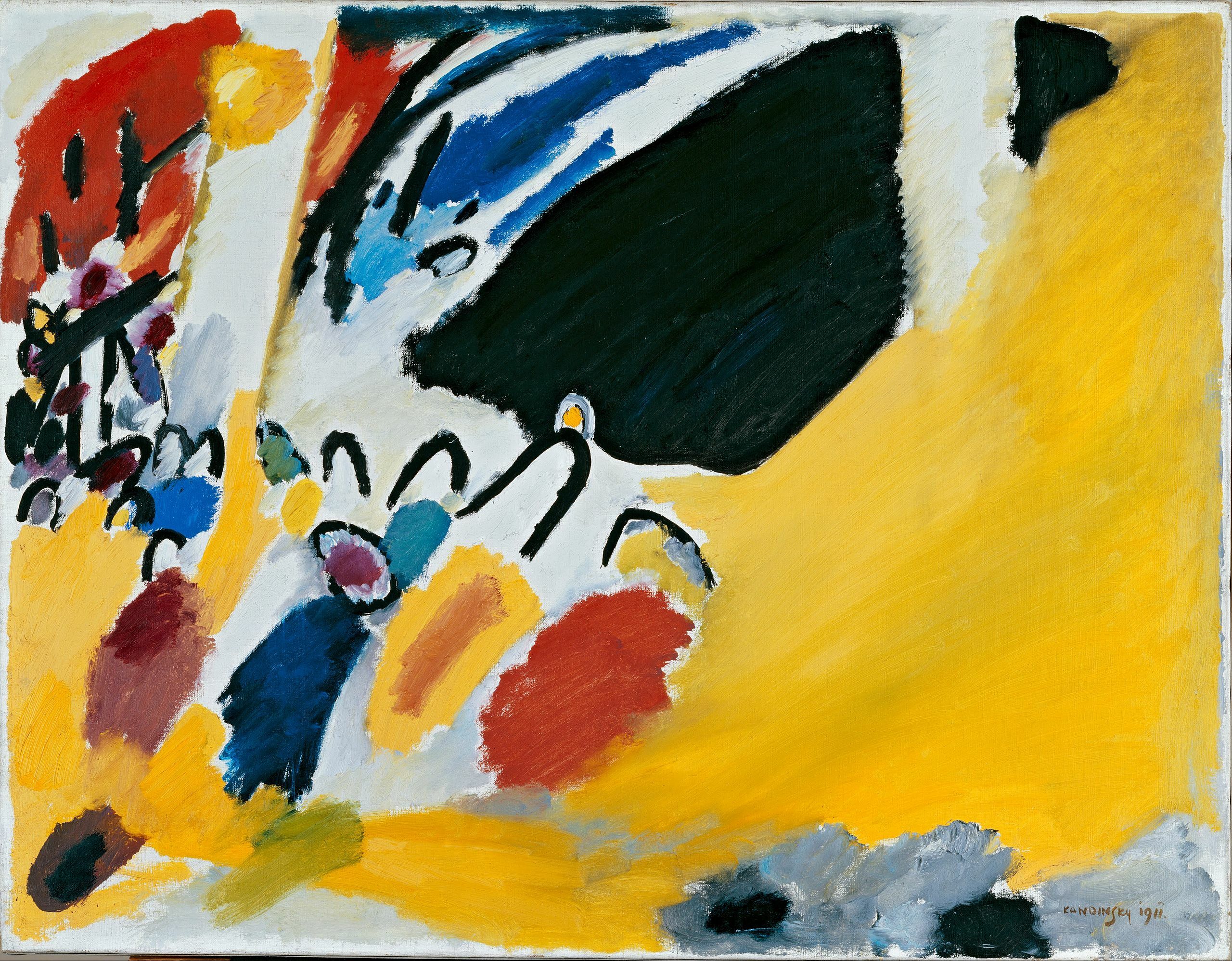
Impression III (Concert) is a painting by Wassily Kandinsky from 1911: a landscape canvas ruled by a large black body in the upper half and a yellow that pours out broadly beneath it, while black arcs run across the middle with patches of colour beside them. It is held by the Städtische Galerie im Lenbachhaus in Munich. We make it as a hand-painted reproduction in oil on canvas, in eight sizes or to your measurements; before dispatch you receive a photograph of the finished work for approval.
| Title: | Impression III (Concert) |
| Other titles: | Impression III (Konzert) · Impressione III (Concerto) · Impresija III (Koncert) |
| Painter: | Wassily Kandinsky (1866–1944) |
| Year: | 1911 |
| Original size: | 100.6 cm x 78.4 cm |
| Original technique: | Oil on canvas |
| Painting style: | Abstract art |
| Location: | Städtische Galerie im Lenbachhaus und Kunstbau, Munich (inv. GMS 78) |
| Our reproduction: | hand-painted oil on canvas, 8 sizes from 50 x 40 cm to 180 x 140 cm, custom sizes on request |
Impression III (Concert) – Wassily Kandinsky
Is anything recognisable in the painting?
Yes, but only on a second look. The museum that holds the work says what shows itself from close to: the black body is the concert grand, and in front of it are the hunched backs of the listeners, who are turned towards it. Once you have seen that, the scene assembles — the row of black arcs beneath it is a row of people, the small patches of colour beneath them their clothes. Without that key the work stays an arrangement of colours, and that was exactly the intention: Kandinsky did not want to depict the scene but to make it heard.
What is on the canvas?
The canvas is landscape format. The upper half to the right of centre is taken by a large black body with irregular edges, set at a slant so that its point turns down and to the left; a smaller black triangle stands at the upper right corner. From beneath the black, yellow pours across the whole right half and downwards — the broadest field of colour in the work, lightening towards the edges. At the left and in the middle the ground stays white, though the yellow reaches into the lower left corner as well. In the upper left corner is a red mass with black strokes and beside it a yellow-orange circle, while above the black body blue strokes line up in two tones. Across the middle, from left of centre towards the black mass, runs a row of black arcs, one beside the other, like bent backs. Beneath them lie small coloured forms: a wine-red oval, a blue figure, orange and red patches. Along the lower right edge are grey and black marks, and in the lower right corner the painter’s signature with the year.
Why is the painting called Impression III?
Because Kandinsky counted it among the impressions, and because he meant impression in a way you would not expect. According to the Lenbachhaus, he called the work an impression, a direct impression of outer nature — and the museum explains that this proves he meant by impressions not only optical ones, but sensory impressions of every kind. Here the impression is an acoustic one: the work rests on an experience of hearing and is its translation into painting; an abstract painting it is not quite yet, but the object has nearly gone. The numeral III marks the third of that series, and the bracket in the title names the occasion.
What happened before this painting?
A concert, and the museum gives the date. The work was made shortly after a concert of works by Arnold Schönberg that Kandinsky heard on 2 January 1911 in Munich together with Franz Marc and other members of the Neue Künstlervereinigung. According to the museum, struck by the bold innovations of Schönberg’s music, he began a lively correspondence with the composer; among other things this led to Schönberg taking part, at the end of that same year, in the Blaue Reiter exhibition with his self-taught works and contributing an article to the almanac. The museum also mentions two preparatory pencil sketches which, by its own record, are held at the Centre Pompidou, and in which the listeners are still plainly visible — seated, and some standing along the wall of the hall. The next in the same series is Impression IV (Gendarme), in the same museum.
Why does this painting matter?
Because among Kandinsky’s works it is the one that touches synaesthesia most directly — the link between sound and colour. The museum says so outright: no other work of his touches it so immediately. Dominant is the yellow, which the museum calls the yellow sound and understands as the emanation of the tonal impression; according to the museum, Kandinsky seems to have associated yellow above all with musical impressions: as early as 1909 he wrote the draft of a stage piece with music that later appeared in the almanac as Der gelbe Klang (The Yellow Sound). The work is today in the Munich Städtische Galerie im Lenbachhaus, where it arrived in 1957 as a gift from Gabriele Münter.
How is our hand-painted version made?
The painter works from a high-resolution reference and builds the surface in layers, with a brush and oil colours. With this subject the relation between two large fields decides everything. The black body has to stay dense and impenetrable or it loses its weight, and the yellow beneath it has to be laid so that it thins towards the edges and the brushstrokes stay visible — lay it evenly and the work collapses into a poster. The white ground is not empty: in places the canvas shows through the paint, and that light is what holds the left half up. An oil painting reproduction holds that balance over years, because the colour does not fade the way a print does. We have no studio photographs of this work yet, so you will find none on this page — once the next copy is painted we photograph it and the images come here. Because everything is done by hand, every hand-painted copy is a single piece and two copies are never quite the same.
Which size for which wall?
If you are unsure: 100 x 78 cm, the closest of our sizes to the original, which measures 100.6 x 78.4 cm. The canvas is landscape and wide, so it sits well above a sofa, above a chest of drawers or above a bed — anywhere the wall is wider than it is tall. The 50 x 40 and 60 x 50 cm sizes belong above a desk or in a hallway; 80 x 60 and 90 x 70 cm suit a bedroom or a smaller sitting room. At 100 x 78 cm this is the natural painting for the living room, and 130 x 100 cm suits a larger wall. The largest sizes, 150 x 120 and 180 x 140 cm, are for open living spaces, halls and stairwells; only at those does it show how broad the yellow field is in the original.
Custom sizes, stretcher and frame
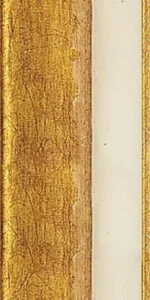
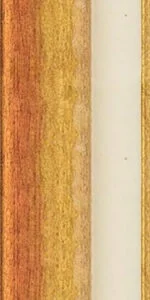
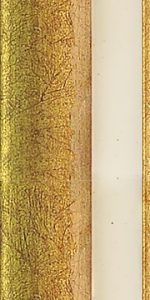
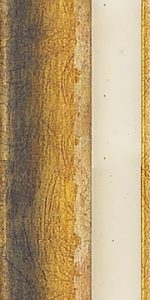
If none of the eight sizes fits your wall, we paint the work to your measurements; that is our painting made to measure. Like all our paintings on canvas, this copy is delivered stretched on a wooden stretcher and ready to hang. For the frame use our 3D application: it shows every frame profile on this subject, so you can compare gold, silver, black, white and natural wood before deciding — it is for choosing a frame, nothing else. Because the ground is light, a darker profile works well here too, picking up the black of the upper half.
Delivery and guarantee
Every copy is made to order in our studio in Slovenia: allow 15 to 45 days by size. We send it stretched and protected, framed if you have chosen a frame, across the EU without customs. Before dispatch you receive a photograph of the finished work for approval, and our returns policy applies. The whole range is in the Wassily Kandinsky gallery, and the painter’s path is described in our article about Wassily Kandinsky. Related works from the same range are The Blue Mountain, Several Circles and Composition VII.
Frequently asked questions
Where is the original?
In the Städtische Galerie im Lenbachhaus und Kunstbau in Munich, under inventory number GMS 78; the museum received it in 1957 as a gift from Gabriele Münter.
How large is the original?
It measures 100.6 cm wide and 78.4 cm high; the closest of our sizes is 100 x 78 cm, 6 mm narrower and 4 mm shorter than the original.
When was it painted?
In 1911, shortly after the concert of 2 January that year. Signed lower right: KANDINSKY 1911.
What is shown in the painting?
A concert, recognisable only from close to: the black concert grand above, the hunched backs of the listeners in front of it, and all around the pouring yellow and the patches of colour.
Is this a print?
No. This is a canvas painting made by hand in oil; the brushstrokes are visible and can be felt.
Which size should I choose?
For a living room 100 x 78 cm, our closest size to the original; for really large walls 180 x 140 cm, and for other walls see the size guide above.
Can I have a size that is not on the list?
Yes, we paint to measure and keep the proportions of the subject.
How is it delivered?
Stretched, and framed if you chose a frame. Allow 15 to 45 days depending on the size; it is dispatched once you have approved the photograph of the finished work.
What is the painting about, in short?
About sound become colour: a concert translated into yellow and black.
How do you read Kandinsky’s Impression III (Concert)?
Kandinsky painted it after a concert of Arnold Schoenberg’s music in Munich on 2 January 1911, and the painting is his answer to what he heard. The black shape at the top is the concert grand, the curved forms in front of it are the backs of the listeners, and the great yellow that pours over everything is the sound filling the hall. The concert began his friendship with Schoenberg, whose break with traditional harmony he saw as a parallel to his own path towards abstraction.
Is the original for sale, and what is it worth?
No. It belongs to the Lenbachhaus public collection and is not for sale, so we do not guess at its value.
Does it make a good gift?
Yes, for anyone who loves modern art, or for a musician. If you would rather leave the choice to them, there is a gift voucher.
- Subject: the black body of the concert grand above, yellow pouring out beneath it, the listeners’ backs across the middle
- Original: Lenbachhaus, Munich, inv. GMS 78, 1911, 100.6 x 78.4 cm, gift of Gabriele Münter 1957
- Our version: a hand-painted Kandinsky reproduction in oil, eight sizes from 50 x 40 to 180 x 140 cm, stretched and framed on request
- Worth knowing: the museum calls this the work that, of all Kandinsky’s, touches synaesthesia most directly