







































Description
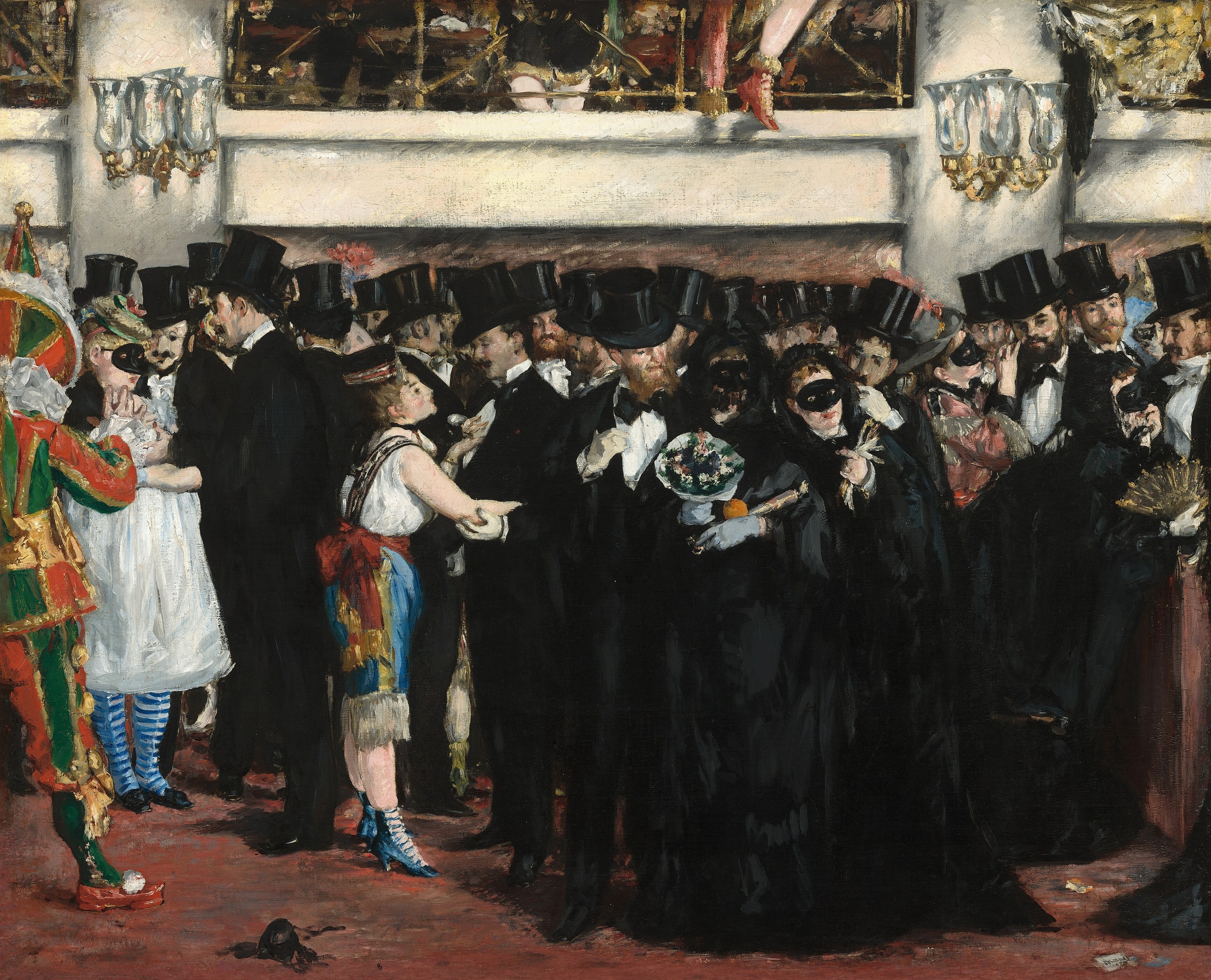
Masked Ball at the Opera is a lively crowd scene that Édouard Manet painted in the spring of 1873: beneath a balcony of the Paris Opera, men in black tailcoats and top hats mingle with women in black masks and a few brightly costumed figures. The original is oil on canvas, 59.1 x 72.5 cm, held by the National Gallery of Art in Washington. We hand-paint it for you in oil on canvas, in 8 landscape sizes from 40 x 31 to 200 x 159 cm, or made to measure. You see a photograph of the finished painting before it is packed.
| Title: | Masked Ball at the Opera |
| Other titles: | Bal masqué à l’Opéra (French title) · Masked Ball at the Opera House |
| Painter: | Édouard Manet (1832–1883) |
| Year painted: | 1873 |
| Original size: | 59.1 cm x 72.5 cm (height x width) |
| Original technique: | Oil on canvas |
| Painting style: | Realism and Impressionism |
| Located at: | National Gallery of Art, Washington, D.C., United States |
| Our reproduction: | Hand-painted in oil on canvas, 8 sizes or made to measure |
Masked Ball at the Opera – Édouard Manet
What does Masked Ball at the Opera show?
A dense crowd of men in evening dress and tall black top hats fills almost the whole canvas. Women in black dominoes and half-masks move among them; one holds a fan, and a gentleman at the centre carries a bouquet in his gloved hand.
The costumes bring the colour. At the left edge stands a harlequin in red and green, beside him a woman in a white dress with a half-mask and blue-and-white striped stockings. Nearer the centre a girl in a short costume, with a red sash and blue lace-up ankle boots, holds a gentleman in tails by the hand.
Across the top runs a balcony with a gilt rail, and a pair of legs dangles over it, one foot in a red shoe. Gilded wall lamps with glass shades are fixed to the white pillars. On the red floor below lie a dropped mask and, further right, a small dance card.
Who is hiding among the top hats and masks?
Manet chose the yearly masked ball of the old Paris Opera on the rue Le Peletier. He made his preparatory sketches from life inside the opera house and finished the painting on the rue d’Amsterdam, where he had moved shortly before.
The men in top hats are not random guests. Several of Manet’s friends posed for him, among them the art collector Hecht and the composer Emmanuel Chabrier, and some had already sat for his Music in the Tuileries of 1863. The German Wikipedia adds that it is one of his few group portraits and one of the rare works in which Manet painted himself.
The poet Stéphane Mallarmé wrote that the masks are no more than a break, fresh as a bouquet, in the possible monotony of a background of black clothes.
Why is this painting still debated?
Édouard Manet (1832–1883) was among the first painters of his century to take modern life as a subject, and a pivotal figure between Realism and Impressionism. A friend of the Impressionists, he never exhibited with them and preferred the Salon.
Yet the Salon of 1874 refused this work: too naturalist, says the English Wikipedia, while the German one says the jury gave no reasons, and some writers suspect political allusions to the early Third Republic. It was first shown publicly only after Manet’s death, though Mallarmé, Edmond de Goncourt and later Michel Foucault all wrote about it.
It also preserves a lost place. The opera house on the rue Le Peletier burned down later that year, before Manet had finished, so this was the last ball held there. A short Wikipedia article in English tells more.
Where is the original, and who owned it?
The original measures 59.1 x 72.5 cm (height x width) and is in the collection of the National Gallery of Art in Washington, accession number 1982.75.1.
In November 1873 Manet sold it directly to the opera singer Jean-Baptiste Faure, one of the earliest patrons of the Impressionists and a major collector of his work. In 1893 it passed to the dealer Paul Durand-Ruel.
In 1894 the American collectors Henry Osborne and Louisine Havemeyer bought it. Their son Horace inherited it, and after the death of his widow Doris it came to Washington in 1982 as a gift in memory of Louisine Havemeyer.
Masked Ball at the Opera or another Manet?
This is a canvas painting for lovers of opera, theatre and evenings in town who enjoy a deep black broken by small flashes of colour.
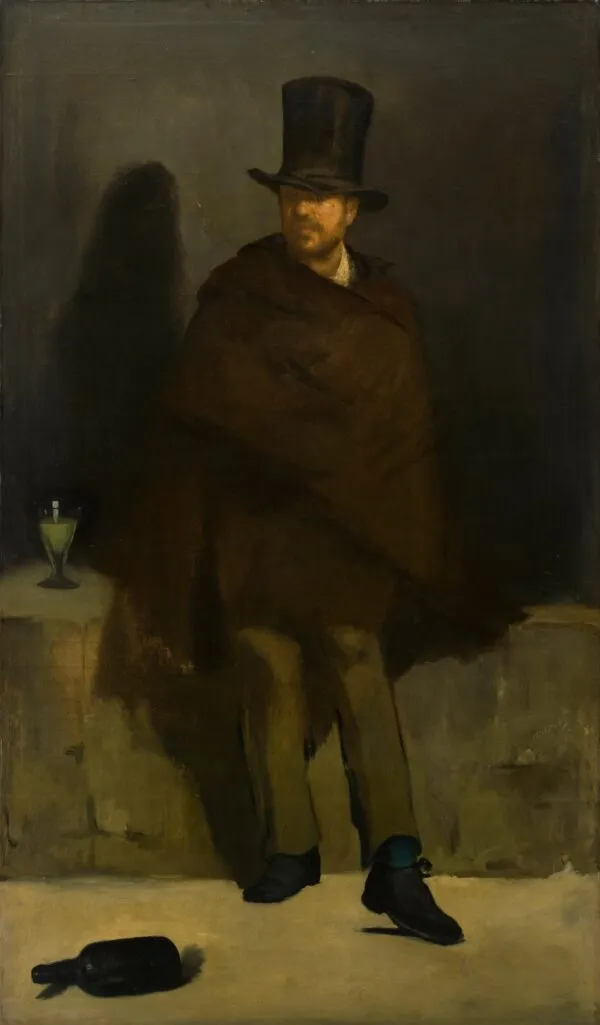
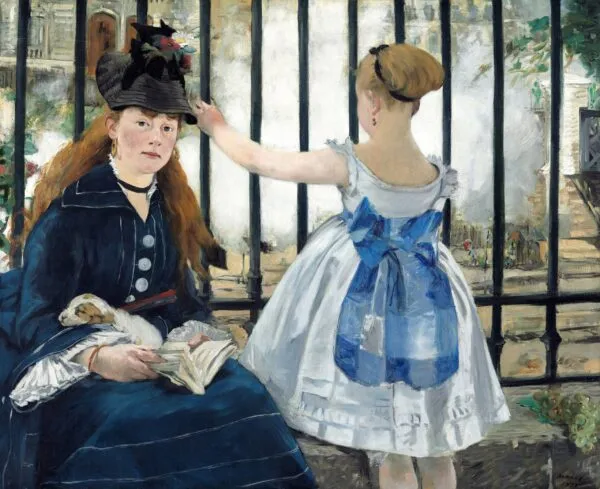
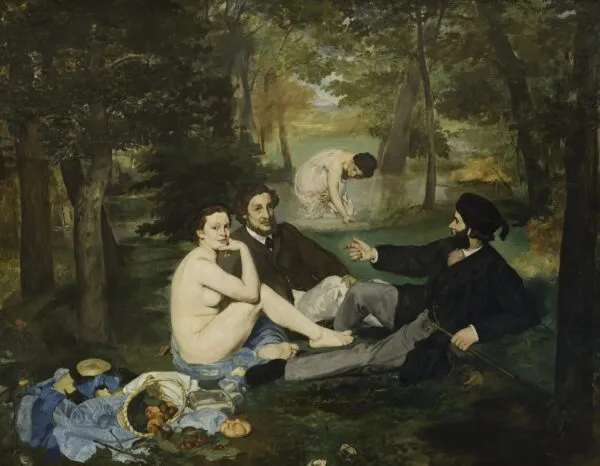
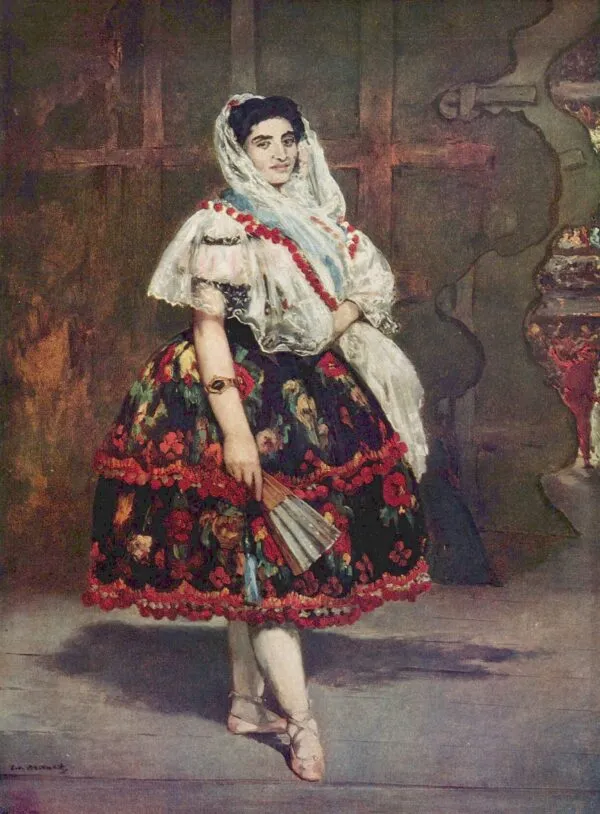
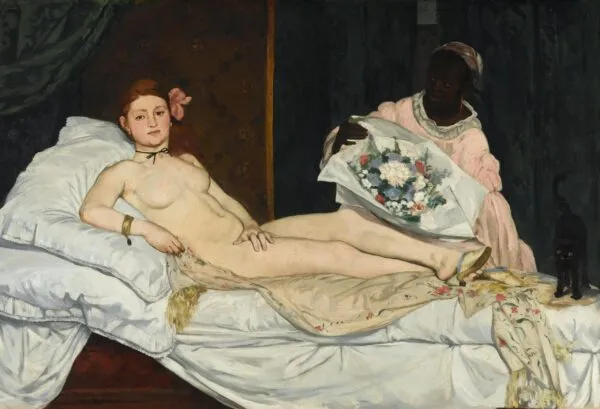
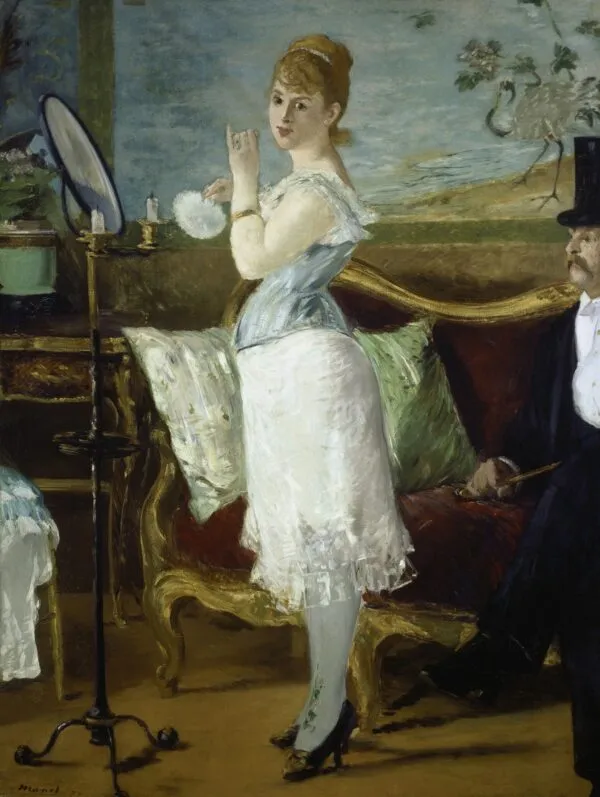
Manet’s delight in stage and costume carries on in Lola de Valence, a Spanish dancer with a fan in the theatre wings, and in The Street Singer, a young woman stepping out of a café with a guitar under her arm. Quieter and more private are Repose, a young woman in white on a red sofa, and the Portrait of Émile Zola, showing the writer at his desk.
The choice does not end there: all our famous Manet paintings are gathered on the Édouard Manet page.
How do we hand-paint Masked Ball at the Opera?
The original is a fairly small oil on canvas, only 72.5 cm wide. Ours is an oil painting reproduction on new canvas, in the size you choose, and the painter lays on the oil colour layer by layer.
He first sets down the balcony, the white pillars and the outline of the crowd, because the rhythm of the top hats holds the scene together. Then come the blacks of the tailcoats and dominoes, built from several dark tones so the figures do not merge into one patch.
Last he adds the accents of colour: the harlequin’s costume, the blue boots, the bouquet, the gilded lamps and the red floor, leaving the crowd as loosely brushed as Manet did.
Which size suits your wall?
In short: 40 x 31 or 50 x 40 cm for a shelf or a narrow wall, 64 x 50 and 80 x 63 cm above a chest of drawers or in a hallway, 100 x 79 and 125 x 99 cm above a sofa, and 160 x 124 or 200 x 159 cm for a large wall.
There are 8 landscape sizes (width x height): 40 x 31, 50 x 40, 64 x 50, 80 x 63, 100 x 79, 125 x 99, 160 x 124 and 200 x 159 cm. The original measures 72.5 x 59.1 cm (width x height), so 40 x 31, 50 x 40 and 64 x 50 cm are smaller, 80 x 63 cm is already slightly larger, and every size from 100 x 79 cm up is clearly larger; the biggest is almost three times as wide.
As a painting for the living room it works best at 125 x 99 or 160 x 124 cm, where faces, masks and costumes stand apart clearly.
Can I order another size or a frame?
Yes. If your wall needs other proportions, we keep the central group and the balcony whole and adjust only the edges of the crowd. Send us the size you need, and we will reply with a price and a date.
Your masked ball can travel rolled, on a stretcher bar, or framed; our workshop in Slovenia does the stretching and framing. Frames are chosen in our 3D app, made for that alone, and a preview of the painting on your own wall is a separate service. Gilt echoes the balcony rail, slim black the top hats.
When will my painting arrive?
Once you confirm, the painter begins with the top hats and masks, and within 15 to 45 working days the painting is ready to leave. First you get a photograph of it, and we adjust details if you wish.
It travels within Slovenia and to every other EU country without customs duties, and our returns policy covers each order.
The colourful opera crowd makes a fine present for lovers of opera, music or carnival. If you do not know the wall, give a wall art voucher and let the recipient choose the size.
Frequently asked questions
Where can I see the original?
At the National Gallery of Art in Washington, accession number 1982.75.1.
What is happening in the scene?
The yearly masked ball of the old Paris Opera: men in top hats, women in black masks and a few bright costumes beneath a balcony.
Is it a print?
No, it is a hand-painted copy, made with brushes and oil paint on canvas.
How big is the original?
It measures 59.1 x 72.5 cm (height x width); our sizes from 80 x 63 cm up are larger.
Can I have a size that is not listed?
Yes. Send us the width and height you need, and we will come back with a price and a delivery date.
How long does it take to make?
Painting and preparation take 15 to 45 working days, and you see the painting in a photograph before it ships.
Does it suit a living room or a gift?
Yes. The dark crowd with its touches of colour looks good above a sofa and pleases any opera lover.
Why did the Salon reject it?
The 1874 jury gave no reasons; the English Wikipedia says the painting was judged too naturalist.
- Subject: the masked ball at the Paris Opera: top hats, black masks, a harlequin and a balcony with a pair of legs dangling over it.
- Original: oil on canvas, 1873, 59.1 x 72.5 cm, National Gallery of Art, Washington.
- Ours: a hand-made Édouard Manet reproduction in oil on canvas, 8 sizes from 40 x 31 to 200 x 159 cm, or made to measure.
- Worth knowing: the Salon refused it in 1874; the opera house it shows burned down in 1873.