


Description
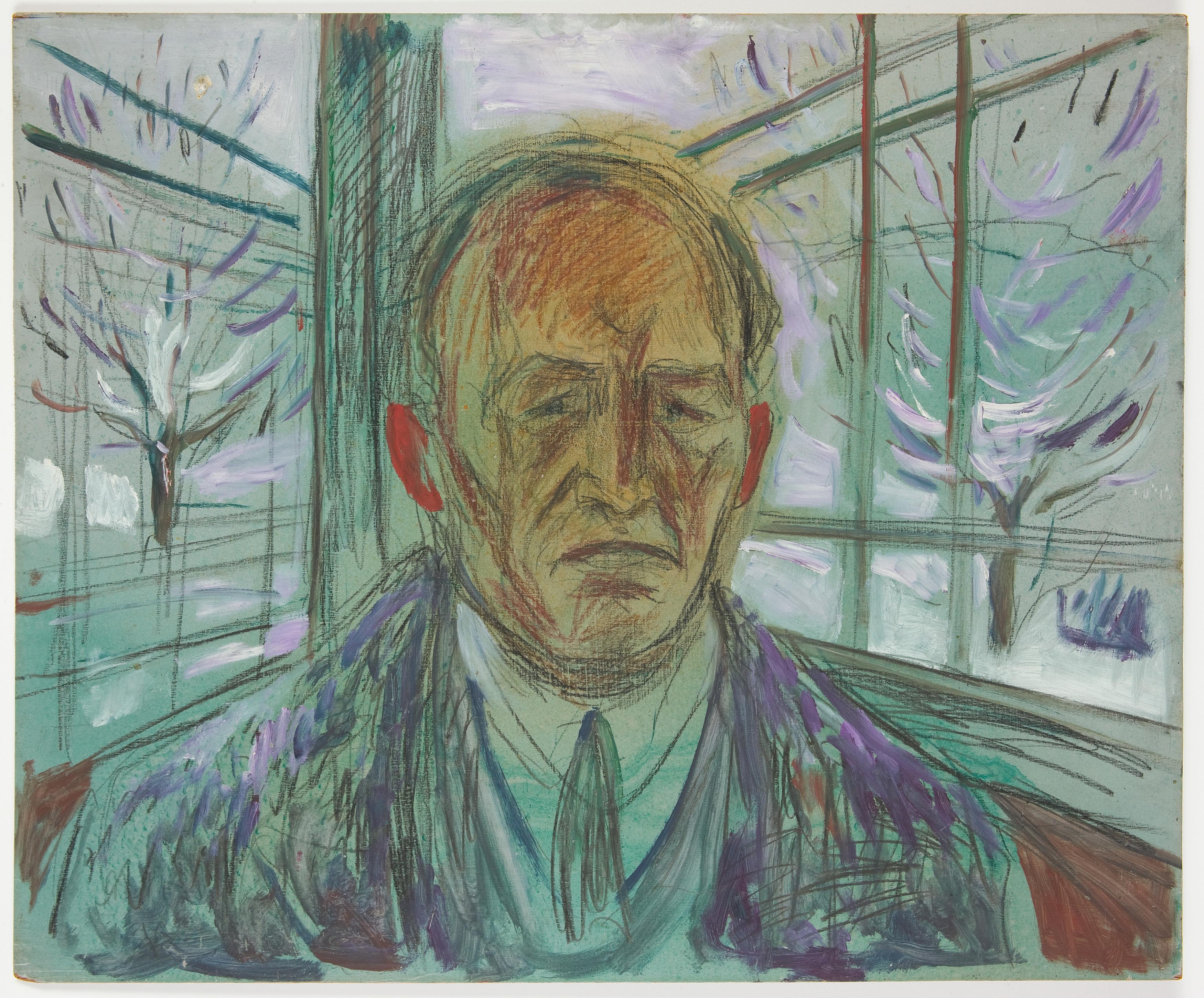
Self-Portrait on the Glass Veranda by Edvard Munch is an expressionist painting from 1930–1933, held under accession number MM.M.00245 by the Munchmuseet in Oslo: the head takes the centre and is large for the format. We see it from the front, turned very slightly to the right and cropped just above the crown. With us it is made as a hand-painted reproduction in oil, brushed onto canvas; you receive a photograph of the finished work for approval before dispatch, and you choose between ten sizes or a size of your own.
| Title: | Self-Portrait on the Glass Veranda |
| Other titles: | Avtoportret na stekleni verandi · Autoportret na staklenoj verandi · Selbstbildnis auf der Glasveranda · Autoritratto sulla veranda a vetri · Önarckép az üvegverandán |
| Painter: | Edvard Munch (1863–1944) |
| Year: | 1930–1933 |
| Original size: | 55,5 cm x 45,5 cm |
| Original technique: | Oil on canvas |
| Painting style: | Expressionism |
| Location: | Munch Museum in Oslo (MM.M.00245) |
| Our reproduction: | a hand-painted work in oil, ten sizes from 45 x 38 cm to 223 x 179 cm, stretched on a stretcher bar, unframed |
Self-Portrait on the Glass Veranda – Edvard Munch
What is shown?
The head takes the centre and is large for the format. We see it from the front, turned very slightly to the right and cropped just above the crown. The forehead is high, the hair thin, the brows heavy, the mouth closed and turned down. The look does not come towards us but passes somewhere to one side, and that is what makes the face read as gathered and closed in on itself.
What is painted on the original?
The face is built from oppositions of warm and cool: ochre and orange planes on the forehead and nose, green and olive shadows under the eyes and along the jaw. Munch does not smooth the transitions but lets the two colours meet at an edge, which keeps the face in movement even where the skin is still.
Why does this painting matter?
Expressionism works here not through a story but through what is actually visible on the canvas: munch does not smooth the transitions but lets the two colours meet at an edge, which keeps the face in movement even where the skin is still. That is why the work belongs to this painting style and not merely to the period it was made in. Munch used the same approach across a run of works from those years, and this is one of them; what makes it worth looking at is the relation between what is painted precisely and what is left open.
What does the painting mean?
We keep to what is visible. The face is built from oppositions of warm and cool: ochre and orange planes on the forehead and nose, green and olive shadows under the eyes and along the jaw. What that means the canvas does not say in words, and that is exactly why the work has stayed open to interpretation. There are no names on the canvas and none in the record we hold; anyone who sees particular people or a particular story in the scene is adding it, and we do not claim it. What is beyond dispute is the arrangement and the colour: what is painted, and nothing further.
Where does the work sit among Munch’s works?
The same painterly approach returns in other Munch works on this shelf: Still Life with Cabbage, Around the Drinking Table, Black and Yellow Man in Snow, In the Cafe. Where exactly this work stands among them is a matter of reading and not of the record; we state only what is on the canvas and in the inventory. The whole range is in the Edvard Munch gallery.
How is our hand-painted version made?
This is a painting on canvas made with brush and oil colour, not with a printer. The painter works from a high-resolution reference and builds the scene from the back forward, layer by layer, so that the transitions between tones stay soft. Because every hand-painted copy is made for its own order, no two match down to the detail; small differences in the laying-on are a mark of the human hand and not a fault. For this work we have no photographs of our own from the workshop, so you will not find any on this page; the photograph of the finished canvas always reaches you for approval before dispatch.
Which size for which wall?
If you are unsure: 100 x 80 cm. The 60 x 49 cm size is the closest of all to the proportion of the original. The format is landscape, so it asks for width, and a narrow wall does not suit it. 45 x 38 cm, 50 x 40 cm, 55 x 46 cm belong in a hallway or among several smaller works, 60 x 49 cm, 70 x 60 cm, 100 x 80 cm are the real painting for the living room or a quiet corner of a bedroom, 109 x 91 cm, 130 x 110 cm, 165 x 130 cm, 223 x 179 cm are for large walls and rooms with enough distance. All ten sizes are made to order; none is held in stock as an already painted work.
Custom size, stretcher bar and frame
If none of the ten sizes suits your wall, we paint to your measurements and keep the proportion of the reference, so the scene is not stretched; that is our painting made to measure. Every example arrives stretched on a wooden stretcher bar, ready to hang; the stretcher bar can be left off at the order. On this page the canvas is offered without a frame; the frame is chosen separately with our 3D application, which shows every one of our frame profiles on this motif. The application is for frame choice only. If you would like to see how the work will look on your own wall, that is our separate room-placement service.
Delivery and guarantee
Every example is made to order in our studio in Slovenia, so allow 15 to 45 days depending on size. We ship it stretched on a wooden stretcher bar and protected for transport, without customs inside the European Union; the frame is not included and is chosen separately with our 3D application, which is for frame choice only. Every canvas painting we make is made the same way, including paintings by famous painters from other periods; we write about Munch’s path in our article on Edvard Munch.
Frequently asked questions
Where is the original?
In Munch Museum in Oslo, under accession number MM.M.00245. We read the detail on the museum’s own record page.
Who or what is shown in the painting?
The head takes the centre and is large for the format. We see it from the front, turned very slightly to the right and cropped just above the crown. We can name none of the figures: there are no names on the canvas and none in the record we hold.
Is Avtoportret na stekleni verandi the same work?
Yes. The work is listed under several titles across languages, among them Avtoportret na stekleni verandi; what identifies it reliably is the accession number, not the title.
Is this a print?
No. The order is painted by hand in oil colour onto canvas; the brushstrokes can be seen and felt.
Which size should I choose?
The 100 x 80 cm size is our recommendation for an ordinary wall. The 60 x 49 cm size is the closest of all to the proportion of the original. For other walls see the guide above.
Can I have a size that isn’t listed?
Yes, we paint to measure and keep the side ratio of the reference.
How is it delivered?
Stretched on the stretcher bar and protected for transport, in 15 to 45 days, once you confirm the photograph of the finished work.
What is the painting about, in one sentence?
In one sentence: the look does not come towards us but passes somewhere to one side, and that is what makes the face read as gathered and closed in on itself.
Is the original for sale and what is it worth?
No. The work is in a public collection and is not for sale; we give no value for it, because we have none from a source we could check. A hand-painted canvas is the one way to have this scene at home.
How high should I hang it?
The centre at eye level, roughly 145–150 cm from the floor; above a sofa 15–25 cm over the back. Because the format is landscape, leave some empty wall at the sides.
Is it suitable as a gift?
As a work of art it is a considered gift; in the middle sizes it arrives stretched and ready to hang. If you would rather leave the choice to the recipient, a gift voucher is available.
- Subject: the head takes the centre and is large for the format. We see it from the front, turned very slightly to the right and cropped just above the crown
- Original: oil on canvas, 1930–1933, 55,5 cm x 45,5 cm, Munch Museum in Oslo, inv. no. MM.M.00245
- Ours: a hand-painted work in oil, ten sizes from 45 x 38 cm to 223 x 179 cm, stretched on a stretcher bar, unframed
- Worth knowing: the original measures 55,5 cm x 45,5 cm and its format is landscape